

The case of the black ey.., p.19
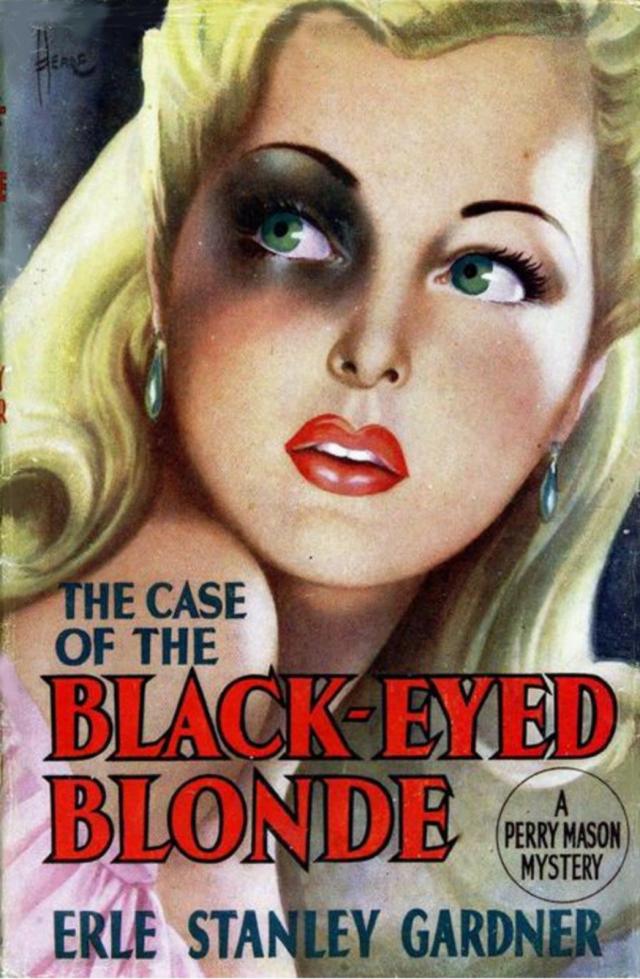
The Case of the Black-Eyed Blonde,
p.19


Mason said, “Frank Glenmore tried to kill Jason Bartsler. I think we got here in time. One of the radio officers shot Glenmore as he went out the back door.”
Tragg sized up the situation swiftly, said to the radio officer, “All right, get out and help your partner. See if you can locate Glenmore. We’ll take care of this. How are you feeling, Bartsler?”
“Pretty shaky,” Bartsler said. “What can we do about that knee?”
“We’ll have an ambulance coming,” Tragg said, and then to Mason, “Sorry we didn’t get here sooner. I’d been out. When I got in, Holcomb told me about your telephone conversation. He thought he’d done something smart; thought you were trying to plant something and use the police to give an air of authenticity.”
“I know.”
Tragg said, “In a way you can’t blame him.” He turned to Bartsler. “Can you tell me what happened?”
Bartsler reached for the second glass of brandy which Mason was extending to him. He said, “Glenmore got a phone call. I heard him talking. He seemed excited. Shortly afterwards I wanted to call and the phone was dead as a door nail. I couldn’t understand it. I looked back of the telephone and found that the wires had been completely cut through. And the minute that happened, I became suspicious. I went to the desk and got out my automatic. But I didn’t suspect Glenmore. I suspected my wife.
“Glenmore came in. He asked me something, and walked around behind the chair … . I don’t know what it was that suddenly made me suspicious, but I glanced up into the mirror and saw that he had a gun. I flung myself out of the chair, at the same time reaching for my automatic, and he shot. The shot hit me in the knee and knocked me flat. I still hadn’t been able to get my automatic.
“I was virtually helpless, and I saw Frank taking deliberate aim. I read murder in his eyes. And just then there was the sound of this police siren and tires screaming around the corner, and that rattled Glenmore. He looked apprehensively back over his shoulder and then took a hasty shot. I jerked my body around, and the bullet went past my head and into the floor. I don’t think it missed me an inch. I had my gun out then, and Frank started to run. He turned in the doorway for another shot, and we pumped lead at each other. I don’t know whether I got him or not. I took another flying shot as he turned to run. I think I hit him with that one because he stumbled, caught at the side of the door, turned and shot again. I was crazy with pain and shock. I heard steps and people running, and … I guess I fainted … . And that brings you up to date. How did you happen to get here, Mason?”
Mason said, “I figured it out. I knew that Mildred Danville must have taken your grandson from Helen and concealed him somewhere. I had reason to believe it was with a Mrs. J. C. Kennard. You remember she called to see you the night Diana Regis got her black eye?”
“Yes, yes. But she wanted to see me about that mining claim.”
“She did when she got in here,” Mason told him. “But what had happened was that she became suspicious of Mildred Danville. She knew the boy’s name was Robert Bartsler. She looked for a Bartsler in the telephone book, found one, and rang up. Frank Glenmore answered the telephone. She explained to him that she had a child who gave the name of Robert Bartsler, and who had been left by a woman by the name of Mildred Danville, and she wondered if it was all right. Glenmore did some quick thinking. If he could get the possession of that child, it would give him a lot of power. He evidently knew a divorce action was in the offing. It’s conceivable he intended to hold the child for the highest bidder. I don’t know just what your own situation was here, but it’s very evident what Glenmore tried to do. He told Mrs. Kennard to come on down, and when she came to the door he pulled that stall about a mining claim to throw Diana off the track. He hadn’t anticipated an audience when he went to let Mrs. Kennard in.
“Glenmore took Mrs. Kennard into one of the other rooms, talked with her in detail, and made some kind of a deal with her. Then he brought her in here to you, after he’d coached her about a mining claim she was to offer you. I take it Glenmore did most of the talking.”
“He did at that. But where’s my grandson, Mason? If you’ve found him … ”
“Take it easy,” Mason said. “I’m coming to that. I want to get the other straight while Lieutenant Tragg is here. As a matter of fact, I should have deduced what happened sooner, because you’ll remember Glenmore said he only talked with her a few minutes before he took her in to see you, and you only talked with her a few minutes. Yet we know that she must have been in the house for some forty-five minutes or longer. And since you talked with her only about five or ten minutes, it’s obvious that Glenmore must have been talking with her in considerable detail.
“However, the deal was fixed up, and Glenmore was sitting pretty. He had you right where he wanted you.”
“The dirty double-crosser,” Bartsler said. “I’d caught him in some financial jugglery that I wanted to straighten out. I’d insisted we call in a certified public accountant, and the man was going to work tomorrow. I didn’t realize how serious the situation must have been.”
Mason said, “Glenmore arranged with Mrs. Kennard to take young Robert and go to live with her sister, taking elaborate precautions to see that she wouldn’t be traced. But when Diana Regis told Mildred Danville how she received her black eye, and mentioned that a matronly woman with a limp had called to see you and was just ringing the doorbell when Diana arrived, Mildred suddenly realized what had happened. The description of Mrs. Kennard was so striking that she knew at once Glenmore must have bribed Mrs. Kennard to sell her out. So Mildred then decided to make peace with Helen Bartsler, and made a ten o’clock appointment to meet Helen. But before Helen kept that appointment, Frank Glenmore got there and silenced Mildred’s lips.”
“How did he know Mildred was wise to him?” Bartsler asked.
“There can be only one explanation,” Mason said. “When Mildred learned through Diana that Glenmore had talked to Mrs. Kennard, she made the fatal mistake of telephoning Glenmore and telling him what she knew. That might have worked if Glenmore’s motives were merely those of greed, but I think we’ll find he has some reason that hasn’t been disclosed as yet for wanting to control Jason Bartsler. His back is to the wall. He’s stopping at nothing. Mildred quite probably invited him to be there at Helen’s house with the baby. Instead he went there prepared to do anything rather than surrender the child until he had what he wanted. Mildred had a gun. She made the mistake of trying to use it. Glenmore got it away from her and in a frenzy of desperation shot her, then he wiped the gun free of fingerprints, took it to Mildred’s apartment and left it in a temptingly obvious place—a place where Diana would be almost certain to touch it.”
“How did he get in?” Tragg asked.
Mason smiled. “A man of Glenmore’s desperation wasn’t to be balked by the lock of an ordinary apartment house door.”
“If that’s the case,” Tragg pointed out, “then Helen must have been lying when she said——”
“Of course she was lying,” Mason interrupted impatiently. “She was trying to save herself and protect her own skin. Things were difficult enough for Helen without any murder complications. There are a lot of angles to this we don’t know as yet, Lieutenant. And there’s no use taking time to go into them now. But when Helen saw it was going to look like rain, she opened the faucet on that cistern——”
“You’ve scored a point there, all right,” Lieutenant Tragg admitted. “One of the officers on Homicide came to me after the session of court this afternoon and told me that he distinctly remembered the faucet on the cistern was open, and running quite a stream.”
Mason nodded. “That’s one of the most important points in the case. It means that Mildred could have been killed before it started raining. She was killed much earlier than you thought.”
“But my grandson,” Bartsler said. “Hang it, I want to sec my grandson. Pretty quick some damned intern will be shooting hop into me … . I want to see my grandson.”
Mason turned to one of the officers. “Would you mind going out and asking Miss Street who’s waiting in the car outside to bring the little boy in? Tell her it’s all safe now, and we have nothing to conceal from the officers.”
The officer looked to Tragg for confirmation.
“Go ahead,” Lieutenant Tragg said.
Running steps sounded as a man hurried around the walk from the side of the house. They heard the thud of steps on the porch, then the officer of the prowl car dashed into the room, caught Lieutenant Tragg’s eye and nodded, said, “Drake found him in a woodshed next door. You’ll have to make it quick, Lieutenant. Is there a stenographer here?”
Tragg frowned, looked around the circle of faces.
Mason said, “We’ll take the baby. You can take Della Street.”
“You’ll have to hurry,” the officer warned.
Tragg started for the door with quick strides, met Della Street coming in.
“Quick, Miss Street, come with me. Got a pen and notebook in that purse of yours?”
She nodded.
“Your stomach strong enough for a dying statement?”
Again she nodded.
Mason took the little boy from her, caught Della Street’s eye, made a signal warning her to utter silence, then entered the room with young Robert Bartsler.
Chapter 21
DELLA STREET snuggled up close to Mason in the front seat of the car.
Mason slid the car through the gear shifts, pulled away from the big house where people were milling around in confusion, where newspaper photographers were exploding flash bulbs and asking questions.
“Pretty bad, Della?” Mason asked solicitously.
“Pretty bad, but not too bad. He’d been hit with a charge of buckshot in the back. They missed his spine, but well, of course it was the end, and in order to make the dying statement admissible in evidence they were brutal about it. They told him he was dying, made him admit he knew it.”
“He confessed?”
“Yes, the whole business. I guess you know it all anyway. Lieutenant Tragg said the details were almost exactly the way you’d reconstructed them. He was in charge of operations on the mines and was supposed to get a royalty on each ton of ore milled. Well, it was quite a mix up, but some of the mines had run into pretty rich stuff, and Glenmore was surreptitiously mixing other rock with that rich stuff so that the tonnage which went through the mills was all the same. But of course it was much easier for him to pick up rock from the dump than to mine it. In that way he had been getting almost double the rate of payment. Of course he had some of the key members of his crew standing in with him. Bartsler became suspicious, and Glenmore was looking for something he could get on Bartsler, some hold that would … Oh well, you know all the answers anyway.”
“Did he say anything about the boy not being Bartsler’s grandson?”
“No, honest, Chief, I don’t think he knew. Apparently he thought Mildred Danville had simply stepped in and kidnapped the boy … Good heavens! What’s this?”
Mason slid the car around and let the headlights illuminate a figure that was limping along the street.
“Looks as though he’d been held up and robbed … . It’s Carl Fretch!”
Mason opened the door, jumped out to the sidewalk. “Hello, Fretch,” he said. “What’s the matter?”
Fretch gave him a glance that was evidently intended to be full of scornful dignity and marched past.
“Hey!” Mason said. “What’s happened?”
Fretch didn’t even look back.
Mason said to Della Street, “I wanted to talk with him and tell him what’s happened at the house … . Oh, well, let him go.”
“What on earth do you suppose happened to him?” Della Street asked.
Mason grinned. “The boy,” he said, “was out with one of Paul Drake’s female operatives, if you’ll remember. She was instructed to get information, but that she didn’t have to put up with too much in order to do it. And, if you’ll remember, while the girl was a demure looking dish, she had really been on the stage with a sparring partner as a female featherweight champion. Evidently, Carl’s fistic success had gone to his head. If he’s going to act the part of a cave man he should learn the manly art of self-defense.”
Della Street laughed. “Wait until Diana sees him! He’s got a beautiful eye that’s going to be a shiner by tomorrow morning.”
Mason said, “Paul Drake has some good operatives, but his cars are in lousy shape.”
“How will he get back since we’ve taken his car?”
“Oh, the police will take him. Since he was there at the shooting, he’s going to be a witness and they won’t get finished with him for an hour or two. In the meantime, Della, we have something to do.”
“I’m a mind reader,” she said. “We’re going to get some eats.”
“Something to take the taste of the chocolate out of my mouth. It’s been repeating on me,” Mason admitted.
“Here, too,” Della said, laughing.
“Perhaps we can find a nice juicy steak somewhere with mushrooms and perhaps some lyonnaise potatoes and French bread toasted so that it’s a golden brown on the outside, but warm and chewy on the inside and … ”
“And because it’s late at night,” Della Street said, “and there aren’t going to be any more clients, perhaps we could dust a little garlic on it?”
“And have a bottle of red wine to go with it,” Mason said.
“What,” Della Street asked, “is holding us back?”
“Just a dread of having Sergeant Holcomb find out that we’ve been violating speed laws,” Mason admitted, grinning.
Della Street asked, “How are you going to break the news to Bartsler about the boy not being his grandson?”
“Don’t be silly! I’m not.”
“You mean you’re going to let him … ”
“Why not?” Mason asked. “The boy’s an orphan now. No one knows his father. His mother has been killed. He has a birth certificate that describes him as the son of Robert Bartsler, and legally entitles him to the name of Robert Bartsler, Junior. Bartsler has a lot of money and the youngster will bring Helen and Jason together and——”
“But won’t Bartsler know? Won’t he see there isn’t any family resemblance? That——”
Mason laughed. “Just to show you, Della, how we interpret evidence just the way we want to interpret it, you should have heard Bartsler making over the little fellow. Before the ambulance arrived, and they gave him a shot of hop, Bartsler was getting acquainted with the boy, and I swear to you I don’t think he even knew his knee was paining him. His, face was all lit up, and for a confirmed skeptic you certainly should have heard his gullibility.”
“What do you mean?”
“Oh, tracing the family resemblance. He pointed out to me how the boy had his mother’s forehead and his son’s mouth, and his eyes were the exact image of Bartsler’s mother’s, and … ”
“Good heavens!” Della Street interrupted. “And that from a skeptic who prides himself on being hard to convince.”
“Exactly,” Mason said. “It simply goes to show how credulous a man can be despite his efforts to be cynical and hardboiled when it comes to something he wants to believe. How many men look at themselves in the mirror and see themselves as they actually are? They see the mental image they have created of themselves, ten to twenty years younger than they actually are.”
Della Street laughed. “You’re talking about woman now,” she said.
“No,” Mason said, “a woman is more honest with herself, a little more critical in her appraisal. Women don’t kid themselves the way men do. They’re more romantic and more realistic.”
Mason swung the car around the corner into a side street. “Remember this little isolated place, Della?” he said with enthusiasm. “It’s where they serve you that heavy bread-like pastry with cheese and spices melted over it.”
“Oh yes!” Della exclaimed. “And they have some perfectly marvelous wine! It’s been a long time since we’ve eaten here, Chief.”
“Paul Drake and I used to meet here a lot,” Mason said. “I wonder if Paul ever did get his dinner finished. I never found out.”
Mason and Della Street entered the little restaurant. The head waiter recognized them, escorted them to a booth.
“What,” Della Street asked after a cocktail and green olives, “are you going to do about Mildred’s diary?”
“With proper ceremonies,” Mason said, “I am going to burn it. After all, a lawyer is something like a doctor, only where a physician doctors men’s bodies, a lawyer has to minister to their minds—although we might do a little judicious blackmail.”
“You mean with Helen?”
“Yes. If she’s a good girl and treats Bartsler properly, we’ll promise to keep the diary out of circulation.”
“A felony,” Della Street said.
“Exactly.”
“But how about Bartsler? What will hold him in line?”
“I think the grandson will do that,” Mason said. “He——”
“Well for the love of Pete! Here’s Paul Drake tagging us along.”
Drake walked across the dining room, said, “Slide over, Perry. Don’t think you’re going to have dinner and a tête-à-tête and leave me out.”
“What’s the matter?” Mason asked. “Didn’t you get your dinner finished before my phone call interrupted you?”
Drake frowned as though thinking back. “Oh, that,” he said suddenly. “Oh sure! I didn’t get the dessert, but I had the dinner. But that’s quite a while ago! A lot’s happened since then.”
“You mean you’re hungry again, and you’re going to horn in on our dinner?” Mason asked, his eyes twinkling.
“Exactly,” Drake said. “I had an idea you’d come here. And those damn cops made me get a taxi. You’ll find it on the expense account. Boy, oh boy, you left Bartsler’s place five minutes too soon!”
“How come?”
“You should have seen Carl Fretch.”
“I did see him.”
“Where?”















