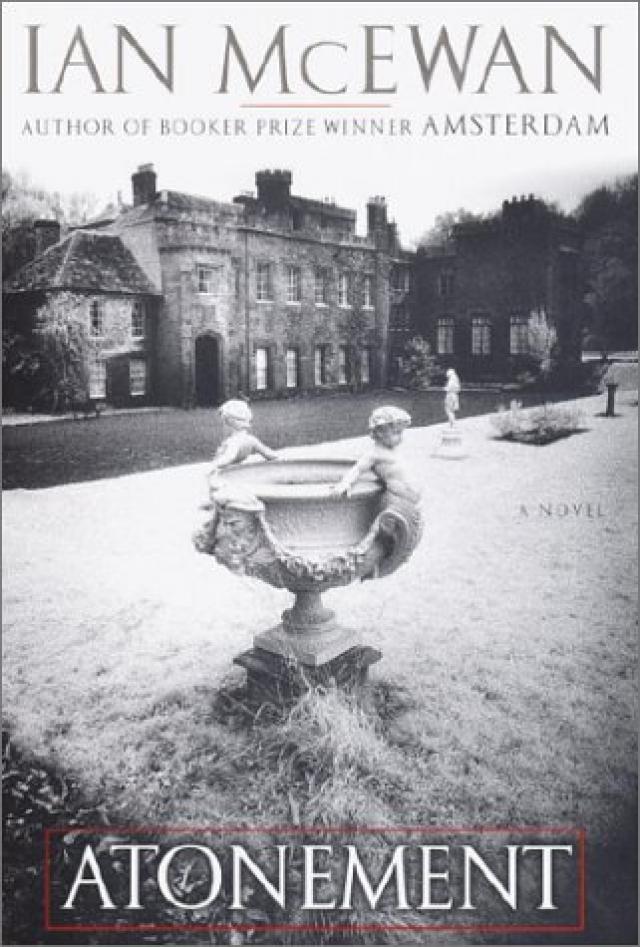
Atonement 1987, p.21
Atonement (1987),
p.21


She wrote in reply, “They turned on you, all of them, even my father. When they wrecked your life they wrecked mine. They chose to believe the evidence of a silly, hysterical little girl. In fact, they encouraged her by giving her no room to turn back. She was a young thirteen, I know, but I never want to speak to her again. As for the rest of them, I can never forgive what they did. Now that I’ve broken away, I’m beginning to understand the snobbery that lay behind their stupidity. My mother never forgave you your first. My father preferred to lose himself in his work. Leon turned out to be a grinning, spineless idiot who went along with everyone else. When Hardman decided to cover for Danny, no one in my family wanted the police to ask him the obvious questions. The police had you to prosecute. They didn’t want their case messed up. I know I sound bitter, but my darling, I don’t want to be. I’m honestly happy with my new life and my new friends. I feel I can breathe now. Most of all, I have you to live for. Realistically, there had to be a choice—you or them. How could it be both? I’ve never had a moment’s doubt. I love you. I believe in you completely. You are my dearest one, my reason for life. Cee.”
He knew these last lines by heart and mouthed them now in the darkness. My reason for life. Not living, but life. That was the touch. And she was his reason for life, and why he must survive. He lay on his side, staring at where he thought the barn’s entrance was, waiting for the first signs of light. He was too restless for sleep now. He wanted only to be walking to the coast.
There was no cottage in Wiltshire for them. Three weeks before his training ended, war was declared. The military response was automatic, like the reflexes of a clam. All leave was canceled. Sometime later, it was redefined as postponed. A date was given, changed, canceled. Then, with twenty-four hours’ notice, railway passes were issued. They had four days before reporting back for duty with their new regiment. The rumor was they would be on the move. She had tried to rearrange her holiday dates, and partly succeeded. When she tried again she could not be accommodated. By the time his card arrived, telling her of his arrival, she was on her way to Liverpool for a course in severe trauma nursing at the Alder Hey Hospital. The day after he reached London he set out to follow her north, but the trains were impossibly slow. Priority was for military traffic moving southward. At Birmingham New Street station he missed a connection and the next train was canceled. He would have to wait until the following morning. He paced the platforms for half an hour in a turmoil of indecision. Finally, he chose to turn back. Reporting late for duty was a serious matter.
By the time she returned from Liverpool, he was disembarking at Cherbourg and the dullest winter of his life lay before him. The distress of course was shared between them, but she felt it her duty to be positive and soothing. “I’m not going to go away,” she wrote in her first letter after Liverpool. “I’ll wait for you. Come back.” She was quoting herself. She knew he would remember. From that time on, this was how she ended every one of her letters to Robbie in France, right through to the last, which arrived just before the order came to fall back on Dunkirk.
It was a long bitter winter for the British Expeditionary Force in northern France. Nothing much happened. They dug trenches, secured supply lines and were sent out on night exercises that were farcical for the infantrymen because the purpose was never explained and there was a shortage of weapons. Off-duty, every man was a general. Even the lowliest private soldier had decided that the war would not be fought in the trenches again. But the antitank weapons that were expected never arrived. In fact, they had little heavy weaponry at all. It was a time of boredom and football matches against other units, and daylong marches along country roads with full pack, and nothing to do for hours on end but to keep in step and daydream to the beat of boots on asphalt. He would lose himself in thoughts of her, and plan his next letter, refining the phrases, trying to find comedy in the dullness.
It may have been the first touches of green along the French lanes and the haze of bluebells glimpsed through the woods that made him feel the need for reconciliation and fresh beginnings. He decided he should try again to persuade her to make contact with her parents. She needn’t forgive them, or go back over the old arguments. She should just write a short and simple letter, letting them know where and how she was. Who could tell what changes might follow over the years to come? He knew that if she did not make her peace with her parents before one of them died, her remorse would be endless. He would never forgive himself if he did not encourage her.
So he wrote in April, and her reply did not reach him until mid-May, when they were already falling back through their own lines, not long before the order came to retreat all the way to the Channel. There had been no contact with enemy fire. The letter was in his top pocket now. It was her last to reach him before the post delivery system broke down.
…I wasn’t going to tell you about this now. I still don’t know what to think and I wanted to wait until we’re together. Now I have your letter, it doesn’t make sense not to tell you. The first surprise is that Briony isn’t at Cambridge. She didn’t go up last autumn, she didn’t take her place. I was amazed because I’d heard from Dr. Hall that she was expected. The other surprise is that she’s doing nurse’s training at my old hospital. Can you imagine Briony with a bedpan? I suppose they all said the same thing about me. But she’s such a fantasist, as we know to our cost. I pity the patient who receives an injection from her. Her letter is confused and confusing. She wants to meet. She’s beginning to get the full grasp of what she did and what it has meant. Clearly, not going up has something to do with it. She’s saying that she wants to be useful in a practical way. But I get the impression she’s taken on nursing as a sort of penance. She wants to come and see me and talk. I might have this wrong, and that’s why I was going to wait and go through this with you face to face, but I think she wants to recant. I think she wants to change her evidence and do it officially or legally. This might not even be possible, given that your appeal was dismissed. We need to know more about the law. Perhaps I should see a solicitor. I don’t want us to get our hopes up for nothing. She might not mean what I think she does, or she might not be prepared to see it through. Remember what a dreamer she is.
I’ll do nothing until I’ve heard from you. I wouldn’t have told you any of this, but when you wrote to tell me again that I should be in touch with my parents (I admire your generous spirit), I had to let you know because the situation could change. If it’s not legally possible for Briony to go before a judge and tell him she’s had second thoughts, then she can at least go and tell our parents. Then they can decide what they want to do. If they can bring themselves to write a proper apology to you, then perhaps we may have the beginning of a new start.
I keep thinking of her. To go into nursing, to cut herself off from her background, is a bigger step for her than it was for me. I had my three years at Cambridge at least, and I had an obvious reason to reject my family. She must have her reasons too. I can’t deny that I’m curious to find out. But I’m waiting for you, my darling, to tell me your thoughts. Yes, and by the way, she also said she’s had a piece of writing turned down by Cyril Connolly at Horizon. So at least someone can see through her wretched fantasies.
Do you remember those premature twins I told you about? The smaller one died. It happened in the night, when I was on. The mother took it very badly indeed. We’d heard that the father was a bricklayer’s mate, and I suppose we were expecting some cheeky little chap with a fag stuck on his lower lip. He’d been in East Anglia with contractors seconded to the army, building coastal defenses, which was why he was so late coming to the hospital. He turned out to be a very handsome fellow, nineteen years old, more than six feet tall, with blond hair that flopped over his forehead. He has a clubfoot like Byron, which was why he hadn’t joined up. Jenny said he looked like a Greek god. He was so sweet and gentle and patient comforting his young wife. We were all touched by it. The saddest part was that he was just getting somewhere, calming her down, when visiting time ended and Sister came through and made him leave along with everyone else. That left us to pick up the pieces. Poor girl. But four o’clock, and rules are rules.
I’m going to rush down with this to the Balham sorting office in the hope that it will be across the Channel before the weekend. But I don’t want to end on a sad note. I’m actually very excited by this news about my sister and what it could mean for us. I enjoyed your story about the sergeants’ latrines. I read that bit to the girls and they laughed like lunatics. I’m so glad the liaison officer has discovered your French and given you a job that makes use of it. Why did they take so long to find out about you? Did you hang back? You’re right about French bread—ten minutes later and you’re hungry again. All air and no substance. Balham isn’t as bad as I said it was, but more about that next time. I’m enclosing a poem by Auden on the death of Yeats cut out from an old London Mercury from last year. I’m going down to see Grace at the weekend and I’ll look in the boxes for your Housman. Must dash. You’re in my thoughts every minute. I love you. I’ll wait for you.
Come back. Cee.
HE WAS WOKEN by a boot nudging the small of his back. “C’mon, guv’nor. Rise and shine.”
He sat up and looked at his watch. The barn entrance was a rectangle of bluish-black. He had been asleep, he reckoned, for less than forty-five minutes. Mace diligently emptied the straw from the sacks and dismantled his table. They sat in silence on the hay bales smoking the first cigarette of the day. When they stepped outside they found a clay pot with a heavy wooden lid. Inside, wrapped in muslin cloth, was a loaf and a wedge of cheese. Turner divided the provisions right there with a bowie knife.
“In case we’re separated,” he murmured.
A light was on already in the farmhouse and the dogs were in a frenzy as they walked away. They climbed a gate and began to cross a field in a northerly direction. After an hour they stopped in a coppiced wood to drink from their canteens and smoke. Turner studied the map. Already, the first bombers were high overhead, a formation of about fifty Heinkels, heading the same way to the coast. The sun was coming up and there was little cloud. A perfect day for the Luftwaffe. They walked in silence for another hour. There was no path, so he made a route by the compass, through fields of cows and sheep, turnips and young wheat. They were not as safe as he thought, away from the road. One field of cattle had a dozen shell craters, and fragments of flesh, bone and brindled skin had been blasted across a hundred-yard stretch. But each man was folded into his thoughts and no one spoke. Turner was troubled by the map. He guessed they were twenty-five miles from Dunkirk. The closer they came, the harder it would be to stay off the roads. Everything converged. There were rivers and canals to cross. When they headed for the bridges they would only lose time if they cut away across country again.
Just after ten they stopped for another rest. They had climbed a fence to reach a track, but he could not find it on the map. It ran in the right direction anyway, over flat, almost treeless land. They had gone another half hour when they heard antiaircraft fire a couple of miles ahead where they could see the spire of a church. He stopped to consult the map again.
Corporal Nettle said, “It don’t show crumpet, that map.”
“Ssh. He’s having his doubts.”
Turner leaned his weight against a fence post. His side hurt whenever he put his right foot down. The sharp thing seemed to be protruding and snagging on his shirt. Impossible to resist probing with a forefinger. But he felt only tender, ruptured flesh. After last night, it wasn’t right he should have to listen to the corporals’ taunts again. Tiredness and pain were making him irritable, but he said nothing and tried to concentrate. He found the village on the map, but not the track, though it surely led there. It was just as he had thought. They would join the road, and they would need to stay on it all the way to the defense line at the Bergues-Furnes canal. There was no other route. The corporals’ banter was continuing. He folded the map and walked on.
“What’s the plan, guv’nor?”
He did not reply.
“Oh, oh. Now you’ve offended her.”
Beyond the ack-ack, they heard artillery fire, their own, some way further to the west. As they approached the village they heard the sound of slow-moving lorries. Then they saw them, stretching in a line to the north, traveling at walking pace. It was going to be tempting to hitch a ride, but he knew from experience what an easy target they would be from the air. On foot you could see and hear what was coming.
Their track joined the road where it turned a right-angled corner to leave the village. They rested their feet for ten minutes, sitting on the rim of a stone water trough. Three-and ten-ton lorries, half-tracks and ambulances were grinding round the narrow turn at less than one mile an hour, and moving away from the village down a long straight road whose left side was flanked by plane trees. The road led directly north, toward a black cloud of burning oil that stood above the horizon, marking out Dunkirk. No need for a compass now. Dotted along the way were disabled military vehicles. Nothing was to be left for enemy use. From the backs of receding lorries the conscious wounded stared out blankly. There were also armored cars, staff cars, Bren-gun carriers and motorbikes. Mixed in with them and stuffed or piled high with household gear and suitcases were civilian cars, buses, farm trucks and carts pushed by men and women or pulled by horses. The air was gray with diesel fumes, and straggling wearily through the stench, and for the moment moving faster than the traffic, were hundreds of soldiers, most of them carrying their rifles and their awkward greatcoats—a burden in the morning’s growing warmth.
Walking with the soldiers were families hauling suitcases, bundles, babies, or holding the hands of children. The only human sound Turner heard, piercing the din of engines, was the crying of babies. There were old people walking singly. One old man in a fresh lawn suit, bow tie and carpet slippers shuffled by with the help of two sticks, advancing so slowly that even the traffic was passing him. He was panting hard. Wherever he was going he surely would not make it. On the far side of the road, right on the corner, was a shoe shop open for business. Turner saw a woman with a little girl at her side talking to a shop assistant who displayed a different shoe in the palm of each hand. The three paid no attention to the procession behind them. Moving against the flow, and now trying to edge round this same corner, was a column of armored cars, the paintwork untouched by battle, heading south into the German advance. All they could hope to achieve against a Panzer division was an extra hour or two for the retreating soldiers.
Turner stood up, drank from his canteen and stepped into the procession, slipping in behind a couple of Highland Light Infantry men. The corporals followed him. He no longer felt responsible for them now they had joined the main body of the retreat. His lack of sleep exaggerated his hostility. Today their teasing needled him and seemed to betray the comradeship of the night before. In fact, he felt hostile to everyone around him. His thoughts had shrunk to the small hard point of his own survival.
Wanting to shake the corporals off, he quickened his pace, overtook the Scotsmen and pushed his way past a group of nuns shepherding a couple of dozen children in blue tunics. They looked like the rump of a boarding school, like the one he had taught at near Lille in the summer before he went up to Cambridge. It seemed another man’s life to him now. A dead civilization. First his own life ruined, then everybody else’s. He strode on angrily, knowing it was a pace he could not maintain for long. He had been in a column like this before, on the first day, and he knew what he was looking for. To his immediate right was a ditch, but it was shallow and exposed. The line of trees was on the other side. He slipped across, in front of a Renault saloon. As he did so the driver leaned on his horn. The shrill Klaxon startled Turner into a sudden fury. Enough! He leaped back to the driver’s door and wrenched it open. Inside was a trim little fellow in a gray suit and fedora, with leather suitcases piled at his side and his family jammed in the backseat. Turner grabbed the man by his tie and was ready to smack his stupid face with an open right hand, but another hand, one of some great strength, closed about his wrist.
“That ain’t the enemy, guv’nor.”
Without releasing his grip, Corporal Mace pulled him away. Nettle, who was just behind, kicked the Renault door shut with such ferocity that the wing mirror fell off. The children in blue tunics cheered and clapped.
The three crossed to the other side and walked on under the line of trees. The sun was well up now and it was warm, but the shade was not yet over the road. Some of the vehicles lying across the ditches had been shot up in air attacks. Around the abandoned lorries they passed, supplies had been scattered by troops looking for food or drink or petrol. Turner and the corporals tramped through typewriter ribbon spools spilling from their boxes, double-entry ledgers, consignments of tin desks and swivel chairs, cooking utensils and engine parts, saddles, stirrups and harnesses, sewing machines, football trophy cups, stackable chairs, and a film projector and petrol generator, both of which someone had wrecked with the crowbar that was lying nearby. They passed an ambulance, half in the ditch with one wheel removed. A brass plaque on the door said, “This ambulance is a gift of the British residents of Brazil.”
It was possible, Turner found, to fall asleep while walking. The roar of lorry engines would be suddenly cut, then his neck muscles relaxed, his head drooped, and he would wake with a start and a swerve to his step. Nettle and Mace were for getting a lift. But he had already told them the day before what he had seen in that first column—twenty men in the back of a three-ton lorry killed with a single bomb. Meanwhile he had cowered in a ditch with his head in a culvert and caught the shrapnel in his side.
“You go ahead,” he said. “I’m sticking here.”
So the matter was dropped. They wouldn’t go without him—he was their lucky ticket.