Late whitsun charlie woo.., p.19
Late Whitsun (Charlie Woolf Book 1),
p.19


‘Let’s just take a look around,’ said Marchant.
There were only two rooms; the one we’d entered and a small bedroom at the rear. Downstairs I’d noticed another door leading out back. The communal WC would no doubt be through there, either inside or outside; there might even be a bathroom somewhere. Purvis went into the bedroom, leaving me and the inspector out front. There wasn’t much to search through; no shelves, no desk. In one corner sat a couple of cardboard grocery boxes stuffed with papers.
‘We’ll go through one each,’ I suggested.
‘Fingerprints!’
I reached into my coat pocket and pulled out a pair of gloves; wool rather than leather but just as effective. ‘It’s my job as much as yours, you know.’ That was an exaggeration, but he didn’t raise any further objections. As I pulled them on, I spotted a hole had worn through at the tip of the right ring finger. I twisted it round so that the skin of my fingertip was covered, and hoped he wouldn’t notice.
There wasn’t much of interest: racecards from Brighton and elsewhere, copies of The Sporting Life. I shook out each of the newspapers in turn in case there was anything hidden within their pages. With the third one, something was revealed. Half a dozen postcards fell out and landed in a pile on the floor. I picked one up and examined it.
‘Looks like you missed some of them last time,’ I said, handing it to Marchant.
He gave it a brief glance and muttered a single word. ‘Filth!’
It seemed an overreaction. They were very tame; just pictures of girls, naked or semi naked. None of them was as pretty as Rachael, none so shameless. By the look of the clothes and the hairstyles, the photographs must have been taken twenty years ago. Fashions had moved on since then. I continued trawling through the box.
‘Grove Street mean anything to you?’ Purvis’s voice came through the bedroom door.
Marchant was on his feet in an instant. ‘You know bloody well it does.’ We went into the bedroom. Purvis was standing proudly, his hands on his hips, looking down at the bed on which lay two files of the type that hang in a cabinet drawer. One was brown, the other green. I always used brown, so the other file must have belonged to O’Connor.
‘Found these under the mattress,’ Purvis explained.
‘They don’t look very crumpled,’ I said, but neither of the detectives responded.
‘Care to do the honours?’ said Marchant, looking towards me. I picked up my file. The words ‘Grove Street’ were clearly written on the tab. I opened it up and flicked through. It was mostly statements from the people who lived in the street, some in their own handwriting, others that I’d copied down as they spoke. I didn’t bother to read through them in detail. There were a couple of newspaper clippings in there too, both from the Argus. One was very short, just a mention of the Peeping Tom when he had first been reported, before the coppers gave up on it and the residents had called me in. The second one contained a story about a fight over at the dog track in Hove. There was a pencilled circle ringing part of it, centred on the name of one of the men arrested: Vincent Ingram. I showed it to Marchant.
‘Not on your list of charges,’ I observed.
‘Hove matter. But it explains why he stole the file from you.’
‘It does?’ I still wasn’t convinced that it was Ingram who had taken the file.
‘Obviously you had him earmarked as a suspect for this.’
‘Apparently.’
‘What do you mean by that?’
‘I mean, I can see it’s here in the file, but I don’t remember the name, or the clipping.’
‘It was a long time ago.’
Marchant was right. I didn’t remember the details of all the cases I’d ever been involved with. But I knew how I worked. If I had suspected Ingram, why did I just leave things at that? I’d have followed it up.
But Marchant seemed convinced. ‘I bet, when we go through all those statements in detail, we’ll find some other mention of him.’
Not in any of the ones in my handwriting, I thought. But I couldn’t be sure. Like the inspector had said, it was a long time ago. So long that I wondered why anyone, Ingram included, would still care. ‘What’s in the other file?’ I asked.
Purvis had been going through O’Connor’s file as we spoke. ‘This one’s marked “Punters”,’ he said. ‘There’s about a dozen pages in it, ripped out of a notebook. Each one’s got a name at the top, then a description: profession, family life … how much money he’s lost and how much extra he’s paid.’ He handed the papers to the inspector.
‘Lost to who?’ asked Marchant, leafing through the sheets. ‘Paid who?’
‘Bookies, I reckon,’ Purvis explained. ‘It’s all broken down, but it doesn’t say who the extras went to.’
‘To O’Connor,’ I said. ‘He’d got it all worked out. Get hold of the names of punters who were losing more than they should, who’d like the fact kept secret, and then squeeze them for all you can get.’
‘Nice motive for murder,’ responded Marchant. He handed me the pages. I flicked through them, looking only at the names which headed each page, but I didn’t see the one I was after. ‘I already looked,’ said the inspector. ‘He’s not there.’
‘Who’s not there?’ I knew the answer to my own question. My voice must have revealed my annoyance that he was a step ahead of me.
‘Ingram, of course. But you should be looking at the bottom of the pages, not the top.’
I did as he suggested. He was sharp. The leaves came from a notebook with printed page numbers. They were sequential, but there was one missing. ‘He took it out,’ I said.
‘If we’re lucky, it may still be lying somewhere around here, but I doubt it. We’ll find what’s left of it in the fire grate.’
It was conceivable, but why didn’t Ingram burn the whole lot? And why remove evidence about the blackmail, but not about him being a Peeping Tom. Maybe even he had realized how flimsy a case that was. But Marchant wasn’t stupid. He’d be entertaining the same doubts. Like me, he was keeping them to himself for now. ‘What about the Metropole?’ I asked.
‘What?’
‘O’Connor’s other file.’
Marchant looked at Purvis, who shrugged. ‘Just these two so far, Governor.’
‘Well, keep looking.’
We went back out to the other room and continued going through the boxes, still with little success. We worked for a few minutes in silence, which Marchant eventually broke.
‘This mean anything to you?’ he handed me a calling card that he’d found amongst the paperwork.
Miss Rachael Westby, 202 Furze Croft, Furze Hill, Hove.
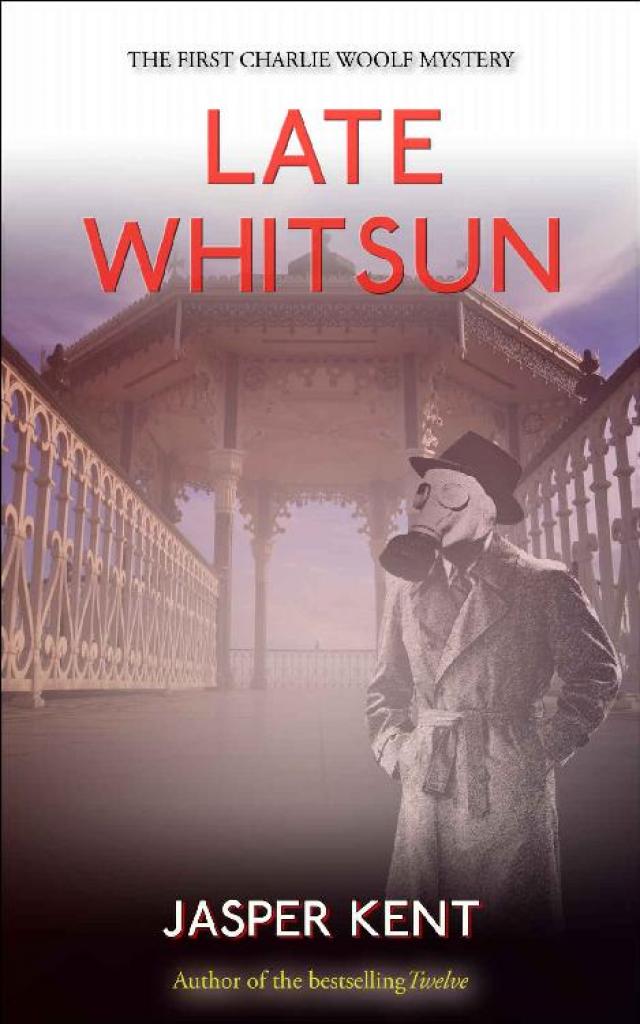
I shook my head. ‘Not a thing.’ I regretted the lie straight away. They’d go and talk to her, and she’d mention that she knew me, and what would I have gained? But it was too late now. Soon Purvis returned to the room. He leaned against the doorframe, staring at the body that still lay in the centre of the carpet, with the gas mask just beside it, like a second head growing out of its shoulder.
‘Why the mask?’ he asked at length. ‘Why wear a gas mask to hang yourself?’
‘Guilty conscience,’ said Marchant, as if that explained it all. ‘He remembers it on O’Connor’s face, as he shot him.’
‘And he just happened to have one of his own?’ I asked.
‘They’re not hard to come by. But it’s one more thing to link him to O’Connor’s death. Who would know that O’Connor was wearing a gas mask, apart from the killer? It was held back from the newspapers. I knew. A few others down the nick. You, of course.’
‘And —’ My attempt to suggest one final name was interrupted.
‘And me, Inspector. Don’t forget me.’ Tremaine stood in the doorway with smile of greeting on his face. But as he stepped forward, his eyes fell on Ingram’s corpse and the smile collapsed. He instinctively took off his hat. ‘Good God, the poor fellow.’
Marchant was up on his feet in an instant. ‘How did you get here?’
‘I was at the station, trying to find you, when the news came in. I drove straight here. Your lads can’t be far behind me. Who is he?’
‘Don’t you recognize him?’ I asked.
Tremaine took a few more steps across the room until he was standing directly above the body. ‘He looks a bit like …’ He stopped himself, maintaining the pretence that the name was secret. ‘… like our German friend. But that can’t be.’ Then he snapped his fingers and pointed at me. ‘This must be the chap you told me about; the one O’Connor got to pose for the photographs instead.’
‘It’s him,’ I confirmed. ‘His name’s Ingram. Vince Ingram.’
‘Looks like him and O’Connor fell out over something,’ said Marchant, ‘and that’s why he killed him.’
‘That would explain why he has a gas mask,’ added Tremaine.
‘How does it explain the mask?’ I asked.
Tremaine looked at me. ‘I mean, if the two were working together – burgling your office together – then it’s hardly likely that one would wear a mask and the other wouldn’t.’
Marchant picked up the story. ‘And, once there, they fell out over something and Ingram killed O’Connor.’
The image of it filled my head: two men, faceless in their masks, gazing blankly at each other, one backing away in fear, or already sprawled on the floor, the other holding a gun, firing … the glass of the eyepiece shattering, and blood coursing out.
‘More likely he planned it in advance.’ Tremaine’s voice interrupted my thoughts. ‘Why would he suddenly decide to do it there in Woolf’s rooms?’
‘Something they found together in the files?’ said Marchant. Tremaine raised an eyebrow. The inspector nodded towards the bedroom. ‘We found the file that was missing. And one from O’Connor’s office too. Both incriminate Ingram.’
‘Not in anything that would be a reason for murder,’ I said. I chose not to point out the fact that only one of the files even mentioned Ingram.
‘A man being blackmailed over his gambling debts?’ asked Marchant. ‘You’d be surprised what people are capable of.’
Tremaine shook his head. ‘I have to agree with our friend here. It doesn’t sound like much of a motive.’ I didn’t warm to being referred to as ‘our friend’.
Tremaine walked back over to the body, gazing down at it for a moment, without emotion. He poked the gas mask with the toe of his shoe. A look of surprised understanding came over his face. ‘I say, he wasn’t actually wearing this, was he?’
‘He was,’ Marchant confirmed.
Tremaine bent forwards and picked it up. He stared into its face, then turned it over to look inside. ‘Must have been out of guilt, I suppose.’ He made to hand it to the inspector, but I was closer and took it from him. He grasped it tightly for a moment, as if reluctant to let me take charge of it, but then yielded. I peered inside it, as he had done, holding it close to my face.
‘You working with the police now, then?’ Tremaine’s question was light-hearted, but it had more effect on Marchant than on me. He plucked the gas mask from my fingers, just as I was noticing something odd about it: a smell – something chemical, but not the rubber of the mask itself. It was familiar, a bit like the turps I used to thin paint. But I only caught a hint of it.
‘It was information from Mr Woolf that brought us here,’ explained the inspector.
Tremaine looked at me, his head cocked to one side. ‘And when you got here, you found this? Quite a coincidence – particularly on top of the fact that O’Connor was killed in your rooms. If I hadn’t seen you with my own eyes in London last week, you might be my number-one suspect.’
‘So you don’t think that this was suicide?’ I asked. ‘Or that Ingram killed O’Connor?’
‘I think that’s for the police to decide, not us.’ He turned to Marchant. ‘Though I’d love to hear your conclusions in the fullness of time.’ It sounded as though he was about to leave, but he didn’t. Instead he wandered across to the bedroom, looking all around him as he went, as though searching for clues. Marchant followed, explaining what we had found so far. Whether he was trying to demonstrate his grasp of proceedings, or appear subservient to the man from London, was unclear. I returned to searching through the box of papers.
I didn’t get long to do it. Only moments later I heard the ringing bells and screeching tyres of reinforcements arriving in the street below. But to me they sounded far distant. The whole of my attention was taken by the sheet of paper in my hands, one that I’d found almost at the bottom of the pile. It explained everything.
Booted feet began to thud up the stairs. Tremaine emerged from the bedroom, with Marchant close behind. I just managed to slip the piece of paper into my pocket. Tremaine must have noticed, though the inspector didn’t.
‘Find something?’ Tremaine asked.
‘No, why?’
I watched him as he decided upon an answer, trying to guess the chain of thought that he must be pursuing. If he told the inspector that he had seen me, then that might demonstrate I was quite wrong in my conclusions. But he didn’t tell.
‘Just saw you eagerly hunched over those papers.’
‘I asked him to help.’ Marchant sounded embarrassed. He shouldn’t have allowed a civilian like me anywhere near the scene of a crime. ‘But I think we can handle things from here.’
I was dismissed, though I had no desire to hang around anyway. ‘Let me know if you find anything.’ I stood upright and made for the door, though I had to wait while four uniformed constables spilled into the room.
‘I think I’ll make tracks too,’ said Tremaine. ‘This place is becoming altogether crowded. Can I offer you a lift?’
It was the last thing I wanted. ‘Has the inspector told you about Ingram’s previous?’ I asked.
‘Is there much to tell?’ Tremaine’s question was addressed to me, but I looked over his shoulder to Marchant. Tremaine turned as Marchant began to explain.
It was distraction enough. I was out through the door and down the stairs in moments. Tremaine meanwhile was stuck. He wouldn’t want to appear too keen to catch up with me, not in front of the inspector.
Even so I took a circuitous route home, making certain no one followed me. It was a superfluous precaution. A week before, I’d evaded a young detective in the dark streets of Brighton, only to discover he knew where I lived anyway. The same was true of Tremaine. But if I could act quickly enough, it wouldn’t matter.
The place was quiet when I got back home. The kitchen door was closed and there was no sound from behind it, neither of Mrs Croft’s cooking nor of her singing. I got up to my room to find a note from her: she and Jack had gone to Worthing for the evening and she’d left a cold plate for me in the kitchen. I had no appetite, and didn’t have time for food even if I’d been hungry. I sat at my desk and drew the fragment of paper from my pocket.
It looked like typing paper. The drawing was in pencil, though I’m not sure if ‘drawing’ was exactly the right word. It was simply a design. It was flat, with no concept of perspective, intended to convey reality without emulating it. But it was very familiar, not just in what it represented but the design itself. It was an anchor. I’d seen just the same image not a week before, when it had been inscribed not on paper but on human skin.
*
I left my rooms again about an hour later and took a tram into town, getting off just before we reached the Old Steine. I walked up North Road until I reached the Post Office building. There was a postbox set into the wall. It was the last one they collected from each day, taking the letters to be sorted just inside. I looked at the envelope for a moment, then slipped it through the black, gaping mouth. It hadn’t taken me too long, putting together every bit of information I knew. I’d written it all down quickly, almost unable to stop, seeing with utter clarity how it fitted together in a way that I hadn’t been able to fathom before. I should have realized what my excitement actually meant, but I was too wrapped up in the case. There wasn’t much concrete evidence: the drawing of the anchor; my own sketches. O’Connor’s notebook would have been handy, but Dudley still had that. None of it mattered, though. In fact it was an advantage. It was all spread around quite thinly in the hands and minds of Dudley, Mullender, Remick, Sylvia Clay and a few others. One of those others was Rachael; if not, things might have been different between us. And no one could silence them all, or even track them all down, not without a lot of manpower behind them. That was if they didn’t just treat the whole thing as a joke. Even I wasn’t sure. No, that was a lie. I was sure I was right; I just wasn’t certain I had the evidence to convince anyone else. That’s why I wasn’t presenting it face to face.
I carried on up the hill and into familiar territory. A little beyond the sorting office was the Three Jolly Butchers, where I’d looked for Remick just the night before. Tonight there was no one I recognized inside, but I felt safer here than I would at home.
CHAPTER 20
I knew as soon as I awoke that a migraine was coming. I’d downed a few at the Butchers before I’d headed home, but that wasn’t the problem. There was no headache yet, no aura, but I felt the stiffness in my muscles that was always a sign. And, worse than that, I felt on top of the world. If migraine was God’s invention, it proved He had a sense of humour. For some sufferers an attack was preceded by a mood of depression. That was reasonable, given what was to come, but it tended to make them fear the onslaught more than was necessary. For me it was just the reverse. I should have guessed it from my feeling of excitement the previous evening as I put my ideas down on paper. Leading up to an attack I would be so optimistic, so bright about the prospects for the day before me, that I wouldn’t take proper precautions. I’d embark upon activities that, if thinking rationally, I would have known I’d be unable to complete once the headache inevitably struck. I’d feel invincible, and that could never be a good thing.
In the drawer of my bedside table sat a packet of ergotamine. The euphoric side of me told me I didn’t need them, but I’d been here often enough to mistrust that voice. I grabbed two of them before heading along the landing to the bathroom. I swallowed them, then brushed my teeth and shaved. I didn’t notice any immediate change to my mood, or to my aches, but that wasn’t the point. The attack would still come; it just wouldn’t be quite so disabling.