Late whitsun charlie woo.., p.4
Late Whitsun (Charlie Woolf Book 1),
p.4


‘If it comes to that, I’ll tell you,’ I said.
‘You’d do better to just tell me now.’
‘Cobblers,’ I muttered.
‘What about this bloke in the gas mask, then. You really think he could make it back to Brighton quicker than you? And get himself killed?’
‘I can’t see how. I saw him in London after you say he was already dead – unless one of us has got the timings wrong. And, anyway, the mask is the only similarity. The coats they were wearing are different – and the gloves.’
‘Odd thing that, for a bloke to notice another bloke’s clothes.’
‘I have a trained eye.’
‘I’ve not heard it called that before.’ Purvis gave a chuckle to please his boss. ‘What about the build?’ Marchant continued.
I shrugged. ‘I’d say the corpse was fatter, but it’s hard to compare. One standing up, alive; the other … a body expands when the muscles stop holding it in shape.’
‘You’ve seen a lot of bodies, then?’
‘One or two.’
‘And you’ve no idea who the man in London was?’
‘Not a clue.’
‘And the man who died in your flat?’
‘How could I? I couldn’t see either of their faces.’
‘You have an eye for “couture”. An eye for a man’s body.’
‘I don’t know him,’ I insisted. Even then I wondered if I might be mistaken.
He paused and took a deep breath, blowing it out through his teeth. ‘Let’s take another look, shall we?’
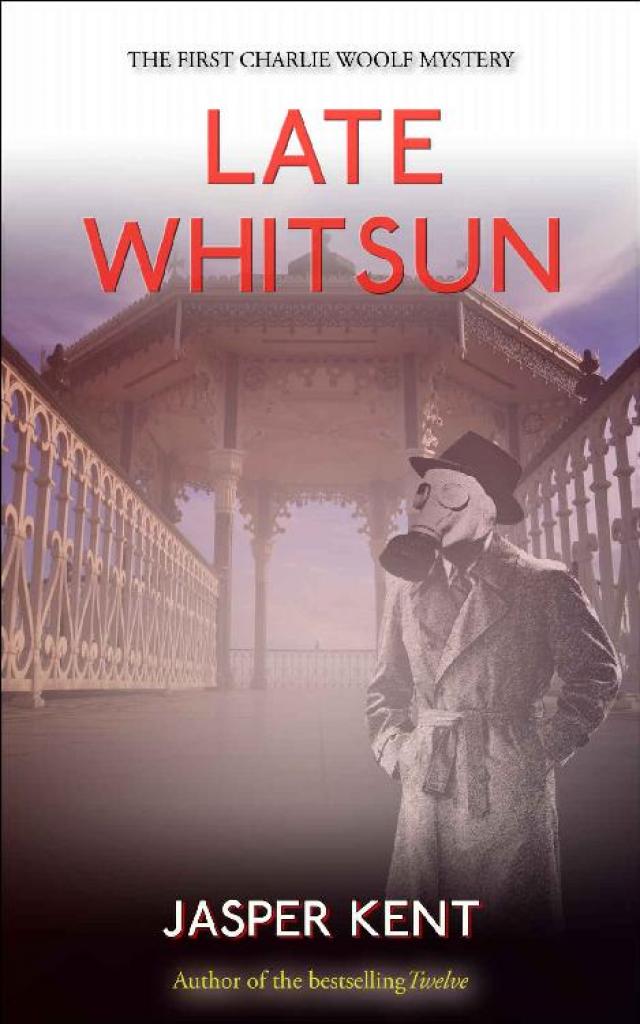
Purvis stood up and banged on the door, which was opened from the other side. Marchant beckoned me with a single finger and I followed him out. Purvis took up the rear. The corridor turned twice before descending a half flight of steps. It felt suddenly cold. The inspector turned sharply left. In the room beyond lay the cadaver, stretched out on a marble slab. It was still fully dressed, still wearing the gas mask. A man in a white coat stood nearby, surprised at our entrance.
‘Why have you left the mask on?’ I asked. I felt an intense anger at this indignity, which must have come across as an air of authority. The doctor glanced from Marchant to me and then back again.
‘But … you told me to put it back,’ he said.
Marchant shook his head and exhaled, but said nothing.
‘Have you confirmed the time of death?’ Purvis asked.
‘Any time between eight-thirty and when you found him,’ the doctor replied.
I took a step forward to get a closer look at the corpse.
‘Sure you don’t recognize him?’ said Purvis.
‘Just take the fucking mask off,’ I growled. I was bored with the play-acting.
Purvis looked to Marchant for confirmation and did as I had asked. He reached his hands under the body’s head to loosen the straps. The blood was drying now, but even so some of it came away on his hands as a sticky burgundy paste. He peeled the gas mask off and looked around for somewhere to put it. The doctor took it from him. Purvis cradled the corpse’s chin in his hand and turned the face in my direction.
I shouldn’t have been surprised. Despite the mess that remained of his left eye, the chubby face was still recognizable. The clothes were not the ones he’d been wearing earlier in the day, but they were still undoubtedly his style. His portly physique had been disguised as death had moulded it into the corner of my living room, but it was still the same body that had squeezed itself into a chair in the bar of the Royal Albion only that afternoon. Here was the man who was my best chance of an alibi – an alibi in his own murder.
It was Alan O’Connor.
*
They took me back to the cells. I lay on the bunk and gazed up at the ceiling, tracing the cracks in the plasterwork with my eyes, thinking over what had happened. I couldn’t make much sense of it all. Eventually I fell asleep. I don’t recall dreaming but, when I awoke, I seemed to have formulated some kind of arrangement of the pieces that made sense. A constable delivered a simple breakfast and I kicked my heels for a couple of hours before they took me up for more questioning. This time it was just Marchant.
‘Care to change your story?’ he asked.
‘Nope.’
‘All right, then. Why don’t you tell me what you think happened? You call yourself a detective – of sorts.’
I considered. It wouldn’t hurt to tell him – I doubted he was part of it. ‘I’ve been set up,’ I told him.
‘Really?’
‘Sent to London on a fool’s errand to get me out of the way.’
‘A fool’s errand? For fifty pounds? That’s presuming the money really exists.’
‘Obviously, whatever he was looking for was worth it.’
‘Looking for?’ Marchant was genuinely puzzled.
‘In my rooms. My files had been searched.’
‘O’Connor you mean?’ Marchant laughed loudly and genuinely. ‘So he framed you for his own murder?’
‘I don’t suppose getting murdered was part of his plan,’ I said weakly.
There was a pause. He sat down, his whole attitude suddenly more conciliatory, but I could tell it was just an act. ‘Look at it from my point of view, Charlie. I find a dead man in your living room. I don’t know what he was doing there. Maybe he was raking through your files. Maybe you caught him at it. Maybe that’s why you did it. The whole town remembers how badly you two fell out, that time.’
‘I was in London.’
‘And that’s just the thing. There’s not much in your story that can be verified – and even the bits that can don’t hold water.’
‘What?’ Evidently he had something new. The whole conversation had been leading up to this.
‘You said you got home yesterday around five, yeah?’
‘That’s right.’
‘And soon after that you telephoned O’Connor.’
‘Yes.’ I exaggerated the tone of boredom in my voice.
‘And his wife answered.’
‘Like I told you.’
He stood up again and paced around the room. ‘Now why, I ask myself, would you lie about a thing like that?’
‘What?’
‘We’ve spoken to her – had to break the bad news. But we questioned her too. You didn’t ring. No one did. O’Connor wasn’t even home.’
‘Then she’s lying,’ I said, before I’d even considered the implication of his words.
‘And why would she do that?’
‘Her husband’s dead, for one thing.’
‘Cherchez la femme, you mean?’
‘She lied, didn’t she?’
‘One of you did.’
There was a knock at the door. Marchant went to it and spoke briefly, then left the room. It might have been deliberate – an opportunity for me to sweat. I found it hard to believe that O’Connor’s wife had anything to do with what had happened, but she must have had a reason to lie – if Marchant wasn’t just making that up to unnerve me. It looked more and more like the envelope with the money – the postmark on it – was my best hope. But even that wasn’t conclusive: I could have got someone to post it for me. Maybe if I dug deep enough, I’d be able to unearth the name of the man in the gas mask. But even if I found him, what use would it be? Who was going to admit to handing over a wad of cash in exchange for an envelope full of smut in a London park?
It was about twenty minutes later when Marchant came back in. His hands were clasped behind his back, his eyes fixed on the floor in thought. I watched him as he slowly walked across the room and came to a halt on the opposite side of the wooden table.
‘You say you never looked at what was in the envelope?’
I nodded.
He brought his hands from behind his back. He was now wearing gloves and in his right hand he held a large manila envelope. I had no doubt as to what was in it. He tipped the contents on to the table. The images were entirely familiar. Still obscene. Still fascinating. The one thing of note was that only about half of the original set were there.
‘So, if I had these examined, I wouldn’t find your dabs on them?’
There was no point trying to pretend anymore. I leaned back in my chair with a sigh. ‘All right, I did look.’
‘Like what you saw?’
‘Do you?’
He picked one up and examined it. It wasn’t a good shot to identify either of the participants, but he let his eyes linger. ‘You think this is the man you met?’ he asked.
‘It could be, I don’t know.’ I didn’t mention the tattoo and its absence in the photographs. If I could just get the police looking further into things, they might eventually find something to clear me. ‘Where the hell did you get those, anyway?’ I’d let more emotion than intended creep into my voice. It showed I was nervous, and Marchant would read that as guilt.
He didn’t answer my question. Instead he tidied up the pictures and returned them to the envelope, then went to the door and opened it. Another man entered the room, and I felt a distant stab of recognition. He was around ten years older than me, perhaps not quite in his forties. Nothing about him suggested he was a policeman. His suit was perfectly tailored – Savile Row, I guessed. His dark hair had a slight wave in it. As he approached, I caught a hint of cologne. He put down his hat and the suitcase he was carrying and offered me his hand.
‘Tremaine,’ he announced with a disarming smile. ‘Ralph Tremaine.’ His accent was pure Oxford.
‘Charlie Woolf,’ I replied, shaking his hand.
‘Sorry to leave you stewing here, but I’ve only just made it down from London.’
I tried to make sense of what he was saying. He’d spoken as if I should have been expecting him, and he seemed to be on my side, though that could be a trick. There was only one explanation I could come up with but, even then, it didn’t make much sense. ‘So what are you?’ I asked. ‘A solicitor?’
He laughed in a way that was unconvincing without being rude. ‘Let’s just say I’m a different kind of policeman.’ It sounded patronizing, but I suspected the tone was directed more towards Marchant than me. I noticed that the inspector had suddenly made himself appear insignificant. Tremaine continued, ‘Now why don’t you take me through what happened to you yesterday?’
I told my story again and this time I didn’t hold much back. I admitted to looking at the photographs, and explained how I’d swapped the envelopes to cover up my prying. I still didn’t tell them where I’d sent the money, nor did I mention the tattoo – God knows why not. It seemed much easier recounting it all to him than it had been to Marchant, but that demonstrated the skill of a good interrogator.
‘So you didn’t recognize the man you met?’
‘He was wearing a gas mask.’ I wondered how many times I’d explained it already.
‘What about his voice?’
It was a smarter question than anything I’d been asked so far, but it still wouldn’t be much help. ‘It was muffled by the mask. I could barely make out what he was saying.’
Tremaine nodded thoughtfully. ‘I suppose so.’ His mood suddenly lightened. ‘Do you recognize me, by the by?’
I smiled. ‘Actually, I do. But I can’t place you.’
‘We met briefly,’ he explained. ‘It was back in ’33. You’d been working on a case with O’Connor, God rest his soul. You had to give evidence at the Old Bailey – as did I. We exchanged a few words in the waiting room.’
As soon as he mentioned it, I could picture every detail. Tremaine had looked younger, of course, and had been wearing a uniform. Royal Navy, a lieutenant-commander. It had been more O’Connor’s case than mine – and a real investigation for once. ‘Leopold Gilbert,’ I said, remembering the name. ‘He was sent down for —’
‘I don’t think we need worry about that now,’ interrupted Tremaine, tapping the side of his nose and giving Marchant a furtive glance. ‘Small world, though.’
‘Not really enough of an acquaintanceship that you could act as a character witness for me,’ I said.
‘No.’ He spoke with a firmness that suggested he might never be prepared to attest to my good character, even if he’d known me all my life. ‘But I may be able to do rather better.’
He grinned and turned away, then laid his suitcase on the floor. I heard the clasps flick open. He rummaged inside but, with his back to me, I couldn’t see what he was doing. I glanced over at Marchant, who had a better view. His face carried a look of sturdy confusion – the expression of a man accustomed to not understanding what he was seeing and able to cope with the fact.
Tremaine turned and stood up in a single rapid motion. He leaned forwards with his hands on the table, so that our faces were just inches apart.
‘Recognize me now?’ His voice was loud, but muffled in a way that was now familiar. The whole thing was becoming ridiculous. The dangling snout and porthole eyes became less shocking on each encounter. Once again I found myself face to face with the cold, blank countenance of a gas mask.
CHAPTER 5
‘Sorry to be so theatrical,’ Tremaine chuckled, as he removed the mask. He stared down at it, as though he were Hamlet contemplating Yorick.
‘So it was you!’ I couldn’t disguise my surprise.
‘Guilty as charged.’
‘What was you?’ asked Marchant, stepping back towards the table.
Tremaine turned and held the respirator up to his face again. ‘The man in the mask.’ His voice was less muffled now that the rubber was not sealed tight against his skin.
‘You met him in London?’ said Marchant. ‘In Eccleston Square?’
‘I’d presumed you cottoned on to that when I gave you the photographs,’ Tremaine replied.
I sat back in my chair. It took a moment for the sense of relief to wash over me. I had my alibi, and from a source I’d least expected. Whatever subterfuge Tremaine had gone through in acquiring those photographs, he now had no shame in announcing his possession of them. It left many questions unanswered, but none seemed of any immediate significance. The only thought running through my mind was that I was free.
‘So who is it in the photographs?’ asked Marchant, evidently less distracted than I had been by this new development. The two men sat down.
‘As I explained to you when I arrived,’ – Tremaine directed his words towards the inspector – ‘I work in a government department that has a special interest in the activities of certain foreign nationals resident in this country. The gentleman in the photographs is one such, and I doubt very much whether he’d like his paymasters back home to find out what he’s been up to over here – or, indeed, his wife.’
‘So it is blackmail,’ I said.
Tremaine twisted his mouth as if chewing something sour. ‘Blackmail of the noblest kind: not for money but for the safety of England.’
‘And you’ve shown him the pictures? He’s agreed to help you?’
‘Not yet, but we’re pretty sure he will.’
‘We?’ I asked.
‘My department.’
‘I don’t think that’s any concern of ours, Woolf,’ interjected Marchant. He oozed deference.
‘No, but I’ve put you both to considerable inconvenience. I’m happy to tell you what I can.’
‘Who’s the girl?’ I asked.
‘I’ve no idea. Some tart O’Connor got hold of.’
‘So O’Connor did take the pictures?’ I said. ‘Down here in Brighton?’
‘I presume so.’
I already knew so. I’d recognized the room as being in the Metropole. I looked towards Marchant. He must have known that as well as I did – he’d been a Brighton copper for twenty years. Like me, he kept the knowledge to himself.
‘Do you recognize her?’ I asked the inspector.
He shook his head. ‘She may not have been here long. Some of them come down just for the summer, when the trade’s good. She’ll be hoping for a rainy Whitsun.’
‘You could find out,’ I suggested. ‘Show the pictures around the station.’
‘There’d be a riot.’ He seemed genuinely concerned.
‘I’d rather you didn’t,’ said Tremaine. We both looked at him. ‘The poor girl’s done great service to her country. I’m sure she’d rather be left in peace.’
‘She knew what she was doing, then?’ I asked.
Tremaine cracked a smile that turned into a leer. ‘I think the photographs make that quite evident. Don’t you?’
‘I mean,’ I said patiently, ‘she knew why.’
‘I doubt she bothered to ask, once she saw the money. Even if she had, O’Connor didn’t know very much.’
‘But why didn’t O’Connor just give you the pictures himself?’ asked Marchant. ‘Why send Woolf?’
‘I should have thought that was fucking obvious.’ Tremaine pronounced the word to rhyme with ‘barking’. It sounded almost pleasant on his lips.
‘Not to me,’ said Marchant.
‘And to you, Mr Woolf?’
‘Yeah, it’s plain enough,’ I said.
Tremaine smiled at me, acknowledging that I’d joined in his game of trying to irritate the policeman. ‘Inspector,’ he said, ‘what was the first thing O’Connor did after he’d seen our friend here off on the train to Victoria?’
‘How should I know?’
‘What’s the first thing you do know he did?’
‘He went to Woolf’s flat.’
‘And, once there, what did he proceed to do?’
‘He proceeded to get himself shot.’ Marchant allowed his anger at being patronized to show through.
‘He didn’t go there to get shot, though, did he?’
‘You still think he sent you up to London deliberately? Got you out the way so he could search your office?’
‘Seems likely,’ I said.
‘And while he was there,’ said Tremaine, ‘somebody killed him.’
‘I don’t suppose you have any idea who?’ asked Marchant.
‘Who’d have a reason to? Who had something against him?’
Marchant looked blank. I felt equally bewildered, but tried not to show it. Tremaine picked up the brown envelope and poured its contents on to the table, forming a jumble of eyes, ears, skin and hair. Again my thoughts turned to the fractured structure of a cubist painting. Tremaine’s gloved finger pointed to the top picture: at the man’s face squashed against the back of the girl’s neck.