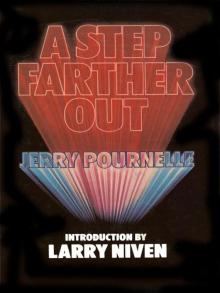
There will be war volume.., p.23
There Will Be War Volume VIII,
p.23


The paper raised storms that have not subsided yet. The real controversy isn’t over the accuracy of the TTAPS predictions. It’s almost universally conceded that things won’t be that way. There was a major flaw—unreported at the time—in the TTAPS report; the calculations were tied to a one-dimensional simulation of the Earth’s atmosphere. This is about on the level of running a computer game simulation of World War I on an IBM PC; it’s fun but the results are not going to be particularly representative of the war itself.
What TTAPS did was raise real questions of science policy. How political may scientists be, and how far may they compromise their results in cases where they feel very strongly? After all, the question is a serious one: If even a small nuclear war can exterminate all life on Earth, the people who control nuclear weapons ought to know that. On the other hand, when scientists start presenting opinion as fact, especially when these “facts” fall very much in line with the policies these scientists have previously recommended, have they not ceased to be scientists at all?
According to the TTAPS report even a 100-megaton exchange—a so-called limited nuclear war—could trigger the same effects, i.e. nuclear winter, as a 5,000-megaton exchange. The Soviets quickly followed up Sagan’s report with their own verification with Soviet models in the book The Cold and the Dark. Tony Rothman states in “A Memoir of Nuclear Winter”: “After my year in Russia I was also interested to see that not only was the Soviet model based on a 1971 American computer code, but that every reference in the paper, with the exception of one to their own work, was to an American source.”
This is not to deny that even a small nuclear war would have disastrous effects upon climate and agriculture; the volcanic eruption of Tambura in 1815 dropped the average world temperature less than one degree; yet 1816 is remembered as “The Year Without a Summer,” and its gloom was the inspiration of Mary Shelley’s novel Frankenstein.
On the other hand, the weather was naturally much colder in those times; during the American Revolution, Colonel Alexander Hamilton brought cannon from Ticonderoga to General Washington in Manhattan by hauling the guns across the frozen Hudson river. Today the Hudson doesn’t freeze solid enough to support skaters. (Incidentally, neither do the canals of Holland, although they did in the days when “Hans Brinker, or The Silver Skates” was written.)
Science is an important source of information; but it can be that only when scientists obey the rules.
Nuclear Autumn
Ben Bova
“They’re bluffing,” said the President of the United States.
“Of course they’re bluffing,” agreed her science advisor. “They have to be.”
The Chairman of the Joint Chiefs of Staff, a grizzled old infantry general, looked grimly skeptical.
For a long, silent moment they faced each other in the cool, quiet confines of the Oval Office. The science advisor looked young and handsome enough to be a television personality, and indeed had been one for a while before he allied himself with the politician who sat behind the desk. The President looked younger than she actually was, thanks to modern cosmetics and a ruthless self discipline. Only the general seemed to be old, a man of an earlier generation, gray-haired and wrinkled, with light brown eyes that seemed sad and weary.
“I don’t believe they’re bluffing,” he said. “I think they mean exactly what they say—either we cave in to them or they launch their missiles.”
The science advisor gave him his most patronizing smile. “General, they have to be bluffing. The numbers prove it.”
“The only numbers that count,” said the general, “are that we have cut our strategic ballistic missile force by half since this Administration came into office.”
“And made the world that much safer,” said the President. Her voice was firm, with a sharp edge to it.
The general shook his head. “Ma’am, the only reason I have not tendered my resignation is that I know full well the nincompoop you intend to appoint in my place.”
The science advisor laughed. Even the President smiled at the old man.
“The Soviets are not bluffing,” the general repeated. “They mean exactly what they say.”
With a patient sigh, the science advisor explained, “General, they cannot—repeat, can not—launch a nuclear strike at us or anyone else. They know the numbers as well as we do. A large nuclear strike, in the 3000-megaton range, will so damage the environment that the world will be plunged into a Nuclear Winter. Crops and animal life will be wiped out by months of subfreezing temperatures. The sky will be dark with soot and grains of pulverized soil. The sun will be blotted out. All life on Earth will die.”
The general waved an impatient hand. “I know your story. I’ve seen your presentations.”
“Then how can the Russians attack us, when they know they’ll be killing themselves even if we don’t retaliate?”
“Maybe they haven’t seen your television specials. Maybe they don’t believe in Nuclear Winter.”
“But they have to!” said the science advisor. “The numbers are the same for them as they are for us.”
“Numbers,” grumbled the general.
“Those numbers describe reality,” the science advisor insisted. “And the men in the Kremlin are realists. They understand what Nuclear Winter means. Their own scientists have told them exactly what I’ve told you.”
“Then why did they insist on this Hot Line call?”
Spreading his hands in the gesture millions had come to know from his television series, the science advisor replied, “They’re reasonable men. Now that they know nuclear weapons are unusable, they are undoubtedly trying to begin negotiations to resolve our differences without threatening nuclear war.”
“You think so?” muttered the general.
The President leaned back in her swivel chair. “We’ll find out what they want soon enough,” she said. “Kolgoroff will be on the Hot Line in another minute or so.”
The science advisor smiled at her. “I imagine he’ll suggest a summit meeting to negotiate a new disarmament treaty.”
The general said nothing.
The President touched a green square on the keypad built into the desk’s surface. A door opened and three more people—a man and two women—entered the Oval Office: the Secretary of State, the Secretary of Defense, and the National Security Advisor.
Exactly when the digital clock on the President’s desk read 12:00:00, the large display screen that took up much of the wall opposite her desk lit up to reveal the face of Yuri Kolgoroff, General Secretary of the Communist Party and President of the Soviet Union. He was much younger than his predecessors had been, barely in his mid-fifties, and rather handsome in a Slavic way. If his hair had been a few shades darker and his chin just a little rounder he would have looked strikingly like the President’s science advisor.
“Madam President,” said Kolgoroff, in flawless American-accented English, “it is good of you to accept my invitation to discuss the differences between our two nations.”
“I am always eager to resolve differences,” said the President.
“I believe we can accomplish much.” Kolgoroff smiled, revealing large white teeth.
“I have before me,” said the President, glancing at the computer screen on her desk, “the agenda that our ministers worked out…”
“There is no need for that,” said the Soviet leader. “Why encumber ourselves with such formalities?”
The President smiled. “Very well. What do you have in mind?”
“It is very simple. We want the United States to withdraw all its troops from Europe and to dismantle NATO. Also, your military and naval bases in Japan, Taiwan and the Philippines must be disbanded. Finally, your injunctions against the Soviet Union concerning trade in high-technology items must be ended.”
The President’s face went white. It took her a moment to gather the wits to say, “And what do you propose to offer in exchange for these… concessions?”
“In exchange?” Kolgoroff laughed. “Why, we will allow you to live. We will refrain from bombing your cities.”
“You’re insane!” snapped the President.
Still grinning, Kolgoroff replied, “We will see who is sane and who is mad. One minute before this conversation began, I ordered a limited nuclear attack against every NATO base in Europe, and a counterforce attack against the ballistic missiles still remaining in your silos in the American midwest.”
The red panic light on the President’s communications console began flashing frantically.
“But that’s impossible!” burst the science advisor. He leaped from his chair and pointed at Kolgoroff’s image in the big display screen. “An attack of that size will bring on Nuclear Winter! You’ll be killing yourselves as well as us!”
Kolgoroff smiled pityingly at the scientist. “We have computers also, professor. We know how to count. The attack we have launched is just below the threshold for Nuclear Winter. It will not blot out the sun everywhere on Earth. Believe me, we are not such fools as you think.”
“But…”
“But,” the Soviet leader went on, smile vanished and voice iron hard, “should you be foolish enough to launch a counterstrike with your remaining missiles or bombers, that will break the camel’s back, so to speak. The additional explosions of your counterstrike will bring on Nuclear Winter.”
“You can’t be serious!”
“I am deadly serious,” Kolgoroff replied. Then a faint hint of his smile returned. “But do not be afraid. We have not targeted Washington. Or any of your cities, for that matter. You will live—under Soviet governance.”
The President turned to the science advisor. “What should I do?”
The science advisor shook his head.
“What should I do?” she asked the others seated around her.
They said nothing. Not a word.
She turned to the general. “What should I do?”
He got to his feet and headed for the door. Over his shoulder he answered, “Learn Russian.”
As It Was in the Beginning, by Edward P. Hughes
Editor’s Introduction
Over the course of this series we have published a number of stories about the Irish village of Barley Cross and its hardy inhabitants. The end of the world need not come with a big bang. The light of civilization may yet flicker out as we unwittingly tamper with our own genetic heritage in an effort to design new and more deadly bio-weapons.
In the world of Barley Cross babies are no longer born. No one knows if this was brought about by the hand of man or some terrible natural catastrophe; only that the age of man is coming to an end. In this story, Edward Hughes takes us back to the earliest days of the O’Meara’s reign over Barley Cross, back to before there was a Master of the Fist.
As It Was in the Beginning
Edward P. Hughes
The last of the Barley Cross giants was toppling. Celia Larkin lay in her cot in the Denny Mallon Memorial Hospital, and waited for a ninety-year-old pump to fail. The others were all gone now. Denny Mallon, years ago, of the lung cancer he had courted so assiduously. Kevin Murphy, of pneumonia, contracted after a kick from a cow had broken his leg. Poor Andy McGrath, from a succession of strokes. Larry Desmond, God help him, of the drink. And Patrick O’Meara… Celia Larkin’s eyes clouded with unshed moisture… the first Lord of Barley Cross, her dear Master of the Fist…
Up on Barra Hill, Liam McGrath, the second Master of the Fist—since one couldn’t count sad, mad Dominic, nor the fatuous Damien—still ruled. Still respected—though no longer required—Liam played endless games of checkers with General Fahey, or told stories of the old days to anyone who would listen.
But the most important story Liam McGrath couldn’t tell. Celia recalled, as if it were yesterday…
…the rumbling, clanking, screeching, clattering from behind which drove the young schoolmistress into a dry gully by the roadside. The noise sounded like a combination of road roller, combine harvester, and a hundred squeaking gates. Celia Larkin crouched low. Any kind of transport could be a threat these days.
She waited minutes before a long gun barrel lagged with thermal insulation poked its snout round the nearest bend. Celia Larkin had never seen a tank before, much less a British Army Main Battle Tank. In her astonishment, she forgot to keep her head down.
The monster halted opposite her hiding place. The roar of its engine died to a low rumble. The driver poked his head through a hatch in the sloping glacis. He called to her. “Is this the road for Castlebar?”
Useless to crouch lower. Celia Larkin stood, brushed dust and grass from her suit, and said, “If you keep straight on you can’t miss it.”
The man smiled. He wore an oily beret bearing a badge which resembled a ball sprouting feathers, and a jacket covered with green and yellow splotches. “I’m making for Kilcollum in Connemara,” he told her.
She stared at his enormous vehicle. Such a monster to carry one man to Connemara! “I’ve not heard of the place,” she confessed.
“Sure, ’tis only a small village,” he admitted. “Not many people have.” He paused, as though seeking inspiration for further pleasantries. “Can I give you a lift to anywhere? The roads are not safe for a young lady on her own.”
She weighed him up. He had an honest, open face. His smile was disarming. And—most persuasive—his remark about the roads was true. The last car she had hidden from had been packed with shotgun-wielding hooligans.
“How do I get in?” she asked.
He pointed. “If you put a foot on that towing eye, and grab that lamp bracket… there are cleats up the side of the turret. You get in at the top. Hold on, I’ll give you a hand.”
She swung her suitcase up onto the glacis beside his head. “That won’t be necessary. Take my case!”
She hoisted her skirt, found the foot and handholds indicated, and climbed onto the tank. One of the hatches in the turret was open. She got in among the machinery.
“I’m in!” she called.
“Where to, miss?” he called back.
“I was hoping to get to Clifden—but that will be a good step past your village, I’m afraid.”
“I don’t mind running a young lady home.”
The engine noise became a roar. She heard his shout. “Don’t touch anything in there, miss. You don’t want to blow us up!”
Tracks squealing, the tank lurched into motion. Celia Larkin found the noise stunning, and the vibration worse than she had expected. The combination of noise and vibration rendered further conversation with the driver impossible. She found a seat, and sat down, wondering what she had let herself in for.
Surely, after her days on the road, anyone would have accepted his offer of a lift. Sligo had been insufferable, the behaviour of its citizens growing daily worse. She wanted nothing more to do with it. In lonely Clifden, at the ocean’s edge, she might find people more civilised, less influenced by the current madness.
When the tank stopped, she nerved herself for further conversation. A hatch opened in the floor of her refuge. The soldier’s head appeared through it.
“Time for a break,” he told her. “Sit still—I’ll put the kettle on.”
She watched in amazement as he filled a kettle and plugged it in.
“I didn’t know you could brew tea in a tank!”
He grinned. “Sure, there’s a deal you don’t know about tanks, I would imagine.”
He opened a locker, and brought out two plastic plates. “Could you face a ploughman’s lunch?”
She hadn’t eaten that day, being scared of entering strange eating places. “After that ride,” she told him, “I could face anything.”
He cut half-inch slabs of cheese, and laid them on slices of bread. He opened a jar, and topped the cheese with pickles. He covered his confections with further slices of bread, and passed one of the sandwiches to her.
“I’m Patrick O’Meara, ex-Second Battalion, Grenadier Guards,” he told her. “Who are you?”
Mouth choked with tangy cheese, she gave him her name. “How did you come by this tank?” she asked him.
He grinned. “Stole it from the British government. I’ve been guarding their docks in Belfast ’til I’m sick of being a cockshy for every idiot who wants his fling while there’s someone left for him to annoy.”
“Is that what it’s like in Belfast?”
He grimaced. “It’s like that all over Ireland, so far as I can gather. Maybe all over the world. No kids for the last ten years. Nothing left to work for. No future to look forward to. If we’ll all be dead in sixty years or so, does anything matter? Belfast is crazy. The Provos are out in the open, shouting a new slogan—‘Ours in the end!’ We shot a few last week, and they got seven of my lads.”
“Sligo is not as bad as that,” she told him. “But there are robberies and muggings every day. I was a teacher, but my class grew up, and left me without a job. I’m going to my sister in Clifden. I hope it will be better there.”
He unplugged the steaming kettle, and infused the tea. “My parents are in Kilcollum. I haven’t seen them since I joined up. I’m hoping for peace and quiet, too.”
She eyed this soft-spoken soldier who stole tanks, killed Provos, and talked of peace. “Why did you steal this machine?”
He grinned impenitently. “Can you think of a safer way to travel?”
They slept that night, battened down, in a pasture hidden from the road by a tall hedge. Next morning he heated water for washing and shaving, then boiled a couple of eggs. They ate breakfast squatting on the glacis.
“I’ll have to find some fuel soon,” he told her.
“What kind of fuel?”
He jerked a thumb at the rear of the tank. “That motor will run on anything. Right now we’re on diesel.”
“How much will you need?”