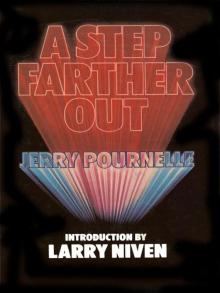
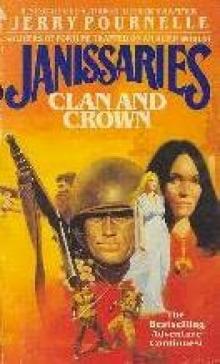
There will be war volume.., p.4
There Will Be War Volume VIII,
p.4


I get an uneasy feeling as I read over this. We no longer think in terms of survival groups and survival preparations, while the Office of Civil Defense is essentially moribund.
The same issue of Survive that carried my column had an article on the Swiss defense system. It concluded:
“The Swiss have such an extensive militia that even Hitler did not dare invade them. Probably the Soviets wouldn’t either. The nation cannot be defeated militarily, either by conventional or nuclear arms. You can kill them, but you can’t conquer them. Probably the powers of the earth will just have to leave the Swiss alone.
“Which is exactly what the Swiss have planned all along.”
Alas, North America seems not to have learned that lesson.
To the Storming Gulf, by Gregory Benford
Editor’s Introduction
Space offers mankind’s only hope of a long future. If we are to survive for 100 billion years—and there’s no known reason why we can’t—then we must, of course, outlive the Earth and the Sun. For most of that time, the word “ship” will mean space ship, of course, but that’s another essay.
We must also live through this century, which may shape the nature of our future. Will freedom survive into the third millennium? Will we? And has space a role in that?
There’s been a recent rash of articles “proving” that space wars are impossible. The only rational strategic policies, it seems, are unilateral disarmament (UD) or Mutual Assured Destruction (MAD). Of course, the latter policy dooms all of us if it fails, so there must be the implicit assumption that we won’t really retaliate if attacked; thus MAD often reduces to UD—a fact well realized by many of those who “prove” that you can’t defend yourself against ICBMs.
The arguments go this way: Space Battle stations are absurd, because they’re vulnerable. A space station—or any other military space system—will cost billions of dollars. Assume that its military value is great compared to its cost. An example would be the Global Positioning System (GPS), a system of navigation satellites that will allow aircraft, ships, trains, and individual soldiers instantly to determine precisely where they are to the nearest meter in three dimensions. It’s estimated that this system can save multibillions in fuel costs alone, simply by allowing precision navigation in any weather condition.
But if the system is worth many billions, its destruction must be worth something approaching that to a potential enemy; and for far less than multiple billions, any space installation can be attacked and destroyed. Thus it doesn’t pay to build space weapons.
Ground defenses, on the other hand, fail because laser beam weapons effects can’t penetrate atmosphere. Note that we “know” this only from theory—and there are counter theories. Particle beams can penetrate the atmosphere very effectively, but they are affected by the Earth’s magnetic field. In his 1987 book, Better a Shield Than a Sword, Edward Teller says that publicly available Soviet sources suggest remedies to both problems. For that matter, Scientific American a year or so ago had an article on using “rubber mirrors” which in effect use the atmosphere as part of the focusing scheme.
There are other ways, for that matter. Preparatory beams can “open a hole” in the atmosphere to allow the rest of the beam energy through. Since the SDI program began we have found at least four ways to defend the nation against ICBM attacks.
One thing is certain: small effects can make a big difference. Example: In theory, radar should operate on line of sight only. The atmospheric refraction isn’t all that large.
In practice, given that the atmosphere isn’t uniform, the over-the-horizon effects are very great. British radar made use of that in the Battle of Britain, and it was decisive: the entire (small) RAF was able to engage each Luftwaffe attack. The Germans never did catch wise.
In later years the British used VHF beams—about the frequency of your television set—to guide bombers to Berlin. The equipment was supposed to be destroyed if the airplane went down, but one set got captured intact. The Germans detailed a commission of scientists to figure out what the set was for.
After the war, a member of the commission told the Allies that they concluded it must be a training device. They could easily determine the frequency, and they “knew” no beam on that frequency would reach from Britain to Berlin…
My conclusion is that we can’t afford to ignore any possible theater of conflict; and as Possony and I stated in The Strategy of Technology, technological warfare—in this case, use of space technology—can be both bloodless and decisive. And sometimes it can help your economy with new inventions.
To the Storming Gulf
Gregory Benford
Turkey
Trouble. Knew there’d be trouble and plenty of it if we left the reactor too soon.
But do they listen to me? No, not to old Turkey. He’s just a dried-up corn husk of a man now, they think, one of those Bunren men who been on the welfare a generation or two and no damn use to anybody.
Only it’s simple plain farm supports I was drawing all this time, not any kind of horse-ass welfare. So much they know. Can’t blame a man just ’cause he conies up cash-short sometimes. I like to sit and read and think more than some people I could mention, and so I took the money.
Still, Mr. Ackerman and all think I got no sense to take government dole and live without a lick of farming, so when I talk they never listen. Don’t even seem to hear.
It was his idea, getting into the reactor at Mclntosh. Now that was a good one, I got to give him that much.
When the fallout started coming down and the skimpy few stations on the radio were saying to get to deep shelter, it was Mr. Ackerman who thought about the big central core at Mclntosh. The reactor itself had been shut down automatically when the war started, so there was nobody there. Mr. Ackerman figured a building made to keep radioactivity in will also keep it out. So he got together the families, the Nelsons and Bunrens and Pollacks and all, cousins and aunts and anybody we could reach in the measly hours we had before the fallout arrived.
We got in all right. Brought food and such. A reactor’s set up self-contained and got huge air filters and water flow from the river. The water was clean, too, filtered enough to take out the fallout. The generators were still running good. We waited it out there. Crowded and sweaty but O.K. for ten days. That’s how long it took for the count to go down. Then we spilled out into a world laid to gray and yet circumscribed waste, the old world seen behind a screen of memories.
That was bad enough, finding the bodies—people, cattle, and dogs asprawl across roads and fields. Trees and bushes looked the same, but there was a yawning silence everywhere. Without men, the pine stands and muddy riverbanks had fallen dumb, hardly a swish of breeze moving through them, like everything was waiting to start up again but didn’t know how.
Angel
We thought we were O.K. then, and the counters said so, too—all the gammas gone, one of the kids said. Only the sky didn’t look the same when we came out, all mottled and shot through with drifting blue-belly clouds.
Then the strangest thing. July, and there’s sleet falling. Big wind blowing up from the Gulf, only it’s not the sticky hot one we’re used to in summer, it’s moaning in the trees of a sudden and a prickly chill.
“Goddamn, I don’t think we can get far in this,” Turkey says, rolling his old rheumy eyes around like he never saw weather before.
“It will pass,” Mr. Ackerman says like he is in real tight with God.
“Lookit that moving in from the south,” I say, and there’s a big mass all purple and forking lightning swarming over the hills, like a tide flowing, swallowing everything.
“Gulf storm. We’ll wait it out,” Mr. Ackerman says to the crowd of us, a few hundred left out of what was a moderate town with real promise.
Nobody talks about the dead folks. We see them everywhere, worms working in them. A lot smashed up in car accidents, died trying to drive away from something they couldn’t see. But we got most of our families in with us, so it’s not so bad. Me, I just pushed it away for a while, too much to think about with the storm closing in.
Only it wasn’t a storm. It was somethin’ else, with thick clouds packed with hail and snow one day and the next sunshine, only sun with bite in it. One of the men says it’s got more UV in it, meaning the ultraviolet that usually doesn’t come through the air. But it’s getting down to us now.
So we don’t go out in it much. Just to the market for what’s left of the canned food and supplies, only a few of us going out at a time, says Mr. Ackerman.
We thought maybe a week it would last.
Turned out to be more than two months.
I’m a patient woman, but jammed up in those corridors and stinking offices and control room of the reactor—
Well, I don’t want to go on.
It’s like my Bud says, worst way to die is to be bored to death.
That’s damn near the way it was.
Not that Old Man Turkey minded. You ever notice how the kind of man that hates moving, he will talk up other people doing just the opposite?
Mr. Ackerman was leader at first, because of getting us into the reactor. He’s from Chicago but you’d think it was England sometimes, the way he acts. He was on the school board and vice president of the big AmCo plant outside town. But he just started to assume his word was it, y’know, and that didn’t sit with us too well.
Some people started to saying Turkey was smarter. And was from around here, too. Mr. Ackerman heard about it.
Any fool could see Mr. Ackerman was the better man. But Turkey talked the way he does, reminding people he’d studied engineering at Auburn way back in the twencen and learned languages for a hobby and all. Letting on that when we came out, we’d need him instead of Mr. Ackerman.
He said an imp had caused the electrical things to go dead and I said that was funny, saying an imp done it. He let on it was a special name they had for it. That’s the way he is. He sat and ruminated and fooled with his radios—that he never could make work—and told all the other men to go out and do this and that. Some did, too. The old man does know a lot of useless stuff and can convince the dumb ones that he’s wise.
So he’d send them to explore. Out into cold that’d snatch the breath out of you, bite your fingers, numb your toes. While old Turkey sat and fooled.
Turkey
Nothing but sputtering on the radio. Nobody had a really good one that could pick up stations in Europe or far off.
Phones dead of course.
But up in the night sky the first night out we saw dots moving—the pearly gleam of the Arcapel colony, the ruddy speck called Russworld.
So that’s when Mr. Ackerman gets this idea.
We got to reach those specks. Find out what’s the damage. Get help.
Only the power’s out everywhere, and we got no way to radio to them. We tried a couple of the local radio stations, brought some of their equipment back to the reactor where there was electricity working.
Every damn bit of it was shot. Couldn’t pick up a thing. Like the whole damn planet was dead, only of course it was the radios that were gone, fried in the EMP—ElectroMagnetic Pulse—that Angel made a joke out of.
All this time it’s colder than a whore’s tit outside. And we’re sweating and dirty and grumbling, rubbing up against ourselves inside.
Bud and the others, they’d bring in what they found in the stores. Had to drive to Sims Chapel or Toon to get anything, what with people looting. And gas was getting hard to find by then, too. They’d come back, and the women would cook up whatever was still O.K., though most of the time you’d eat it real quick so’s you didn’t have to spend time looking at it.
Me, I passed the time. Stayed warm.
Tried lots of things. Bud wanted to fire the reactor up, and five of the men, they read through the manuals and thought that they could do it. I helped a li’l.
So we pulled some rods and opened valves and did manage to get some heat out of the thing. Enough to keep us warm. But when they fired her up more, the steam hoots out and bells clang and automatic recordings go on saying loud as hell:
EMERGENCY CLASS 3
ALL PERSONNEL TO STATIONS
and we all get scared as shit.
So we don’t try to rev her up more. Just get heat.
To keep the generators going, we go out, fetch oil for them. Or Bud and his crew do. I’m too old to help much.
But at night we can still see those dots of light up there, scuttling across the sky same as before.
They’re the ones know what’s happening. People go through this much, they want to know what it meant.
So Mr. Ackerman says we got to get to that big DataComm center south of Mobile. Near Fairhope. At first I thought he’d looked it up in a book from the library or something.
When he says that, I pipe up, even if I am just an old fart according to some, and say, “No good to you even if you could. They got codes on the entrances, guards prob’ly. We’ll just pound on the door till our fists are all bloody and then have to slunk around and come on back.”
“I’m afraid you have forgotten our cousin Arthur,” Mr. Ackerman says all superior. He married into the family, but you’d think he invented it.
“You mean the one works over in Citronelle?”
“Yes. He has access to DataComm.”
So that’s how we got shanghaied into going to Citronelle, six of us, and breaking in there. Which caused the trouble. Just like I said.
Mr. Ackerman
I didn’t want to take the old coot they called Turkey, a big dumb Bunren like all the rest of them. But the Bunrens want into everything, and I was facing a lot of opposition in my plan to get Arthur’s help, so I went along with them.
Secretly, I believe the Bunrens wanted to get rid of the pestering old fool. He had been starting rumors behind my back among the three hundred souls I had saved. The Bunrens insisted on Turkey’s going along just to nip at me.
We were all volunteers, tired of living in musk and sour sweat inside that cramped reactor. Bud and Angel, the boy Johnny (whom we were returning to the Fairhope area), Turkey, and me.
We left the reactor under a gray sky with angry little clouds racing across it. We got to Citronelle in good time, Bud floorboarding the Pontiac. As we went south we could see the spotty clouds were coming out of big purple ones that sat, not moving, just churning and spitting lightning on the horizon. I’d seen them before, hanging in the distance, never blowing inland. Ugly.
When we came up on the Center, there was a big hole in the side of it.
“Like somebody stove in a box with one swipe,” Bud said.
Angel, who was never more than two feet from Bud any time of day, said, “They bombed it.”
“No,” I decided. “Very likely it was a small explosion. Then the weather worked its way in.”
Which turned out to be true. There’d been some disagreement amongst the people holed up in the Center. Or maybe it was grief and the rage that comes of that. Susan wasn’t too clear about it ever.
The front doors were barred, though. We pounded on them. Nothing. So we broke in. No sign of Arthur or anyone.
We found one woman in a back room, scrunched into a bed with cans of food all around and a tiny little oil-burner heater. Looked awful, with big dark circles around her eyes and scraggly uncut hair.
She wouldn’t answer me at first. But we got her calmed and cleaned and to talking. That was the worst symptom, the not talking at first. Something back in the past two months had done her deep damage, and she couldn’t get it out.
Of course, living in a building half-filled with corpses was no help. The idiots hadn’t protected against radiation well enough, I guess. And the Center didn’t have good heating. So those who had some radiation sickness died later in the cold snap.
Susan
You can’t know what it’s like when all the people you’ve worked with, intelligent people who were nice as pie before, they turn mean and angry and filled up with grief for who was lost. Even then I could see Gene was the best of them.
They start to argue, and it runs on for days, nobody knowing what to do because we all can see the walls of the Center aren’t thick enough, the gamma radiation comes right through this government prefab issue composition stuff. We take turns in the computer room because that’s the farthest in and the filters still work there, all hoping we can keep our count rate down, but the radiation comes in gusts for some reason, riding in on a storm front and coming down in the rain, only being washed away, too. It was impossible to tell when you’d get a strong dose and when there’d be just random clicks on the counters, plenty of clear air that you’d suck in like sweet vapors ’cause you knew it was good and could taste its purity.
So I was just lucky, that’s all.
I got less than the others. Later some said that me being a nurse, I’d given myself some shots to save myself. I knew that was the grief talking, is all. That Arthur was the worst. Gene told him off.
I was in the computer room when the really bad gamma radiation came. Three times the counter rose up, and three times I was there by accident of the rotation.
The men who were armed enforced the rotation, said it was the only fair way. And for a while everybody went along.