Every last cent l 22, p.15
Every Last Cent l-22,
p.15
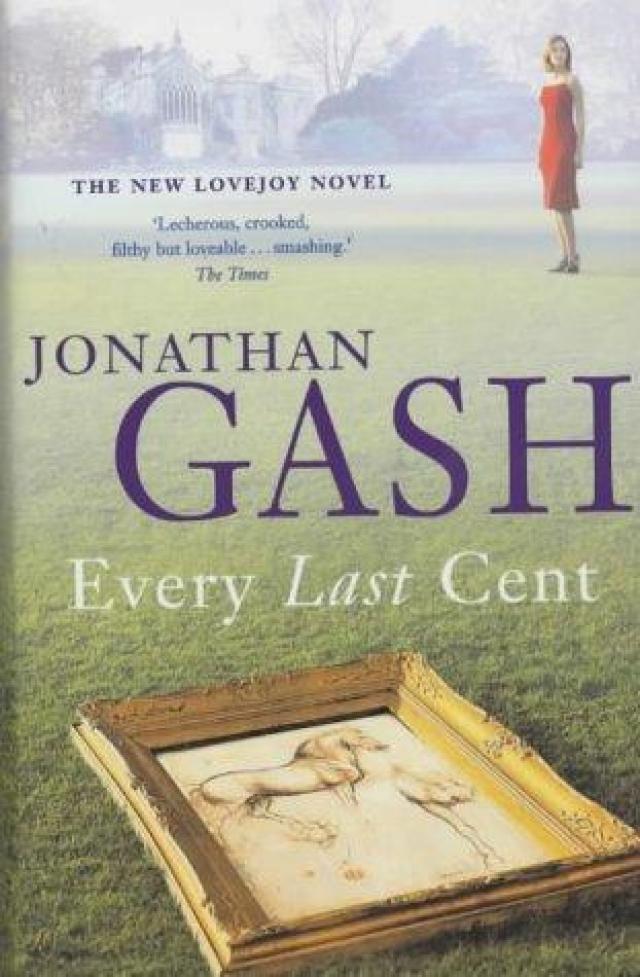


A Minton fruit and nut dish might not sound much –to go and poison a whole bloke for, I mean – but it was true as a saint. I can see it now in my mind's eye: painted, not printed, those gorgeous florid colours of 1805 with Thomas Minton's interlinked stroke marks just like the Sevres device that Minton liked to imitate. Hearing about the dish, well, all the collectors and dealers in the Eastern Hundreds finally took Peggy's side.
'You can only go so far,' the lads sympathized. Our women dealers said things like,
'Well, you can only take so much, can't you?' We all gave evidence at her trial. The judge let her off with two hundred hours of community service. That only meant that when she came to sweep the market she didn't need to lift a broom. The stallholders simply kept their pitches clean.
Justice isn't often so straightforward, though.
Luckily, among the revellers was Cromwell, for where Peggy Price comes can Cromwell be far behind? He sat in his breastplate and gauntlets, smoking a churchwarden pipe.
He sometimes speaks daft Ho There Sir Knave stuff. Dunno why. He was once prevented from tethering his nag outside the pub. I spoke up for him at the town council.
They claimed there was no need to ride to the tavern on a horse these days. Walking and motor cars were good enough.
I claimed in evidence, 'His nag knows the way home, your honour.' I got pretty heated.
'Even when Cromwell is drunk as a lord, your, er, lordship, his horse carries him home safe. Cromwell himself was allowed to ride here.'
'Confine yourself to facts, please,' the judge said wearily.
It was Mrs Finisterre, a distinguished battleaxe with lovely legs. She shouldn't wear purple skirts. She should try tan or beige. I sold her a lovely Wellington chest once, and charged too little because I knew she was a famed lawyer. See what good it did me.
'I am, missus!' I'd bleated.
'Lovejoy. This plaintiff is not Oliver Cromwell. The Lord Protector died in 1658.'
Just like a woman, slipping truth in. They're sly. This particular Cromwell was the Rt Hon St John (say Sinjern or people think you're common) Featheringshay Popperinghe, late of the diplomatic corps. He can speak twenty lingos. Once, he put 'Polyglot' for his occupation on a dole claim form, and got a letter from some thick civil servant, 'Dear Mr Polyglot. . .' And we pay their wages.
I'm in good with Cromwell. I got his fiancée off his back once. Literally, in a dancehall scrap. My intervention escaped him to Lancaster where his sister lives with a clergyman. Also, I didn't tell his lass where he'd gone, so earning Cromwell's undying gratitude. By the time he came back Feya had married a French bargee on the River Rhone.
'Whose rounder are they yakking about, Cromwell?'
'That birdman's wife owned a fake Sisley, one of the Impressionists.'
Paul Blondel, the kindly wild-bird keeper. Cromwell meant his wife Jenny who was shacked up with Aspirin.
'It went for two thousand, right?'
'Tom Keating did it, they're saying. Hence the joviality.'
Tom Keating, RIP, was my old friend. A master faker of paintings, his stuff is actually pretty ropey and wouldn't deceive anybody, though they did mucho deception in their day. Alfred Sisley ('the English Impressionist') is probably the greatest of the Imps. The paintings he dashed off in the open air are the best ever. Faker Tom was always broke.
Running out of expensive oils, Tom used poster colours blended in decorator's white. I often saw him scumble schoolkiddies' powder paint into house-painter's white. In fact I helped Tom more than once. The point is, you can't mistake modern acrylic for antique French oil paint. They shine differently. If you're too idle to look, you deserve to be ripped off.
'Cromwell,' I began with humility, as befitted asking the Lord Protector, 'what diplomat's knocking around East Anglia?'
'That Yank consul,' he said with bitterness. 'Wald Sommon by name.'
Cromwell got drummed out of the diplomatic for being found in a cupboard with an honorary consul's wife one Europe Day. A guard heard whimpers of ecstasy and wouldn't accept a bribe, which only goes to show how far standards have sunk since we gave away the Empire, thank God. Cromwell got drummed out of the Brownies without pension rights. He runs on hate.
I injected a little bitterness there myself. 'He ran over a cat near Stalham.'
'The bastard!' he breathed.
Cromwell judges local cat shows, loves them in fact. I was making it up, but so what?
The bloke had almost knocked me senseless.
'It was a big American motor. Diplomatic plates.'
He actually trembled with fury. 'Did you help the cat?'
'Eh?' I hadn't seen any bloody cat. Now I had to play out this sympathy. Wearily, I made up a cock-and-bull tale of some poor feline dragging itself, broken and bleeding, along a country road. 'I shouted. The swine drove on.'
'What did you do?' he asked, appalled.
'I was seething. I carried the poor thing to a farmhouse. They promised to look after it.
But,' I added brokenly, because I was really welling up, that poor moggie all bloodied and everything, 'they didn't hold out much hope.'
'Give me their address, Lovejoy.'
To my horror he took out a pencil. The dolt wanted to drive to the cat's rescue. I felt like yelling, 'There isn't any bleeding cat, you silly sod.'
'No, Cromwell.' I gripped his arm. 'I was trying to shield you .. .'
'It passed away?' Tears dripped from his chin.
I felt bad, especially after the way I'd struggled to save the poor cat, carrying its broken body to the dimly lit farmhouse. Except there wasn't any frigging moggie. No accident.
No thoughtless diplomat. My imagination will get me in trouble one of these days.
'Yes.' I looked into my empty glass, sighing. 'If only there was some way to get back at him. There never is, is there? You'd need money. I gave my last groat to the farmer's wife. The poor kitty deserved a decent burial.'
Cromwell took my glass. 'What'll you have, Lovejoy? Have you eaten?'
'If you insist,' I said. 'Ta. Ask Unis for a full nosh, please.'
And settled back in the warm to listen to the gossip.
During that pleasant evening – the last quiet spell for some time, though I didn't know it – Peggy Price brought me a glass to divvy. Cromwell had gone to phone somebody. I was drowsy after two meals and wine. Peggy offered me a refill, but I couldn't help thinking how she'd sped her late husband on his way with a fry-up sprinkled with sundry vitriols. I declined. She rummaged in her bag.
'This glass, Lovejoy.'
No wonder I'd gone wonky. She brought out a drinking glass in one of those bubbly plastic cases that protect against breakages. It was a beautiful piece of Anglo-Dutch soda glass, engraved with a coat-of-arms. Seventeenth century, it felt typically lightweight, its cup thin as a wafer. The surface was crizzled, all little cracks that make the glass look frosted. I used Peggy's loupe. Sure enough the engraving was shallow, mere scratches engraved with a diamond point.
'The foot's flat as a fallen arch,' I joked, giving myself time to get my breathing back.
'These Anglo-Dutch drinkers are always flat across. Anglo-Venetians have an inverted cone space underneath.'
'It's genuine, then, Lovejoy?' Peggy breathed.
'Say that the bubbles in the stem "exhibit the freestyle glassblower's art", or some such junk,' I advised. 'Buyers expect it.'
This actually means that if there are any bubbles in the decorative swellings in the stem, they'll be asymmetrical. This isn't a stunning instance of brilliant artistry. It's just that the glass they used in those days cooled at speed, so the glassblower didn't have time to get it even all round. It's off kilter.
She bussed me enthusiastically and asked, pen poised, 'How much, Lovejoy?'
'Hardly anything, love. Sorry.'
It had two chips on its thin rim. The flat wide foot was also chipped. A scale of glass had fallen from the bowl –water can creep into the crizzles, you see. If the glass isn't dried in the warm, the water might actually freeze and lift away a flake of the actual glass. It's heartbreaking, the way people treat their glass. Worse even than women with pearls, and that's saying something. The worst crime of all, though, is to put them through a dishwasher.
'Don't get me started, Peggy,' I said, sadly returning her glass. She was mortified.
'Will you look at some more stuff for me, Lovejoy?' she asked. 'I bought a job lot in Norwich last week, a commission for Mr Eggers. He's American, staying at Saffron Fields.'
'I've heard of him,' I said, wondering what now.
She coaxed, 'I'll stand you supper.'
Supper with our poisoner? 'Er, ta, love. Some other time.'
It was then that Unis called me over and gave me a bulky envelope.
'A street busker brought it for you, Lovejoy. Feels like money.'
'Just some newspaper cuttings,' I said, wondering who was sending me messages at this time of night.
As soon as Peggy had returned to her bar stool I slipped a finger into the envelope and saw more money than I'd ever had in my life. I put it away, casual, but Peggy was watching.
When she went to the loo I ferreted out the message, shielding it from curious dealers.
It read, Dear Lovejoy, Come this instant! Sandy.
As if I wasn't in enough trouble. The gelt was presumably the retainer Consul Sommon had mentioned. And Sandy was confirmed as heavily involved, because he never paid even legitimate debts.
That was my last peaceful evening before the deaths. None of it really was my fault.
20
THAT NIGHT I slept badly. Actually I'm not big on sleep. I think sleep's a trick. God made night so we'd wear ourselves out worrying, then gave us days to be exhausted in.
My mind was in turmoil. I felt something frightening coming.
In all this was Mortimer. I had to protect him at all costs, never mind why. The lad was an innocent, hardly out of the egg. He didn't know that inexplicables ruled in antiques.
It was the antiques trade's fault.
Antiques is an army of scroungers hunting for dross. In short, antiques is chaos in search of a wardrobe. See, I've no illusions. At the upper end, however, stands the antiques raj, that eclectic club of hoods who control everything. If the International Court of Justice grouses about looted heritage, you can bet that justice will fade before the ink is dry. And why? Simply because the antiques raj will make sure that art and antiques don't move out of their hands. The corollary is this: what you see in museums, galleries, or famed auction rooms is merely the residue that the members of the raj can't be bothered with and allows to remain untouched. For a fee, of course.
The money Unis passed me in the Welcome Sailor was a fortune. I stared at the notes.
I could eat for years, get some shoes without holes in, socks, fit myself out in Willie Griffs. And a hat! I'd always wanted a hat, look like a gent. Gloves I tend to lose, but with so much gelt what's a lost glove?
Sandy, I knew, had society connections, the sort that only fashionably weird individuals have these days. He sold them antiques. Many were ultra rich. In fact, there'd often been rumours that Sandy was a raj bloke, but I didn't believe it. They're unseen, and Sandy thrived on attention.
There was no doubt, though. I was now firmly yoked to somebody's plough.
Everywhere I went, dealers were working for Susanne Eggers. Directly or indirectly.
Like Ferd, with auctioneers arriving in posh motors itching to do deals. And his missus Norma, warning me off now that she was in ladyland – riff-raff lovers need no longer apply, so get thee gone, ye varlet. Never mind that I'd been Ferd's only pal while he was mental, and kept Norma in groceries and emotion. And Olive Makins, secretary of the local auctioneers, was used – forgive the word – by Mr Eggers et al. to sweet-talk auction lists out of her.
Also, the matter of my forged portraits. Not long since it was hard to give them. Now they were in demand. They were clear fakes, yet dealers were scouring the kingdom for them. Worse, Mortimer had begun lobbing the stone of honesty into the tranquil pond of fraud, threatening me.
So here was me, sitting on my let-down divan in my cold, bare-flagged cottage with a bundle of bunce like I'd never seen. Handed through some pub's back door by a street wino. I was retained by some American consul geezer. Foolishly, I'd blundered off to ask Cromwell, because he was the only ex-diplomat I knew. My logic always finishes up bizarre. Just as it had, in fact, when I went to see Quaker and Maud. I'd thought I was boxing clever, but finished up being talked into a risky tryst with Maud, learning nothing from Quaker, then stupidly agreeing to meet Brigadier Hedge. Only dedicated duds like Hesk, the would-be faker of Georgian art, were left out.
There was a huge scam on. The public would suffer, of course. They always do.
Whatever genuine antiques they possessed would be collared, fiddled, stolen, and they'd end up with barely a farthing. I woke with a splitting headache, took half an aspirin because I hadn't any more, drank some water, and went to the village shop with my wealth.
At nine o'clock I made a hearty breakfast – cereal, eggs, those veggie sausages that give you heartburn, fried tomatoes, a stack of bread, tea. I diced some Lancashire cheese for the bluetits and the robin, and put an egg, cracked, by the cottage door for the hedgehog. Mother Nature, a scrounging harridan, could share my affluence.
'To labour, folk,' I told them, took a ton of the money, hid the rest and caught the bus.
Ginny and Ox were already out working the Liveridge estate when I arrived. I'd spent a mint on Visbee's taxi, guessing where they'd be this morning. Visbee reckons he has a brilliant sense of direction, but hasn't. He bets on a mobile phone while trying to chat up some housewife not his own. I spotted Ginny's motor near the livery stables and told Visbee to let them finish their con.
She's boss, so Ox can be ignored. Except, fraudsters need somebody who looks the part, don't they? Ginny is executive pretty and computer smart, twenty-five, smiles like an angel. Ox is thick, but tall, elegant, can make a cheap suit look Jermyn Street. He says nothing. Ginny rings your doorbell and stands there exuding charm. The con trick (soon to your door!) is this: Ginny smilingly offers you a free security check. She'll show you printed cards, credentials, has a security ID pinned to her ample bosom, and offers you letters from dignitaries. You, in all this charade, are the householder soon to be done out of every trinket, your furniture, porcelain, your savings books and credit cards.
Both Ox and Ginny carry gadgets. They're actually micro-camcorders that photograph your locks, windows, doors, and anything worth stealing. Needless to say, there is actually a real security firm should you check up – it's only her cousin Ditch, to whom she is very, very close. He has an electrical shop near Ipswich. The actual burglar is a violinist called Felly, works from darkest Hammersmith. He sells the stolen goods along the M18 motorway, like everybody else. I'm not in favour of Ginny's con trick, incidentally. But needs must when the devil's hard at it. I like to know what antiques they've stolen, keep abreast of what's safe.
'Wotcher, Ginny.' I flagged them down as they left the avenue.
She brightened. 'Hello, Lovejoy. So early, this bright dawn?'
'It's eleven o'clock, love. Where's Sandy?'
Her face clouded. 'Slumming, Lovejoy?'
'Desperate to unravel the plot, love.'
She examined my expression, let it go and alighted. 'Ox, drive to St Edmundsbury. We'll follow.'
'Which way is St Edmundsbury?' he asked, synapses clanging.
'Try the St Edmundsbury road,' she suggested.
And off he drove, we trundling behind in Visbee's motor. I asked her about Sandy. She could be trusted, for Sandy had done her down in a way I daren't repeat. It was foul, sinister, and marked Ginny's mind with permanent grief. Luckily, a woman never forgives. My sort of ally.
'If I tell you, Lovejoy, will it be bad for him?'
'Very bad.'
She smiled. 'Brilliant! Sandy's doing one of his morning showtimes. A hired audience and Eastern Hundreds TV, hoping to break in to Look Eastward.'
'Who's financing?'
She nodded at the pertinent question. 'You're right to ask, Lovejoy. That evil queen won't spend tuppence. Some American. You're bound to've heard of them.' She meant because of Saffron Fields and Mortimer.
'Sandy's got one of my Geoffreye Parlayne portraits.'
'How come?'
Her question cheered me up.
'Dunno. If you find one for me I'll be your best friend.'
She smiled. 'I can do more than that, Lovejoy. We've got one. It's there.' She nodded to indicate the boot of Ox's limo up ahead. 'Felly handed it back last night.' She laughed.
'It was the only thing he couldn't sell up the motorway because it was spav. You can have it for a favour or two. Ox'll hand it to Tinker.'
Spav means rubbish, tat so dud nobody would even give it house room. Stung, I found myself arguing heatedly that it wasn't as bad as all that.
'I know,' she surprised me by saying. 'She has a lovely face. But she's that ghost, isn't she?'
Which was where I came in. I think.
The village hall stood a few miles from St Edmundsbury. Cars and an excessive number of motorbikes filled its car park. Inside, gusts of laughter. Three massive pantechnicons filled with cables and TV crud darkened the double doorway. Sandy can't sing, can't keep time, doesn't dance, can't tell a joke, yet believes that he is God's gift to the world of entertainment. I went in alone. Two goons accosted me.
Ticket?'
'Sandy told me to stand here and wait for his signal.'
Sandy was on the stage. Lights hurt my eyes. He looked whitewashed. He was dressed in a showgirl's feathers, glittering bodice, plumed head-dress, silver train, high heels, his face set in a ghastly rictus under panto makeup. I always feel sad for him.