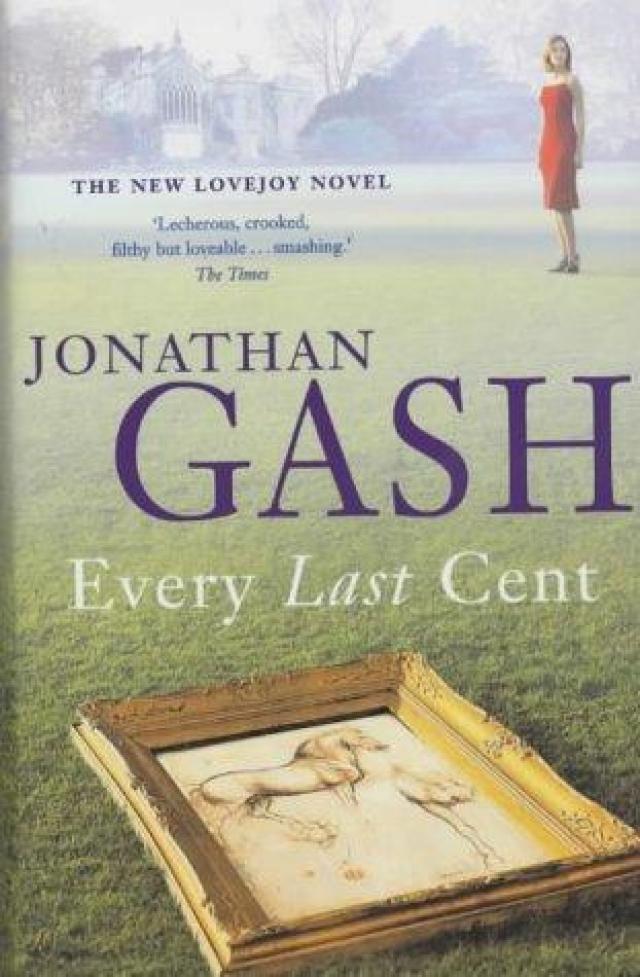
Every last cent l 22, p.17
Every Last Cent l-22,
p.17


The noise was indescribable. Wnat the hell were all the engines revving for? Blokes in heavy goods vehicles leaned out calling questions. It was mayhem. I sat on the running board of a lorry. I had a bad headache.
I could have prevented this somehow. And hadn't. I could have lied to Mel that I knew what he was up to. I could have confronted Sandy, demanded what the hell. Or gone to the police. I could have seized Olive's wheel, flagged the mark motor down and warned them. I hadn't done a frigging thing.
A lorry driver came. 'You okay, mate?'
'Aye. Ta.'
'You look rough. In one of the motors, were you?'
'No. Thumbing a lift on the verge.'
'See anything, did yer? Here.' He gave me a swig of tea from his flask. Hot, thick, sweet.
'Ta. No, saw nowt. Anybody hurt?'
'Two people in a motor bought it. The other motor isn't too bad.'
He was a crew-cutted bruiser, but often they're the kindliest people on the road, do anything to help. He sounded Merseyside.
'This'll be a long time clearing,' he said. 'Get in my cabin and watch the telly if you like.'
'Ta,' I said, and did.
The plod came with their loudhailers, filling the night with questions.
They asked what I'd seen. I said I recalled seeing a motor driving past and swerving. I was trying to thumb a lift, but nobody seemed willing to stop in the darkness.
Something gave me a thump. I fell, heard tyres screeching, found myself down in the ditch.
'I climbed up the bank to the road,' I said.
'I gave him some tea and sat him down,' the lorry driver said. 'I wondered if he'd been thrown out of one of the motors. I've seen that happen.'
They let me go after an hour. I got a lift to civilization from the driver. I have an idea he knew my tale was made up, but that's the same for pope, poet, and peasant. We're all fibbers.
It took me a couple of hours to walk down to the river and up the footpath to my cottage. I made tea and pulled the divan down. I stripped and went to bed.
The tangled mass of Timothy Giverill's motor, crumpled against the tree in the lights, was with me as I closed my eyes and waited for the night to pass and bright day come with its new sequence of hauntings. I should have wept for what I'd done, but my senses wouldn't play my silly games any more. They just sat in me, eyes, hearing, touch, the rest, just knowing what a worm I really was.
In sad moments the past comes niggling, making you feel bad about things long forgot.
Melancholy blamed me for the tragedy. I remembered Trudy and Betcher.
It was all down to unrequited love.
Trudy was an accountant. 'I'm no oil painting,' she said jestingly. She did tax for antique dealers. Wisely she never learned the trade, or what dark deeds were done. Or, indeed, how much income flowed silently along the night hedgerows of East Anglia. I liked Trudy.
Enter Betcher. Extrovert, noisy, chatty, a caricature of the wartime spiv of old black and white films right down to the padded shoulders and natty trilby. He was called Betcher because of his gambling. 'The Derby's been run exactly for three hundred years, betcher ten quid,' and so on. He never owned a thing, simply gambled wildly. Losing a bet, he'd bet his way out: 'Okay, so it's Sheraton and I lose,' he'd say, spirits instantly lifting as something else caught his eye. 'Then that tallboy over there. Betcher it's Chippendale. Double or quits?' He used me as referee, seeing I was the only divvy around.
There was a problem. He longed for Trudy and hadn't the nerve to tell her.
'Trudy's got everything, Lovejoy. Bright, bonny. I'm rubbish.'
Tact seemed the best tack so I said, 'You frigging burke. Ask her out, God's sakes. This isn't Jane Eyre.'
'Help me, mate.'
I get uneasy in affairs of the heart. I'd lately been in trouble with Big Frank's new betrothed lady – his fifth wife, maybe sixth – and I didn't want to be anybody else's go-between.
'Look, Betch, I'm pushed at the moment.'
'She likes that thing. I could win it on a bet.'
He described a pendant that Trudy admired in Fookleston's window. Fookie is a cadaverous, stooping bloke of immense height, bespectacled and thin. He inherited our town's best jewellery shop, and spends his profit in the bookmaker's in Head Street.
Another gambler. I'd never known a bloke like him – well, I have, but you've got to say that. Fookie gambles serious money. With Betcher gambling's a mere introductory spiel leading, he hopes, to better things.
'That spinel?'
'Isn't it a sapphire?'
'No. Fookie's just trying it on. It should only be a tenth of the price.'
People let themselves get carried away by simple points of recognition. Men do it with women – she's got a terrific shape, so she must be desirable / holy / honest / kind /
trustworthy, etc – and women invariably do it with jewellery. They see something prettily mounted and blue, and think, 'Egad! A princely sapphire in twenty-four carat gold! Astronomically priced, so it must be terribly valuable . . .' and so on. A spinel can be red, through blue to black. Most people think that so-called 'noble' spinel (only means gem quality) is always red, which isn't true. Okay, blue spinels are sometimes cloudy and not so bonny, but when you see transparent violety or frankly blue stones, they don't come any lovelier. The great 'Black Prince's Ruby' in our Crown jewels is secretly a spinel, not a ruby at all, but don't let on. Blue and red spinels have been substituted for sapphires and rubies over the centuries.
Like a duckegg I decided to help Betcher. I got Fookie to sell me the blue spinel pendant for a fraction of his asking price. I sold it on to Betcher for exactly what I'd paid. He wooed Trudy, heavenly violins soared and angels sang, and we all waited for wedding bells to chime. No such luck. The sky fell in. Trudy abruptly resigned and went to Manchester. Betcher sank into profound dejection, recovered slowly to his usual,
'Wotcher, Lovejoy. Betcher that new cat of Chrissy's gets lost within the week, ten quid on it?' I thought, oh well, lovers' parting is such sweet sorrow and all that. I'd done my bit so was it my fault?
Needless to say, yes it was.
One day I was in Manchester collecting some fake English secretaire bookcases – lovely mahogany, narrow, finely dovetailed drawers. Manchester repros are by far the best anywhere on earth. They're dead ringers for 1795. Dunno why, but Manchester craftsmen take the trouble of matching wood grain top and bottom, banding the same.
Other forgers are too damned idle, don't do a proper job ... Where was I? Manchester, bumping into Trudy in an antique dealer's.
She still wore Betcher's spinel pendant. In fact I recognized it before I even looked at her. We said hello. I stood shuffling, waiting for her to get mad over something I'd done / hadn't done, the usual female response to me. Until she said, 'I'm married now, Lovejoy. A little girl, twelve months.'
'Oh, good.' What can you say?
'It didn't work out with Brendon,' she said wistfully. I remembered in the nick of time that was Betcher's real name. 'I waited, but he never said anything. I saw it was hopeless.' Sorrow pained her eyes. 'I just had to leave.'
Betcher had been too much of a dope to speak out and I'd been too thick to bang their silly heads together and tell them to get on with it and stop annoying us. A classic tragedy, English reserve versus ardent longing.
The question was, what to say? Tell Trudy the truth, that Betcher had always loved her, now she was married with a family? Or reveal all to Betcher? Or let things slide? Being me, I took the easiest, saddest route. When next I met Betcher he said wistfully, 'Back from Lancashire, eh?' And asked, heart in his eyes, 'Betcher didn't see Trudy, Lovejoy.
Tenner on it.'
'No,' I lied evenly. What else could I say?
So Betcher languishes and Trudy languishes and me helping made it shambolic. And that, said Alice, was that.
The lesson? When I help, things get worse. My gran used to say, 'Lord save me from helpers.' She meant me.
There's no doubt. Morality's punk, dud from start to finish. I believe there's only one moral problem in life. It's this: if you could save somebody's life and you don't, then you're a murderer. That's the only moral dilemma since the dawn of man, like Brigadier Hedge's australopithecines question. Except it's no problem, for it's solved before you even utter the question.
Whoever else was responsible for Florence and Timothy Giverill's deaths – plus the deaths of whoever else had died in the crash – there was no doubt who was the real culprit. It was me, as surely as if I'd driven Timothy into that tree.
No sleep that night. The bluetits knocked on my window at seven as usual. I got up, filled their thing full of nuts, diced cheese for the robin and scattered a load of gunge for them to get on with. The plod came and took me in. I wasn't quite ready for them, but answered as I'd worked out during the lantern hours.
22
IT WAS A different office. I prefer uniformed plod these days. Once, I used to think they were the worst of a myriad evils. Now, I think maybe they're the least, though you've still to watch them.
'Eh?' I asked Sep Verner.
He showed his teeth. He believes it looks like smiling, but so far he hasn't learned how.
When he was in clink and I was showing him how to paint like Vincent – I told you about that – he was a quiet, withdrawn geezer on remand. We all make mistakes. I believed he was human, or at least lifelike, capable of emotion and everything. I was well wrong. He shook my hand, I remember, when I got sprung, and told me ta for helping him through. A blink of an eye, and there he was a rising star in the plod's firmament.
'This fatal accident in which you were involved, Lovejoy.'
'What accident?'
No lie to tell him my head hurt. I'd no mirror at the cottage, but knew I must look frayed at the edges. I had a bump on my noggin, though I'd bathed as usual in my tin bath and got blood and mud off.
He sat in his chair, rocking and swinging. I'm sure he copies American gangster films.
He's prognathous, teeth like that cowcatcher device that Babbage invented for the front of railway engines. I'll bet he got called names by his pals at school. Is there anything worse than the cruelty of children?
'What was that about children?' he asked sharply, his chair slamming down. He leaned forward, fingers linked. Whoops. Must have spoken my thoughts. I'm always doing that.
'Sorry,' I said. 'I'm still woozy from the accident.'
'What accident?' he asked softly.
'That's what I asked.'
He flicked open a slender file. My name. I must have started a new one, for legal goings-on instead of the usual messes.
'Last night, Lovejoy.' He stared beyond me, gave some newcomer the nod. 'You were injured. Two people were killed. An antique dealer, one Mrs Olive Makins, was injured along with three other drivers. You were an eye witness.'
'Olive Makins? I know her. Is she all right?'
'Fine. Just grazes.'
'Thank heavens,' I said piously. 'She's the auctioneers' secretary.'
'We know.' No grin now. 'Which raises the question what you were doing so late thumbing lifts on the trunk road.'
'Trying to get home, I suppose.' I furrowed my brow, trying to help him against the odds. 'I remember some event in a village hall. Was it Beccles?'
'How did you get to the main road?'
'I don't remember. All I can see is ...' I did the same patter, tyres, vehicles braking, me down the embankment.
'Then this truck driver was saying there'd been an accident. From Liverpool,' I added helpfully.
The newcomer spoke. 'You're not pulling the wool over my eyes, Lovejoy,' she said, coming round the desk. My heart sank.
Sep Verner made way as Petra Deighnson seated herself and gazed at me unsmiling.
Petra, incidentally, means rock in Latin.
Deighnson missed her vocation. She could have been human given half a chance. No, I mean it, could have been a real functioning Homo sapiens with friends and a life to lead. Don't misunderstand. She looks the part, is always well turned-out. Smart, my generation would say, suited, good legs and high heels, only one item of jewellery and that a spanker with an ultramarine – my favourite gem –at its centre. High Victorian, it's what posher antique dealers call en tremblant, meaning shivery, always on the go. It's one of the few brooches you can tell a mile off.
It had all the marks of pricey craftsmanship; not flat, but different planes of the brooch standing proud. Class. This, I knew just from looking, would be as superb when you turned it over as it looked from the front. Only one gem, set in fragile leaves made of diamonds in silver and platinum. It made my mouth drool. I'd never seen her wear any other jewellery. Blouse, neat white gloves, jacket and skirt matching, she looked you-shall-go-to-the-ball. She's known for it. I daresay the lads at the nick have a score of spiteful names for her. They say she'll go far. I don't doubt it. When first we met she was a lowly come-here-do-that. Now, she's the one they stand up for. Always wears white gloves, but not for what you think. I've actually seen her hands, and they're beautiful. No split nails for our Petra.
'Do be seated, Lovejoy.'
She has a pleasant face, lovely eyes. I couldn't imagine her doing the three-minute basic police training, Kevlar vests and guns. Petra seems remote as monarchy. Rumour puts her at Oxford reading classics, pure maths, divinity. Whatever, she's hard to fool and harder still to oppose. She looks the sort of plod that fashionable actresses are always trying to emulate in those tiresome TV mayhem-and-murder episodes. I was once being questioned when somebody rang her up and asked if she'd be willing to let some TV actress come and see her work. She'd replied, 'Don't be silly,' and rang off, continuing the questions without breaking step.
That's Petra Deighnson, vicar's daughter from Northampton. Oh, and big ranker in the Serious Fraud Office. She used to be in the local plod, but saw the light of promotion in the galaxy and jumped ship. The SFO has nicknames – Seriously Flawed Office among variants – but you dursn't utter them in dear Petra's hearing. Local dealers call it the Silly Failure Orifice. The SFO's useless, despite our Petra. It rattles sabres at robber barons like Robert Maxwell, then lets them get away scotage free while the rest of us sit seething and the tabloid newspapers thunder Why Are They Allowed? It's the little bloke who gets done, for forgetting half a groat on his tax return, or the old woman who forgets to claim her pension. They wistfully wonder how the huge-haul thieves get away with everything. The SFO alone knows, and does sweet sod all.
'Lovejoy. You witnessed an accident last night.'
'People keep saying so.'
She didn't smile, but something in her changed as if she was pondering a smile as a possible strategem for some future reincarnation.
'Won't you answer the question?' she said, quite pleasant.
'What question?'
'You watch it, Lovejoy!' Sep spat, itching to rise and belt my head in, his form of psychotherapy. Showing off before the pretty lady, more like.
'Leave him. Lovejoy's quite correct, Mr Verner. I didn't ask a question.'
He subsided, glowering. I'd made a pal.
'Sorry, missus. I've a bad head.'
'Can we offer you anything? Would you like to see a doctor?'
'I'll be okay as soon as I get back to work.'
Verner sniggered. She half turned and he quietened, staring at me with pure hatred. I wondered, not for the first time, how close he and Susanne Eggers actually were. Thick as thieves, to coin a phrase.
'If I remember anything, I'll phone in.'
'Very well.' She rose. We rose. 'I'll take you to hospital.'
'I'm not as bad as that, missus,' I said in alarm.
'To visit your friends.' I gaped at her as she wafted past. 'The Giverills. Do come.'
We drove to the new hospital in Gosbecks in a superb saloon that must have cost us taxpayers a mint. She had the grace not to charge me a penny fare. I was almost fainting from relief. Timothy and Florence were safe! All along I'd assumed that Olive Makins had been there to bear witness to their murders in a rigged road accident. I felt so grateful, to everybody – God, police, the ambulance, the AA, oddly to Sandy and Mel.
La Petra seemed to know the hospital corridors, leading the way with clicking heels. I wondered if, once folk rose to some requisite rank in official bureaux, they were trained to walk like a fieldmarshal. Patients and nurses melted before us at the Intensive Care Unit.
I'm scared of these places. The doctors look into you, obviously working out where the next needle must be drilled in, and nurses look like they're weighing how heavy you'd be to lift onto a bedpan. It's demoralizing when you're just a visitor.
The place was all glass cubicles, like some crazy computer game where a little figure has to make it through a castle dungeon and gets hoodwinked by hidden assassins. I was told to wait. A doctor came, looking at the floor while he spoke to Ms Deighnson.
She held a small transmitter thing. The doctor shook his head, shrugged, finally nodded. She beckoned.
'Go in, Lovejoy. He wants you.'
'Who? Is it Timothy Giverill?'
She didn't quite shove me, but I felt propelled. Somebody gave me a green hat and a mask – what the hell for? Was I to operate? A green gown enveloped me, the arms gorilla length, the tapes trailing on the lino.
'Sit there, please.'
I obeyed, stricken. Timothy – was that him, for Christ's sake? – was in a floppy transparent tent. Gasses hissed. Screens blipped green lines and spikes. I felt ill. I could hardly look. The nurse, garbed the same as me, warned me with a glare, but of what exactly? I didn't want to be here.
'Lovejoy?' A whispering gnat.
'It's me, Timothy. You okay?' Then I could have kicked myself. What was he supposed to say? Of course he wasn't frigging okay. He was smashed to blazes, his face swathed in bandages, plasters keeping tubes in place and see-through muzzles on his mouth. It was obscene.