Master alvin, p.1
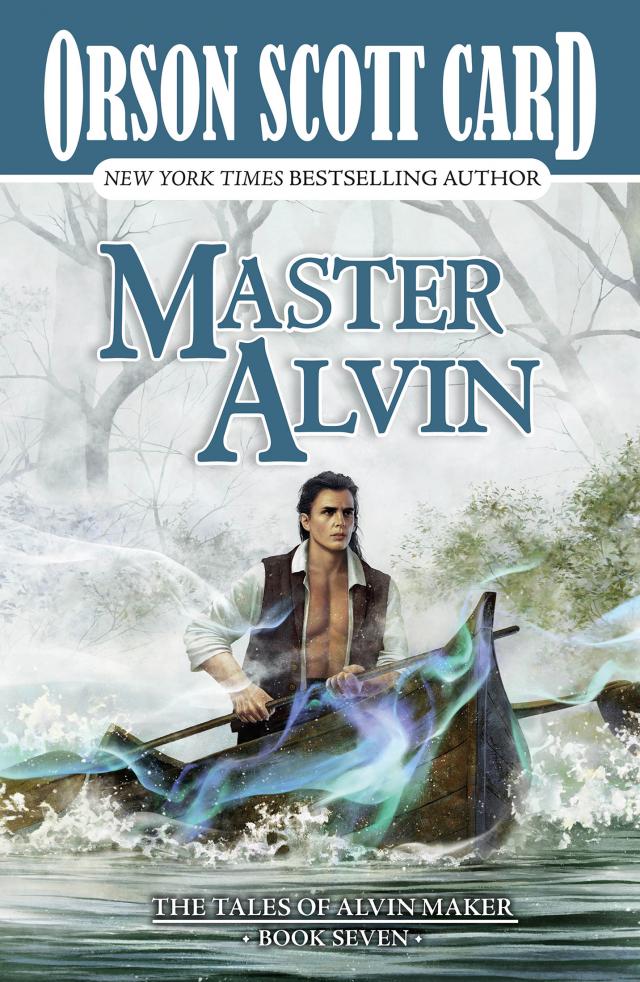
Master Alvin,
p.1


Begin Reading
Table of Contents
About the Author
Copyright Page
Thank you for buying this
Tor Publishing Group ebook.
To receive special offers, bonus content,
and info on new releases and other great reads,
sign up for our newsletters.
Or visit us online at
us.macmillan.com/newslettersignup
For email updates on the author, click here.
The author and publisher have provided this e-book to you without Digital Rights Management software (DRM) applied so that you can enjoy reading it on your personal devices. This e-book is for your personal use only. You may not print or post this e-book, or make this e-book publicly available in any way. You may not copy, reproduce, or upload this e-book, other than to read it on one of your personal devices.
Copyright infringement is against the law. If you believe the copy of this e-book you are reading infringes on the author’s copyright, please notify the publisher at: us.macmillan.com/piracy.
To Beth Meacham
Thank you for Octagon Mound
For decades of trust
For helping Alvin talk like Alvin
For being a friend to every writer
And to every reader
1
ARTHUR GOT HIMSELF up a tree because he was still young and spry and because he couldn’t see heartfires clearly from afar off, so if he was going to keep a lookout, he had to be where he could see into the distance. And he saw them, a party of five men and one woman, leading a two-mule cart through a narrow trace in the woods.
This part of Irrakwa country was still forest, but they allowed Arthur’s friend and brother-in-law, Alvin, to use the old trace, because the Irrakwa didn’t like Puritan New Englanders any more than any other citizens of the United States of America. Looking to kill folks for no other reason than they had them a knack seemed as wrong to the Reds as it did to any Whites. Or Blacks, for that matter, seeing how Arthur himself was half Black—or half White, depending on which way you looked at it.
So Peggy Larner told them a party of knackers was coming out of West Hampshire by way of Rutland, and they’d need some protection. That’s why Arthur had run behind Alvin all the way through the wooded land from Crystal City to the state of Irrakwa, where there was still a lot of primeval forest where the Greensong was so strong Arthur could hear it. Not like Alvin, of course, and it wasn’t singing to Arthur, he was just overhearing it. But it was beautiful and he wished everybody could hear it so they’d be gentler to the living things of the Earth.
Arthur didn’t know the names of the folks who were making their way up the trace, nor their faces, but they were the ones. Peggy had said they’d be pulling a heavy mule cart, which Arthur thought was plain stupid—what possessions did they have that was so precious they had to slow themselves down to bring it along by cart through a forest? But when knacky folk were trying to get away from witch-hunters they needed help even if they was stupid. Maybe especially when they was stupid.
He could hear Peggy Larner’s schoolroom voice saying, “Maybe especially when they were stupid.” And Arthur saying, “Alvin talks like I do.” And she said, “Making you brothers in ignorance. Learn to think to yourself with proper grammar, and then when you speak, respectable language will come out of your mouth without your even having to think about it.”
“Thought you didn’t like me to talk without thinking,” said Arthur on one such occasion, and Miz Larner laid a ruler atop Arthur’s head right sharply, making him glad she didn’t use a thimble but not making him regret his impertinent remark very much, since it was true.
The knackers were moving again, but faster, having left the wagon behind. Arthur shinnied down the main trunk of the tree and set himself down on the ground in front of Alvin. “They’re no more than five minutes away,” he said.
Alvin nodded. “I hear them.”
“Left their wagon off the trace in the trees,” said Arthur.
Alvin nodded again. “They think nobody can see it there.”
“Unless somebody clumb up a tall tree and could see down through the branches cause the forest is only just coming into leaf again.”
“I’m glad you still like to climb trees so high you could kill yourself just thinking about jumping down.”
“Never been injured by thinking of something stupid,” said Arthur.
“Good thing,” said Alvin. “But a lot of misfortune comes to folks as think of something stupid and then they do it.”
“I didn’t even think of jumping down,” said Arthur, “and so you shouldn’t be surprised that I didn’t land dead at your feet.”
“I wasn’t surprised,” said Alvin. “And I’m happy you’re not dead.”
The first of the knacky people came into the small clearing. It was the woman.
She stopped, and Arthur looked at her, and she looked at him and then at Alvin and then back at Arthur again. “Who am I talking to?” she asked.
“Both of us,” said Arthur. “But I reckon I’m likely to do most of the talking back.” And as he said it, his voice slid into sounding just like Alvin’s voice, because that was Arthur’s best knack, being able to imitate voices perfectly. He lost it for a while, but Alvin and Peggy helped him to learn it back again, and he was almost as good as ever.
The woman didn’t know Arthur sounded like Alvin, though, because Alvin hadn’t said a word in front of her. Hadn’t even looked her in the eye.
The woman turned to Arthur, took a step toward him. “I was told that someone from the Crystal City would be here to meet us. Meet me.”
“Oh, I know there’s five men as well as you, ma’am,” said Arthur. “And you left your mule cart hid up in the trees just off the trace, about a quarter mile back.”
The woman took a step back. “You been spying on us?”
“Well of course,” said Arthur. “You think we’d let somebody get this close without knowing who they are and what they’re here for? You rather we didn’t watch out for you, and so when you came over the border you’d meet up with Irrakwa border scouts instead of us from Crystal City?”
“Watching out for us,” said the woman. “Not spying. I get it.”
Arthur doubted that she got anything right yet, but … no reason to argue the point. If he was going to imitate Alvin, he should say only things that Alvin would say, and picking an argument about nothing was something he’d never do, not with good folks, anyway.
“I bet you have a name,” said Arthur.
“I bet you do, too,” she answered.
“You’re the stranger,” said Arthur.
“I’m not a stranger to me,” she said, “but you are.”
“I’m Arthur Stuart, reckoned by most people to be the cleverest boy in Crystal City, though I’m over twenty and have a man’s height.”
“I’m glad you’re so highly thought of,” said the woman. “At least by yourself.”
“Everybody agrees with me,” said Arthur. “You’d be amazed.”
“My name is Goody Sower,” she said. “Even if they weren’t nobody looking to kill me, I’d be glad to get shut of New England. Hardly any honest soil in the whole country, just stones and smaller stones.”
“You got you a husband, Goody Sower?” asked Arthur. “Just wondering if there’s a Goodman Sower among the five men standing just out of sight among the trees.”
A man stepped out from the wood. “That’s me,” he said.
“The rest of you come out, too,” said Goody Sower. “They know you’re there. These men are from Crystal City.”
“How do we know that’s true?” asked a suspicious-looking man.
Arthur laughed. “Who else is going to be waiting here to welcome knacky folks from New England and take them west?”
The men looked a little uncomfortable. Then Goodman Sower walked to her and put an arm around her waist. “If you’re here to take us west to the Crystal City, can you lead us to a wagon road?”
Arthur grinned. “Now why would we do that?”
Goody Sower said, “Because you already know we have a wagon.”
Arthur nodded wisely, still grinning. “To be precise, ma’am, you had a wagon. Now you’re just six people standing in a clearing with us.”
The other men reacted abruptly—two of them turning around to head back toward the wagon, the other two to step forward and demand an explanation.
“Rest easy, merry gentlemen,” said Arthur. “Your wagon is where you left it. The contents are undisturbed.”
“I bet you got it surrounded with armed men. Or Irrakwa warriors.”
“Not yet,” said Arthur. “Which would you prefer?”
“Neither,” said Goody Sower, preempting them before they could say something dangerous. “But we worked hard to get that wagon where it is, and if we can find an easier path, that would be … helpful.”
“We’re here to help,” said Arthur. “So, what’s in this wagon that you can’t bear to part with even to get to the prairie by the Mizzippy?”
“It’s everything we own,” said Goodman Sower.
“Well, now,” said Arthur, “I think you’re making fun with me. Because you own the clothes you’re wearing, and the guns some of you are carrying. The shoes or boots on your feet. And every thought inside your head. Ain’t none of those in that wagon.”
The men looked nervously at each other, but Goody Sower was unfazed. “You know what I meant to say,” she said.
&nbs
p; “I also know what you meant not to say,” said Arthur. “I’d say there’s about four thousand dollars in gold in that wagon, in two chests and three heavy cloth bags.”
“Who’s been spying on us!” demanded the largest of the men, looking as if he wanted to rassle the culprit to the ground there and then.
“Just think a minute,” said Arthur.
The men paused. The big one said, “Think about what?”
“Think about where you’re going.”
This time they thought. Goody Sower, who seemed to be the sharpest blade in the knife drawer, finally said, “You’re a city full of people with knacks. Maybe one of you can see afar off. Maybe this fellow.” She indicated Alvin, who wasn’t looking at them or at Arthur.
“Close,” said Arthur. “We’ve got one farseer who maybe could spot you and the gold from Crystal City all the way to the bank you just come from.”
“What bank!”
“Who said anything about a bank!”
Arthur held up his hands to quell their outrage. “Every citizen of Crystal City is free to look into the crystal walls and floor and see what’s there to see. You folks were there to see. All the way here, trying to get them mules to stay in order and not hang up the wagon on a stump.”
Some of the men nodded—no doubt the ones who had to help the mules get the wheels over those stumps.
“And those same folks also saw you rob the Whitman Bank and Trust and fill your wagon up with other people’s gold.”
Now the men stiffened up and a couple of them clenched their muskets and one of them made as if to run off, but Goody Sower stopped them all. “Forgive my companions,” said Goody Sower. “They weren’t none of them chosen for their wits.”
The men glowered, but kept still.
“I can assure you,” said Goody Sower, “that nobody saw us enter the bank or load up the gold. There’s no pursuit behind us.”
Arthur laughed. “Well, I sure know what your knack ain’t,” he said. “There’s a posse comitatus tracking you through the woods not two miles back, and having an easy time of it, your wagon tracks being mighty easy to see.”
“Then we’ve got to get that wagon moving right now,” said the big man, and he and another fellow took off running back toward the trace in the woods. Or so they thought.
Alvin looked up and called out to them. “The trace you came through is over there,” he said. “That’s the path to your wagon and its cargo of contraband.”
The two runners corrected their course and disappeared into the woods.
Goodman Sower stepped closer to Alvin. “Are you the one in charge of this party?”
Alvin shrugged. “Arthur and I travel together and we make decisions pretty much at the same time. Nobody’s in charge, not officially.”
“I’m in charge,” said Arthur, “on account of I got more common sense.”
“While I have some uncommon senses,” said Alvin.
“Here’s the thing,” said Arthur. “That wagon’s already gone as far as it’s going to go.”
“Is that a threat?” asked Goodman Sower.
“It’s a fact,” said Arthur. “Because you ain’t getting no further without our help, and we ain’t going to help you bring stolen gold into Crystal City.”
“Then I guess we’ll have to go somewhere else,” said one of the other men, looking angry but also scared.
“I doubt it,” said Arthur, “since your wagon wheels are buried up to the hubs in squishy mud.”
“There wasn’t no mud where we—”
Goody Sower held up a hand again. “So you ain’t leaving us no choice,” she said.
“You got several choices,” said Arthur. “You can run back to the wagon and try to kill all the men who are coming after you, so you can take the wagon further along one trace or another.”
“I’d like to hear another choice,” said Goody Sower.
“You could leave that wagon and all that gold behind, so that the good folk of Whitman can take it back to the bank and no harm done.”
“I’m hoping there’s a third choice,” said Goody Sower.
“I’m thinking,” said Arthur.
“Here’s what I’m thinking,” said Goody Sower. “Crystal City’s growing by leaps and bounds, we hear. It’s got to be expensive, feeding and housing all them folks. This gold isn’t for us, no matter what some of these clowns might think. We mean to contribute all of it to Crystal City, to the Maker and his people. What we’ve got is prosperity.”
Arthur laughed. “Don’t you know that Maker fellow can turn iron into gold whenever he wants?”
They had nothing to say to that—they had all heard the stories.
“Iffen you bring that gold to Crystal City,” said Arthur, “then the law’s going to follow you all the way, and then if they find the gold in the city, they’ll be arresting a lot more folks than just you.”
“Don’t you people have hexes to conceal the gold?” asked Goodman Sower.
“What gold?” asked Alvin.
Goodman Sower stammered a little. “The gold back in our wagon.”
“Ain’t no gold there,” said Alvin. “Just bars of tin and little tin disks. Like a tinker tripped and dropped all his kit in that wagon.”
The men were outraged. “Tin!” “We hefted it and it’s gold.” “We know the difference between tin and gold!”
“And so do we,” said Alvin. “But I can promise you—if the posse from Whitman finds that wagon, it’ll be full of gold, just how you left it. But the minute you try to defend it or conceal it or transport any part of it away from here, it’ll be tin.”
“We can use tin in Crystal City,” said Arthur helpfully. “You can probably sell it for enough to rent some houses long enough to find work and earn your way.”
The tall man came back into the clearing. “We earned our way,” he said. “Gold enough to let us buy houses and hire workers to till our fields. Gold enough to keep carriages and fine horses, and china plates for our wives.”
“Wives that none of you got,” said Arthur, “not even Goodman and Goodwife Sower, who are no more married than this tree to that stump.”
“How can you know anything like that?” said Goody Sower. “Specially on account of it’s a lie.”
“Why did you come back?” Alvin asked the big man. His erstwhile companion emerged from the trace.
“The posse got to the wagon before us,” said the big fellow. “And the two of us were outnumbered by a few.”
“Well,” said Arthur to Goody Sower, “you got fewer choices than you had awhile ago. I’m thinking, you can take off running down one of these forest traces and hope you reach some town before you run into Irrakwa who might not appreciate your trespassing.”
The men said nothing to this.
“Or you might just come along with us,” said Arthur, “which was what we came for, to guide you and protect you all the way to the Crystal City, where the Maker’s likely to try to teach you to use your knacks for something better than stealing other folks’ gold.”
“You two, protect us?” asked the big guy.
“I reckon so,” said Arthur. “For instance, that posse saw you take off running this direction. They tried to follow, since they didn’t know all the gold was still on the wagon. But they haven’t been able to find any trace that leads to this clearing. Isn’t that protection?”
The men looked at each other, at Goody Sower.
“You can lead us to safety?” Goodman Sower asked.
“Only a couple of conditions,” said Arthur. “And don’t worry, it’s not payment the Maker asks for. It’s honor.”
“I think that’s in short supply in our company,” said Goody Sower.
“First, he expects folks to tell us their right names, and some of you been passing by other names so long it might be hard for you to remember the name your mama called you.”
“I really am named Sower,” said Goodman Sower. “Robin Sower.”
“Robert,” corrected Goody Sower.
“Robin is what my mama called me, and that’s what he said they want,” said Robin Sower.
The big man allowed as how his nickname had been Tiny for so many years that he wasn’t sure if his original name was Cincinnatus or Hobb. Or Cincinnatus Hobb?
“Cincin Hobb,” offered Arthur. “Sounds like the devil’s work, though—Sin-Sin.”