

Studio of screams, p.2
Studio of Screams,
p.2
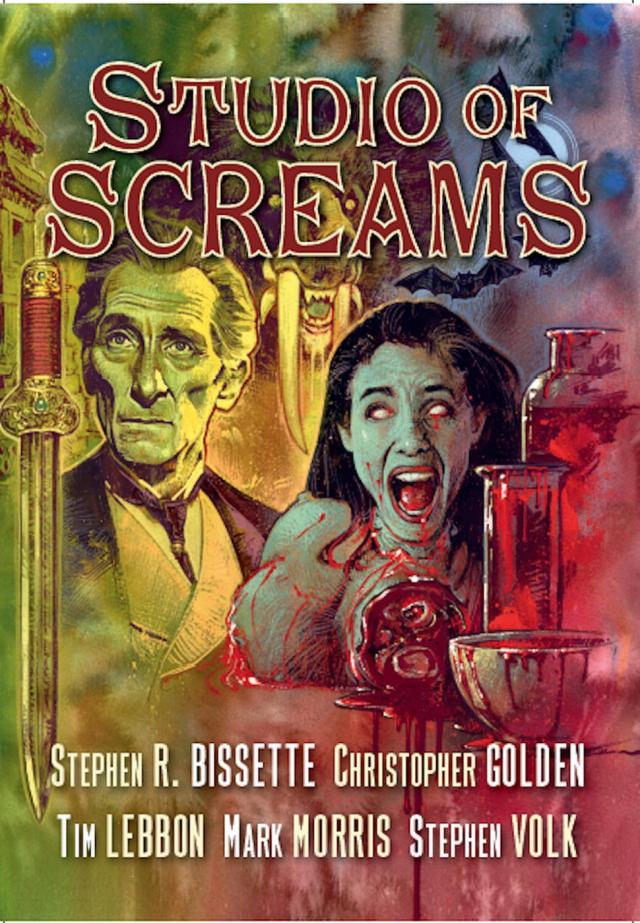


In compiling the list, it’s interesting what material I found myself compelled to include, from movies, TV, print, all media: Robert Mitchum’s marijuana arrests leaving him essentially unscathed, only boosting his badass outlaw stature; Henry Lewis Gates and his defense of performers like Mantan Moreland and Lincoln Theodore Monroe Andrew Perry, better known by his stage and screen name Stepin Fetchit. Was I to subject my students to excerpts from Bill Cosby’s once-beloved best-selling comedy LPs, excerpts from his game-changing co-starring role in television’s I Spy? Was I to show the class racist Warner Bros. animated cartoons of the past, like Bob Clampett’s COAL BLACK & DE SEBBEN DWARVES? An episode of the Amos & Andy TV series? Of course, I’d have to.
Woody Allen and Roman Polanski were essential viewing, but what about filmmakers like Bryan Singer? James Gunn? The women in previous classes I’d taught were already outspoken about Quentin Tarantino, with blistering attacks concerning his treatment of Uma Thurman on the KILL BILL set. But on the other hand, what about Leslie Jones, suffering social media abuse for her role in the GHOSTBUSTERS remake, which—through no fault or “crime” of her own—had career-damaging consequences? What about Milo Yiannopoulos? Kathy Griffin? Underground cartoonist Robert Crumb? Do I include or exclude the whole of National Lampoon (e.g. Tony Hendra’s “The Joys of Wife-Tasting” and Doug Kenney’s “First Blowjob”)? What about generational shifts resulting in once-revered work being consigned to oblivion, as with Harvey Kurtzman and Will Elder’s long-popular Playboy comic strip “Little Annie Fanny”? It’s not as if Kurtzman and Elder were like Hustler’s “Chester the Molester” creator, Dwaine B. Tinsley, who was arrested and charged for raping his own daughter—but I’ve found 21st century students reacted to “Little Annie Fanny” the way they did to Polanski, or Woody Allen, as if it shouldn’t ever have been part of the pop culture (Michael Jackson seemed to still be getting a “pass” from some, but that, too, would change in time, I was certain). Times and cultural norms change, but these case histories all seem relevant, the assessments and reassessments critical.
For multiple reasons, I struggled to include and keep Blythewood Studios in this list.
My decision wasn’t because of anything or anyone associated with Blythewood having been accused or found guilty of any of the sins (for want of a better word) associated with some of the more infamous members of the “Cancel Culture” Rogue’s Gallery I’ve already mentioned. To the best of my current knowledge, there are no particular crimes or infamy attached to anyone who was part of Blythewood’s operations.
Nor is it only because Blythewood shared the fate of so many other British filmmaking firms of the 1970s (which they did): closing up shop as British tax laws were revised, production opportunities evaporated, and once-dependable genre staples ceased to draw audiences. Blythewood’s fortunes didn’t dwindle. Blythewood rigorously removed itself completely with breathtaking haste from the marketplace as soon as the winds changed—and then covered its own tracks. Why? What could have happened?
Blythewood’s absence from the historical record begs a procession of unanswerable questions. Perhaps the critics who called for Blythewood’s films to be “barred from exhibition altogether for the good of the nation”—as one uncredited review in the Glasgow Herald suggested in 1972—at long last got their wish?
But how would I expose 21st century students to their product?
Perhaps, I told myself, I might track down someone associated with Blythewood, perhaps producer and studio founder Lawrence P. Blythewood himself, and persuade them (or him) to Skype into the classroom for an in-class conversation, and from there...well, who knows, unless one tries, yes?
Tries, and trying: I was distracted, derailed, misled, and simply lied to along the way. Most of the Blythewood production and player personnel were long dead and gone; contemporary newspaper accounts from the 1960s and ’70s proved to be unreliable at best, and my online investigations were fruitless, all blind alleys and bald-faced fraudsters. There were contradictory sketchy biographies: were the founders of Blythewood from Wales? Ireland? Scotland? That they weren’t Brits seemed to be the only consensus, though that, too, seemed unfounded, undocumented. The founders were brothers; the founders weren’t brothers; no, Lawrence P. Blythewood was his own man, a solitary entrepreneur. He was originally in insurance; no, the brothers were in real estate, and filmmaking was a side endeavor; no, Lawrence had worked as a movie theater projectionist, working his way into production from those humble beginnings, and his brother was an archeologist, their parents apparently killed when a coal spoil (a.k.a. slurry a.k.a. waste) inundated their retirement home.
Eventually my search led me to a pair of fanzine editors from the 1970s who claimed to have once visited Blythewood’s offices in London, and the only ultimately helpful individual in the zine circles proved to be Richard Klemensen, longtime editor/publisher of the Hammer and British horror film fanzine Little Shoppe of Horrors. Richard entrusted me with the only name he’d ever found in his own research that seemed to be forthcoming with any information on Blythewood. A tentative exchange of emails and two phone calls, and lo and behold, a breakthrough.
And this, eventually, led me to a tiny township in northern Quebec on a Sunday morning in late June of 2016, sitting across from a well-dressed, silver-haired bearded gent whose last name was Blythewood.
He introduced himself as Lawrence Blythewood—“never did achieve Lord stature,” he chuckled, “though one could grow to like the sound of it: Lord Blythewood”—and seemed content to meet me.
He’d selected our meeting date, time, and place, at a bed-and-breakfast in one of the pleasantly rural eastern townships of Quebec, a location I was instructed to never disclose under any circumstances. Blythewood was listening to and watching BBC news on a laptop when I arrived, but he promptly removed his ear buds and closed the computer, handing it over to the gentleman he then introduced me to, a much younger and taller gent named Randall Mayer. Retaining and patting a scuffed attaché case that he kept on his seat, a sort of worn leather rucksack he kept close by his left hip, Blythewood dismissed Mayer rather curtly before insisting upon our sitting across from one another at a small oak table in the dining area, turning his full attention to myself, and breakfast.
“The food is quite good here, as are the rooms,” Blythewood noted, “and they manage to be both quite attentive and quite discreet, which I value above all. See to my needs when I need, otherwise leave me alone: that’s how I’ve always preferred things to be.”
We exchange brief greetings and pleasantries. He spoke with a slight accent I couldn’t place or identify. Blythewood seemed to have already satisfied himself as to the seriousness of my intent—“don’t waste my time, and I shan’t waste yours”—and promptly cut to the chase.
“So, what was first in the queue?”
He laughed aloud as I admitted to the first Blythewood title I’d seen.
“Ah, yes, MIRACLE OF THE BOWMEN. We lifted that wholesale from that famous story ‘The Bowman,’ you know,” Blythewood chuckled. “An old story, that, 1914 or 1915, during the Great War, as it were.”
Clearing my throat, I reiterated my father’s claim that the film was based on an actual event. Blythewood laughed heartily.
“We’d already made that one: THE ANGEL OF MONS! ANGEL never played over here, Americans weren’t familiar with that legend the way we were on our side of the pond. Couldn’t get any American distributors to look at it, even Richard Gordon couldn’t place it. Still, same story, precisely the same story—same actors, same sets, in fact—but that one involved an angel and a sword cutting down the Krauts, instead of the ghost bowmen and the fiery rain of arrows. No, no, BOWMEN was from a story, a fabrication, a fantasy, complete nonsense, with some input from my brother, who loves and understands matters of war and antiquity far more than I ever have or will. We optioned the story from Arthur Machen’s estate for a song.2 Mind you, Machen hated his own story, but he was long dead and gone. We paid his estate what they’d asked, so no complaints from his corner about what we did with it. Made a few quid off that one, we did.”
Blythewood took a sip, looking me over with even more rigorous intensity.
“But you’re still a rather young fellow, surely you didn’t see BOWMEN in a theater? You couldn’t have.”
Tensing up, I admitted to MOLLY & ME being my first Blythewood experience on the big screen.
“MOLLY’S MOGGY?” he shook his head. “Really? Out of everything, MOLLY’S MOGGY? Not one of our pirate movies? The MOGGY, then. That was to have been the Dalby Spook, Gef the talking mongoose, you know, from the 1930s, but as a kiddie’s fantasy, hoping Rank3 would play it. We even shot it around where it all happened, Dalby, off the track on Isle of Man, what was left of the farmhouse, which they knocked down for good a year or so after we’d left. Again, my brother helped track all that down and set it up. Always thought the girl’d done it, I did, throwing her voice, but who knows. Figured making her the heroine would let us play it either way. Silly me, I tried to arrange for an actual mongoose, but my brother talked me into making it about a mouthy moggy instead, since Disney had scored with their cat movies all through the decade.”
“Right: THREE LIVES OF THOMASINA, THAT DARN CAT!, CAT FROM OUTER SPACE—”
“Bloody nuisances on set, never do what you want, particularly on a shoot. But you didn’t come all this way, motor here, corral me, to talk about moggies, did you? Bigger fish to fry, haven’t you?”
“May I ask, where were you born, raised?”
Blythewood simply narrowed his eyes and remained mum.
“So, then, when and how did you get into film production?”
Blythewood leaned back and scowled. Then he spoke.
“Oh, come off it. You’ve better opening lines than that, haven’t you? Surely, you know what you most want to ask. Out with it.”
I could feel my face flush, my throat clog; clearing my throat, I stammered, “why are you even willing to talk to me?”
For the first time, Blythewood truly smiled. It was an unnerving grin, far more so than his scowl.
“Ah, there’s a lad. I’ve my reasons. In good time, I promise, I’ll tell you.”
At this he chuckled, locked his fingers together, and leaned in toward me, still smiling.
“What did the crossed knives represent?” I ventured, referring to the Blythewood logo.
“Oh, Trevelyan didn’t like that.” Blythewood smiled. “Didn’t like that in the least. ‘You’re trading on our X-cert,’ he complained. It was an ‘X’ you see. That meant adult fare in England, which Hammer had made quite exploitable: they used it in some of their titles, you understand. Put it right in their titles. So I thought, ‘I’ll make it my company brand!’ Our coat of arms. Brought the punters in, kept the kids away, which made them want to see the movies all the more. Good business, all around. Trevelyan took me to court, he did. I had to reposition the angle on the knives on our trademark to settle everything, you understand. Silly, really.”
“John Trevelyan, head of the British Board of Film Classification?” I asked, and Blythewood grinned, only a little less disturbing a grin than his prior one.
“BBFC Secretary, he was, head of the policing what we could and couldn’t do. Had to run all our scripts by him, we did. Tiresome, really. I found workarounds. Still, they’d nip and tuck, insist upon cuts. T’was all a game for me, except when it wasn’t. But look, let’s tip-toe into this, shall we? I don’t know you from Adam.”
The B&B host interrupted with breakfast, setting our plates before us without saying a word. Blythewood took this as his opportunity to regain control of the conversation.
“You have a day. Today. Let’s see—yes, it’s the 23rd June. We’ll start after breakfast, wrap up before midnight,” he said, leaning in over his eggs. “You’ll screen the first two in daylight hours, we talk after each, you have a snack between, with time for a break, a walk, whatever suits you. Then, a proper dinner, and you then screen the last two features tonight. As I say, we’ll be done well before midnight, if all goes as it should.
“First, you’ll have to spend some time getting acquainted with what we’ll be talking about,” he added, pushing aside his plate, pulling a paper-wrapped package from the leather bag tucked alongside his hip, and placing the package on the table dead-center, before me. “The grown-up stuff, not the magpie moggy.”
“Fair enough,” I said, doing all I could do to contain my enthusiasm. The package was the size of a disc, or discs, and I hoped above all hope what it might contain.
“I’ve rented a room for you here in this B&B, apart from your own. It’s yours, while you’re here, your home-away-from-home for a bit.”
Blythewood gestured toward the window across from where we were sitting.
“There’s an old theater space in the adjoining building. I refurbished it fifteen years ago, it’s my private screening room. I watch movies there all the time. Strictly controlled situation, state-of-the-art, all digital now, you understand. My man Mayer will see to everything for you. Can’t have you copying or taping what you’re to see, you understand. You’ll be inspected before and after, just as if you’re serving on a jury or Grand Jury or somesuch.”
And then, that smile—that distressing smile.
“No handheld or laptop devices, no paper, no pens. No recording, no note taking, you’re just to sit and watch what’s onscreen. Just enjoy the show. Not that I don’t trust you. It’s just that I don’t know you.”
“Fair enough, you’ve no reason to, but you did get my—”
“Your résumé, yes. Very nice, very tidy. Impressive enough, though I don’t move in academic circles. No use for it. Might impress my brother, all that academia, but I’ve no interest whatsoever. Checked your credentials, you understand. I’ve got people, like Mayer. Do that sort of thing for me.”
Blythewood slid his plate back into easy reach, tucked into his eggs, pausing between discreet chewing to spell out the rules of engagement.
“So, the room is all set up for you.”
“My room?” I asked.
“The theater. You’ll be comfortable, there’s a spot of food and beverage there for you. There will be appointed times this afternoon, and two more for this evening’s; Mayer will bring you in and out, over and back, up and down. We’ll sit down and talk between the screenings, yes? We’ll convene here, this table. Convene, and converse. Those conversations you can take notes, if you wish, but only the conversations. Not the screenings.”
He patted his lips with his napkin, sipped tea, then folded his hands, fingers tightly interlocked.
“So. Four.”
Blythewood winked.
“Four movies. Four screenings, in all. Chose them for you myself, I did. It’s the favorite of what we accomplished. My favorites, that is. Most important to me, they are. I’d prefer you see them back-to-back, just like we used to program the films, but for your purposes”—he patted the table at this point—“we’ll chat in between. As I say. You begin whenever you’re ready. Then again, why wait? Right now, if you wish; no need to lollygag. Mayer is ready for you next door.”
Blythewood’s cheeks went ruddy, but his lips closed tight, as if whatever might have wedged between his teeth over breakfast should remain invisible until he’d had a chance to see to his dental hygiene.
“Well, yes, I’d like that.”
“Thought you might. Oh, and these, you will be permitted to take these home with you—”
He winked.
“—one title per title, as it were.”
My puzzlement at his odd phrasing was met with another of Blythewood’s unsavory smiles. Blythewood extracted something new from his attaché case: a small paper bag. He opened the end of the bag, and I could see the spines of four thin paperbacks.
“Novelizations, specially commissioned back in the day. We did a batch of them. I had friends at Badger, Cobra, Corgi, but I liked working with Ace Books, Four Square, after they became NEL4 in ’61. Knew an agent in Bloomsbury on Great Russell Street, and an editor at NEL, never worked with the same author twice, liked to keep it fresh. They’d have me lunch with a writer, bring them a copy of the script. Quick and easy £150, £200 they’d make from the job. Two weeks and a nice photo cover or use our poster art, and Bob’s your uncle, you know? Made a bit off them, enough to keep NEL happy to see me, but I mainly used them for promotions.”
I checked my eagerness to reach over and touch the paperbacks, but the urge was obvious.
“They’re not precisely true to what you’ll see, but they were written from the early-draft screenplays, you understand. You’ll have a butcher’s—as a pal of mine used to say—at some of what we weren’t allowed to keep in the final cuts, livelier than anything Trevelyan or his successor Stephen Murphy permitted. Oh, I’ve personalized them to you, no need to thank me.”
“May I—”
“Mayer will deliver these to you, one at a time, after you’ve enjoyed each course.”
Rolling the end of the bag up, Blythewood set it down on the table, tapping it with his fingers.
“I think you’ll enjoy what’s first in store. First one, my brother really rode me on. First one to make me a small fortune in its day, it was. Kicked up a bit of a storm, it did. Always good for business, except when it wasn’t, but we’ll get to that.”


