Attack of the black rect.., p.9
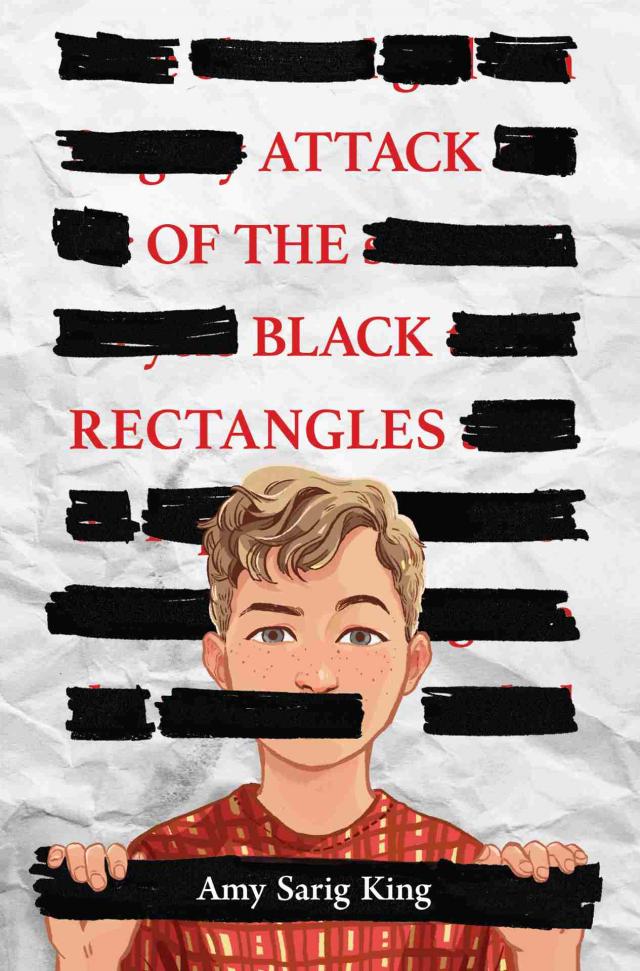
Attack of the Black Rectangles,
p.9


We protest for three hours, have a lot of cool conversations with people, and then Marci says she has to get home. Grandad says we should get some lunch, so we start walking home, too, with Marci at first until she takes a left to go up her street.
“See you on Monday, Mac,” she says. She opens her arms and I think she’s going for a high five, but then she hugs me and I hug her back kinda—my right arm is still raised for the high five that never came.
Grandad and I walk quietly after that. When we get home, we go to his flat to put the candy bucket away.
“That was fun,” Grandad says.
I don’t know what to say at first, but then all these feelings hit me at once and I say, “I feel like I work in an office.”
He looks confused.
“I feel old. Like I’m in an office and I’m handling all this stuff like a real office guy,” I say. “Not like I know what it’s like to be an office guy but you get what I’m saying, right?”
“You are one cool cat,” Grandad says.
“None of it feels cool.”
“I mean you have a way with words, kid. When you write a letter to that author, you should ask if she can help you write a book. I bet you could.”
I tilt my head and wonder if Grandad is not hearing me on purpose or if he’s doing it by accident. It makes my eyes wet and I take a deep breath, but when I exhale, the quiver from my lip moves to my chest and it comes out like I’m shivering. Or crying—which is what I seem to be doing.
But like an office guy, I don’t feel like I’m crying, I’m just crying—same as asking people to come into my office and leave work on my desk or empty my trash can like that’s normal. I don’t feel a thing. But I also feel my whole body shaking and it’s like it’s not my body. I’m twelve, by the way.
This is when Grandad wraps his arms around me.
My whole body goes limp the minute it knows he will support it. I am a sobbing blob of 100 percent human. I never wanted to be half alien. I never wanted any of this. I just took it in and filed it. Dad told me he was an alien, and I believed him because he’s my dad. I saw the McDonald’s parking lot from a half mile high. I did all that. I made my own anime series about us in my head and wrote and drew every episode and every season.
Feels like it was for nothing.
Not just because he left and stole Grandad’s car and my baseball stuff, either.
When he said he smashed Mom’s mug last week—it felt like it was for nothing every time he got like that. And he got like that a lot. It’s hard to know when they’re sitting right there at your dinner table with you, but people can be real jerks while you make up excuses for them.
“You just get it all out,” Grandad says, and I do—for what feels like ten minutes.
When I finally sit up and gather my used tissues from the floor, and Grandad stretches his right arm and shoulder, I say, “Sorry for crying.”
“Don’t you dare be sorry for crying,” Grandad says. “Crying is one of the most important things to learn how to do.”
I laugh. “Nobody has to learn how to cry,” I say. “Babies do it!”
“Next up, talking. Babies do that, too,” he says.
“Hey! I talk,” I say. “I even get in trouble in school for talking!”
“You’re great at standing up for the abolition of Columbus Day, but most days you keep your feelings inside. You get what I’m laying down?”
“Yeah,” I say. “I get it.”
For the rest of the night, I still feel like an office guy, though.
Unreasonable Curfew
My son and his friend were driven home in a police car last weekend because the officer said they were out past curfew. I was not aware of this 9 p.m. curfew and I don’t understand how we are enforcing it. My child and his friend were simply taking a walk and did nothing wrong. Plus, some restaurants on Main Street are open until 11 p.m.! Do the people leaving them and walking to their cars also get ticketed for such ridiculous things?
—Mike Fallon, Locust Street
Re: Unreasonable Curfew
Those who stay up to all hours are known to have lifestyles that bring a town like this down. Good people are asleep or close to it by 9 p.m. and two boys walking and talking outside others’ homes can wake up people who have to work in the morning. Try to think of others and keep yourselves and your children inside after 9 p.m.!
—Laura Samuel Sett
On Sunday we go canoeing. We never go canoeing. This is what families do when something big and weird happens. They do things they never did before. So we go canoeing. It’s still warm, but not hot. The lake is big and motors aren’t allowed, so it’s quiet. We see herons and egrets and a turtle sunning itself on a log.
Mom has to work on Monday, but I have the day off because of the big lie. So Grandad and I sit around, play backgammon, and watch a movie that tells the truth. It’s called Blackfish and it’s about orcas in captivity and what their lives are really like, and it’s really sad. After that, we put on the punk rock records he bought me and he tries to teach me how to dance punk rock.
“Here’s the thing: There is no specific way to dance to this stuff,” he tells me.
“Usually they just throw themselves around the mash pit or whatever it’s called,” I say.
“Mosh, I think.”
“I just like doing this.” I stand and tap my foot and bang my head to the beat.
“You do you,” he says, and then thrashes himself around his flat like he has helicopter blades for arms.
At dinner, we talk about the Lenape tribe, and we recognize and thank them before we eat. People do that in a lot of countries that took land from Indigenous populations and Mom does it before every event at her work. It’s called Indigenous Land Acknowledgment and today seems the perfect day to start doing it at our house.
Tuesday is normal. It’s still hotter than it should be and I think it’s affecting us. In math class, I can’t remember anything we learned last week.
After lunch, we have library class. We’ve been learning how to research and I’m still trying to find any articles about books being censored like ours are. I hear Denis and Marci talking in the shelves behind me, so I get up from the computer station and stand closer.
“Mac totally likes you,” Denis says. My heart drops into my shoes and I feel a sudden need to run while my body stays completely still.
“He does?” Marci asks.
“A lot.” I don’t know how to feel—other than like an office guy.
“Huh. I thought he thought I was bossy,” Marci says.
“You are bossy,” Denis answers.
There’s silence that scares me a little and the two of them start laughing.
“Huh,” she says.
“Why not go to the homecoming dance with him and figure out if you like him?” Denis offers.
Marci laughs through her nose. “Oh, I like him. I’ve liked him since fourth grade. Did he send you to tell me this? Why isn’t he telling me himself?”
“He doesn’t even know I’m telling you,” Denis says. Part of me wants to be angry when Denis says this, but honestly, I’m glad he’s telling her. Now I don’t have to.
“Oh.”
“He can’t stop talking about you and I’m getting sick of it,” Denis says. A complete lie. I don’t ever talk about Marci. “And if you go to this dance with him, then he might stop or the two of you can kiss or whatever and it will just get all of that weird stuff over with.”
“You make it sound like it’s not normal.”
“I don’t want to kiss anyone ever, and that’s just how I am,” Denis says.
“Ever?” Marci asks.
“I’ve never even had a crush,” Denis says.
“Huh,” Marci says.
“What?”
“What if you knew that I liked you once?” Marci says. “Does that make you like me back?”
“No,” Denis says. “Sorry. I really love you as a friend, though. I think you’re really smart and great!”
I can hear the crack in Denis’s voice and I know I should rescue him. I slowly walk up the side passage between rows of books. I act like I’m really thinking about something deep, and then I look up and see the two of them there and say, “Oh, hey. I was just looking for you.”
“Hi, Mac,” Marci says.
“Hey, Marci,” I say. I smile.
“Is it true that Denis has never had a crush?” Marci asks. Denis looks at me and smiles crooked.
“It’s true,” I say.
“Huh,” she says.
“More crush energy for the rest of us.” I smile at Marci.
Marci smiles back.
I feel like I’m going to puke up all my lunch.
When I get home, Grandad is in the yard meditating again. I don’t want to interrupt him, so I turn back and head inside, when he says, “Don’t go! Come. Join me.”
“I really can’t,” I say.
“I’m not asking you to do anything but sit down,” he says.
I walk to him and sit down.
“Doesn’t the grass feel good in your toes?” he asks.
I still have my shoes on. I take them off. I’m self-conscious because I know people say boys’ feet smell, but I take my socks off, too, and put my toes in the grass.
“You’re tense,” he says.
“I guess I always am.”
“Nah. You’re a chill guy. Your gram always said you were a little lamb.” His eyes are closed and he’s smiling as he says this. He looks so at peace. Breathes in. Breathes out. “You’re just in a choppy ocean at the moment.”
The grass is making my toes itch. Things just feel wrong here on the tiny lawn with the neighbors watching. They probably think Grandad is a weirdo for sitting here breathing and humming all the time, rubbing magic beads.
“Good day at school?” he asks.
“Yeah. Just normal.”
“Any news on the school board meeting?”
“As far as I know, they’re going to let us talk. Marci said she got approval,” I say. “Now we have to find ways to get more people to help us.”
“We’ll keep protesting on Saturdays,” he says.
“Yeah, I have to go. I have homework.”
This is a lie. I feel bad lying to Grandad but I’m still processing the fact that Marci has liked me since fourth grade.
The thing about The Devil’s Arithmetic is that up until chapter eleven, the reader, like Hannah (the main character), is experiencing the journey of Jewish people from their villages and home places in train boxcars—eventually landing them at concentration camps.
Until chapter eleven, the story is about the journey—and I know where they’re going because I know what the Holocaust is. And so does the main character because she’s a time traveler. But the people in the story don’t know—just like in real life. It’s eerie and you can tell something terrible is about to happen, but at first, it’s just … normal.
Jane Yolen sure knows how to write a book.
Today is the day we read chapter eleven. Of course I’ve already read it, and so have Marci and Denis and Hoa. Aaron is the only one in our group who probably hasn’t.
I pull out my uncensored copy of the book and start reading.
The horrible shower scene unfolds and Aaron doesn’t say anything about his censored book until he sees my page because I put my book, open, flat on the table. Yes, on purpose. Of course on purpose.
“Hey,” Aaron says. “How come my book has that part blacked out?”
“What?” I say.
“Let me see.” He reaches over and grabs the book. I grab it back. He asks, “What page is that?”
“Ninety-three,” I answer. I put the book down again, with my hand on it to keep it open.
“Someone crossed out a bunch of words on my copy,” he says.
“Mine too,” Marci says.
“Same,” Denis adds.
Hoa nods.
“How come you got a copy without it?” Aaron asks me.
“I bought this one myself.”
“Huh. Why?”
“Because if they’re censoring books, what else are they going to hide from me, right? What lies can they be telling me, you know?”
Aaron nods and squints at me. “Are you messing with me?”
Marci and Denis show their censored books.
“Well, what’s it say?”
Marci smiles at me, then turns to Aaron. “You’re not going to believe it,” she says. “But Ms. Sett censored it because she thought boys—like you guys—would be uncomfortable and get all weird about it.”
“Imagine,” I say, “uncomfortable during that scene! As if it’s not already so terrifying.”
“But what’s it say?” Aaron asks.
“It says hands over her breasts,” Hoa says in a quiet, respectful voice.
Aaron frowns. No giggles in sight. He looks at me and I give him my book so he can read it. He gives the book back to me. “That’s just wrong.”
“We know,” Marci says.
“What can we do about it?” Denis says. “We have to do what they tell us, right? I mean, rules are rules.”
I give him a look like we’re going too far.
We sit quietly for a few moments. Hoa goes back to reading her book. Marci does, too. Denis follows and I go to pick up my book. Aaron says, “Where’d you get that copy?”
“Tad’s.”
“Was it expensive?”
“Four bucks used. They have new ones for eight,” I say, then go back to reading like censorship is no big deal. Aaron mutters under his breath a few times about it. He’s still frowning.
“You okay, Aaron?” I ask.
“I just don’t like people telling me what to do. It’s a free country, right? This is covered in the constitution, I bet.”
“First amendment,” Marci says. “It’s kinda the most important thing.”
“Huh,” Aaron says.
Hoa says, “If you ask me, the word made the person who crossed it out more uncomfortable than it makes us.”
“And she even has breasts!” I say.
As if she can sense our topic of conversation, Ms. Sett turns our way and says, “Mac? Marci? Why is there talking and not reading?”
“Sorry,” I say.
She gets up and approaches us.
She pulls a spare chair from another pod and sits on it. “What chapter are you on? Last I checked your worksheets, Hannah and the family were still on the train,” she says.
“We just got to chapter eleven,” I say.
“The showers,” Marci says.
“Oh,” Ms. Sett says. “That’s a tough scene. Today’s worksheet has a space on it to talk about how it makes you feel. Make sure to really write your feelings down there.”
What occurs to me right then is that my feelings about this scene are horror, sadness, and shock, but because she made the scene about her own censorship rather than the content of the book, I feel distant because I was more curious about the black rectangle than I was paying attention to the book. It makes me even more determined to fight the whole thing.
“I feel angry,” Aaron says, “that someone thought they could censor my copy of the book. Like I’m too dumb to read the words that are meant to be here.” He looks super angry, too.
Ms. Sett says as she stands, “Just write it down on the worksheet!”
“Huh,” Aaron says.
“Is there an issue, Mr. James?” Ms. Sett asks, hand on her hip.
“Actually, yeah, there is,” Aaron says. “I think this is un-American and wrong. I think my right to read the words here are covered by the first amendment or another part of the constitution. And I think this is tyranny. Like—don’t tread on me, okay?”
“I’m sure no one was trying to tread on you,” Ms. Sett says.
“Yeah, well, whoever did this is going to have to hear from my dad. He’s real into freedom and so am I.”
Ms. Sett walks to her desk and sits down behind it and barely hides the smirk on her face. She still thinks this is nothing.
I hope it works. It had better work.
We meet at Greco’s after school on Friday because Marci said we would. Greco’s is one of the reasons I love living in this town.
“I can walk out of my house, and ten minutes later I can get anything I want,” I say.
“Except milk and bread,” Marci says. “Which is why this town needs a little grocery store.”
“You and your grocery store!” Denis says.
Marci shrugs. She’s been talking about the lack of a small grocery store forever.
“It’s practical,” I say. “It’s the one thing we’re missing for a basic, normal, walkable town.”
“Exactly,” Marci says. “The whole point is to not have a car. Save the planet. All that stuff.”
“Yeah,” I say.
“Are you two going to run it together?” Denis jokes.
I try not to smile, but the thought of running anything with Marci makes me smile because she’s so organized and I’d be happy to do whatever she wants. Ugh. That sounds so bad. But it’s not like that.
When we get to Greco’s, we take a minute to look at the menu board. They make their own ice cream and they have everything—milkshakes and soft serve and sundaes and Italian ice—thirty flavors easy. But we’re here for the homemade and I choose a small regular cone of butter pecan. Denis gets chocolate chunk and Marci gets a waffle cone with a scoop of chocolate and two scoops of butter brickle.
We sit outside at a picnic table, and even though it’s October, it still feels like summer.
“I wonder what Aaron told his dad,” Denis says. For the past few days of lit circle, Aaron has been turning every page, waiting for more black rectangles to appear.
Marci says, “We shouldn’t be focused on Aaron. We should be focused on the school board meeting.”
“I’ve been writing notes,” I report. “I still can’t find any real research about this kind of censorship. There’s a lot of banned books and book challenges. I mean a lot. But this blacking-out doesn’t seem to be officially reported. I don’t think it’s because it’s rare. I think it’s probably common. I can’t tell.”