

The case of the haunted.., p.11
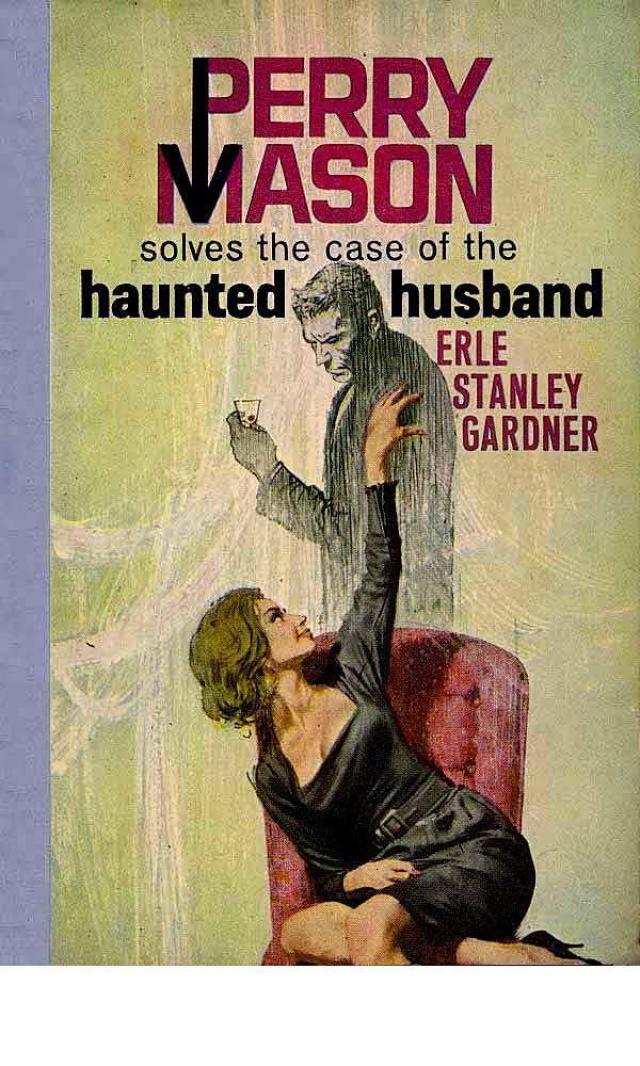
The Case of the Haunted Husband (Perry Mason Series Book 18),
p.11


"No," Mason said.
"Well, what was it?"
"So the dead man's name is Greeley, is it?"
"I am not answering questions. I am asking them. I want that name that you mentioned, the one that you said was wanted by the San Francisco police."
"Oh, you must be referring to Spinney," Mason said.
"That's it. What about him?"
"That's all I know about him," Mason said. "The name of Spinney."
"And how did you happen to find that out?"
"One of Drake's men uncovered a lead which made him think Spinney was associated with Homan."
"Homan again," Tragg groaned. "My gosh, why do you always come harping back to him?"
"Because he is the angle I am working on."
"Well, what made you think he was registered here under the name of Lossten?"
"Because," Mason said patiently, "I thought the man who was registered here was the man who had been driving the car. I thought the man who was driving the car was associated with Homan. I thought that Mr. Spinney was associated with Homan. Therefore, I thought it was a good possibility that the man who was registered here was Mr. Spinney."
"You didn't come here because Miss Claire asked you to?"
"No."
"You didn't look him up on account of anything Mrs. Warfield told you?"
"No."
"And why did you come to my office before you went to call on the gentleman?"
"I told you," Mason said. "I wanted to cooperate."
Tragg bowed. "I certainly appreciate your frankness, Mr. Mason. Don't let me detain you. I know you are a busy man, and while I appreciate the great help you are giving me, I can't ask you to sacrifice your practice."
"Meaning that we are free to go?"
"Yes, all except the Claire girl."
"Why can't she go?"
"Because I am holding her."
"I don't know what grounds you have for holding her."
"So far she is the only one we have found who knew this man. She had every reason not to like him. The man is dead. Under the circumstances, we are going to have to hold her for a while."
"She has just been released from the hospital."
Tragg smiled. "It isn't where she has just been that counts, but where she is just going. And that's the D.A.'s office."
"May I talk with her before she leaves?"
"I would prefer that you didn't."
"She is my client. I demand the right to talk with her."
Tragg smiled, "I wouldn't want to deprive you of your right to talk with a client," he said, "but unfortunately she isn't here. A detective is driving her to the D.A.'s office."
Mason said irritably, "Even when we cooperate, we don't seem to be of much help to each other, do we?"
"Are you," Tragg said, "telling me? However, Mr. Mason, don't worry. I will start an investigation of Mr. L. C. Spinney who has been residing at San Francisco, and – shall we say Bakersfield?"
"I don't know why not," Mason said.
Tragg, looking at him, said, "Well, I shall pull that one chestnut out of the fire for you. What did Mrs. Warfield look like?"
"About thirty-one or two, tired looking, blue eyes, light chestnut hair, drooping shoulders, average height, thin. Wearing a blue serge skirt and jacket when we last saw her."
Tragg picked up the telephone, called headquarters, and said, "I want a dragnet out for a Mrs. Warfield who registered at the Gateview Hotel last night as Lois Warfield of New Orleans. She checked out of the hotel within the last hour. Search all the restaurants nearby. She is thirty-odd, thin, average height, tired looking, blue eyes, light chestnut hair, blue serge suit. I want her damn bad. Rush it."
He hung up the telephone.
"And do you," Mason said, "want us anymore?"
Tragg grinned. "Hell, no!"
Out in the street once more, Mason said, "I thought he would give us more action going after Spinney if he thought I was trying to keep what I knew about Spinney away from him."
"It may work that way," Drake admitted. "Why didn't he mention her baggage in Greeley's room?"
"Trying to trap us," Mason said. "Watch your step, Paul. In the meantime, we shall see if there is an Adler Greeley in the telephone book. If there is, we will pay a very hurried call. While Tragg is busy unscrambling the leads we have given him, we may manage to steal a march."
Chapter 13
THE BUILDING was a two-flat affair in a high-priced district. Green palm fronds splashed against the background of white stone.
A coloured maid answered the bell.
Mason gave her his card. "I would like to see Mrs. Greeley if she is in," he said. "Please tell her it is very important."
The maid took the card, read it, glanced shrewdly at Mason, said, "Just a moment, please," and climbed the stairs. A few moments later, she returned. "Mrs. Greeley will see you," she said.
Mason was ushered into a living room in which dark massive furniture, deep rugs, and a few carefully selected oil paintings, originals, gave an atmosphere of unpretentious luxury. The photograph over the fireplace was unquestionably that of the man whose body Mason had seen at the Gateview Hotel.
Mrs. Greeley was evidently in the early thirties. She was a woman who could extend every courtesy as a hostess, yet managed to withhold the intimacy of her friendship – a woman who had quite evidently done much entertaining, had been entertained, and who would seldom be at a loss under any circumstances.
Surveying him with frank curiosity, she said, "I have heard of you, Mr. Mason, and I have read about your cases in the papers. Won't you be seated?"
Mason said, "My errand is not very pleasant, Mrs. Greeley. It has to do with your husband." He paused.
She said, "I am sorry, Mr. Mason. You can't see him. He is in San Francisco."
"Do you know just when he went to San Francisco?" Mason asked.
"Why, yes. He was called rather unexpectedly yesterday evening."
"Does he go to San Francisco frequently?"
"Yes. His business calls him there regularly. Can you tell me the reason for these questions, Mr. Mason?"
Mason said, "Frankly, Mrs. Greeley, I am investigating an automobile accident in which your husband was concerned."
"Adler in an automobile accident?"
The lawyer nodded.
"You don't mean last night? Tell me, Mr. Mason, he wasn't hurt?..."
"No, not last night. It was several days ago."
"Why, I didn't hear him say a thing about it. There was a bruise... Can you tell me just what you have in mind, Mr. Mason?"
"Your husband was in San Francisco last Wednesday?"
"He goes up there frequently."
"And does he drive when he makes the trip?"
"Good heavens, no! Not between here and San Francisco! He takes the plane or the night train, usually the plane. Sometimes he will go up on the early morning plane and take the night train back."
"One more question. Can you tell me if Mr. Greeley knows a motion picture producer by the name of Homan?"
"Why, yes. Well, now, wait a minute, I don't know whether he has met Mr. Homan personally or just over the telephone. But I know he has handled some business for Mr. Homan. I remember we were at a picture a few nights ago, and Mr. Homan's name was flashed on the screen. Adler told me that Homan was a client of his, and I was quite thrilled."
"Mrs. Greeley, has your husband mentioned that he was in any automobile accident recently?"
"No."
"Has he seemed bruised or stiff or sore?"
"Except for a slight... Mr. Mason, why do you ask me these questions? Adler would be the logical person to answer them"
"Unfortunately, he isn't available."
"His office would know where to reach him. You could get him on the phone."
"His office said they couldn't tell me when I could reach him."
She smiled. "Perhaps they would tell you that, but they would let me know."
"Was he here last night?"
"No. I told you he was called to San Francisco – but he expected to take either the morning train or the night train back."
"Has it ever occurred to you that your husband might change his plans – or might tell you he was in one place when he was really in another?"
She laughed in his face. "Are you trying to ask delicately if it's occurred to me that my husband would deceive me?"
"Yes."
She said, still smiling, "I suppose he would. I think any man would if he happened to be tempted sufficiently. But my husband would always play fair with me, Mr. Mason. There is a difference, you see. And I think, Mr. Mason, that you have said enough now so that Adler should know you are here and what you want."
She opened a compartment in a taboret, took out an extension telephone, dialed a number, and said, "Irma, this is Mrs. Greeley. Let me talk with Mr. Greeley, will you please?... Oh, he hasn't. Well, where can I reach him?... That's in San Francisco?... I see.... Well, give me a ring as soon as you hear from him then."
She dropped the receiver into place, said, "He told her he would either be at the office before noon or give her a ring from San Francisco. She thinks he is on his way by plane."
"So you think if your husband were sufficiently tempted, he might..."
"Mr. Mason," she interrupted, "any husband who is worth his salt can't get over the idea he is something of a devil with the women. If a woman is clever enough to capitalize on it, she can turn any man's head – but she can't turn his heart, Mr. Mason, and I think that answers your question. And now, since I have answered it, may I ask why you are here, what you are intimating, and precisely what you have in mind?"
Her eyes, which held Mason's, were frankly challenging, just a little suspicious.
"Specifically, Mrs. Greeley, I think your husband was driving an automobile on Wednesday evening of last week at about ten o'clock. He was driving over the Ridge Route. A young woman was with him. There was an accident. Some persons were badly injured."
"You mean he was going to San Francisco?"
"No. He was coming this way."
"At what time?"
"At a little after eleven o'clock."
She thought for a moment. "That was Wednesday of last week?"
"Yes."
"Why haven't you asked Mr. Greeley?"
"Unfortunately, I haven't been able to find him."
"After all, Mr. Mason, it seems rather circuitous to come to me... I think that if you have any further questions about my husband, you're going to have to ask them of him."
"That is impossible."
"Well, it won't be impossible long. He will be in his office..."
"I am afraid," Mason said, "your husband won't be in his office – not today, not tomorrow, not this week."
She was staring at him, her forehead puckered into a perplexed frown when the telephone rang.
Her eyes flashed triumph. "That," she said, "will be Irma telling me Mr. Greeley is at the office. I am going to tell him that you are here and what you want, Mr. Mason."
She said, "Yes?" into the telephone, then frowned.
"Oh, I am sorry. Who is it, please? What is it? What is the name, please?... But I don't understand. You want me at the Gateview Hotel?... Lieutenant Tragg of Homicide? You mean – You mean – No! Not Adler! There is some mistake... He is in San Francisco. I was talking with his office only a few minutes ago... I ... Y-y-yes, I will be right up."
She dropped the receiver into the cradle of the telephone. Slowly, she turned to stare at Mason. She regarded him as though he had been some distorted apparition of a nightmare. Her face and eyes were filled with surprise and horror.
"You – you must have known – this."
Mason arose. "I am sorry, Mrs. Greeley."
She might not have heard him. She got to her feet mechanically, as a reflex action brought about by the departure of a guest, followed Mason to the head of the stairs.
She didn't start to cry until Mason was halfway down the treads.
Then the lawyer heard one choking sob, and the sound of feet running across the living room toward the bedroom.
Mason let himself out into the bright sunshine of a cold spring day.
Chapter 14
THE COURTROOM hummed with activity. Judge Cortright on the bench, disposed of half a dozen preliminary motions, listened with enforced attention to the arguments of an attorney who seemed unable to come directly to the point, finally interrupted with a ruling, and called the next case. Lawyers came and went. The atmosphere seemed permeated with haste. These were minor matters, things which were occurring over and over, times without number, until they had lost any individuality; infractions of the law which piled up faster than they could be disposed of unless the judicial machine functioned smoothly. The only persons who thought the cases had any importance were the ones directly affected.
The white-faced wife who sat with folded hands while the attorney for her husband argued that the complaint for non-support was technically incorrect, was conscious of the fact that at last she had summoned nerve enough to make the man who sat glowering at her quit spending money on other women and help support his child. He had always sworn that he would kill her if she ever went to law. Would he do it? Her heart was thumping the blood through her tired arteries in pounding sequences. She felt them hammering in her ears. He had said he would kill her. He looked as though he wanted to. Perhaps he would. Then what about the baby? The lawyer droned on. The complaint was defective in that it failed to state the defendant had willfully withheld support.
Judge Cortright listened to the argument wearily. After all, what difference did it make? Knock out this complaint, and the man would be re-arrested. He was conscious only of the passing minutes, of his crowded calendar, of the tedious verbosity of counsel.
At length, he disposed of the preliminary matters. "People versus Stephane Claire," he called.
Harold Hanley from the district attorney's office regarded the case as a legal chore. "Your Honor, the defendant is in court represented by Perry Mason. Counsel have agreed that the preliminary may be held at this time. The defendant is on bail. By stipulation of counsel, the hearing may be had with no other notice or formalities."
"Very well," Judge Cortright said. "Your witnesses are present?"
"Yes, Your Honor."
There followed a routine of technical procedure. Attorneys whose matters had been disposed of left the courtroom, some of them still arguing heatedly, others joking, others bustling to some other department where they had matters pending. Harold Hanley called his witnesses to the stand in a quick succession. Frank Corvis, the traffic officer who had been advised of the accident, had come on the wrecked automobile in which the defendant was sitting, had lifted her out. He testified to her position. She was at the steering wheel of the car in the driver's seat. Both car doors were closed when he arrived. He had found a bottle in the glove compartment. No, he didn't have that bottle with him. He had sealed it and handed it to the head of the traffic department. Yes, he
would know that bottle if he saw it again. Yes, that was the bottle. That was exactly the condition in which he had found it, about one third filled with whiskey. Yes, he had noticed an odor on the defendant's breath. It was the odor of liquor.
"Cross-examine," Hanley said to Perry Mason.
The traffic officer turned toward Mason, squaring himself as though belligerently ready to repel any attack.
"Did you," Mason asked, "notice whether the hands of the defendant rested on the steering wheel?"
"I didn't notice both hands. I grabbed her right wrist to lift her up."
"Where was her right wrist?"
"On the steering wheel."
"You are certain?"
"Absolutely."
"Then, of course, her fingers were not wrapped around the steering wheel."
"What do you mean?"
"If her wrist was on the steering wheel," Mason explained, "it would be an impossibility for her to have her fingers wrapped around the steering wheel."
Corvis frowned. He glanced at the deputy prosecutor, then away. "I think I got that wrong."
"Her wrist was not on the steering wheel?"
"Her hand was on the steering wheel."
"Now, by her hand being on the steering wheel, do you mean that her fingers were wrapped around the steering wheel?"
"Yes. I think they were."
"You gripped her right wrist when you lifted her through the car window?"
"Yes."
"You wrapped your fingers around her wrist?"
"Yes."
"Now did you notice anything peculiar about her right hand?"
"Not at the time."
"But you did later?"
"Yes."
"When was this?"
"After she had been removed from the car and was lying on the ground waiting for an ambulance. A motorist had given us an automobile robe which we had spread on the ground, and the motorist and I moved the girl over to this robe."
"Now by the girl, you mean the defendant?"
"Yes."
"And at that time, you noticed something about her right hand?"
"Yes."
"What was it?"
"There was something red on her little finger. At first, I thought it was blood. It came off and made a red smear on the back of my hand. I tried to wipe it off, and it didn't wipe off the way blood would."
"It was lipstick."
"I think so, yes."
"Now did you notice her left hand?"
"Yes."
"There was a glove on it, was there not?"
"Yes."
"But none on her right hand?"
"No."
"Had you searched the automobile?"
"Yes."
"Did you find any lipstick in the car?"
"No. I found her purse and sent that in with her in the ambulance."
"Find any baggage?"
"No."
"Not anywhere in the automobile?"
"No."
"Now, if the defendant's right hand had been resting on the steering wheel, particularly gripping it with the force used by a person in trying to avoid an accident, there would have been lipstick on the wheel of that car?"
"Well..."
"Objected to as argumentative," the district attorney said.















