

The case of the haunted.., p.16
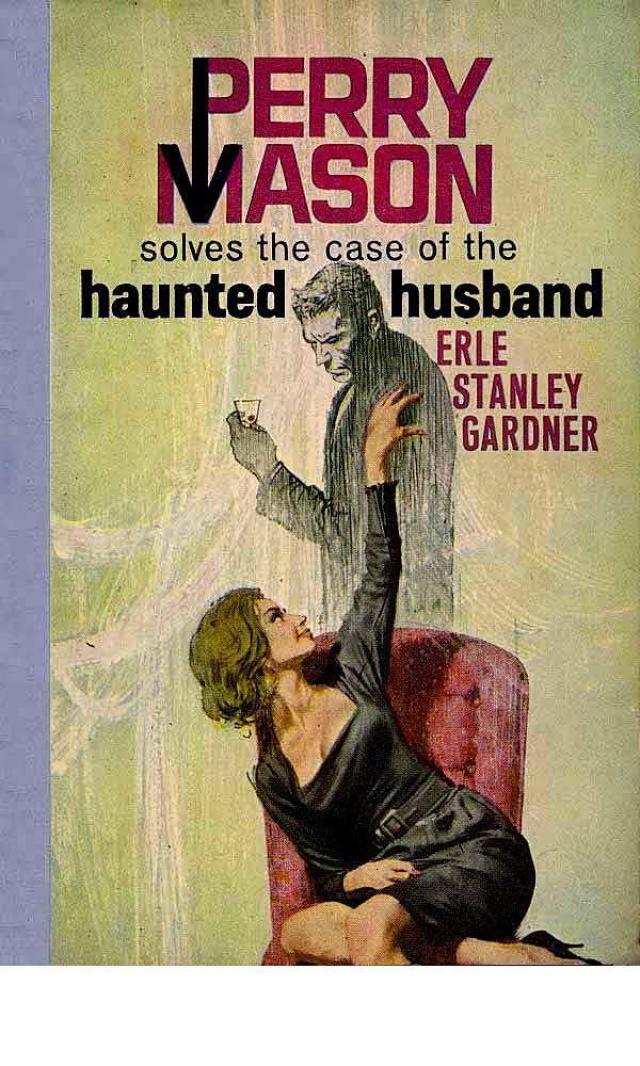
The Case of the Haunted Husband (Perry Mason Series Book 18),
p.16


Mason paced the floor, thumbs pushed up in the armholes of his vest, his head bent slightly forward. He said, "He isn't going to explain it. He can't. He's got to change his story."
"Well," Tragg said, "so far as I am concerned, Mason, I am satisfied now your client didn't steal the car, and I am pretty well satisfied she wasn't driving it. For the sake of argument, let us say Greeley was. She hadn't known him before. She hadn't known Homan. She undoubtedly had left San Francisco that morning."
Mason said, "All right, Tragg, we will put all the cards right on the table. From the time the chauffeur last saw the car, which was on Tuesday morning, until Wednesday, the car had been driven seven hundred and thirty-two miles. Now then, if Homan is telling the truth, that car was driven seven hundred and thirty-two miles between noon on Wednesday and around eleven o'clock, the time of the accident. Well, suppose it had been operated steadily at sixty miles an hour. That would be six hundred and sixty miles. It is an absolute impossibility."
Tragg said, "It could be done. That bus will do around a hundred miles an hour."
"The bus will," Mason said, "but the roads won't."
"What do you mean?"
"I don't care how fast you drive. You can pick the very fastest roads in the country, and by the time you have driven eleven hours, you will find you can't have covered more than six hundred odd miles. Of course, you could pick a straight, fast, desert road and drive back and forth on it and average more. But a person wouldn't do that. In three or four hundred straight-road miles, you are going to encounter grades, curves, detours, cities, bottlenecks, boulevard stops. Seven hundred and thirty-two miles means that the car was driven about four hundred miles away from the city, then turned around and driven back toward the city. The accident happened about sixty miles from Los Angeles."
Tragg said, "That is interesting."
Mason said, "Paul and I have been thinking about the man who was driving the car ..."
"Conceding for the sake of the argument that your client is telling the truth," Tragg interrupted.
"Naturally," Mason said. "I take that for granted whenever I start in on a case."
"I can't take anything for granted."
"Well, conceding it for the sake of the argument," Mason said, "that this man either came from or went through Bakersfield around ten o'clock. He was wearing a dinner jacket. When a man puts on a tuxedo, he is usually attending something which doesn't begin before seven-thirty or eight at the very earliest. It is rather unusual for him to leave such an affair at quarter to ten. Now then, if this man didn't come from Bakersfield, we can probably stretch that time at least another hour. He must have left at quarter to nine or perhaps eight-thirty."
"Left what?"
"Whatever he was attending, dinner, dance, or whatever it was."
"It might have been a lodge."
"It might have been."
"But Greeley was in San Francisco the night of the accident."
"I am coming to that," Mason said. "Greeley was in San Francisco at quarter past five. He hadn't taken a tuxedo to San Francisco with him, just a double-breasted gray business suit. At ten o'clock that night he was in Bakersfield wearing a tuxedo. Now stop a minute and figure what that means."
"What does it mean?"
"He couldn't have driven from San Francisco to Bakersfield in approximately four hours and forty-five minutes."
"Go ahead. You are doing fine."
"If he had been wearing a gray business suit at the time," Mason said, "he would hardly have taken a plane, kept a rendezvous with someone, picked up the car, changed to a tuxedo, and still been at Bakersfield at ten o'clock."
"All right. We will pass that for the moment. He might have done it, but let us hear the rest of it."
"That brings us to the question of whether he was wearing the tuxedo at five o'clock. And, since he hadn't taken a tuxedo with him, it must, in that case, have been some other person's, one that Greeley had rented, or one he kept in San Francisco. But why would he have been in the Southern Pacific Depot at five-fifteen in the evening wearing a tuxedo? That is pretty early in the day for a dinner jacket."
"Keep right on," Tragg said.
"The tuxedo must have been twenty-four hours old," Mason announced. "In other words, he must have put it on for some function he was attending the night before, something from which he had been called away very suddenly and hadn't had an opportunity to change his clothes.
"If Greeley didn't have a chance to put on a tuxedo after he left San Francisco, he must have had it on before."
Tragg frowned thoughtfully. "Don't say anything for a minute. Let me think that over."
He shifted his position in the chair so that he was sitting forward on the extreme edge of the seat. He spread his knees far apart, put his elbows on his knees, raised his hands to his chin, and sat staring down at the carpet.
Abruptly, he straightened. "Mason, you should have been a detective. You are right."
"Of course," Mason said, "it is hard to back-track a man under ordinary circumstances, but a man who wears a tuxedo in daylight is very conspicuous."
Tragg said, "Give me some paper, Mason." He whipped a pencil from his pocket, braced the pad of paper which Mason gave him over his knee and started making swift notes. "We will look up Spinney in San Francisco. Now then, we will start checking with service stations to see if a man in a tuxedo bought gasoline for an automobile. We will
check those stations all the way down the valley route, and we will check the air lines, and see if a man in a tuxedo didn't get aboard a plane out of San Francisco sometime on Wednesday night."
"And while you are about it, try late Tuesday night and early Wednesday morning," Mason said.
Tragg looked up from his writing. "I don't get that."
Mason said, "It is just an angle. Let us try it. You know he may have been wearing his tuxedo all Tuesday night and all day Wednesday, because his double-breasted gray suit may have been in Homan's house."
"What makes you think that?"
"When he left home, he was wearing a gray suit. On the Ridge Route, he was wearing a tuxedo. When he got home, Mrs. Greeley says he wasn't wearing a tuxedo. Yet he didn't take any baggage with him when he slipped out of Homan's car up on the Ridge Route."
"Well, I can't give you much on it, but it's an angle. Okay, let me phone head-quarters."
"You can use Della Street's office," Mason said.
Tragg said, "I am going to get some immediate action on this."
"You can't start the wheels grinding any too fast to suit us."
Mason and Drake sat smoking while they listened to Tragg putting through the telephone calls in Della Street's office, instructing headquarters to make a check-up, sending out inquiries to the state highway police, and asking the San Francisco police to check on what had happened at the airport.
"How about going out and grabbing a bite to eat?" Tragg asked, returning from Della's office.
Mason said, "We are waiting for Della Street. She went out to Hollywood to get a line on Homan."
"Can't you leave a note for her?"
"I could," Mason said, "but I am watching. I thought perhaps there would be a call from her."
Tragg said, "It will take me an hour or so before I begin to get reports from my end, and I thought it would be a good time to eat. We may be busy afterwards."
"You folks go out, and I will wait," Mason suggested.
Tragg said, "Oh, I shall just run down to a counter and pick up a hamburger sandwich. I ..."
The phone on Mason's desk rang.
Mason picked up the telephone, said, "Hello," and heard a feminine voice say, with every indication of relief, "Oh, I am so glad I caught you at your office, Mr. Mason. I must see you at once."
"Who is this?"
"Mrs. Greeley."
"What is it?" Mason asked. "No, wait a minute. Hold the phone just a moment, please." He cupped his hand over the receiver, said to Tragg, "Mrs. Greeley on the phone. She is getting ready to tell me something, sounds rather excited. You should better listen in on the extension – just in case."
"Where?" Tragg asked.
"Go in Della Street office and push that left-hand button..."
"I will show him," Drake said.
Mason waited until Tragg had plugged into the line, then he said, "Yes, Mrs. Greeley."
"What was that click I just heard? Did someone else ..."
"I thought it would be better to use another telephone," Mason said. "There were some people in my office. What is it?"
"Mr. Mason, I am afraid I have – well, I don't know. I... I wanted to ask you about something."
"What?"
"I feel very guilty."
"Why?"
She said, "I may have done that young woman injustice."
"In what way?"
"I ... well, you perhaps know something of how I feel. Mr. Greeley and I were very close. I... I have been feeling so absolutely all alone and completely lost. Tonight I just felt I had to do something, so I started packing up some of my husband's clothes to give away. I couldn't bear walking into his room and seeing his clothes in his closet and everything, and ..."
"Yes, go on," Mason said.
"Something happened, and I ... well, I found something."
"What are you getting at?" Mason asked.
"I... well, Mr. Mason, one of my husband's dress shirts has a long red streak across the front, and the smear made by a woman's lips. I ..."
"Where are you now?" Mason asked.
"Out at my flat."
"How long ago did you find this shirt?"
"Why, just a few minutes ago – oh, perhaps five minutes. I found it in the bag of clothes he had ready to go to the laundry. I don't think my husband could possibly have been driving that car, but ... well, you understand, Mr. Mason, I want to be fair. I simply couldn't put that young woman in a false position. I thought you ought to know."
Mason said, "I would like very much to see that shirt at once, Mrs. Greeley. Suppose I drive out?"
"Can't it wait until tomorrow?"
"No. I want to see that shirt at once – just as you found it."
"Well, I ... I will tell you what I will do, Mr. Mason. If you will be at your office for a little while, I will drive by on my way to dinner and bring it in."
"All right," Mason said, "and there is something else I want you to do."
"Yes. What is it?"
"Check through your husband's clothes that are in the closet. Find his tuxedo and bring that along."
"I was just going to ask you about that, Mr. Mason, whether you wanted it."
"Yes, I do."
"It will take me half an hour to get ready. You will be there?"
"Yes, yes, I shall be here."
"I wouldn't want to make the trip unless ..."
"I will be here."
"Very well, Mr. Mason."
The receiver clicked at the other end of the line.
Mason hung up the telephone, walked in to Della Street's office where Tragg was still sitting at Della Street's desk staring at the telephone.
"Well?" Mason asked.
"That's your case," Tragg said. "Put her on the stand tomorrow, and your client goes free as air."
Mason said, "That is a load off my shoulders. How do you feel?"
"I feel like hell," Tragg said.
"Why?"
"Because I don't think Greeley stole Homan's car. If Greeley was driving Homan's car, he was driving it with Homan's consent. That means I have got to go after Homan. And you know what that means."
"You have certainly got enough to justify you in..."
"It isn't a question of whether I am justified or not, Mason. Look here, how about getting you to be the goat in this thing?"
Mason said, "When the police department needs a cat's-paw, it certainly does cooperate."
"Nuts to you," Tragg retorted. "Remember, I brought you those keys."
"You did at that. What do you want?"
"Call Homan back to the stand tomorrow. Hold this dress-shirt evidence back, and go after him. Use these keys as a basis for your cross-examination. Rip him wide open. See if you can't catch him in some contradiction, and when you do, put the screws on him."
Mason said, "I think it is all right, Tragg, but I want to think it over a bit."
Tragg said, "Well, I shall go out and grab that sandwich, Mason. You can think it over. How about it, Drake? Want to come with me?"
Drake grinned. "You are a great guy, Tragg – at times. But I can't dance with you."
"What the hell are you talking about?"
"Della Street is coming back," Drake said, "and Mason is going to buy a dinner."
Tragg smiled. "Wise guy," he said.
"Don't be too certain," Mason said. "The way things are breaking now, it looks like a busy night. We shall probably grab a hot dog and be lucky to get that."
"Just the same, Perry, I shall wait."
Tragg picked up his hat as he started for the door. "Well, personally, I am going to grab a sandwich while the grabbing is good. I don't want to seem to be putting any high pressure on you, Mason, but it might not be a bad idea for you to give the department a break. You might need it sometime."
"It is all right," Mason told him, "if I can work it out so it doesn't affect my client's interests."
"Shucks, she is out of it," Tragg said. "You could send Mrs. Greeley to the D.A., and he would dismiss. You know that."
"I shall think it over, Tragg. I think it is okay, but there are a couple of angles I want to check."
"All right, be seeing you in about twenty minutes."
Tragg went out. As the automatic door-closing device clicked the latch shut, Paul Drake turned to Mason. "Why not grab at it, Perry?"
Mason said, "It's all right. I just didn't want to seem to be too eager. I don't want Tragg to get the idea he can use me as a stalking horse any old time he wants to and have me fall all over myself doing just what he wants."
"Well, you have got your client out of the mess on this one."
"As a matter of fact, Paul, I would do just about what Tragg wants, anyway – whether he had suggested it or not. I hate to see a man with money start putting the screws on a hitchhiker just to get himself out of a mess."
"But why is Homan doing it? Just to avoid a few thousand dollars in civil liability? You would think that a man in his position and with his means would ..."
"Throw money to the birdies for champagne," Mason interrupted. "When he takes a bunch down to Tiajuana or Palm Springs on a party he does, but when it comes to something of this sort, he is tight as the bark on a tree.
"He ..."
The telephone rang
Mason said, "This will be Horty again... Hello."
Hortense Zitkousky's voice sounded harsh and high-pitched. "Is this Mr. Mason?"
"Yes."
"Horty, Mr. Mason. You got a minute?"
"Why, yes."
"Listen, could you get out here right away? There is – well, I can't tell you over the phone what it is."
"I am afraid not," Mason said after a moment. "I am waiting for a woman to come to my office with some evidence which will put Miss Claire entirely in the clear. I ..."
"Listen, can't you please come? It is awfully important."
"Where?"
"The Adirondack Hotel, room five-twenty-eight. If you could come quick, it would help a lot."
Mason said, "It may mean a lot if I leave here. Can't you tell me something of what it is?"
"I ... No. You have got to come, right away."
Mason said, "Wait for me in the lobby."
"I think I would better wait here in the room, Mr. Mason."
"All right."
Mason slammed up the telephone.
"Who is it?" Drake asked.
"Hortense. Something has happened that is damnably important. I wouldn't go for anyone else but that young woman has a most unusual and priceless possession – horse sense."
Drake nodded.
Mason reached the coat closet in four swift strides, jerked his coat from the hanger, struggled into it, and clapped on his hat.
"Listen, Paul, you have got to hold the office. I will be back before Mrs. Greeley gets here. Tragg may be back before she arrives. Tell him I had to talk with Stephane
Claire and get her consent before I agreed to cooperate with him. Tell him it is a matter of form, just my idea of professional ethics."
"And I will tell him you went to see her?"
"Yes."
"Wouldn't it sound a little more like it if I told him that you had telephoned her and tried to explain it to her, and she couldn't understand so you had to go on up and see her?"
"Perhaps so. Use your own judgment. Don't be too voluble. Take it as a matter of course. I am on my way."
Mason grabbed a taxicab from a stand in front of his office building. "Adirondack Hotel," he said, "and drive like the devil."
The cab-driver said, "I can make it in five minutes."
"Try making it in four. Stop across the street if it will save time."
The cab shot forward. Mason didn't relax against the cushions, but kept a precarious position on the edge of the seat, hanging on to the door handle, watching the traffic whiz past.
It began to sprinkle before the cab had gone a block, and was raining steadily by the time the cab-driver pulled up in front of the hotel, but directly across the street.
"If you want to spring across, Captain, you can save a full minute. I would have to go around.
Mason jerked the door open.
"Want me to wait?"
"Yes."
"Okay, I shall be right in front of the place, all ready for you."
Mason ran across the wet street. Once in the hotel he walked rapidly across the lobby, stepped into the elevator, said, "Five, please," and was whisked on up to the fifth floor. The elevator operator looked at him curiously, apparently trying to ascertain whether Mason was registered in the hotel or merely a visitor. The lawyer, turning to the left without the slightest hesitation, walked confidently down the corridor.















