

The case of the haunted.., p.22
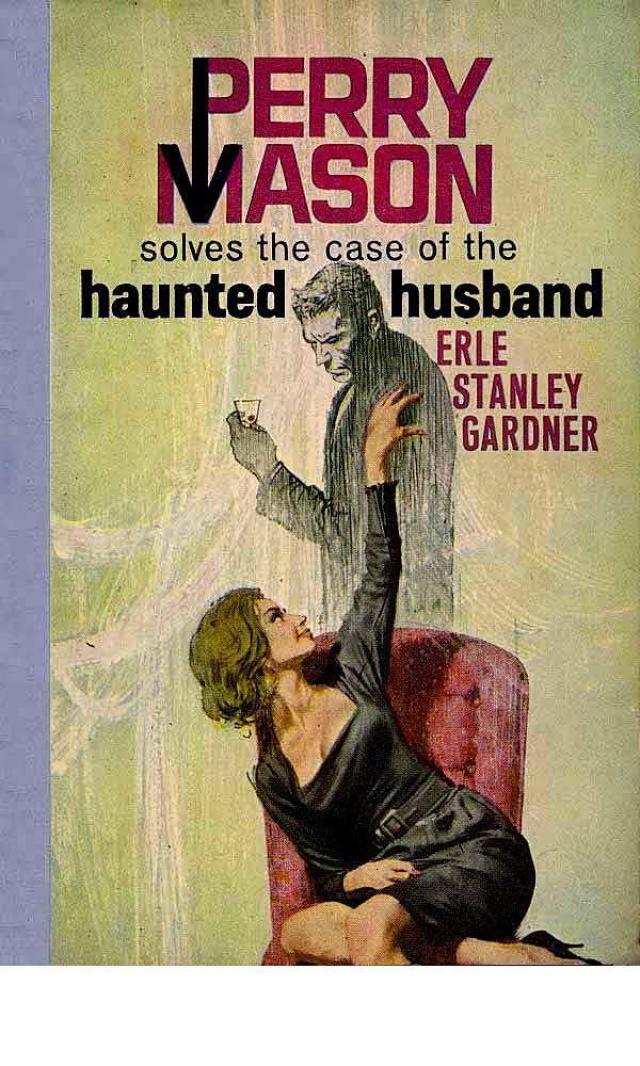
The Case of the Haunted Husband (Perry Mason Series Book 18),
p.22


Tragg said, "I think it is cuckoo, but I shall hear the rest of it."
"Tanner, the chauffeur, had been bribed by Greeley to act as his spy. Greeley was in San Francisco taking the identity of Spinney for the purpose of keeping Mrs. Warfield where he wanted her. He knew, of course, that it must be during his trips to San Francisco that Homan was taking advantage of his absence. Tanner telephoned Greeley in San Francisco twice. The first time, he told Greeley that Homan had taken the car and left. The second time that Homan hadn't gone to the yacht, and, therefore, must be in the cabin back of Fresno. And at least once Greeley telephoned Tanner at Homan's residence."
"The calls charged to Homan's phone?" Tragg asked.
Mason smiled. "That's poetic justice."
"Go ahead."
"It was sometime late Tuesday night when Tanner definitely found out they were at Homan's mountain cabin. Greeley took a plane to Fresno, hired a car, investigated, found Homan and his wife were there. He couldn't steal Homan's car without leaving his hired car for them to get away in. So he drove back, hired a car with a driver, got out on the highway somewhere within a mile or so of Homan's mountain hide-out, took Homan's car, so as to leave the lovers abandoned in their love nest."
"Why didn't he bust in on them and call for a show-down" Tragg asked.
"For one reason, he wasn't ready for a showdown. For another, they weren't there."
"I don't get you."
"They were back in town Wednesday afternoon. There is only one answer. They must have spotted him snooping around on his first visit, telephoned for a plane, and rushed back here. It is less than two hundred miles in an air line. I don't know, mind you, but I shall bet twenty to one that there is some sort of landing field near that cabin. There has to be."
"Why the hell didn't they take Homan's car? Why leave it and take a plane?"
"Time, for one thing. Then they knew Greeley had actually seen the car. The best way to establish an alibi was to rush back by plane, and report the car as stolen."
"Why wasn't Greeley ready for a showdown?"
"Because of Mrs. Warfield. He already had a wife. It would be rather embarrassing for him to sue for a couple of hundred thousand dollars, and then have some smart lawyer bring Mrs. Warfield into court. This way, he steals the car and thinks he is leaving them marooned in the mountains. Back in Los Angeles, he will abandon Homan's car and go home. His wife won't be there. She will show up after a while, very much alarmed, and with some plausible lie that he will certainly be able to disprove when the time comes. But as it turned out, it was he who did the hitchhiking."
"He wanted Mrs. Warfield to get a divorce?" Tragg asked.
"At first," Mason said. "Later on, I think he decided to kill her."
Tragg snorted. "Next thing I know you will be trying to prove self-defense."
"Well... let us say she beat him to the punch, if that is what you mean. Understand, Tragg, I am not a mind reader. I am only giving you a solution which fits the evidence. If you can punch any holes in it, go ahead."
Tragg scratched his head and thought things over. Then he said suddenly, "But Mrs. Greeley talked with her husband in San Francisco."
"No. After Greeley died, she said she did."
"She talked with someone."
"Sure. Part of her alibi. She telephones some friend from a pay station and arranges for the second station-to-station call. That way, she establishes the fact, by the telephone company records, she was in Los Angeles, and doesn't have to drag her friend's name into it."
"How do you know all this?" Tragg asked.
Mason said, "I don't, but it's the only way the evidence fits together."
Tragg pushed his hands down deep into his pockets, stood staring down at the tips of his shoes. "Anything else?"
"A lot of minor corroborating facts," Mason said. "Greeley, of course, was having detectives keep an eye on Mrs. Warfield. When they reported she was coming to Los Angeles to take a job with a Mr. Drake, Greeley was waiting for her at the bus depot – keeping out of sight of course."
"And he followed you folks to the hotel?"
"Yes."
"And how about Mrs. Greeley?"
"She must have followed Greeley. Maybe she even saw the wire reporting Mrs. Warfield's arrival. Remember, she was watching her husband like a hawk on those days because she suspected he knew of her affair."
"How about that stained shirt?"
Mason smiled. "Now comes the touch of real comedy. You will remember, Homan and Mrs. Greeley rushed off to their love nest at night after Mrs. Greeley found her husband was going to be detained in San Francisco. Homan didn't stop to change his dinner jacket, but just threw some other clothes in a bag. Now, when they were getting out of the cabin, they must have been in a panic, grabbing things right and left. In the confusion of packing, Homan's stiff shirt got put in Mrs. Greeley's bag. When Mrs. Greeley found that shirt, the logical place to hide it was in her husband's laundry bag. She dropped it in there, intending to dispose of it later.
"After her husband's death, she realized that I was working on the Warfield angle, and checking up pretty closely on Homan. She and Homan were both in a panic for fear I would bring out the evidence of their little affair. The best way to head all that off was to get Stephane Claire acquitted. One way to do that was to prove that Greeley had been driving the car. So she went to his laundry bag, grabbed the first stiff shirt she came to, smeared lipstick on it, and brought it to my office. Poor girl, it was a last desperate attempt. By that time her mind must have been going around in circles, or she would have remembered Homan's shirt."
"Why did you come here, Mason?" Tragg asked.
"To check on the identity of the woman who had registered immediately after Greeley."
"But evidently you knew that already."
"I surmised it."
"Any idea where Mrs. Warfield is?"
"She might be on Homan's yacht. Remember, his brother Horace wanted to use it, but Jules suddenly refused to let him.
Tragg studied him thoughtfully. "What is that stuff on the bed?"
"Some papers Mrs. Greeley brought – correspondence between her husband and Mrs. Warfield, stuff she found after his death."
"Well, I guess ... hello, what's this?"
Tragg's eyes had come to rest on the gun lying on the floor.
"Mrs. Greeley dropped it."
"Dropped it?"
"Yes. She is hysterical and has an idea that someone is trying to kill her. I made her promise she would go to her doctor and get him to give her some sleeping stuff."
Tragg picked up the gun. "A small caliber automatic."
"Yes. It fits nicely in her bag. Do you want it?"
Tragg studied it for a moment, then dropped it into his hip pocket. "Mason, I congratulate you."
"I haven't done anything," Mason said, "except put the evidence together."
"That's enough, isn't it? It is a triumph for you."
"I don't want any of it, Tragg. You take the credit. All I want is to have Stephane Claire acquitted of that negligent homicide."
Tragg's face flushed. "Gosh, Mason, that is damned white."
Mason said, "I am an amateur. You are the professional. You turn up the murderer. I shall get my client off."
Tragg turned toward the telephone. "I will get headquarters and ..."
"Wait a minute."
"What's the idea?" Tragg asked.
"There is no hurry."
"The devil there isn't! We have really got something on Mrs. Warfield now – if she is on Homan's yacht …"
Mason broke in, "There are a couple of angles I want to check, and I have been hoping something would turn up here in the hotel. Let us go have a drink, Tragg, and check the evidence over carefully."
Tragg's eyes narrowed. "What's the idea?" he asked.
"Nothing," Mason said, "only before you talk to the ..."
Tragg suddenly snatched up the telephone. "Get me through to headquarters," he said. "Yes, police headquarters. This is Lieutenant Tragg. Rush that call!"
Mason said, "Don't do that, Tragg."
Tragg looked at him over the top of the telephone. "Damn you, Mason! You had me sold. The only thing that tipped me off was the way you tried to keep me from sticking my neck out just now... Hello, headquarters. This is Tragg. Get the dispatcher to throw out a dragnet for Mrs. Adler Greeley. We have her description and photograph... Yes, first-degree murder... Her husband and Ernest Tanner. And cover all drugstores in the vicinity of the Gateview Hotel, and see if a woman answering her description has tried to buy poison. Get that started at once. I will call back later with details."
Tragg dropped the receiver into place. "You could have fooled me," he said to Mason, "if you hadn't been such a softie. You knew that if I called headquarters and gave them that line on Mrs. Warfield, it would sound like a logical solution. The newspaper boys would make me out a regular Sherlock Holmes and tomorrow morning when they found Mrs. Greeley's body and her confession, I would be the laughing-stock of the town. I presume you told her to commit suicide."
Mason sighed. "I only told her to see her doctor, Tragg."
Chapter 21
DELLA STREET came through the door from the outer office. Mason, tilted back in his swivel chair, his feet crossed on the corner of the desk, was staring in frowning concentration at the tips of his shoes.
"What is it, Della?"
She didn't answer at once but walked around the desk to place a sympathetic hand on his shoulder. "Lieutenant Tragg just telephoned, Chief."
Mason looked up with a quick glance, then at what he saw in Della Street's face, turned away once more.
"They have found her."
"Where?" Mason asked.
"In the place no one would ever have thought of looking."
"The Gateview Hotel?" Mason asked.
Her eyes were wide. "How did you know?"
Mason said, "My guess would be she never checked out of that room she took. She didn't want to attract any attention to herself, so it is very possible she paid a week's rent on the room when she registered."
"Then she must have intended to kill him at that time."
Mason nodded.
"Why?"
"To protect the reputation of the man she loved."
"Homan?"
"Yes."
"And your idea was to throw Tragg off the scent just long enough to give her an opportunity to... you are a softie."
Mason said, "She is intensely emotional Della. She is a woman. She loved Homan, madly, passionately. She did what she did in order to save Homan's reputation. And then Tanner started blackmailing her. And when she knew Tanner knew, she had to silence his lips in the same way she had silenced her husband's. And the tragic part of it was, if she had only waited, it wouldn't have been necessary. If she had only talked with Mrs. Warfield before she went down to her husband's room ...
"Oh, well," Mason said with a sigh, "You can't reverse the hands of the clock."
"Chief, what did actually happen?"
"A great deal of it was just the way I outlined it to Tragg," Mason said, a note of weariness creeping into his voice. "But there were one or two important variations. When Mrs. Greeley learned her husband was corresponding with a detective agency
over a Mrs. Warfield, she probably thought Mrs. Warfield was a witness in the case Greeley was planning to file for alienation of affections against Homan.
"She followed her husband to the hotel. Of course, she didn't go to Mrs. Warfield's room first. She went to his room – and killed him. We can only surmise what happened next, but under the evidence, it is not taking much of a chance. Greeley probably had some of Mrs. Warfield's correspondence to Spinney in his pocket when he was murdered, and it wouldn't have taken Mrs. Greeley long to realize that here was a marvelous opportunity for framing Greeley's murder on Mrs. warfield. She goes to Mrs. Warfield's room, gets Mrs. Warfield down to her room, and worms the whole story out of her. Mrs. Warfield is afraid of the law, believing her husband to be a convict, and she is already suspicious of Drake and me, so it is easy to persuade her to ditch us and disappear so Drake and I can't find her. Mrs. Greeley has to put her some place where she won't see the newspapers. The answer is Homan's yacht."
"And Mrs. Warfield's baggage?"
"Mrs. Greeley put it in Greeley's room, of course – probably telling Mrs. Warfield she was going to spirit it out of the hotel."
There was a long pause. Then Della frowned. "Greeley wasn't wearing his dinner jacket when he got home."
"Sure he was, but he changed his clothes before awakening his wife."
"How much did Homan know of what Mrs. Greeley had done?"
Mason shook his head. "I don't know. That is up to Tragg. But my best guess is he didn't know a thing."
"Not even if he was keeping Mrs. Warfield on his yacht?"
"No. I don't think he knows she is on the yacht. Only that Mrs. Greeley said she wanted to borrow it to keep some witness concealed. In any event, that's Tragg's headache. I am not going to worry about it. Dammit, Della, I sent a woman to her death. I don't want to talk about it anymore."
Della picked up an ash tray, emptied it, and replaced it on the lawyer's desk.
"What about your beautiful blonde, Chief?"
"She is in the clear."
"Sure. I mean–"
"Oh, that uncle of hers will come around after I have talked with him."
"Uncle!" Della's nose wrinkled in disdain. "I mean her love life."
"Well – there is the Romeo from home – but I am betting on young Homan. He is not a bad kid, and if I know the signs –" The telephone rang. Della Street picked up the receiver, said, "Hello? ... Hold the line a minute," and turned to Mason. "It's Tragg."
Mason took the phone.
"Hello, Perry," Tragg said. "I just wanted to thank you. The newspaper boys think I am some detective."
"That is fine."
"When did you first know, Mason?" Tragg asked.
Mason said, "I should have known some time before I did, but when you found that white feather in my hallway, Tragg, I realized at once what had happened. When Mrs. Greeley telephoned about the shirt she wasn't calling from her house. She was telephoning from the Adirondack Hotel or someplace nearby, but said she was at home so that she would have an alibi."
"And she had already committed the murder?"
"Yes. She had followed Tanner ever since he left the courtroom. By that time she was desperate. She had tried to protect Homan and herself and she was going to see it through. She realized Tanner held the whip hand. Remember, when she called she said she couldn't leave right away, so she had time to dash by and pick up the shirt and tuxedo. You should have known as soon as you found that feather, Tragg."
"You mean she was the one who dropped the feather?"
"Of course," Mason said.
"How did you know you didn't?" Tragg asked.
Mason grinned. "I wouldn't want to make any admissions to you in your official capacity, Tragg, but if I had been in that room in the Adirondack Hotel, I certainly hope you don't think I could be so confoundedly negligent as not to look over my shoes very carefully while I was returning to the office in the taxicab. A man of ordinary intelligence would know that loose feathers would stick to wet shoes – and take proper precautions."
And Mason gently slid the receiver onto its hook before Tragg could make any reply — or ask any questions.
About the Author
Author photo courtesy of the Harry Ransom Center, The University of Texas at Austin
Erle Stanley Gardner (1889-1970) is a prolific American author best known for his works centered on the lawyer-detective Perry Mason. At the time of his death in March of 1970, in Ventura, California, Gardner was “the most widely read of all American writers” and “the most widely translated author in the world,” according to social historian Russell Nye. He was cited by the Guinness Book of World Records as the #1 Bestselling Writer of All Time. The first Perry Mason novel, The Case of The Velvet Claws, published in 1933, sold twenty-eight million copies in its first fifteen years. In the mid-1950s, the Perry Mason novels were selling at the rate of 20,000 copies a day. There have been six motion pictures based on his work and the hugely popular “Perry Mason” television series starring Raymond Burr, which aired for nine years and 271 episodes.
Erle Stanley Gardner, The Case of the Haunted Husband (Perry Mason Series Book 18)















