The case of the one eyed.., p.15
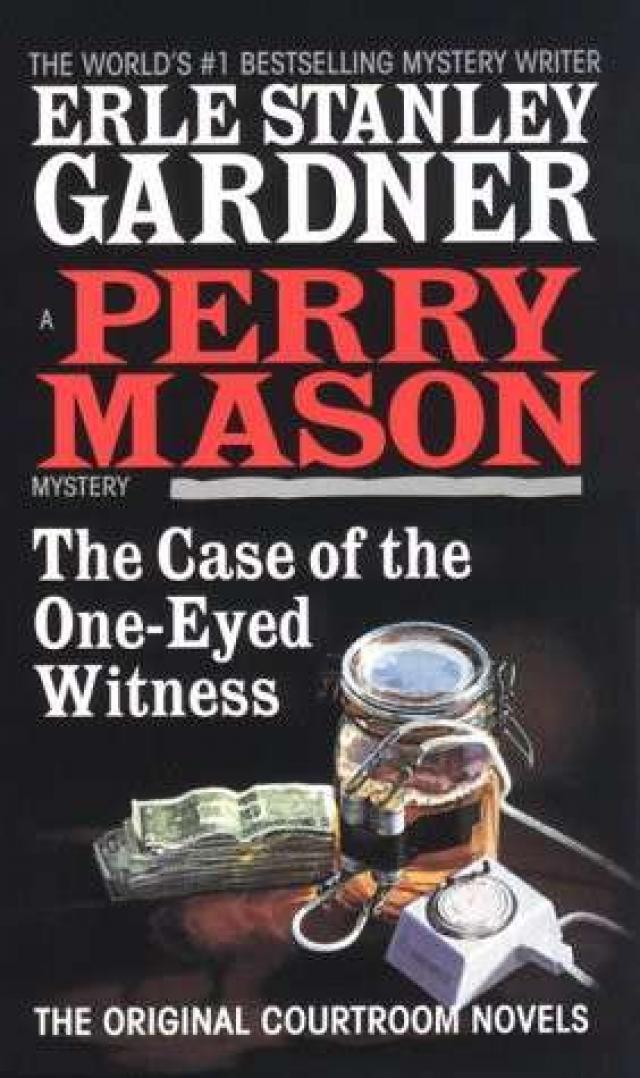
The Case of the One-Eyed Witness,
p.15


Mason said, “Many people misunderstand the duty of an attorney. It’s an attorney’s duty to see that a defendant has a fair trial. If the attorney makes up his mind that the defendant is guilty and therefore won’t represent that defendant, that’s asking an attorney to substitute his own prejudices, his own judgment for the judgment of a Court and a jury.”
“Suppose you know a client is guilty?”
“That’s different.”
“Do you know that Mrs. Fargo is guilty?”
“No, I assume she is not.”
“Do you know she is not guilty?”
“I know only that she is accused of crime, that she is entitled to a fair trial before a jury, and in order to have such a trial it will be necessary for her to have counsel. If counsel should refuse to appear for a defendant, there couldn’t be any trial.”
“The Court would order counsel to represent a prisoner under those circumstances, wouldn’t it?”
“Then the person would still be represented by counsel.”
“Aren’t we talking around in circles, Mr. Mason?”
Mason’s smile was disarming. “I think so.”
They took a few more pictures, then left him alone. Mason found himself sliding into a chair opposite the long meshed screen which ran the length of the divided table. A matron brought Myrtle Fargo in and she dropped into the other seat.
Her face was white and lined. There were dark circles under her eyes. Her lips, without lipstick, seemed about to tremble.
Mason said, “I take it you didn’t get any sleep.”
“They had me up all night questioning me, browbeating me, making me tell my story, wheedling me, signing statements, and then they loaded me in a plane and brought me down here and we went through the same thing all over again. I haven’t had a wink of sleep.”
Mason said, “Did you telephone me and ask me to take a message to Medford Carlin?”
She met his eyes. “No.”
“Did you kill your husband?”
“No.”
“Did you send me any money?”
“No.”
“Do you understand that you’re charged with murder?”
“Yes.”
“Do you understand that you don’t have much of a defense?”
“Apparently not. I thought I did but I guess I haven’t.”
She went on. “Mr. Mason, I’m in a horrible predicament. I had absolutely nothing to do with my husband’s death. I can realize the position that I’m in but what bothers me more than anything is the effect all of this is going to have upon Steve, my son.”
Mason’s nod was sympathetic.
She said, “I’ve sacrificed everything for him. I’ve—I can’t tell you how much I’ve sacrificed in order to give him the breaks. To think what is going to happen now is more than I can bear.”
Mason said, “The question is, do you want me to represent you?”
“Mr. Mason, I haven’t any money to squander. My uncle had died and left me some money that my husband was investing. I think he falsified the account. I want whatever estate there is to pay for my son’s education. There’s some insurance but I can’t get that so long as I’m … well unless I’m cleared of the murder charge.”
“Do you have any ready cash?”
“Very little. I had five hundred dollars when they arrested me, but they took it away from me.”
“You had five hundred dollars when they arrested you?”
“Yes—it belonged to me.”
“Do you want me to represent you?”
“I tell you that I have no money to squander on lawyers.”
“Do you want me to represent you?”
“Yes.”
“All right,” Mason said. “You are lying to me about a lot of things. You did telephone me; you left a piece of paper with the safe combination written on it in the telephone booth. You did send the money; it was your handwriting on the envelope.”
“No, no,” she repeated dully.
“But even if I can’t make you tell the truth, I’m going to represent you. Now here’s what I want you to do. I want you to sit absolutely tight and make no statements to anyone. They’ll probably leave you alone and probably won’t ask you for much because they already have you crucified. You signed statements?”
“Yes.”
“In front of a notary public?”
“Yes.”
“You made statements that were taken down in shorthand?”
“Yes. I told them everything.”
“All right,” Mason said. “Balance up for it by telling them nothing for a while. Now do you know anything that could help me in handling your case?”
“No.”
“Your husband had a real estate business?”
“Yes.”
“Anything else?”
“No, that was all.”
“Was he doing much good in the real estate business? Was he successful?”
“Fairly so, but things have been quiet lately.”
“I understand. Now, Mrs. Fargo, I’m going to tell you something frankly. I’m going to tell you something as your attorney. I’m going to tell you what I think happened.”
“Yes, go on.”
Mason said, “I think you called me up at the Golden Goose, I think you gave me a job to do and …”
She interrupted him by slowly shaking her head.
“Let me finish, please,” Mason said. “I think you sent me all the money that you had, money that you’d been saving up against an emergency. I think you had encountered some emergency. I think that in some way your husband found out what had happened, and I think the next morning in place of taking the bus for Sacramento as you had planned you found yourself engaged in a showdown with your husband. I think you became afraid of him and locked yourself in your bedroom. I think your husband finally persuaded you to open the door and I think that he tried to choke you. I think you had a knife and stabbed at him in self-defense. Then I think you got in a panic because of the feeling that a lot of newspaper notoriety would make things difficult for you and your son, and tried to fake an alibi. You originally had intended to be on that bus at eight-forty-five in the morning, you knew that your mother was expecting you to arrive on that bus, you felt that if you could find some way of getting aboard the bus and arriving in Sacramento on that bus you would be all right.
“I think you killed your husband but I don’t think you murdered him. I think you acted in self-defense. I think you have all but put yourself behind the eight ball trying to tell a story that won’t hold water.
“Now then, that’s my idea about the case.”
She kept shaking her head.
“Is it true?”
She avoided his eyes. “Mr. Mason, I—I wish … Oh, I do wish I dared tell you what …”
“What are you afraid of?” Mason said. “Anything you tell your attorney is in confidence. Isn’t that the way it happened, Mrs. Fargo?”
“I—no.”
“It isn’t?”
“No.”
“How did it happen?”
“I told the truth all along. I left on that …”
“Didn’t you kill your husband in self-defense?”
“No.”
“Why don’t you admit you rang me up at the Golden Goose and …”
“I didn’t!”
Mason said, “You’re making it very difficult for me to represent you.”
“I’ve told you everything I can.”
“All right,” Mason said, “I’m going to represent you. Now I want you to understand one thing.”
“What?”
“If I represent you I’m going to try to get you acquitted.”
“Naturally.”
“No jury on earth is going to believe the story that you’ve told so far.”
“I’m sorry. I can’t help it.”
“Therefore,” Mason said, “I’m going to try to give the jury something that they will believe.”
“But I can’t help you, Mr. Mason, I can’t…. ”
“Of course you can’t,” Mason said, “you’ve already committed yourself. You’ve made affidavits, you’ve signed statements, you’ve put yourself in such a position that you’re completely bound hand and foot. You’re lashed to a set of circumstances that are going to send you up for life if they don’t send you into the gas chamber, but my hands aren’t tied.”
“What are you going to do?”
“What I think will be for your best interests.”
“But, Mr. Mason, you can’t—in view of what I’ve said you can’t found a defense on a lie.”
“I can found a defense on anything I want to,” Mason said, “and it isn’t a lie unless you tell it. Now then, you’ve got yourself in a mess. I’m going to try to get you out. Remember that under the law the prosecution has to prove that you’re guilty beyond all reasonable doubt before the jury can convict you. You understand that?”
“Yes.”
Mason said, “I’m going to raise a reasonable doubt in the minds of the jury.”
“How’s that?”
“I’m going to make it appear that you killed your husband in self-defense.”
“I didn’t.”
“Yes, you did. You’re afraid to admit it on account of certain facts that you want to keep from the public, facts that you think will disgrace your son.”
“No, Mr. Mason, honestly, I’m telling you …”
“I’m going to keep you off the stand, I’m going to let them throw all those affidavits that they want in front of the jury. I can’t stop them, but I’m going to raise a reasonable doubt in the minds of the jurors as to what happened. That’s all I can do, and the only way I can do it is by utilizing the testimony of the prosecution’s own witnesses. Now then, I want you to keep quiet from now on. Do you understand?”
“Yes.”
“Can you do it?”
“I think so.”
“Try it then,” Mason said, and nodded to the matron that the interview was over.
Mason took the elevator down to the lower floor of the Hall of Justice, where he found a telephone booth and called Paul Drake.
“Paul,” he said, “I’m up against it on this Fargo case.”
“Are you just finding that out?” Drake asked.
Mason said, “I’m stuck with it.”
“Don’t do that, Perry, get out from under. Don’t have anything to do with that case. It’s dead open-and-shut.”
Mason said, “Just the same, I’m stuck with it, Paul, and I’m going to need some ammunition that I can shoot when I get to court.”
“Anything you can get will sound like a firecracker popping back against a sixteen-inch gun,” Drake told him.
“Never mind, Paul. I have to take the case as it is. Now Mrs. Maynard is the most deadly witness. I want you to find out about Mrs. Maynard’s eyes.”
“What about her eyes?”
“She’s around thirty-one or two. The picture of her in the paper shows her without glasses. Now there’s just a chance she’s accustomed to spectacles. She may have a pair which she wears when she isn’t particularly concerned with the impression she’s creating. Whenever she appears in public, however, she takes off her spectacles.”
“A lot of women do that,” Drake said.
“But,” Mason said, “if a woman witness is going to identify a client of mine and has her glasses in her bag instead of on her nose, I intend to make a point of it.”
“I get you,” Drake said.
Mason said, “As a matter of fact it’s an utterly cockeyed and false impression that a woman doesn’t look well wearing glasses but some women have built up a complex on it and I just have a hunch that Mrs. Maynard may be one of those women.”
“I’ll find out.”
Mason said, “I want you to find out everything you can about her, everything about her past, her present, her tastes, her likes, her dislikes, where she goes, what she does….”
“Better take it easy, Perry,” Drake said. “You know what’ll happen. They’ll claim you’re tampering with witnesses for the prosecution.”
“I don’t give a damn what they claim,” Mason said. “I’m not threatening her. I’m simply trying to find out facts. Now get busy and see what you can do. She must be back in Los Angeles. Start asking questions around the neighborhood. Get a general line on her.”
“And particularly about her glasses?” Drake asked.
“Very particularly about the glasses,” Mason told him.
Chapter 17
It was early the next afternoon when Paul Drake had a report ready for Mason on the prosecution’s star witness.
“This Mrs. Maynard,” Drake said, thumbing through the pages of a report, “is a woman who keeps very much to herself. No one knows very much about her. She’s a widow and apparently has a little insurance that enables her to live quietly and simply without having to ask favors of anyone. She keeps pretty much to herself and has a little car, wears pretty fair clothes, and is away from home a lot.”
“Working?” Mason asked.
“No, not working, because she leaves at irregular hours, and sometimes she is away for days at a time. She has a telephone that’s not on a party line, but …”
“Well, you can find out where she goes from now on,” Mason said. “Shadow her everywhere she goes.”
“We’re doing that,” Drake said, “but since my men have been on the job she hasn’t been out very much. However, here’s something that you can use, Perry.”
“What?”
“Yesterday there were some glasses delivered to her from an optometrist.”
“How do you know? You weren’t on the job then.”
“No, but this morning one of my men talking to her next door neighbor discovered that yesterday a delivery boy rang and rang Mrs. Maynard’s bell and it didn’t answer, and finally the neighbor called out to him to leave his package with her. He did. She remembered the label because she knew the name of the optometrist, whose shop was only a few blocks away.”
“That’s a break, Paul!”
“Yeah. If her glasses were broken when she was making this trip and she …”
“Now we’re getting somewhere!” Mason exclaimed. “Let’s follow up that lead. Who’s the optometrist?”
“Dr. Carlton B. Radcliff. He has a little shop where he sells binoculars, optical goods, does fitting for glasses and …”
“What sort of a chap?”
“An oldish man, around seventy, I’d say. He lives up above his shop. Apparently he knows his way around—a quiet, patient man who’s making a little living out of his shop. Want me to try to find out more about …”
“I’ll tackle him myself,” Mason said. “That may be very important.”
Drake said, “I have something else for you.”
“What?”
“You wanted me to get a line on Celinda Gilson.”
“What do you have, Paul?”
“The card on her apartment reads ‘Celinda Gilson Larue.’ The Larue has been scratched out and …”
“I saw that,” Mason said.
“And,” Drake went on, “the last name of the headwaiter of the Golden Goose happens to be Larue.”
“Pierre?”
“That’s right.”
“Pierre Larue,” Mason repeated.
“That’s right.”
“Good Lord, Paul, you don’t mean he’s the husband?”
“Apparently he is. I can’t find that they’re formally divorced. However, they’re separated and—well, anyway, that’s the story. Apparently in place of any kind of a property settlement, Larue got his wife a job with the photographing concession there at the Golden Goose. Now then, try putting all that together and what sort of an answer do you get?”
“An answer that doesn’t fit in with the problem.”
“You’d better change the problem, then,” Paul Drake said. “Facts are stubborn.”
“Damned if they aren’t,” Mason admitted. “Did you find out where Pierre lives?”
“No one knows,” Drake said. “When he leaves the Golden Goose he’s gone.”
“All right,” Mason said, “if he’s tied up in the case that much, if he’s the husband of the Gilson girl, put a shadow on him. Let’s find out where he goes when he quits work.”
“You’re going to be spending a lot of money before we get done,” Drake warned.
“That’s all right,” Mason told him. “I want results. Let’s go see that optometrist.”
“My car or yours?”
“Mine. It takes you all day to get there.”
“Well,” Drake said, “riding with you is always an experience. Let’s go.”
Mason told Della Street where he was going, then he and Paul Drake drove to the office of Dr. Carlton B. Radcliff.
Despite his various qualifications, Dr. Radcliff quite evidently was seeking retirement in his little shop.
A sign over the counter at the back of the store which could be read by everyone on entering proclaimed:
“I WON’T BE BULLIED AND I WON’T BE HURRIED.”
There was a watch-repair counter at the front of the store, and as Mason and Drake entered Dr. Radcliff was seated at the counter, a loupe over his eye, assembling the component parts of a watch.
“Just a minute,” he called over his shoulder and went on with his work, carefully picking up a small jeweled wheel with a pair of tweezers, fitting it into position in the movement of the watch.
After a few moments he pushed back his chair, came to the counter and surveyed the men with patient eyes in which there was a glint of quizzical humor.
“What can I do for you gentlemen?” he asked.
Mason smiled. “We want some information.”
“Information you can get better some place else.”
“I think this is information you can give us,” Mason said.
“I am an old man; I have studied but few things. The world has moved rapidly and now there are many things I don’t know.”
“We want information about glasses,” Mason said.
“Now glasses are different,” the man conceded. “Glasses and watches I know. Those two things I have studied. I have studied them a lifetime and a lifetime has been too short. What can I do for you?”
Mason said, “We want to know something about Mrs. Newton Maynard’s glasses.”