The case of the one eyed.., p.22
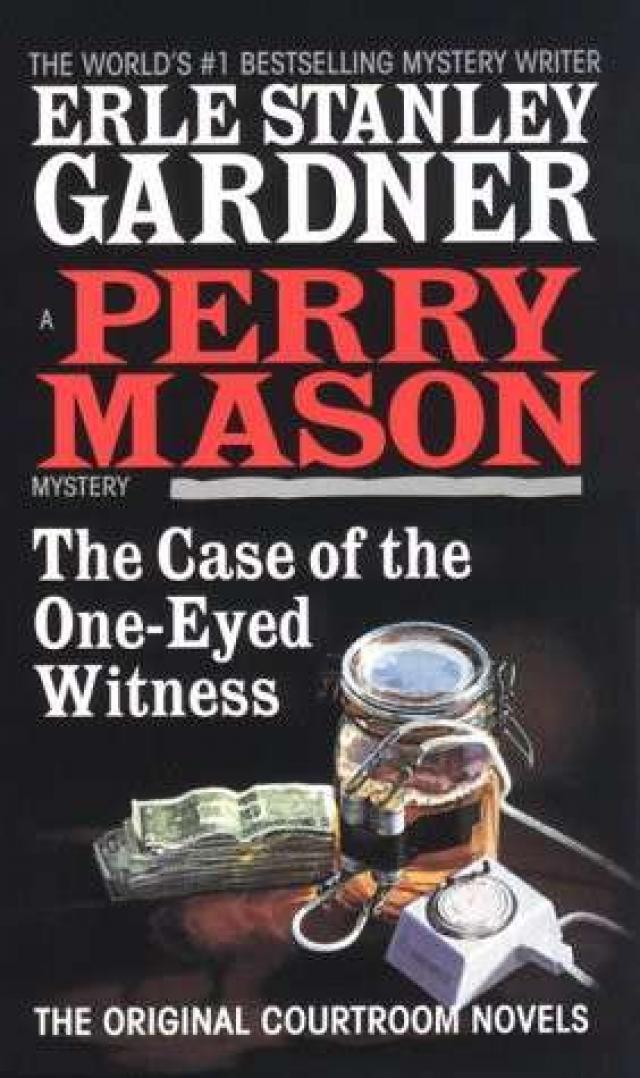
The Case of the One-Eyed Witness,
p.22


“Certainly, I—I …” Her voice abruptly trailed into silence.
“Go ahead,” Mason said.
“I—I made a slight mistake,” she said. “I meant to say that I had had him pointed out to me in the corridor as one of the witnesses in the case who was to testify that …”
Mason said suddenly, “Now, Danvers, I want to ask you a question which you can answer from right where you stand. Isn’t this the woman who parked the automobile on the morning of September twenty-second; the person who asked you about taking a taxicab? Think carefully and …”
“I did no such thing,” Mrs. Maynard snapped. “I wasn’t there. I never saw this man before I came to court. He’s never seen me. I …”
“Then why did you just now say you saw him at the parking station?” Mason asked.
“Because I—I was confused. I—and then again, I’ve parked my car there before. I’ve seen him there on other occasions long before the twenty-second of September.”
Mason turned to Danvers. “Is this the woman you saw?”
“By gosh, I don’t know,” Danvers blurted. “It sure looks like her.”
“It could be?” Mason asked.
“It could be.”
“Just a moment,” Hamilton Burger shouted. “This is getting entirely out of hand. Counsel is examining two witnesses at once. We’re getting nowhere. We’re …”
“On the contrary,” Mason interrupted, raising his own voice to drown out that of Hamilton Burger. “We’re getting to a solution of this case, Your Honor; the only solution which actually fits the facts in this case.”
Judge Keith pounded with his gavel. “Let’s have an orderly procedure here. We …”
Mrs. Maynard started hastily adjusting the bandage over her eye.
“Just a moment,” Mason said, “before you put on that bandage, Mrs. Maynard, we happen to have a good eye doctor here in court. Perhaps you wouldn’t mind having Dr. Radcliff look at that eye.”
“I don’t need any doctor to look at it.”
“I didn’t notice any evidence of inflammation,” Mason said.
“Surely, Your Honor, that’s beside the point,” Hamilton Burger said.
Mason laughed. “No, it isn’t, Your Honor. The witness testified under oath that she had an inflammation of that right eye, an infection. I think the court had an opportunity to observe that eye and I know Dr. Radcliff did, and I think everyone will agree that there is certainly no evidence of infection, no redness, no inflammation, or …”
“It’s gone down. It’s ever so much better now,” Mrs. Maynard said.
In the moment of silence that followed Percy Danvers said quietly, “Come to think of it, I think that is the woman.”
Chapter 24
Mason, entering his office, scaled his hat in the general direction of the shelf in the hat closet, grabbed Della Street around the waist and gleefully started to whirl her around.
“What happened?” Della Street asked.
“Well,” Mason said, “we finally got the whole story and it’s so darned simple that I should have known what it was even sooner than I did.”
“It’s clear as mud to me,” Della said.
“Here’s what happened,” Mason told her. “Carlin, Fargo and Pierre Larue were all in cahoots in a baby-blackmail racket.
“They used Helen Hampton in their main shakedown, too, but the racket was far more intricate than she knew about. It involved getting illegitimate children, putting them out for adoption at a fat fee, and then, after the new parents had become attached to the child, steering them into the Golden Goose and letting Helen Hampton do her stuff. Helen would get the tip-off from Pierre. Then she would put on her act, and vary the age of the infant and the circumstances in her story to suit the occasion.
“Myrtle Fargo found out that her husband was mixed up in some racket with Carlin, but she never associated it with the blackmailing she’d been subjected to three years ago. Until today she still thought her adopted son had Japanese blood. Talk about compelling reasons for not telling the truth! She secured the clipping showing Helen Hampton’s criminal record and was foolish enough to think that she could frighten Carlin into letting her husband out of the partnership—the poor kid had no idea just how deep the thing went.”
“And Carlin killed Fargo?” Della Street asked.
“There’s where Carlin’s girl friend entered the picture,” Mason said. “But in order to understand that you have to know exactly what happened. Mrs. Fargo has come clean and filled in all the gaps. And Helen Hampton has confessed.”
“I’m listening.”
“Myrtle Fargo was ready to call for a showdown,” Mason said. “She didn’t know just how she was going to do it because she wanted to avoid publicity. Then that night in the Golden Goose the girl in the powder room told her who I was. Myrtle immediately made an excuse to go home, get the money she had been saving and send it to me, together with the clipping.
“That clipping was her ace in the hole. She opened her husband’s safe to get it and then slipped out of the house. She got a man who runs a nearby delicatessen store, whom she knew and trusted, to deliver the envelope at the Golden Goose, and then went to the drugstore to telephone me.
“Fargo had gone up to his bedroom, saying he had an important real estate agreement he wanted to prepare, but when his wife didn’t appear he got suspicious. He found she had left the house. He checked on the safe. His money was there, but things were disturbed and he found the Helen Hampton clipping was missing. He suspected she might have gone to the drugstore to telephone—her mother, the police—he didn’t know who, but he was frightened. He didn’t know how long she had been gone, and when he caught up with her at the drugstore he thought he had headed her off before she had had a chance to put through the call.
“On the way home there was a scene, and Fargo notified Carlin that his wife was going to make trouble, and he also notified Pierre.
“Then that package came for me at the Golden Goose, and Helen Hampton, seeing Pierre in conference with us, got her signals mixed. They’d been waiting for the parents of one of the adopted babies to show up at the Golden Goose, and she thought we were the new victims!”
“How delightfully intimate,” Della Street said.
“Wasn’t it? Well, you can imagine what happened. Pierre got Helen Hampton away from our table as soon as he saw what was happening, but it didn’t take him long to find out that he had been too late.
“Pierre gave us credit for being able to put two and two together as soon as we had the facts, so Pierre slipped out of the night club the moment he could and rushed out to Carlin’s house. He was in a panic. He wanted to divide all the money in the business and start making tracks.
“Carlin felt certain he could wait it out. Carlin and Pierre got in a fight and, according to Carlin’s present story, he hit Pierre on the chin, not too hard. But evidently Pierre’s arteries were brittle. The blow brought on a cerebral hemorrhage, and Pierre died.”
“You mean he was dead when we called on Carlin?” Della Street asked.
“I mean he’d been killed and was lying on the bed in an upstairs bedroom all the time Carlin was making coffee for us and talking about the beauties of nature.”
Della shuddered.
“So Carlin then knew he did have to get out from under. He telephoned his girl friend, Mrs. Maynard, to join him, but to park her car out of sight of the house. He then proceeded to fix up a time bomb which would set off a gasoline fire and destroy the house.
“You’ll remember that Pierre Larue was a chunky Swiss about sixty years old, about the same age as Carlin and with almost the same build. Carlin felt certain Pierre’s body would be found and the police would naturally assume that Carlin had died in the fire.
“However, you will remember that Pierre didn’t wear glasses. Carlin not only wore glasses but, because of the peculiar lopsided facial development, one ear was about an inch higher than the other. He took his own glasses off and put them on Pierre, hoping that even after the fire there would be enough of them left for the police to clinch the identification. Then they both slipped out of the back door before Paul’s second man got on the job. Carlin holed up somewhere.
“Mrs. Maynard had an old pair of Carlin’s discarded spectacles at her house, and she was to rush through a new pair for Carlin.”
“How about Fargo?”
“Fargo wouldn’t go for murder,” Mason said. “He was willing to go for blackmail but he was scared of murder. He wanted to clear out, and fast. His wife had left and he didn’t know what she was up to because of the night before and because that morning before she left she had taken the five hundred dollars from the safe. So Carlin sent Mrs. Maynard out to reason with him. She was in the upstairs bedroom when I called. After I left she and Fargo had a showdown. She stabbed him. She was desperate. Fargo had told me his wife had taken the six o’clock plane for Sacramento because he didn’t want anyone to know where she really was, but he told Mrs. Maynard the truth—that she’d taken the morning bus. Mrs. Maynard figured that by impersonating Mrs. Fargo she could leave a trail that would make it appear that Myrtle Fargo had committed the crime, and tried to build a fictitious alibi.
“At two places we almost ruined the whole scheme for Carlin. The first time was when our detectives, who were watching the house, put in a fire alarm so promptly that the fire department was able to get the fire extinguished before the evidence had been obliterated. (And, of course, the fact that Carlin had taken everything from his safe and put in charred papers was really the pay-off on the whole thing.) The second time was when we put detectives on that Greyhound bus. It just happened that luck played into the conspirators’ hands in that there weren’t any other through passengers traveling all the way through from Los Angeles to stop them, and therefore Mrs. Maynard was able to get by with her deception.
“That, of course, was purely a matter of luck, but, on the other hand, the fact that we rushed detectives aboard the bus was also a matter of luck. If their plans had gone through, no one would have thought to look for witnesses until after the passengers had scattered to the four winds of heaven.”
“But how did you trap Carlin?” Della Street asked.
“Carlin,” Mason said, “was keeping in touch with Celinda Gilson, Larue’s former wife. She didn’t know anything about the murders, and wasn’t involved personally with the blackmail. She had been playing around with Carlin, too, on the side and didn’t know about Mrs. Maynard. When Carlin went underground after the fire, she thought he was trying to hide out from a woman and she was only too glad to help him. And when you called her up and said that Helen Hampton was talking, she immediately notified Carlin. So Carlin came rushing up to see what it was all about and ran into me. If I hadn’t hit him first he’d have pulled his gun on me.”
Della Street said, “How did you know Mrs. Maynard was the one who boarded the bus in Bakersfield?”
Mason laughed. “It was so simple I should have known it a lot earlier. But I was blinded by the conviction that Myrtle Fargo had killed her husband in self-defense. In the first place, Mrs. Maynard was about the same size, the same build and the same age as Myrtle Fargo. Furthermore, she herself kept insisting that they were dressed very much alike.
“The testimony of the pilot about the man who arranged to charter the plane, and his uncertain, groping movements should have suggested someone who couldn’t see well and should have been connected with Mrs. Maynard’s ordering glasses for a friend, and the description of the glasses pointed to Carlin—especially when I remembered that they had an unusual inside curvature to accommodate a person with protruding eyes. The woman who boarded the bus at Bakersfield wore a veil, and when Mrs. Maynard came to court she had one eye bandaged in such a way that the strips of adhesive tape pulled the skin over her forehead, so that it distorted the expression in the other eye. I should have realized she was trying to avoid identification!
“By trapping her into believing I was making a point that she couldn’t see with both eyes, I got her to take off the bandage, and by defying her to recognize the parking station attendant, I got her to betray herself.”
Della Street’s eyes were sparkling. “You certainly squeezed out of a tight corner on that one, Chief,” she said.
Mason made a little grimace. “I used a certain amount of ingenuity to get my client out of it, but using ingenuity to take the place of good sound police technique is like trying to walk a tightrope over Niagara Falls without a balancing pole. It takes footwork, ingenuity and luck.”
“I don’t see that police technique did so much in this case,” Della Street said.
Mason grinned. “It turned out afterwards that Tragg managed to get fingerprints from the corpse in Carlin’s burnt house. He checked those fingerprints with police records and found the dead man was really John Lansing alias Pierre Larue who had been implicated with Helen Hampton in the first blackmail racket.”
“You mean he knew all that,” Della Street said, “and would nevertheless have let Myrtle Fargo be convicted of murder?”
Mason said, “What he didn’t know was whether the name Medford D. Carlin was simply another alias. Moreover, he assumed that I’d opened Fargo’s safe and removed documents which I was afraid would incriminate my client. Therefore, he wasted a lot of time following the trail of a red herring.”
“But you must admit you did open the safe.”
“Tut, tut,” Mason said. “You must use more careful reasoning. I merely unlocked the safe.”
“Pardon me,” Della Street said demurely.
“Gosh, how I wish I’d known about those fingerprints earlier.”
“Well, after all,” Della Street told him, “you had to do something to earn your $570.”
About the Author
Courtesy of the Harry Ransom Center, The University of Texas at Austin
Erle Stanley Gardner (1889-1970) is a prolific American author best known for his works centered on the lawyer-detective Perry Mason. At the time of his death in March of 1970, in Ventura, California, Gardner was “the most widely read of all American writers” and “the most widely translated author in the world,” according to social historian Russell Nye. He was cited by the Guinness Book of World Records as the #1 Bestselling Writer of All Time. The first Perry Mason novel, The Case of The Velvet Claws, published in 1933, had sold twenty-eight million copies in its first fifteen years. In the mid-1950s, the Perry Mason novels were selling at the rate of twenty thousand copies a day. There have been six motion pictures based on his work and the hugely popular “Perry Mason” television series starring Raymond Burr, which aired for nine years and 271 episodes.
* I am deeply indebted to S. J. Goldstein, O.D., Optical Salon, Hotel Laurentien, Montreal, Canada, for some of the technical material in this book as well as for a vast storehouse of material indicating the remarkable things which a competent optometrist can tell from such a prosaic thing as a pair of glasses.
Erle Stanley Gardner, The Case of the One-Eyed Witness