There will be war volume.., p.12
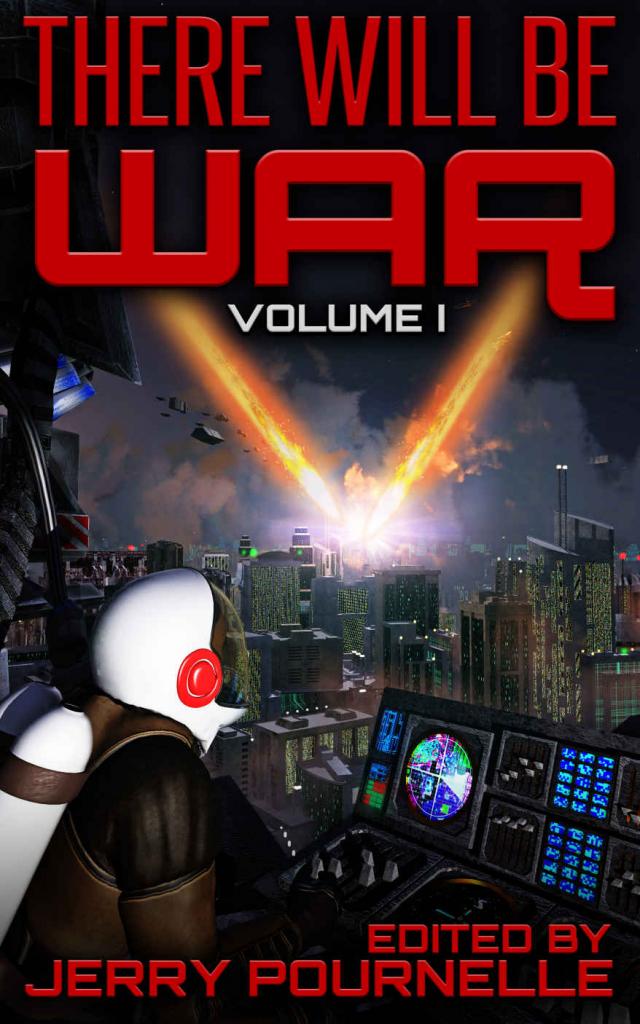
There Will Be War Volume I,
p.12


A warning buzzer sounded, and Ender cleared the simulator board, waiting for today’s game to appear. He felt muddled today, and wondered why people were there watching. Were they going to judge him today? Decide if he was good enough for something else? For another two years of grueling training, another two years of struggling to exceed his best? Ender was twelve. He felt very old. And as he waited for the game to appear, he wished he could simply lose it, lose the battle badly and completely so that they would remove him from the program, punish him however they wanted, he didn’t care, just so he could sleep.
Then the enemy formation appeared, and Ender’s weariness turned to desperation.
The enemy outnumbered him a thousand to one, the simulator glowed green with them, and Ender knew that he couldn’t win.
And the enemy was not stupid. There was no formation that Ender could study and attack. Instead the vast swarms of ships were constantly moving, constantly shifting from one momentary formation to another, so that a space that for one moment was empty was immediately filled with a formidable enemy force. And even though Ender’s fleet was the largest he had ever had, there was no place he could deploy it where he would outnumber the enemy long enough to accomplish anything.
And behind the enemy was the planet. The planet, which Maezr had warned him about. What difference did a planet make, when Ender couldn’t hope to get near it? Ender waited, waited for the flash of insight that would tell him what to do, how to destroy the enemy. And as he waited, he heard the observers behind him begin to shift in their seats, wondering what Ender was doing, what plan he would follow. And finally it was obvious to everybody that Ender didn’t know what to do, that there was nothing to do, and a few of the men at the back of the room made quiet little sounds in their throats.
Then Ender heard Bean’s voice in his ear. Bean chuckled and said, “Remember, the enemy’s gate is down.” A few of the other leaders laughed, and Ender thought back to the simple games he had played and won in Battle School. They had put him against hopeless odds there, too. And he had beaten them. And he’d be damned if he’d let Maezr Rackham beat him with a cheap trick like outnumbering him a thousand to one. He had won a game in Battle School by going for something the enemy didn’t expect, something against the rules—he had won by going against the enemy’s gate.
And the enemy’s gate was down.
Ender smiled, and realized that if he broke this rule they’d probably kick him out of school, and that way he’d win for sure: he would never have to play a game again.
He whispered into the microphone. His six commanders each took part of the fleet and launched themselves against the enemy. They pursued erratic courses, darting off in one direction and then another. The enemy immediately stopped his aimless maneuvering and began to group around Ender’s six fleets.
Ender took off his microphone, leaned back in his chair, and watched. The observers murmured out loud, now. Ender was doing nothing—he had thrown the game away.
But a pattern began to emerge from the quick confrontations with the enemy. Ender’s six groups lost ships constantly as they brushed with enemy force—but they never stopped for a fight, even when for a moment they could have won a small tactical victory. Instead they continued on their erratic course that led, eventually, down. Toward the enemy planet.
And because of their seemingly random course the enemy didn’t realize it until the same time that the observers did. By then it was too late, just as it had been too late for William Bee to stop Ender’s soldiers from activating the gate. More of Ender’s ships could be hit and destroyed, so that of the six fleets only two were able to get to the planet, and those were decimated. But those tiny groups did get through, and they opened fire on the planet.
Ender leaned foward now, anxious to see if his guess would pay off. He half expected a buzzer to sound and the game to be stopped, because he had broken the rule. But he was betting on the accuracy of the simulator. If it could simulate a planet, it could simulate what would happen to a planet under attack.
It did.
The weapons that blew up little ships didn’t blow up the entire planet at first. But they did cause terrible explosions. And on the planet there was no space to dissipate the chain reaction. On the planet the chain reaction found more and more fuel to feed it.
The planet’s surface seemed to be moving back and forth, but soon the surface gave way in an immense explosion that sent light flashing in all directions. It swallowed up Ender’s entire fleet. And then it reached the enemy ships.
The first simply vanished in the explosion. Then, as the explosion spread and became less bright, it was clear what happened to each ship. As the light reached them they flashed brightly for a moment and disappeared. They were all fuel for the fire of the planet.
It took more than three minutes for the explosion to reach the limits of the simulator, and by then it was much fainter. All the ships were gone, and if any had escaped before the explosion reached them, they were few and not worth worrying about. Where the planet had been there was nothing. The simulator was empty.
Ender had destroyed the enemy by sacrificing his entire fleet and breaking the rule against destroying the planet. He wasn’t sure whether to feel triumphant at his victory or defiant at the rebuke he was certain would come. So instead he felt nothing. He was tired. He wanted to go to bed and sleep.
He switched off the simulator, and finally heard the noise behind him.
There were no longer two rows of dignified military observers. Instead there was chaos. Some of them were slapping each other on the back, some of them were bowed with their heads in their hands, others were openly weeping. Captain Graff detached himself from the group and came to Ender. Tears streamed down his face, but he was smiling. He reached out his arms, and to Ender’s surprise he embraced the boy, held him tightly, and whispered, “Thank you, thank you, thank you, Ender.”
Soon all the observers were gathered around the bewildered child, thanking him and cheering him and patting him on the shoulder and shaking his hand. Ender tried to make sense of what they were saying. He had passed the test after all? Why did it matter so much to them?
Then the crowd parted and Maezr Rackham walked through. He came straight up to Ender Wiggin and held out his hand.
“You made the hard choice, boy. But heaven knows there was no other way you could have done it. Congratulations. You beat them, and it’s all over.”
All over. Beat them. “I beat you, Maezr Rackham.”
Maezr laughed, a loud laugh that filled the room. “Ender Wiggin, you never played me. You never played a game since I was your teacher.”
Ender didn’t get the joke. He had played a great many games, at a terrible cost to himself. He began to get angry.
Maezr reached out and touched his shoulder. Ender shrugged him off. Maezr then grew serious and said, “Ender Wiggin, for the last months you have been the commander of our fleets. There were no games. The battles were real. Your only enemy was the enemy. You won every battle. And finally today you fought them at their home world, and you destroyed their world, their fleet, you destroyed them completely, and they’ll never come against us again. You did it. You.”
Real. Not a game. Ender’s mind was too tired to cope with it all. He walked away from Maezr, walked silently through the crowd that still whispered thanks and congratulations to the boy, walked out of the simulator room and finally arrived in his bedroom and closed the door.
He was asleep when Graff and Maezr Rackham found him. They came in quietly and roused him. He woke slowly, and when he recognized them he turned away to go back to sleep.
“Ender,” Graff said. “We need to talk to you.”
Ender rolled back to face them. He said nothing.
Graff smiled. “It was a shock to you yesterday, I know. But it must make you feel good to know you won the war.”
Ender nodded slowly.
“Maezr Rackham here, he never played against you. He only analyzed your battles to find out your weak spots, to help you improve. It worked, didn’t it?”
Ender closed his eyes tightly. They waited. He said, “Why didn’t you tell me?”
Maezr smiled. “A hundred years ago, Ender, we found out some things. That when a commander’s life is in danger he becomes afraid, and fear slows down his thinking. When a commander knows that he’s killing people, he becomes cautious or insane, and neither of those help him do well. And when he is mature, when he has responsibilities and an understanding of the world, he becomes cautious and sluggish and can’t do this job. So we trained children, who didn’t know anything but the game, and never knew when it would become real. That was the theory, and you proved that the theory worked.”
Graff reached out and touched Ender’s shoulder. “We launched the ships so that they would all arrive at their destination during these few months. We knew that we’d probably only have one good commander, if we were lucky. In history it’s been very rare to have more than one genius in a war. So we planned on having a genius. We were gambling. And you came along and we won.”
Ender opened his eyes again and they realized he was angry. “Yes, you won.”
Graff and Maezr Rackham looked at each other. “He doesn’t understand,” Graff whispered.
“I understand,” Ender said. “You needed a weapon, and you got it, and it was me.”
“That’s right,” Maezr answered.
“So tell me,” Ender went on, “How many people lived on that planet that I destroyed.”
They didn’t answer him. They waited a while in silence, and then Graff spoke. “Weapons don’t need to understand what they’re pointed at, Ender. We did the pointing, and so we’re responsible. You just did your job.”
Maezr smiled. “Of course, Ender, you’ll be taken care of. The government will never forget you. You served us all very well.”
Ender rolled over and faced the wall, and even though they tried to talk to him, he didn’t answer them. Finally they left.
Ender lay in his bed for a long time before anyone disturbed him again. The door opened softly. Ender didn’t turn to see who it was. Then a hand touched him softly.
“Ender, it’s me, Bean.”
Ender turned over and looked at the little boy who was standing by his bed.
“Sit down,” Ender said.
Bean sat. “That last battle, Ender. I didn’t know how you’d get us out of it.”
Ender smiled. “I didn’t. I cheated. I thought they’d kick me out.”
“Can you believe it! We won the war. The whole war’s over, and we thought we’d have to wait till we grew up to fight in it, and it was us fighting it all the time. I mean, Ender, we’re little kids. I’m a little kid, anyway.” Bean laughed and Ender smiled. Then they were silent for a little while, Bean sitting on the edge of the bed, and Ender watching him out of half-closed eyes.
Finally Bean thought of something else to say.
“What will we do now that the war’s over?” he said.
Ender closed his eyes and said, “I need some sleep, Bean.”
Bean got up and left and Ender slept.
Graff and Anderson walked through the gates into the park. There was a breeze, but the sun was hot on their shoulders.
“Abba Technics? In the capital?” Graff asked.
“No, in Biggock County. Training division,” Anderson replied. “They think my work with children is good preparation. And you?”
Graff smiled and shook his head. “No plans. I’ll be here for a few more months. Reports, winding down. I’ve had offers. Personnel development for DCIA, executive vice-president for U and P, but I said no. Publisher wants me to do memoirs of the war. I don’t know.”
They sat on a bench and watched leaves shivering in the breeze. Children on the monkey bars were laughing and yelling, but the wind and the distance swallowed their words. “Look,” Graff said, pointing. A little boy jumped from the bars and ran near the bench where the two men sat. Another boy followed him, and holding his hands like a gun he made an explosive sound. The child he was shooting at didn’t stop. He fired again.
“I got you! Come back here!”
The other little boy ran on out of sight.
“Don’t you know when you’re dead?” The boy shoved his hands in his pockets and kicked a rock back to the monkey bars. Anderson smiled and shook his head. “Kids,” he said. Then he and Graff stood up and walked on out of the park.
Editor's Introduction to:
A DEATH IN REALTIME
by Richard Sean McEnroe
A few years ago editor Jim Baen published ARMAGGEDON 2419 A.D., which was the original Buck Rogers novel. It was an interesting story, although hopelessly out of date. Larry Niven and I began speculating about it: what strange events might have happened so that when engineer Anthony Rogers awakened in the 25th Century after being trapped in a mine cave-in sometime in 1930, the world looked as portrayed in the book?
It was no easy task, for the original Buck Rogers stories had the traditional Mars (dry and dying, but not dead) and Venus (hot and swampy). Mankind was oppressed by the Han, who were not precisely human but who could certainly interbreed with humans. The technology was quite strange, and many inventions made since 1930 (when the book was written) had vanished.
After a couple of coffee and brandy sessions, we came up with what we thought were plausible notions. They involved some pretty elaborate assumptions, but when we finished we had a seamless whole.
Enter Jim Baen, who offered to buy the outline from us. “I’ll get some other writers to write the novels,” he said, “and meanwhile you can get paid for all those daydreams.”
We pointed out that getting paid for daydreams is precisely what we do for a living, and began to haggle over the price. Eventually the bargain was struck. The first of these stories “from an outline by Larry Niven and Jerry Pournelle” was “Mordred” by Eric Holmes. The second, and in our opinion far the better, was “Warrior’s Blood” by Richard S. McEnroe…
When Jim Baen first went to Ace Books from Galaxy magazine, he very much missed being able to work with short stories and new writers. Eventually Ace invented Destinies, that rather strange “magazine” that looked like a book, just so that Jim would feel at home. When this story first appeared in Destinies, it carried the blurb “The Real World Gives No Quarter.”
This story was actually written before arcade games gained their full popularity. Anyone who has ever watched kids play Missile Command will appreciate the essential truth it portrays. One query: computer people use the words “real time” a lot. What is its opposite?
A DEATH IN REALTIME
by Richard Sean McEnroe
Join the navy and see the phosphor dots.
If Cooper hadn’t been stationed aboard the USS Quincannon, manning his post might have been quite similar to watching television in a broom closet. But because the fast, cramped little Michaelson-class corvette was making thirty knots in a Force Seven blow as it steamed past the Migged-out North Sea derrick-fields, he had the added pleasure of being thrown back and forth in his seat with such force that his bowl-shaped helmet grazed the bulkheads behind him and above his console.
He braced himself against the ship’s rolling, studying the pale green screen of the Decca-built R50/90A naval radar unit that was tied into one of Quincannon’s two Poignard tactical missile batteries. Switched to long-range sweep, its resolution was too coarse for the screen to be kept entirely clear of the Soviet ECM hash, but he could still make out the clustered blips of the Russian squadron his own small flotilla was steadily closing on.
When he was just a little kid, he had watched all the shows.
There was Combat, with Vic Morrow, and you could always tell who was going to die because it was always the same five or six guys who came back every week; everyone else was just a sympathy frag, at best. Then there was Rat Patrol, with Christopher George and his hat and those dynamite little jeeps, and the German officer—was it Eric Braeden? He didn’t remember—who never got court-martialed even though the jeeps kept blowing up all his General Grant tanks that were supposed to be panzers. And the movies, God, yes, the movies; he couldn’t have been more than three years old the one time he ever saw Guadalcanal Diary but he could still remember the way the Marine Corps tanks had gone crashing through the jungle to chase the Japanese into the ocean—or Battle of Midway, the old one with Aldo Ray: he’d seen that one so many times that when he went to see Star Wars he got royally pissed at the way they took the whole last battle scene and just stuck it in, practically shot for shot. And then there was the one he’d seen so long ago that he couldn’t even remember the title, where the GIs had knocked out a tank by collapsing a building on it; he had sat there peeling the chocolate coating off a Mallomar and pretending it was the plating of the tank falling apart in the flames…
The blips of the Russian ships were closing on the center of his screen now, and he switched over to short-range scan just as Quincannon shuddered and launched a brace of longer-range Harpoon missiles. The blips jumped magically back to the far edge of his screen, and where several blips had tended to blend into one amorphous mass before, each now stood out sharply distinct. Working a shorter range with the same power, he was able to fiddle with his clutter and squelch controls and clear his picture considerably. Then the last of the Soviet interference vanished as Quincannon’s own electronic counter-counter-measures finally got the best of it. Now he could see the much smaller blips of the NATO squadron’s first salvo stabbing at the much more slowly-moving dots that meant ships and men. The screen broke out in a dozen blotches of pale light as the missiles struck home or were intercepted—Quincannon’s were—and a straggly line of pinpoints separated from the Russian ships, heading for the little cluster of blips around the center of his screen, heading towards him.