The last days of the nat.., p.2
The Last Days of the National Costume,
p.2


‘You can’t make a silk purse out of a sow’s ear, can you?’ Again, the unruly tongue.
Sometimes you can.
‘It does look a bit like a sow’s ear, doesn’t it?’ She giggled.
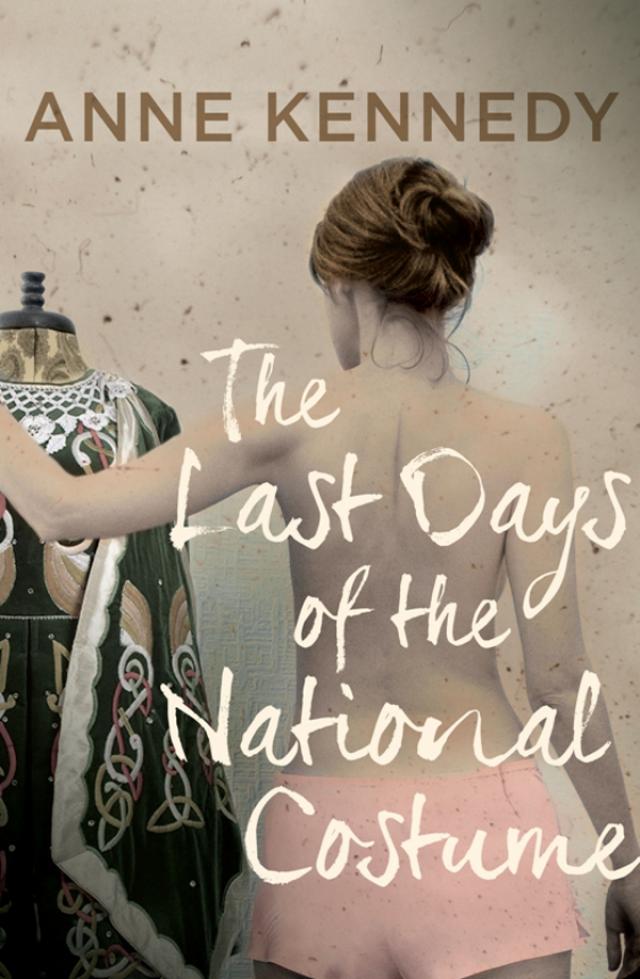
I wrote out a docket. Her name: Trisha, not that it matters. The job: Irish costume, black. When I asked for her phone number she said she’d just drop by one day and pick it up. Spare me. I hated this. Don’t leave a message, they’d say, under any circumstances. The problem with dropping by was, sometimes they didn’t. Sometimes they decided, apparently, that their lives could go on without the particular skirt or coat. Their life wasn’t destroyed after all. The other possibility was that they’d been murdered by the cheated-on spouse. I never found out what happened to the people who abandoned their garments at the end of my rack (the sight of them growing poignant with familiarity). I did sometimes scan the crime pages with certain names in mind. Was Higgins, trousers, brown, the man bludgeoned to death by the jilted boyfriend at the barbeque? Was Ford, dress, blue, the woman poisoned slowly by her chemist husband? And of course when people didn’t come to collect their garments I didn’t get paid, which might sound petty, and of course I would draw the line at charging someone’s estate. A phone number was handy, then. But I didn’t feel like arguing with Trisha. I told her the costume would be ready on Tuesday.
She was about to go, but I could tell she wasn’t finished. She hesitated and reached for the costume. I let her take it and she put it quickly to her lips, as if to farewell it. I saw this as a bad sign, re being paid. I watched her while she closed her eyes and lingered over the fabric. It must have been rough and soft against her mouth, the harsh embroidery and the old fuzzy wool. Where a man’s fingers had been, I knew that. I found myself saying, ‘Your grandmother will never know the difference.’ I didn’t usually fish for information, but I knew there was no swollen-ankled octogenarian fretting over her Michael Flatley costume. I wasn’t born yesterday. Or maybe I was, in some ways. No, I wasn’t.
Sure enough, Trisha was momentarily puzzled. She put the costume down. ‘Grandmother?’ She’d forgotten her own story. Great crim she’d make. ‘Oh!’ she said finally. ‘Well, not mine actually. A friend’s.’ She blushed, but happily. ‘You know?’
I nodded. I knew.
‘I should never’ve put it on in the first place. He did warn me, but I went ahead. Stupid me!’
I handed stupid Trisha the docket. After I’d watched her tartan Docs thump out to the gate, I went back to my moony workroom and reached for the light. I remembered the power was out. I hung the costume on the rack and watched for a minute as it swung, rippling out into the room, the beautiful ripped thing.
2
A bit about my little business (which was still moderately fun, and had just been for something to do, more on that later): Every day there was a procession of clients who, with their bundles, were like the survivors of a train wreck. They would drop off their torn clothes, tell me how it happened, then leave and I’d get on with it. While I worked, I’d mull over what they’d said. After a while, I began to suspect that at least some of them were spinning me a load of the proverbial codswallop. Was ‘evening dress, red’ really torn getting out of a car? And seriously, were ‘trousers, navy’ chewed by a dog? The ragged tear did seem to be the work of some kind of teeth.
Perhaps there was a change in me, I don’t know. Perhaps I started looking at the clients sideways. Because pretty soon, they started fessing up. The first time was when a schoolteacher cleared his throat and described how his girlfriend had, with her lips, glued him all over as if to wallpaper him. That’s what he said. First she had ripped off his clothes, hence the torn dinner jacket. I had no idea why he told me this, as he stood in my workroom. Yes, I did know. It was because he knew I knew. I was becoming experienced. I was like a forensic scientist. I could tell, just from looking at a garment, how a pocket parted company with a panel, how a skirt split its pleat.
From then on I heard about the many uses of the hands, together with the tongue, stomach, neck, the arms, the area behind the knees, the crotch, breasts, and anywhere else clothing might be torn from. Not that I didn’t know about them before, of course, just not like this. Or not anymore. I noticed that in their lugubrious descriptions, they all used the word ‘passion’. So Baroque. They told me it was the kind of passion that was out of their hands, there was no deciding about it one way or the other, it just was. This was what they said. Not just one client, but many, over and over. They said these words—passion, no choice, out of my hands. I know. Tedious. What’s more, they explained that the consequences of this passion were going to destroy their life, or would if it weren’t for me, the mender. I must say I quite liked this bit. They were so grateful to me! They would tell me I was worth my weight in gold. I would shrug in a shucks kind of way. But underneath I was glowing. I imagined my bodyweight as a rough, glittering nugget. Of course I knew it wasn’t my skill in mending they were grateful for. It wasn’t the neatness of my weaving or the tininess of my stitches. Because really, there’s no special trick to it. Well, perhaps a little natural dexterity helps. Perhaps having been a girl once, that helps. Having been a girl and because you were a girl having a bodkin put into your hands at school at the age of six, with a skein of bright wool and some hessian woven as loosely as fingers latticed together, and being shown how to make a running thread like the dotted line down the middle of the road. And over the years everything fined down gradually, from cross stitch in wool, to chain stitch in cotton, to satin stitch in silk, and it all got finer and finer until the fibres were like hair and the fabric was as tight as, say, the matt of the sky. It was as if you’d walked away from your big woollen running stitch and it receded into the distance, and at the same time your hands got bigger as if they came into the foreground. Nothing had changed. Everything was still there under my hands, but smaller.
But it wasn’t my skill the clients were grateful for. No. It was my collusion. What lies are worth: their weight in gold. If it weren’t for me, their lives would be over. This was such a lot of melodrama. Of course their lives wouldn’t be over. Look at Clinton.
My neck would ache from being crouched over the sewing machine, thinking about all this. I really needed a visit from a health and safety officer to sort out my workstation. Not to mention the stories I was hearing. Also, my fingers would end up chafed from the needle, which poked me repeatedly as if to remind me I wasn’t dreaming. The thing is, I didn’t give a rat’s arse what the clients did in their spare time. But why couldn’t people be upfront about things? Why couldn’t they be honest? What I really hate is deceit.
•
Some jobs I remember, others not.
Case 1: I remember a green shirt. I didn’t do many shirts. This one was rayon, made from wood! The owner looked like he drank powdered protein drinks—somewhat pumped up. So the shirt might have burst anyway. Across the back was a long tear with bright threads like a fringe of grass. The man’s skin would have shown through like a new road on his shirt. I wondered if a woman had traced it with her finger. Or another man.
Case 2: A winter coat belonging to a library assistant. The buttons were ripped off, all of them, each one taking a swatch of wool and leaving a little hole like a nibble. Impossible to nibble woollen suiting, of course. More like the frenzied chomp you’d need to tear into a Mars Bar.
Case 3: A black skirt with a pretty L-shaped tear. Piece of rubbish, one hundred percent polyester, badly cut—nothing wrong with that. The girl who brought it in was about sixteen, bit her nails, in a hurry, on her lunch hour. The tear caused by hurry in the first place, in a storeroom, with the manager, she said. She blushed, and was kind of proud he was so high up. The skirt belonged to her mother. Who must never know, of course. The girl couldn’t find the exact same thing in the shops. I repaired the damage.
Case 4: Another black skirt, also inexpensive, ripped in gorse on Mount Eden. The owner in her thirties, married. She told me she’d scratched her thighs and her bum and had to soak her underwear in milk to get rid of the blood and keep covered up in front of her husband until the grazes healed. She was slightly shamefaced as she told the story, but also boasting. I suppose only a particularly desirable woman could have a man not her husband rip her skirt in the prickly undergrowth on Mount Eden. I told this woman she could buy a new skirt for less than it would cost to mend the old one, and her husband would never notice. Even if he saw it hanging in the bathroom with the tear visible. Even if he caught sight of it in the rubbish bin. I found myself getting quite worked up—even if, even if. The thing is, men don’t notice that kind of detail. The woman wouldn’t listen. She paid twice the value of the skirt to have it mended. She would never understand men, what they see, what they don’t see. So I thought, in my great wisdom.
Case 5: A man who brought in a shirt his wife had made for him. Purple silk—no, indigo. She’d dyed the fabric from berries. Berries! A labour of love. The pocket was torn. The man told me the story standing in my workroom. His lover, not his wife (the categories so distinct), had ripped the pocket. He was ashamed and bursting with pride at the same time, literally, his jowly face swelling up. I looked at the flesh of the tear under the light—its fat, so to speak. It was bad. They’d been having a game, he said, in which he hid the condom about his person—that’s what he said, about his person—and the object of the exercise was for her to find it, and for him to stop her. I felt my eyes roll involuntarily. This was a tame and childish game compared to some of the things I’d heard. We’re talking objects and things that won’t open in a hurry. (But why do people wear their best clothes? More on that later.) The man with the indigo shirt told me his lover had herpes, that was why they used a condom. So, no secret babies either. Strange how one thing leads to another, he said, and laughed. On eye contact he blushed deeper. Oh please! As they say in America. He was delighted to have a ripped shirt—but even more delighted, ecstatic, that I could see that another woman, not his wife, loved him, or something. Then he told me it was just a bit of fun. It wasn’t as if he would play a game like that with his wife. His wife didn’t need to rip his shirt. His wife made him the shirt.
I bundled up the indigo shirt as briskly as you can other people’s clothing, and said I couldn’t repair it. He coloured visibly and asked me why not. I said it was because his wife made it, and he asked me how that made a difference. I told him it made the job impossible. No matter what I did, the wife would notice. She would know it down to the last stitch. He said he didn’t give a damn how much it cost. I told him money wasn’t the point, it was whether it was possible. The man sniffed a bit, then sat back as if resigned. This could be the end, he said. I said, surely not. Then he told me something the others hadn’t mentioned: he might leave his wife for the lover. There was always that possibility. I guess when you put it in that light, I said. And he said, I do.
I remembered this.
I mended it. Took a whole afternoon. It was labour-intensive, a word which used to be associated with carrying bricks, but has gone soft now that labour is carried out sitting down. I found the almost exact match of thread in the good afternoon light, the indigo of the berries. Thread by thread I wove the fabric back together. In the end I charged him peanuts compared to the hours it took. (I’m not good at taking money from people, which I guess means I’m not good at business.) I wondered if the wife would ever peer closely while she was embracing her husband, if her lips would press into her husband’s chest and feel a line of roughness. Perhaps she would put her head back, retracting like a snake for a better look. I wondered if the wife was the kind of wife who ironed her husband’s shirts. Perhaps she would reach suddenly for her reading glasses while she was at the ironing board late at night, thinking she’d seen something odd about the pocket. She’d peer inside and see the faint line of threads twisted and raised like a scar. Then turn her head to look curiously at her husband, who might be in the bedroom preparing for bed. Would she look at his naked figure with new eyes? I’d never know. I would never know unless, by some chance, I met the wife.
Enough case studies. The messes people got themselves into—up shit creek, basically. I was pleased never to have found myself in that kind of creek, which sounded very disgusting. All in the name of love.
But there is one more case study.
3
After the punk woman with the dog’s brunch left, thank Christ, I pressed my ear against the flocked wallpaper in the passage and listened to the flat next door, but, as always, nobody home. Art had met them once when the rent was late. I looked out over Newton Gully. The high-rise construction sites on the ridge to my left were quiet, which was unusual. Ditto the dark, oily little mechanics’ shops down the street that dinged till early evening. I walked along the brick path to our rickety picket gate. Yes, we had a house with a picket fence, but far from being a suburban idyll, it had gone to rack and ruin—like the set for a Tim Burton movie (sorry I can’t come up with my own description). The front garden was a thatch of overgrownness you needed to fend off as you made your way down the path. This was the garden no doubt put in by some middle-class Victorian—no, Edwardian—woman, the wife of a banker perhaps. A pohutukawa tree presiding over exotics, pansies, geraniums and roses, which had gone to seed dozens of times over. She would turn in her flowery grave. Out the back was a little handkerchief lawn, all closed in and shady from the banana palms. From the front, though, you could look out over the strawberry patch of cottages than ran down to the North-Western Motorway. We were one of those strawberries, a red roof nestled in foliage. Among the houses, this Friday afternoon, there was no sign of life, but that wasn’t unusual. After dark, it revved up a bit, when people got home, but often during the day it was so still you wondered if anyone lived there at all. Anyone home? Ah, me, actually, running my little business.
I went back inside and plonked myself in the late sunlight in the front window—we had a beautiful bay window—where the panes were so old they were bent like prescription glasses, making the red pohutukawa flowers fuzzy. I did a bit of hand-finishing—my machine out of commission, of course. Bell was coiled up asleep in her habitual chair in the corner. At this point I didn’t know that the power was out all over downtown, and people were spilling over with the milk of human kindness.
Eventually the sun went all neony, how it does, and squashed down behind the Waitakere Ranges. I started to worry about Art. No, not Art as in Vermeer, as in Andy Warhol, but my husband Art-short-for-Arthur. He was late coming home. I folded up my work and wandered into the gloomy boomy passage. It was cavernous and the walls were timbered to halfway up, and I always felt like I was inside a mandolin.
•
So about half an hour after the power had snuffed it, I was peering out of the mandolin, imagining life as a widow at the age of twenty-eight. (Although can you be a widow when you only got married to go to America?) Bell slunk around my legs. She was mostly white and glowed like phosphorous. Just then I felt the bounce of the veranda as Art slapped up the steps. A squirt of relief fired somewhere in my torso when I saw his big rectangular outline. But Art was the one gasping—I’d given him a fright, looming there like a ghost, alone and palely loitering, apparently. He sighed when he saw it was only me. He said the power was out, and I said I could hardly miss it, could I.
‘What are you doing standing in the dark, then?’ he asked. Had I gone mad? I said very probably, bonkers. He said there were pills for that sort of thing that could keep people sitting at desks for long hours instead of lurking in dark passageways. Get me some, I said. Ah, he said, but you have to be sitting at a desk earning the money to buy the pills. I earn a bit, I said. Not enough, he said. More than you, I said, but that wouldn’t be hard. (Not strictly true. Art had this lovely Grandma fund which flooded into his bank account every February.) We kept up this sort of banter. He came inside.
My McCahon poster was rolling on the floor as if in agony. The virgin and jug, rolled up inside, would be even more wonky than usual. ‘It’s a free country, isn’t it?’
‘Free for some.’ Art liked to sound like a socialist, although the family on his mother’s side, the Woolthamlys, was squattocracy. (You weren’t allowed to use that word, I found out early on.) They owned ‘the farm’—two thousand springy hectares in Taranaki—a fruit-drying business inventively called The Taranaki Fruit Drying Company, a few bungalows in Wellington, plus, four of the villas in our street, all in a row. They’d given us one. I should add that Art’s father was a Frome, and not landed. Art was a Woolthamly-Frome. But anyway, that first evening of the power cut, Art clunked down his satchel, which was always impossibly heavy, as if it had brass candlesticks in it, as if he were a burglar, but it was just his dissertation on Settler Literary Ephemera. Not to diss it, of course. He kept printing it out, a wodge of a thing that he carted around with him while he worked on his series of off-and-on tutoring jobs. We pecked each other. He had nice cheeks, Art, rough and smooth, and they smelled nice. He was gorgeous.
‘We got stuck in the lift in Queen’s Arcade,’ he was saying. ‘I was at the Denise Kum opening. Almost bought something—in fact, I still might. I thought you were coming. Why didn’t you?’
I’d had a client.
I could just see, in the last of the western light, that Art was radiant. He had very white teeth, and a golden fringe of hair. ‘Five of us, for two hours. This claustrophobic woman was going nuts, literally. I mean I’ve never seen anyone try to climb walls before, like Spiderman. So Roger read Joseph Campbell to us. We thought it was just the building, but the guy who winched us up told us the whole CBD’s out, that’s why it took so long. They’re still going. They’re winching every lift in town.’
Later, we heard on the news that seventy-four thousand workers had been plunged into darkness that afternoon. They waited to be released from lifts, like Art, or felt their way down hot, dark stairwells. Outside, the rush-hour traffic was chaos, Art said. Horns, road rage but not as much as you’d think. A few hours later, it all went very quiet. That was what we could hear now, as we stood in the doorway: the quiet. The thing is, I hadn’t known there was noise before. Our house fell just on the edge of the Blackout zone. Yes I know, fell. It was a bit of a worry.