The last days of the nat.., p.22
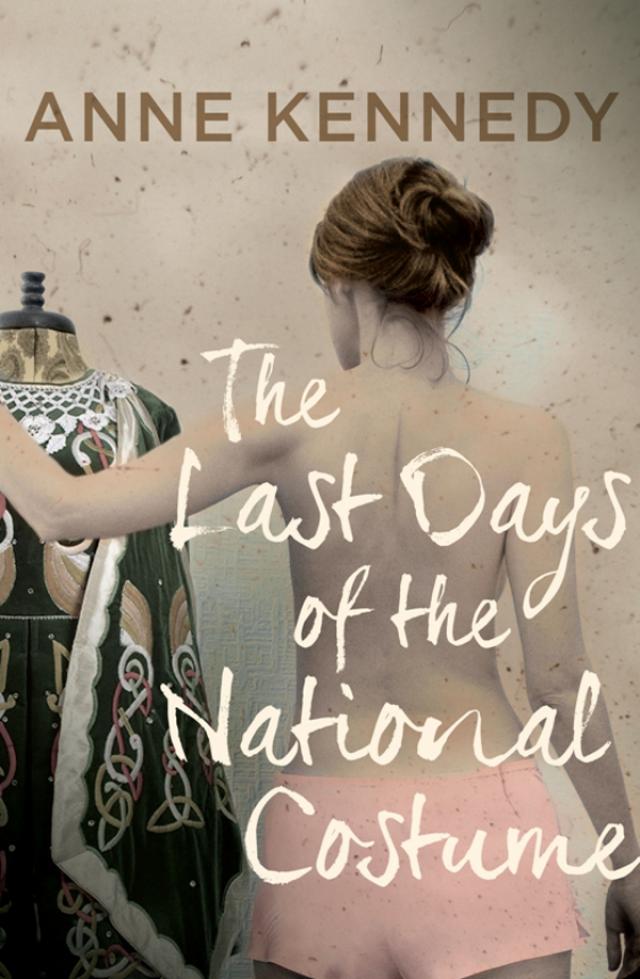
The Last Days of the National Costume,
p.22


‘What’s that smell?’
‘Oh,’ I said, ‘it’s the waste disposal.’ I felt kind of nervous.
Then he was under the sink looking at the pipes, asking for a wrench, which I found miraculously in the kitchen drawer.
‘And a bucket.’
I got one.
Soon there was the sound of something tumbling wetly down, and the smell—well. Then he was charging through the kitchen with the bucket, saying out the side of his mouth, Out of my way, and I heard him pounding around in the undergrowth of the garden. He came back, and ran water through the waste disposal while we alternately gagged and had hysterics. I guess because, like a high wind, a smell is horrible and funny. And we kept laughing and gagging, and something had gone, something had given way, and he said, Why didn’t you tell me, and I said, I don’t know.
•
In the front room, after all that, the sun was almost gone. I shrugged on my Nom*d cardigan and safety-pinned it up. The client sat on the couch and ate another bag of dried apples.
‘These are good,’ he said.
‘What about The Piano?’ I said. ‘We were up to.’
He was chewing again. ‘Ma wanted to buy one. Dad’s job.’ He smiled, pointing at his mouth.
I’ll be telling this one. I cuddled the costume.
‘And there was nothing else to do.’
Like Sam Hunt’s dog.
Paradise was boring.
He didn’t mind going back to the piano.
Going back?
Exactly. But he pleaded with the ma not to buy the new-old piano from the old woman along the street. She’d seen it advertised in the Musical Instruments column of the Dominion, which she scanned down like an abseiler.
An abseiler. I loved that.
But the Ma ploughed ahead. This was providence, like the chair. They come all the way from Belfast and want a piano, and someone in their street has one for sale. And a good price. This was the universe telling them something. Telling us what? asked the dad. That there’s a piano for sale, said Shane. The ma said, Keep quiet, you. They went to the house where the piano was for sale. The smell of cats greeted them at the door like a butler.
A butler.
Then came the woman herself. Gradually you saw cats as your eye grew accustomed to the darkness. They were everywhere, on every chair, on piles of newspapers, on the piano stool, and even an orange one curled on top of the piano like gum oozed out of the wood. In Clonard the ma would’ve rolled her eyes at Shane and said to this woman, Thank you very much and goodbye. Not here. What’s more, the piano was a write-off. The case had a funny shape, as if someone had gripped it by the shoulders and shaken it. Even from a distance you could see a galaxy of borer holes. Ma nudged Shane to try the thing. The piano stool had a cat on it. Shane looked back at the woman. She gestured him to push it off. He sat down on a thatch of cat hair. The old woman went about her business, fondling a cat and watching Shane out of the corner of her eye. In the moment with his hands poised above the keys, he wanted to go back to Belfast more than anything in the world. He didn’t care about the Wanted card or the Mass card. He’d rather that than be sitting at this horrible piano in a room full of cats, and the room dark compared to the glare outside. But there was nothing to be done. He played something.
‘What?’
‘I don’t know. “The Happy Farmer”.’
He pushed the costume out of my hands. I looked up, surprised.
‘What?’
‘Can I tell you this? Will you listen?’
‘Of course,’ I said. I sat back.
‘“The Happy Farmer”. It was all I could think of to play. As soon as I started, a mangy cat leapt off the top of the piano. The piano was terrible, of course—notes missing, the dampers gone. “The Happy Farmer” could’ve been almost anything, but it wasn’t. I realised I hated it. I couldn’t stand it. I got up from the piano. I thought we’d be going home soon—or at least back to the house we lived in. (That’s the way to feel at home, by the way, find somewhere where you feel even less at home.) We’d go back home and leave this old nutcase to her cats and her piano. But Ma was getting the bright money out of her purse (the money was so bright, purple and orange, I thought you could eat it and save the trouble of going shopping). Ma was counting out fifty dollars, and I was saying, Ma, don’t. Don’t buy this piano! She ignored me and went on smoothing out the notes. I said again, Ma, don’t buy this piano. I thought the cat woman would see how much I didn’t want it, and say, Don’t buy the piano if the boy doesn’t like it. But she didn’t.’
In the front room, the sun going, greyness coming on, Milly in Wiggytown, the costume over the back of a chair, we laughed. Don’t buy the piano if the boy doesn’t like it.
‘And now. Now you’re—’
‘I know what you’re going to say,’ he said. ‘A capitalist.’
‘I wasn’t going to say that.’ Well, I might’ve been.
‘But the cat woman was stroking her cat and looking at me as if she was deaf.’
‘Of course.’
‘Of course. I said it again: Don’t buy the piano. I wondered if the cat woman couldn’t understand me because of my accent. Perhaps it sounded like I’d said, I really want that piano, Ma, please buy it for me. But Ma was gesturing for me to keep quiet, and she was looking at the cat woman apologetically. I’m sorry about my son, she seemed to be saying. I’m sorry about me, I’m sorry about our funny accent. She was handing over the brilliant fifty dollars. It seemed like we had to buy that piano because of the way we spoke.
‘That evening, while we were all trying hopelessly to shift the piano down the old woman’s steps, a group of men from the street came to help. They all had short names—Ken, Ted, Earl and Earl. (That’s where all the earls went.) That was how Ma and Dad met the neighbours, so I suppose some good came of it.
‘I was to go for lessons. Guess what the teacher’s name was?’
‘No idea,’ I said. I fingered the costume and he pushed it out of my hands again.
‘I thought you wanted—’
‘No. Can you just listen?’
‘I am.’
‘Mrs Deethridge. I saw it written down by the phone. It said, Deathrage.
‘I hated that. We had everything wrong—our clothes, our accent, the piano, the piano teacher. Mrs Deathrage. I never touched that piano, I never played it. I never played “The Happy Farmer” again.’
•
We were sitting in the gathering dark. That’s what people say, gathering, and it was gathering around us like a blanket. We were on to our third glass of wine. ‘Half,’ he’d said, he was driving. I was feeling a bit light-headed myself. I’m not good on more than one, really. A ruby fell on the table as I poured, and I put my finger in it and licked it. I was tiddly enough to break the golden rule, no food or drink near the garments (the ruby rule). Although Rose didn’t give a rat’s arse, I told him—Rose who had taught me to mend and who drank coffee and smoked cigarettes all day long. Rose had been known to burn a hole in a garment by accident and mend it invisibly before the client was any the wiser.
He said, Oh, and looked a little worried.
Soon all the light would be gone from the room.
And I would see everything. Slight exaggeration.
‘If you like music, what do you like?’
‘Why do you think I like music?’
‘The piano teacher, your ear, etcetera.’
‘I hate music.’
I clicked my tongue. ‘Go on, what do you like?’
‘Europop,’ he said, as if he didn’t.
‘I love Europop!’ I said. ‘And post-punk.’
‘I like post-punk.’
‘God, I wish I could put something on.’
‘Why can’t you?’
‘The Blackout!’
‘Oh yes.’ He could never keep the Blackout in his head.
‘Sometimes I forget,’ I said. ‘Sometimes I put my hand on the light switch expecting it to go on and it doesn’t.’ I blushed for some reason. I held up my glass in a semi-toast. ‘Alright, instead of music.’
‘Instead of punk, plonk.’
‘Oh that’s good,’ I said. We drank. ‘We could hum,’ I said.
We hummed ‘London’s Burning’. The Clash of course, not the bloody nursery rhyme. Daa-de-da-da, da-de-da-da-da-da. The light was going. It was catastrophic. It was all over. I loved it. I loved the way everything became dangerous.
‘How can you see in this light?’ He’d been looking at my hands.
‘I just can,’ I said. There was no sunlight and no electric light, only wine and the song I was humming, then singing, ‘London’s Burning’. I broke off to say, ‘I love that song.’
‘I’m not surprised,’ he said.
‘Why?’
‘Because you’re a colonial.’
The funny ideas he had. ‘That was yonks ago. Generations.’
Then, reaching for a needle, scissors, I don’t know what in the half-light, I knocked over my glass and it was like a tree being felled. It didn’t break, but red wine spilled onto the table and was absorbed by the stack of organza aprons. We were both up, dancing about with tissues and bits of material and he had grabbed the costume and was intending to mop up the wine with that, but I snatched it from him.
‘Not that! Are you crazy?’
‘I suppose I am crazy,’ he said, ‘to sit here day after day, when all I needed was this to be mended.’
I was saying, ‘I’ll wash these. It’ll wash out.’ I was slightly woozy on my feet.
He was saying, ‘First the beads, then this.’
I stopped with the stained aprons in my hand.
‘The beads, remember? Gone. And now these, these things, gone.’
‘They’re not exactly gone,’ I said.
‘And probably the dress too.’
‘This is silly,’ I said.
The costume was still in his hand, and he looked at it. He held it very close to his face, almost to smell it.
I took it gently from his hands and hung it over a chair.
‘I’ll be back in a minute.’
He nodded. He looked sad.
I went to soak the aprons—only four of them had been splashed with the wine. I bumbled around in the gloom. He followed me, appeared in the bathroom doorway. ‘Can I help?’
‘No,’ I said, ‘I’ll only be a minute. Look, it’s just rinsing out, it’s getting on to it quickly, that’s the trick.’ I tried to string the aprons up over the shower rail but I couldn’t reach and he reached up above me and hung them up like Miss Havisham’s veils, and they dripped down our arms and we were laughing and saying, I hope to hell it comes out. Me too, I hope it comes out. It should. While his arms were still stretched up at the rail I remembered that Mabel was coming tomorrow to pick up said aprons. He asked who Mabel was, and I told him—the designer, only the designer of the aprons! We had another storm of laughter. Mabel is coming tomorrow. Mabel is coming tomorrow! He stepped out of the bathroom, suddenly awkward, leaving the aprons dripping noisily, and hovered in the passage and I brushed past him on the way back to the front room, and felt all of him, flesh and bones and his warmth, and I felt as if I knew his atomic structure.
When we were back at the table, I picked up the costume and held it in my lap like a cat and said, ‘Sit down, it’s alright, tell me about Trisha.’
‘But you’ve stopped now.’
‘Well, it is the light now. The lack of it.’ Because the light had all but gone from the room, and from the garden, although the white daisies on the unruly bush through the window were glowing. As if embroidered onto the costume, I said to myself, and was pleased. A costume that consumed light, took all the light for itself as if it owned the light. I shook my head, saying a small no to something, I wasn’t quite sure what. ‘There isn’t enough light now.’
‘I suppose that means it won’t be finished today.’
‘Does it matter?’
‘Can it matter?’
‘Well, no!’ I said. ‘What choice do we have? It’s out of our hands. Bloody Pinnacle Power!’
He was shifting in his chair, perhaps to get up, I didn’t know.
‘I can’t come tomorrow.’ He seemed flat.
‘Why?’
‘I’m busy. Work,’ he said. ‘Also, I’m going to Wellington the next day and I have things to finish.’
He got up and looked down at his arms as if he had woken after sleepwalking and was surprised to find his arms still there. ‘You must have things to do.’
I stood up. Art would be home soon.
I said it was alright. I felt his mouth come out of the darkness against mine, tentative, then urgent. I tasted cigarettes, and him. This strange wet tenderness and hunger. He broke off and stepped back.
‘I’m sorry.’
‘No, I’m sorry.’
He fumbled for his jacket on the back of the chair. I heard him bumping against the chair and could just see his outline as he moved across the room. I was about to say something—I felt I should say something—and he hesitated, waiting, but I didn’t say anything. There were no transactions about tomorrow or the next day or the day after that. He felt his way into the passage and let himself out the front door. I stayed sitting with the costume in my lap and for some reason tears fell onto it. Not rips, tears.
26
Change of subject but not entirely: once, in the Taranaki Museum, I saw a pair of nineteenth-century men’s woollen long johns that were literally all patches, completely remade, with nothing of the original left, only different-coloured cross-hatching. And bad cross-hatching at that, all uneven and knotty. They’d belonged to a gum-digger who had mended them himself. Not many sheilas out there on the gum fields. You had to admire him. These long johns, with their pink and grey and cream darns, reeked of poverty but also of pride. This obstinate colonial still had a pair of long johns, even if they were a different pair. Here’s an interesting parallel: our skin replaces itself every seven years. For instance, in the five years I’d been with Art, three-quarters of my cells had been replaced. And his. I was thinking this as we wolfed down our battered mercury on Friday night (not on the superfoods list), and went back and forth about the Blackout, about LambChop, about bloody Settler Literary Ephemera.
•
The outlook was terrible, Art said, terrible. Not the weather, of course, the Blackout. Work on the cables was slow. Three weeks, they were saying. I was reading on the back doorstep with a torch, not getting very far. Art was at the bench unwrapping a cake he’d got on the way home from that little place in Mount Eden. He sneezed every so often, out into the room to avoid the cake. He then brought the cake, a mini orange disc, outside with the lamp, and his hair cast painty shadows like Grahame Sydney cabbage trees onto the house. I’d held that hair in my hands—it was brittle, like seagrass. I’d clung to it as if it was the only thing that would save me from falling. But the outlook—I found it strangely exciting. In Wellington people used to say The outlook is terrible quite a lot, and sure enough the wind would arrive and assert its authority, cancel everything, lambast everything. And people would be delighted. It was a relief to hand over to the wind.
We hoed into the cake, nodding and agreeing.
‘No cream though,’ said Art. ‘No icing on the cake.’
He waited for my rejoinder, but I couldn’t think of anything.
‘No worries about gilding the lily though,’ he said.
I felt charged, like on a windy day in Wellington.
Later, I stood in the doorway of the front room and said goodnight. Art was rummaging through papers with a torch and humming Billy Bragg. What I thought was, he’d love the Wanted card, the Mass card. Ephemera. I almost told him about them, standing there. Ephemera when seen from the centre.
‘Looking for an article,’ he said.
The bedroom smelled like a billygoat—the damp waiting just underneath. Who goes there! I could hear Art sneezing his head off in the bathroom. Then he called out, ‘Do you want these, GoGo?’
‘What?’ I bellowed.
‘Just come!’
I’d once needed a light in the passage, even in the daytime. For a few days I’d used my fingertips to brush along the fuzzy topography of the flocked wallpaper, but after ten days of Blackout I could walk confidently in a straight line along the passage in the dark. When I got to the candlelit bathroom Art was naked, poised to get into the shower (which would be cold but hey, it was summer). The aprons were dangling from the shower rail.
‘What shall I do with these?’
I harvested them, plucking them down, one, two, three, four, pink, blue, green, yellow. They were dry of course—the organza like drying air. They were ever-so-slightly wrinkly, but soft, smooth, like a penis to the touch. I’d iron them. His body so beautiful as he stepped under the cold water, shuddering. I laughed. Ah, but no iron! In the kitchen I smoothed the aprons out on the table—checked the marbly Formica first for wet spots, for stickiness; I wanted no more stains.
We slept on the aprons, Art and I. I was aware of them all night under the mattress. What I thought was, there’s been a change, in me, in him. He had armour on, or something. But that was silly.
The next morning, Saturday, we went to ‘the farm’.
•
Spur of the moment decision: me trying to light the flipping Primus stove in the early grey light, Art getting a whiff of some off milk. Blow this for a fucking joke. Next thing I’m shaking out dried food for Bell, and Art’s stuffing the boot, and we’re driving the length of the scalloping power cables—bloop bloop. Prue and Bert spent most weekends at ‘the farm’ and it was open invitation for Art and his sister and hangers-on (i.e. me) to meet them there. (I’m going to keep using inverted commas for ‘the farm’ because the word farm sounds down-home, but of course it was a business.) I must say, after the Queen Street thing—the hundred dollars and the boy—I felt the teensiest bit uncomfortable about seeing Prue and Bert again. This was overridden by the thought of a warm bath.