The last days of the nat.., p.9
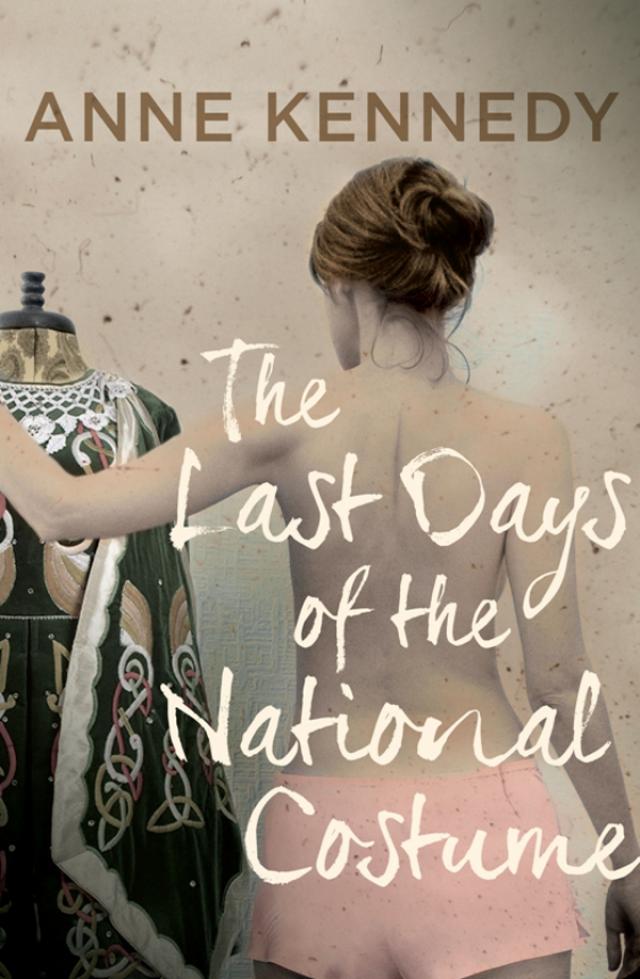
The Last Days of the National Costume,
p.9


‘The thing is,’ he said, ‘I’m kind of busy myself.’ Of course he was. I mean, Donovan Brothers. He narrowed his eyes at the bright window. ‘And there is sunlight today.’
‘True,’ I said. ‘Good old sunlight.’
‘There’s a wee bit of urgency about it.’
‘Oh, I know,’ I said. ‘I know that.’
‘I don’t mean to drag you into all this.’
I shook my head. ‘You’re not. Not at all.’ I was loving this. I gestured at a chair but there was no reason for him to be here. He reached for his briefcase. It’s strange how the words ‘sit down’, ‘have another cup of tea’, make people leave in a hurry. I picked up an apron and, standing there at the table, busied myself with a bead. ‘Tell me,’ I said, ‘why exactly are you so concerned?’ I was being dense. ‘I mean, now you have Trisha.’
‘I don’t,’ he said quickly, getting a little het up. ‘She’s gone. Remember? You asked me that and I told you.’
‘Ah, no. I don’t remember everything. I have a lot of clients.’
He looked sideways as if checking for evidence. ‘Well,’ he said, more to himself, ‘I was an idiot. But you don’t want to throw everything away just for being an idiot, do you?’
I held up my hand with the needle in it. ‘No need to explain.’
‘It’s just simpler,’ he said. He put his briefcase down again.
I was genuinely curious. I was. I asked, ‘Is it possible to hide this from someone?’ I reached for a fresh amber bead from the dish.
‘The costume?’
‘Well, yes, but not just the costume. I mean, can you really keep someone in the dark? You must think she’s pretty naive.’
‘No, not at all!’ He was bursting. ‘She’s . . . funny and wise. You didn’t see her at her best the other day. I just don’t want to hurt her. When the thing’s mended I’ll put it back where it was.’
It occurred to me that she’d already seen it wasn’t there.
He’d thought of that, he said, he had a plan. He was watching my hands jabbing away at the organza. I’m pretty fast, though I say it myself. I told him he was thorough. The eyes: they were grey, no, green, marbly, and intent. His plan: he was going to put the costume on the wardrobe floor.
‘There’s a pile of junk there, shoes and things. It’ll look as if it fell off the hanger.’ He looked at me pleadingly for verification, the thumbs-up. I made my lips into a sceptical twist. The man thought his wife was a moron.
Another bead, like sticky pollen. ‘That day here, she said she saw a woman wearing the costume in the supermarket.’
‘Did she?’
‘Didn’t you hear her say that?’
‘No.’
Lying through his teeth, of course. He’d heard all about Doris of Kingsland. I continued. ‘It is a beautiful thing, I mean, I can imagine any woman wanting to try it on.’ For some reason I blushed. I’m a terrible blusher, as I said. I moved things along. ‘It was your mother’s, right?’
‘I suppose so.’ He looked out the window at the dark wild garden and the bright western sky.
‘You suppose so?’
‘It’s not like she wore it or anything.’
I nodded.
‘Will it be done tomorrow? She might just turn up, if the power comes back on.’
‘Don’t be anxious,’ I said.
Because he was anxious. I didn’t mean to be comforting—he was a cheating bastard—but it just came out.
He took a step over to the window and looked back at me. ‘I have this feeling.’
‘Yes?’
‘That you’re on her side. And that’s why you won’t get on with this. I don’t blame you.’ He held up his hand as if to stop traffic.
‘I’m neutral,’ I said. I squashed down my smile. ‘But I never put one job in front of another.’ I pointed to my workbook on the table. ‘It wouldn’t be fair otherwise, would it?’
‘Neutral?’ He gave an ironic guffaw.
When I was a kid I used to read guffaw as gawuff.
‘But I’m paying you,’ he said.
I couldn’t argue with that.
‘I’ll tell you how you can be even more “neutral”.’ His fingers doing quote marks. He was suddenly animated, the grey-green eyes leaping. ‘I’ll pay double.’
I did a bead. ‘I knew you’d get to that.’ And I did.
‘For God’s sake, triple. Whatever happened to supply and demand?’
I must say I was tempted. I had no work to speak of, apart from Mabel. I sat down. At that point he noticed the organza apron for the first time and frowned. ‘What about this? Is this urgent?’
‘Of course this is urgent,’ I said. ‘It’s fashion.’
He hesitated, and seemed to decide I was joking. ‘I’ll go now.’ He took his jacket from the chair.
‘Does your wife sew?’ I asked.
‘I don’t know. Perhaps.’
‘Ah,’ I said. ‘I just wondered if she might recognise a mend.’
He stopped in the middle of the room. ‘Hopefully she won’t go looking at it with a magnifying glass.’
Our voices had gone quiet, like the day we waited for his wife to be out of earshot.
‘Well, not a real one,’ I said. His silence indicated he wasn’t going to be drawn into what sort of magnifying glass I meant. But he didn’t turn away. ‘I mean,’ I said, ‘she might look at it with the eyes of someone who—’
‘Who can sew, yeah, okay.’
‘The eyes of someone close.’ I held my hand a centimetre from my eyes to demonstrate. ‘Close to you, I mean. So close she can see everything.’ My metaphor astounded even me.
When I looked up I saw he was blushing, an odd sight on his white face. ‘If you’re so concerned about Milly, why don’t you . . . do whatever you do to these things and mend it?’
It seemed something had given way in him, a cell wall. I burred at seeing a bit of him, however tiny, undone. ‘I will,’ I said. ‘I just need good light.’
The smallest pursing of the lips. ‘About tomorrow . . .’
There was a sudden greyness, the exciting loss of the sun leaving the room.
‘About Milly,’ I said. ‘I only meant if she looked right inside. She’ll be happy it’s there’—and I looked directly into his eyes because I’d just remembered something about him—‘waiting for your daughter to grow up.’
He peered at me as if I’d suddenly gone small. ‘Daughter?’
‘It’s for your daughter. That’s what your wife said.’
‘We don’t have a daughter.’
I looked at the apron. I’d worked the whole thing, the koru, the white flowers the shape of stars.
‘Not that I know of.’ He smiled. ‘She meant if and when.’
‘So you did hear her through the door that day.’ I neatened the thread and picked up my little snake scissors to snip it off. ‘Maybe in the future,’ I said lightly.
‘Anyway, tomorrow?’
‘If you like.’
‘I like. But will it be ready is the point?’
‘Yes.’
‘What time?’
‘What time can you come?’
‘Sevenish. After work. I work.’
Oh, he worked.
I smiled. ‘I’m surprised you’ve got time then.’
‘I’ve got time to come and pick up a dress that should’ve been ready days ago.’
‘I meant time for all this,’ I said.
He winced. I’d overstepped the mark. Somehow our roles had gone topsy-turvy. He was supposed to brag about his conquest while I fixed things. ‘Early evening then?’ I said in a conciliatory manner.
‘Okay. I hope it’ll be ready. My wife’s in Wellington, but she’ll be back any day.’
‘Yes, you told me. Because of the Blackout. See you tomorrow then.’
I watched him tramp down the path between the wiry garden beds. I noticed that he wore no clothes, like a lot of men. His clothes were almost invisible, his suit like nothing. His car was parked right outside. It was almost invisible too, a grey sedan.
14
The ring was so shiny it was meat-like on my finger. Getting married at the registry office with two friends as witnesses was so po-mo I couldn’t stand it. Enshrined in culture but, in 1995, also spectacularly other. We surged up Willis Street afterwards and went to the pub. I loved it. I didn’t mention it to anyone in the family. Mary-France wasn’t a fan of the institution of marriage, Dad was long gone of course, and Lisa would be too stoned to take it in. Anyway, it wasn’t like we getting married married.
I did find though—and it had all happened so fast that I hadn’t anticipated it—that I became a spouse. And because the spouses of students weren’t allowed to work under the terms of their F2 visas, and because it was impossible for two people to survive on a scholarship in New York City, the spouses got jobs under the table. The spice. It was expected. What were these regulations for if not to provide cheap labour for the hardworking taxpayers? From another spouse I inherited a series of gigs cleaning apartments in brownstones on the Upper East Side. I tooled over from Hoboken, and all day I swept parquet floors and dusted surfaces while someone sat in another room listening to the cabaret songs they all seemed to like so much in this part of town. ‘It’s De-Lovely’. I did the toilets and the sinks. Wiped up piss and slime and mould. ‘You Go To My Head’. Crumbs and dust and ash. I had no doubt that Something Would Turn Up.
Sure enough, I got a lead from another spouse that you could get piecework from alterations businesses in the Garment District. I could have the old sewing machine the spouse was giving away because she was going home anyway, as they all did, in the end, urgently, like peristalsis. There wouldn’t be any more money in it than cleaning, but it was cleaner.
•
I took the PATH across to Times Square and walked into the Garment District, found a narrow building on 37th Street squeezed between two bigger blocks. Up three flights, and in the sepia-coloured corridor was a metal door with a framed sign done in ornate red cursive: Rip Burn Snag Clothing Alterations and Repairs. Underneath, in smaller letters, the way a subtitle defines an essay: Specialists in French Re-Weaving and Invisible Mending. There was a piece of paper taped to the door. Help Wanted. I knocked and the door was unlocked noisily from within. As I stepped inside, a woman with a streak of nicotine going up through her greying hair was already walking away from the door, calling over her shoulder, ‘Close the door!’ I closed it.
The tiny workroom was a riot of clothes, spools, bolts of material, and a table so littered with offcuts it was like Jackson Pollock had run his lawnmower over it. Another woman, older, plump, with jowls and short legs tipping her off the edge of her chair, whirred away at a machine by the window. She looked as if she never left her station. The first woman, with the nicotine-stained hair (and you could see how she got it, because she had a fag stuck to her lip), had one of those two-tone New York accents—abrupt and friendly. She was small and wiry. She asked me my name, what experience I had. When I told her I could do embroidery she laughed.
‘Embroidery! Are you kidding? Who sent you?’
I reeled off the name of the spouse.
‘Jesus Christ! Well, whadda we gonna do here? We’re snowed under—yeah, just like the outside. It’s snowing out there, it’s snowing in here.’ She called to the woman by the window. ‘Whadda we gonna do, Nance?’
Nance called back without looking up from her machine. ‘What choice is there? We got no choice. We’re snowed under.’
Snow seemed to be the way they gauged business.
‘You’re right,’ said the nicotine woman. ‘No choice.’ She looked about the room once more, and gave a sigh that at one or two points seemed endless. ‘Okay, I’ll tell you what we’ll do, we’ll try you out. We’ll try you out on this, this, this’—and she yanked a few bits of clothing from a pile like a magician doing the tablecloth trick. The pile stayed put. ‘Simple stuff. Hems, mostly hems. They’re all marked, see?’ She showed me the grainy chalk lines.
Nance called over from the window, ‘Don’t give her that jacket, Rose. Snag on the pocket.’
‘Oh yeah,’ said nicotine woman, and snatched the jacket from the bundle. ‘I’m Rose.’
‘Hello,’ I said.
‘Under the table?’ asked Rose. I nodded. She held a few spools up to the light to match with the fabrics. ‘Next Thursday. See you next Thursday. Okay?’
I tried to give her my phone number. Rose waved her hand. ‘Yeah, okay, gimme your number. You can gimme a fake one. If you’re gonna steal them you’re gonna steal them, nothing I can do about it.’ She scribbled down the number madly, saying at the same time, ‘You look trustworthy to me. Been in this business long enough to know an honest face. Been looking at honest faces and dishonest faces since I was knee-high.’ Rose gathered in my mending from the table like a harvest and bundled it into a plastic bag. ‘My mother was a mender, my grandmother was a mender. I know honest, I know dishonest. Dishonest is the ones getting their clothes mended—sometimes, often enough. Got things to hide.’ Rose slid the carry bag across to me. ‘Haven’t got things to hide, have you?’
Nance gave an admonishing click of the tongue—‘Rose!’
I shrugged helplessly.
‘No, you see,’ said Rose to Nance. ‘I know an honest face. You hang around here long enough you’ll see some faces, you’ll see some real doozies, won’t you, Nance?’
‘Say that again,’ said Nance.
‘Okay,’ said Rose, opening the door, ‘see you Wednesday.’
Hadn’t she said Thursday?
‘Did I? Whenever—Tuesday, Wednesday, Thursday, Doomsday. These are the Whenevers. They know I do them for cheaper, whenever I got a minute.’ She poked a finger at my bundle. ‘The Next-Weeks. Now those’—she crooked her thumb back into the room, to a long rack of clothes—‘those are the Two-Days and those’—pointing to a smaller rack against the opposite wall—‘are the Same-Days. Never get ’em mixed up, and never—never—put one in front of another within their own category. Wouldn’t believe the trouble you can get into, doing someone a favour.’ Rose laughed her tinselly cigarette laugh and unlocked the door. On the landing, I heard the door lock from the inside.
I carried the bundle of clothes home to mend them under the table, like the girl in ‘Life of Ma Parker’, the girl crouched under the table in her grandfather’s hairdressing salon, the girl who goes on to have the life. I found that the jacket Nance had spied from across the room had been scooped into the pile after all. I wasn’t sure what to do with it. I thought of taking it back to the workshop, making a special trip on the PATH so the jacket wouldn’t become overdue, which would mean other garments would be put in front of it. Rose had been so emphatic that should never happen. But when I looked at it, I saw that I could mend it easily. So while the snow fell outside, I pulled a few threads from the inside hem and used them to reattach the ripped pocket.
On the Thursday before Christmas I carried my bundle through the snow to Rip Burn Snag. Rose let me in—‘How ya doing?’ She tipped the garments onto the cutting table and ferreted through them, going, ‘Mm, mm,’ to each one. When she came to the jacket she stopped and screwed up her face. ‘You did this?’
I was going to be fired. I should have just left it. Back to cleaning the stinking bathrooms of the stinking rich.
But Rose was looking at me. ‘Why didn’t you tell me?’
‘What?’
Rose snapped her fingers, which were tea-coloured from all the ciggies. ‘Nance, we have someone who can actually sew!’
I did that palms-upward thing that I must have learned in America.
Rose put out her hand and we shook. Something swelled up inside me, not connected with my hands. Then Rose brought out a pair of beautifully made suit pants with a puncture in the back of the leg that a nail might have made, and a drag in the material streaming away from the hole like a comet’s tail. ‘Sit down, honey’—now it was honey—‘I’m gonna show you something. I’m gonna show you how to mend this, ’cause I know you can pick it up fast. See this hole here? We’re gonna mend this.’ Rose was investigating the insides of the trousers. ‘God knows how it got here. I mean here. I don’t mind betting this swanky financier or whoever from over on Wall Street who came in this morning, don’t mind betting he’s in trouble. Don’t know how he made this hole in this fine suit of clothes, but it sure looks fishy to me.’ Nance laughed from the window. ‘I mean,’ continued Rose, ‘what’s he doing in the boxroom in his good pants, huh?’ She looked up over her glasses. ‘Ripping and burning and snagging ’em.’ I laughed too. Rose smiled—‘Uh? Uh?’—and tossed the pants onto the table. She angled a strong lamp onto them. ‘You need good light for this. Now this, this is not worth re-weaving. Re-weaving’ll take all afternoon, cost an arm and a leg. Not worth it, not where that hole is, not half hidden down near the ass. And not worth you learning how to do it either, unless you wanna spend a lifetime learnin’. Do ya? I didn’t think so. We’ll do Plan B.’
‘Plan B?’
‘Plan B is piece-weaving. Take an incy little bit of material from the hem and sew it in the hole. Quicker than re-weaving, but still takes a long time. You got anywhere you need to go to?’ Rose perched magnifying-glass plates across her nose, big rectangles like blowtorch glasses. ‘Now watch carefully. I’m gonna show you how to make time go backwards. But be warned’—she looked up between the magnifying plates and her two-tone, Bakelite-looking hair—‘you’re gonna help that man on Wall Street cheat on his wife.’ Rose waited for my surprised expression, then dissolved into laughter and coughing. ‘His wife is never gonna know he’s been in that boxroom once we finished with this. So you’re gonna be complicit. You gotta know that.’