

Everything is photograph, p.32
Everything Is Photograph,
p.32
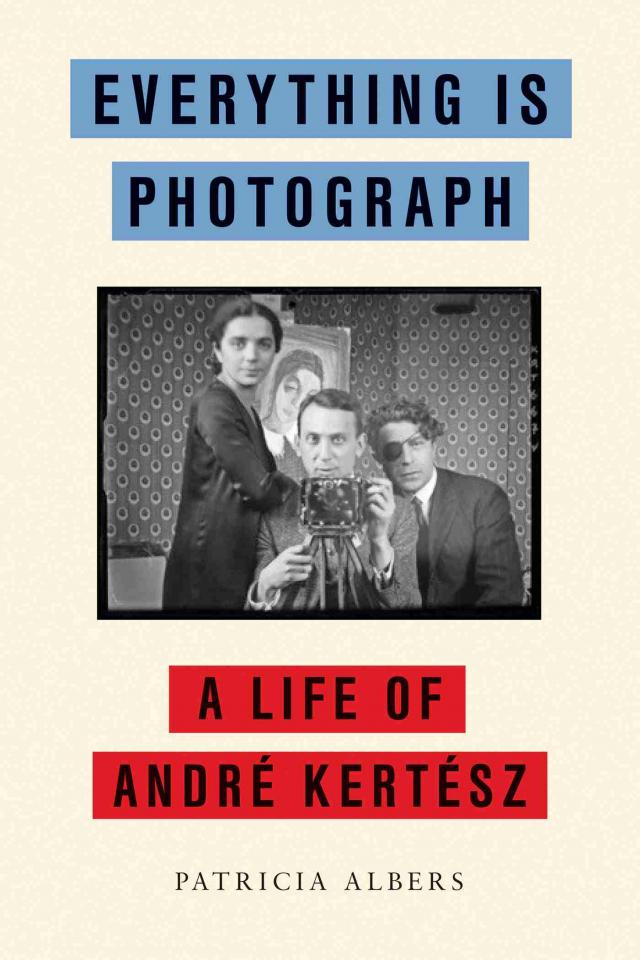


Day of Paris hit the stores just after VE Day. Because the US Army had helmed the liberation of Paris, André’s book seemed to confirm that the mythic City of Light was America’s gift to the world. During the years of defeat, occupation, and Vichy collaboration, the French soul had hung by a thread. Day of Paris, some felt, stitched it up. The journalist and novelist Elliot Paul said as much in an article in Saturday Review, calling it a “balm to throbbing nerves” of war-battered humanity. “There is nothing civil or military in its pages. It is purely philosophic.”[23]
The book garnered dream reviews from a then-robust critical community. Some dwelt on the city itself. The captions were superfluous for anyone smitten with Paris, according to The Christian Science Monitor. A reviewer for the Sunday Call-Chronicle in Allentown, Pennsylvania, noted that “the camera of Kertész has caught spirit as well as actuality.” Others raved about André’s know-how. “To serious photographers … [Day of Paris] is an absolute must,” advised an editor at Popular Photography.[24]
Still buoyed by such reviews months later, André took advantage of a job on Chicago’s North Shore to call on the curator Carl O. Schniewind at the Art Institute of Chicago.
“Oh, are you the famous André Kertész?” Schniewind greeted him, peering from behind horn-rimmed glasses.
“Yes, yes, I’m the famous Kertész.” André’s expression turned glum. “Only nobody knows it.”[25]
Schniewind had lived in Europe during André’s glory days, and he knew it. The two proceeded to sketch out an exhibition wrapped around Day of Paris. Eventually, André persuaded Schniewind to include his 1918 Underwater Swimmer and a few other Hungarian photographs as a way of adding weight to his status as an early modernist innovator. He pitched the Distortions too, but the curator demurred because the public was likely to react to nudes “in the most curious sort of way.”[26]
Photographs by André Kertész opened at the Art Institute of Chicago on June 7, 1946. André rejoiced to read of its “total success” in a letter from Schniewind.[27] He replied with a request for the press clippings, which he planned to use to generate more heat for his work. Perhaps a New York version of the exhibition? Silence from Schniewind. Two months later, André opened a second letter to learn that there were no clippings, only a mention in a sloppily edited omnibus column in the Chicago Tribune.[28] Schniewind attributed the lack of coverage to the sorry state of art criticism in Chicago. But André was hurt: “I felt like I was buried alive.”[29]
He promoted Day of Paris as best he could. One copy went to Chicago’s pioneering curator of modern art, Katharine Kuh. “You have never sent a gift to a more appreciative friend,” Kuh assured him.[30] André also talked up his book to the writer Struthers Burt as the two traveled together in Mississippi for a Ladies’ Home Journal feature. Back in New York, Burt took Day of Paris to Maxwell Perkins, Scribner’s editor in chief, who liked the idea of a Day of series. Perkins scheduled a meeting with André. But the project came to naught.
It was Brodovitch who showed the book to Robert Frank soon after the young Swiss-born photographer arrived in New York in 1947. Moved by the photographs, Frank began patterning his practice after André’s. Roaming the streets with his Leica, he bobbed and darted, catching slight yet resonant gestures and nabbing the crude poetry of the everyday. When Frank traveled to Paris in 1949, he hung around the Tuileries and Luxembourg Garden, taking dozens of photographs of park chairs inspired by André’s but more comedic and anthropomorphized. (Several would be published in Life.)[31]
Less sophisticated viewers failed to grasp André’s achievement. Some mistook the Day of Paris photographs for documents — simply the way Paris was—as if he were only a button-pusher. Despite its critical triumph, the book sold only 1,500 copies before it went out of print.[32] Day of Paris would have one last turn in the spotlight in 1955, when it showed up in The New York Times Magazine as a prop in an ad for Rite-Form girdles.[33]
The liberation of Europe meant that André and Elizabeth could pack up and return to France. But they did not. André would dance around an explanation: “We were up in the air. And I was not young anymore. I had no idea what had happened with my reputation in Paris.” A pause. “Yes, I was afraid that I was too old.”[34] (He was fifty when the city was liberated.) He said nothing about other possible reasons. André’s legal wife, Rogi, had survived the war and was living in Paris. Keeping the marriage secret was easier 3,600 miles away. Besides, it must have seemed foolish to abandon a city astir with financial opportunity for one where residents had to endure long lines to buy rationed baguettes. After a decade of poverty, André and Elizabeth shared Americans’ appetite for prosperity, and then some. They continued to fetishize Paris. André had come to New York on a one- or two-year sabbatical, he insisted. After the Keystone debacle, he would have returned to France if only US customs had not confiscated the gold bar he needed to pay for the boat tickets. That statement is false: The gold bar had been melted and sold and a check sent to the Kertészes by the time Keystone sued him.
Some have inaccurately framed André’s move to the United States in 1936 as that of a Jew escaping the Nazis. They hitch his story to those of the Surrealist artists and writers who fled France and rode out the war in New York. As a Jew, André must have been grateful to America for harboring him. But no. “I’d rather be dead in Paris than live over what happened to me here,” he said.[35] André knew that tens of thousands of Jews, French and foreign, had been rounded up in France, interned in the Paris suburb of Drancy, then packed into trains headed for extermination camps. As an assimilationist Hungarian Jew living abroad, he enjoyed the luxury of refusing to carry that baggage.[36] “Jewish doesn’t exist,” he asserted, speaking of his self-identity. He described himself as “cosmopolitan.”[37]
* * *
—
In the magazine photography world of those heady days, the men and women behind the camera were emerging as public personalities. Vogue published a first-person account of the wartime experiences of the photographer Irving Penn. A feature about the home of Cecil Beaton was in the works.[38] Harper’s Bazaar presented personal work like Bill Brandt’s series about the denizens of a London pub and Brassaï’s about Parisian cats. Another article in Harper’s Bazaar confirmed Brassaï’s fame with a subtitle that marked him as a personality in his own right: “Picasso and His Studio: Photographed by Brassai.”[39]
Buried in the product-promotion column (Shopping Bazaar) of that same issue was this: “André Kertész … will come to your home by appointment to photograph your child … His prices are average for top-notch photographers and you can reach him for an appointment at 31 Union Square, or by calling GRamercy 3-2564.”[40] But when a Chicago reader tried to schedule a portrait session with her toddler, André bristled. The item was not an advertisement, he insisted, but simply “a token of enthusiasm of the editor.”[41] Should André find himself in Chicago, he would photograph the child, but he did reportage. His humiliation at the contrast between the splashy feature by Brassaï, photographe extraordinaire, and the mention of André, kiddie photographer, is palpable.
Other photographers — Edward Steichen, Alma Lavenson, Berenice Abbott, Ansel Adams, Harry Callahan—were burnishing their reputations by writing articles for Minicam or U.S. Camera or publishing their credos in The American Annual of Photography. André, however, did not believe in public pronouncements, written or spoken. “You don’t talk photography,” he insisted to Popular Photography editor Jacob Deschin, “you do it.”[42]
His relationships with colleagues were pleasant yet limited. The Circle of Confusion met every other Monday evening at a family-style Italian place on MacDougal Street. Dinner at Mike’s, wine included, cost only $1.10. (After Mike’s closed, they went to Mona Lisa, also on MacDougal.) Yet the club’s single rule — “You paid for your own dinner” — had limited André’s attendance over the years, even though he benefited more than once from help from “the boys.”[43] When he did attend meetings, his participation in the verbal free-for-alls was stymied by his hearing loss and poor English. Americans got impatient with the word soup he ladled out. At home, Elizabeth shook her head at his refusal to work on his English: “André just won’t try.”[44]
Colleagues threw parties. In May 1946, André attended one at the home of Beaumont and Nancy Newhall, where he mingled with fellow photographers Paul Strand, Helen Levitt, Minor White, Berenice Abbott, and Dorothy Norman. Once or twice, Evsa and Lisette Model hosted him at their apartment on Riverside Drive, along with Brodovitch, Ralph Steiner, and Abbott. André’s once close friend Evsa Model had married Rogi’s confidante Lisette Seybert, now Lisette Model. In 1938, the couple had moved to New York. André and Evsa’s reconnection did not prove enduring. The Models could not forgive André for his treatment of Rogi.[45] As for Abbott, she considered André “a prick” for the same reason, even though she admired his work, which she included in a juried show she organized at the New School.[46]
Such gatherings tended to bring André down. Back home, he would grumble to Elizabeth: Why were they more famous than he was?[47]
* * *
—
As 1946 drew to a close, André unexpectedly found himself wanted, at Condé Nast, no less. “Please, André, we have to work together, we’re old friends, you have to help me at the start of this work.”[48] Alexander Liberman’s pencil mustache, slicked-back hair, and polished manner gave him the air of a Continental gallant. By André’s account, he was begging.
In only five years in New York, André’s colleague at Vu had come far. Not long after Liberman’s arrival, Lucien Vogel had prevailed on Condé Nast to try the young man in Vogue’s art department. Thus Liberman became an assistant to M. F. Agha. Unbeknownst to Nast, Agha had already hired and fired him. For two years, Liberman again worked for Agha, now at Nast’s behest. When the friction between the two grew unbearable, Agha issued a me-or-him ultimatum. Nast chose Liberman. At age thirty, Liberman had clinched a top job as Vogue‘s art director. Aiming to make the magazine less starry-eyed and more journalistic — more modern — he ratcheted up photography at the expense of illustration.[49] By 1946, Liberman was art directing Glamour and House & Garden too, still ousting Agha’s people and hiring his own.[50]
André freelanced for all three Condé Nast publications. Liberman would have been impressed by pictures like those he took for a House & Garden feature about the summer home of June and Joseph Platt in Little Compton, Rhode Island. Both Platts were House & Garden editors. Joseph moonlighted as a Hollywood set designer. With the same flair as in Joseph’s interiors of Manderley in Rebecca and Tara in Gone with the Wind, the Platts made ample use of folk objects in their own home: a cherub from a circus cart, a figurehead from a French frigate, a painted watchmaker’s sign the size of a wagon wheel. André’s photographs show off such objects in the context of the couple’s stylish living. Images that merely illustrated design ideas did not interest André. He wanted to convey the feeling of life unfolding in the spaces he photographed.
During his shoot at the Platts’, André donned canvas shoes, rolled up his sleeves, and, despite his vertigo, hoisted himself up to the roof where he craned to take some exposures of the garden below. Maybe it was that climb that prompted Joseph to inquire about André’s specialty. “Everything in photography is my specialty,” the photographer replied breezily.[51]
Everything. According to André, he refused Liberman’s offer of a contract, insisting on his identity as a photo reporter. He was tempted, however. He liked Liberman. They shared Paris and the old days at Vu. Condé Nast was Francophile and prestigious. Besides, when André surveyed the crowded magazine field, he saw few other places where he might land. He was neither a fashion photographer nor a hard-news photojournalist. The new travel monthly Holiday hadn’t yet found its footing. Look was filled with mediocre staff work supplemented by stock pictures from commercial agencies. Life didn’t want him. Then there was Fortune. Henry Luce’s monthly incorporated features about the arts into its coverage of business. The magazine’s concept of the humanist businessman paralleled Art et Médecine’s concept of the humanist doctor, and André had once been happy freelancing for Art et Médecine.[52] His work would have fit at Fortune. Unfortunately for André, the magazine had just hired Walker Evans as staff photographer.
All the while, he would have been watching the plummeting star of his compatriot Martin Munkácsi. Owing to Munkácsi’s incapacitating heart attack and his aversion to color photography, Ladies’ Home Journal had canceled his lucrative contract. Harper’s Bazaar was also about to drop him. Munkácsi’s was a cautionary tale about seizing the occasion. He was fifty; André, fifty-two. André signed with Liberman.
“I promise you,” said Liberman — again, in André’s version of the exchange — “that, once we’re on the right track, you’ll be able to work as you did in Paris.”[53] Yet both men should have known that the freedom André had enjoyed in the salad days of European picture magazines was impossible in a postwar American publishing empire. André would later claim that Liberman assured him of steady assignments for Vogue. His contract did not specify work for any one magazine. Condé Nast publications shared their talent. Yet Liberman’s biographers Dodie Kazanjian and Calvin Tomkins lend credence to André’s claim. The Vogue plan was scuttled, they explain, when Liberman realized that André was ill-suited for fashion. The art director’s fallback was to make him the lead photographer at House & Garden.[54] So André wound up with glamorous Vogue’s plain sister. House & Garden was “horrible,” he complained to Liberman.[55] You can help change it, the art director replied. Liberman felt “slightly guilty about Kertész,” report his biographers. “‘It was the first time in history,’ he once said, ‘that a great artist had been asked to photograph interiors.’”[56]
Effective January 1, 1947, and valid for one year, André’s contract stipulated that he work exclusively for Condé Nast. He would earn between $150 and $175 per page for black-and-white pictures and $200 for color. At a time when Americans’ median annual income was just over $3,000 (about $43,000 in 2024 dollars), he was guaranteed a minimum of $10,000 (about $143,000 in 2024 dollars). After years of poverty, the prospect of a steady and substantial paycheck would have relieved him and put him in Elizabeth’s good graces.
André wasn’t the only émigré photographer who had to adjust to American realities. The Russian-born Roman Vishniac had opened a portrait studio. László Moholy-Nagy founded a school. Lisette Model combined magazine work with teaching. But André couldn’t let go of the idea that he should be well compensated for taking pictures as he pleased. He would speak of it like a recalcitrant child: “I wanted to do what I wanted, the way I did in Europe.”[57] Practicalities dictated otherwise. To anyone who would listen, he complained.
* * *
—
With home construction booming, the economy firing on all cylinders, and postwar America obsessed with domesticity, House & Garden was poised to rake in subscriptions and advertising dollars. Its editors scurried to reposition the magazine for the new era. Photographs got bigger, layouts airier, pages more colorful. Prim dining rooms ceded space to open-plan kitchens. Articles that read like home economics textbooks thinned out. House & Garden was going to be “the Vogue of architecture and house furnishing,” as one staffer put it.[58] Just as Vogue’s editors had shifted their thinking from clothing as such to the lifestyle of the active woman, so House & Garden’s editors looked beyond home decor and gardens, urging readers to “live as well as you look.”[59] The magazine’s scope widened to include topics like entertaining and buying at auction. The socialite Brooke Marshall (later Brooke Astor) was hired to sweet-talk her rich friends into allowing House & Garden photographers inside their homes.[60] André was dispatched to shoot the Newport cottage of Mr. and Mrs. Persifor Frazer III, the Connecticut farm of the investment banker Dewees Dilworth, and the wooden-Indian collection of the artist Charles Green Shaw, an heir to the Woolworth fortune.
André threw himself into the task of waking up House & Garden. He traveled incessantly, usually with an editor or writer. Colleagues found him good-natured, likable, and utterly professional. They respected his perfectionism even when it tried their patience. A single image might require hours of preparation. Furniture had to be moved, dishes rearranged, bushes trimmed. André would fuss over the angle of a door, the placement of a bouquet, or the position of a book left open on a table or chair — his signature touch — as if its reader had just stepped away. He made ample use of the oblique, leading the eye from one object or space to another and implying the way a person might move through a garden or room. His goal was to convey the feeling of each place that he photographed: to reveal the essence of, say, a den or a rose garden and underscore its relevant details. He might take advantage of a cast shadow to articulate space or use a sun pattern from a multipaned window to make a nook feel cozy. Some of the pictures were quietly stunning.
Photographing buildings is technically challenging. Verticals must come out vertical, and horizontals, horizontal. Depth of field is important. Orchestrating light and shadow can be tricky. André coordinated natural and artificial light. He avoided stray reflections and distracting shadows. When a dim interior and bright exterior appeared in the same image, he captured details in both. If the House & Garden team arrived at someone’s home in the late afternoon and the light was wrong, he would insist on returning the next morning, despite an always tight schedule.[61] He had to get everything right the first time. He did not enjoy the luxury of redos.
André relied heavily on both his Linhof and a 4 by 5 inch Stegemann view camera. Occasionally, he switched to a medium-format camera, either a Rolleiflex f/3.5 twin reflex or a Zeiss Super Ikonta. His favorite black-and-white film was the Eastman Kodak Super XX panchromatic, rated about ISO 250 by today’s standards. When Kodak retired Super XX in 1954, he would opt for the photojournalist’s workhorse, Tri-X (ISO 400).[62]


