

The woman who couldnt wa.., p.34
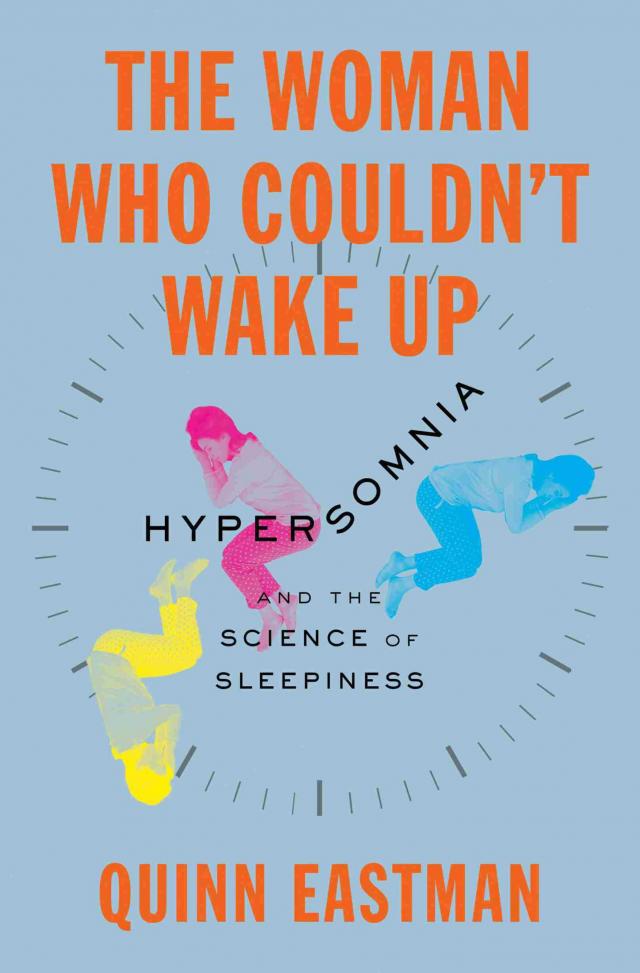
The Woman Who Couldn't Wake Up,
p.34


BOOK BUSINESS
Fact-checking services: Kelly Hills and Cadence Bambenek.
Representation: Jessica Papin at Dystel, Goderich & Bourret.
Editor: Miranda Martin at Columbia University Press.
THE BOTTOM LINE
Edith Eastman for love and support.
NOTES
INTRODUCTION
1. Thomas Fast, “Snooze TV Episode 1: Parents with Children with Idiopathic Hypersomnia,” Hypersomnia Foundation, YouTube video posted January 9, 2015, https://www.youtube.com/watch?v=xgbuCiZ9rME.
2. Colin L. Talley, “The Emergence of Multiple Sclerosis, 1870–1950: A Puzzle of Historical Epidemiology,” Perspectives in Biology and Medicine 48 (2005): 383–95.
3. Joanna Kempner, Not Tonight: Migraine and the Politics of Gender and Health (Chicago: University of Chicago Press, 2014).
4. Richard Hargreaves and Jes Olesen, “Calcitonin Gene-Related Peptide Modulators—the History and Renaissance of a New Migraine Drug Class,” Headache 59 (2019): 951–70.
1. ANNA SLEEPS A LOT, AND WE DON’T KNOW WHY
1. Anna Sumner, “Waking Sleeping Beauty: An Antidote for Hypersomnia,” Emory University YouTube video, posted November 21, 2012, https://www.youtube.com/watch?v=V9gnvWtta4M.
2. David B. Rye et al., “Modulation of Vigilance in the Primary Hypersomnias by Endogenous Enhancement of GABA-A Receptors,” Science Translational Medicine 4 (2012): 161ra151.
3. Timothy I. Morgenthaler et al., “Practice Parameters for the Treatment of Narcolepsy and Other Hypersomnias of Central Origin,” Sleep 30 (2007): 1705.
4. Elisabeth I. Penninga et al, “Adverse Events Associated with Flumazenil Treatment for the Management of Suspected Benzodiazepine Intoxication,” Basic & Clinical Pharmacology & Toxicology 118 (2016): 37–44.
5. Virginia Hughes, “Re-Awakenings,” Last Word on Nothing (blog), November 22, 2012, https://www.lastwordonnothing.com/2012/11/22/re-awakenings/.
6. Bedřich Roth, “Sleep Drunkenness and Sleep Paralysis,” Ceskoslovenská neurologie 19 (1956): 48–58; translation by Jordan Tomes.
7. Michel Billiard, “Development of Sleep Medicine in Europe,” in Sleep Medicine, ed. Sudhansu Chokroverty (New York: Springer, 2015), 113–24.
8. Bedřich Roth, “Narcolepsy and Hypersomnia: Review and Classification of 642 Personally Observed Cases,” Schweizer Archiv für Neurologie Neurochirurgie und Psychiatrie 119 (1976): 31–41.
9. Soňa Nevšímalová, “Idiopathic Hypersomnia,” in Sleep Medicine, ed. Chokroverty, 223–28.
10. Michel Billiard, “Idiopathic Hypersomnia,” in Sleepiness: Causes, Consequences, and Treatment, ed. Michael J. Thorpy (Cambridge: Cambridge University Press, 2011), 130.
11. Maurice M. Ohayon, Yves Dauvilliers, and Charles F. Reynolds III, “Operational Definitions and Algorithms for Excessive Sleepiness in the General Population,” Archives of General Psychiatry 69 (2012): 71–79.
12. David E. McCarty, “Resolution of Hypersomnia Following Identification and Treatment of Vitamin D Deficiency,” Journal of Clinical Sleep Medicine 6 (2010): 605–6; Imran Khawaja et al., “Vitamin B12 Deficiency: A Rare Cause of Excessive Daytime Sleepiness,” Journal of Clinical Sleep Medicine 15 (2019): 1365–67.
13. Saraiah Naps, interview, email and phone, April 2020.
14. Jimmy Kimmel, “What It Feels Like to Have Narcolepsy,” Esquire, August 2003.
15. Russell Rosenberg and Ann Y. Kim, “The AWAKEN survey: Knowledge of Narcolepsy Among Physicians and the General Population,” Postgraduate Medicine 126 (2014): 78–86.
16. Michelle Emrich, “A Doctor’s Once Agile Brain Broken by IH,” Hypersomnia Foundation, YouTube video, posted November 23, 2020, https://www.youtube.com/watch?v=Ww_6LfS4dFc.
17. Caroline Maness et al., “Systemic Exertion Intolerance Disease/Chronic Fatigue Syndrome Is Common in Sleep Centre Patients with Hypersomnolence: A Retrospective Pilot Study,” Journal of Sleep Research 28 (2019): e12689.
18. Todd Swick, interview, September 2018.
19. Yoko Komada et al., “Difference in the Characteristics of Subjective and Objective Sleepiness Between Narcolepsy and Essential Hypersomnia,” Psychiatry and Clinical Neuroscience 59 (2005): 194–99; Patrice Bourgin, Jamie M. Zeitzer, and Emmanuel Mignot, “CSF Hypocretin-1 Assessment in Sleep and Neurological Disorders,” Lancet Neurology 7 (2008): 649–62.
20. Carlos H. Schenck et al., “English Translations of the First Clinical Reports on Narcolepsy and Cataplexy by Westphal and Gélineau in the Late 19th Century,” Journal of Clinical Sleep Medicine 3 (2007): 301–11.
21. Daniela Latorre et al., “T Cells in Patients with Narcolepsy Target Self-Antigens of Hypocretin Neurons,” Nature 562 (2018): 63–68.
22. Soňa Nevšímalová-Bruhova and Bedřich Roth, “Heredofamilial Aspects of Narcolepsy and Hypersomnia,” Schweizer Archiv für Neurologie, Neurochirurgie und Psychiatrie 110 (1972): 45–54.
23. Gary S. Richardson et al., “Excessive Daytime Sleepiness in Man: Multiple Sleep Latency Measurement in Narcoleptic and Control Subjects,” Electroencephalography and Clinical Neurophysiology 45 (1978): 621–27.
24. Chad Ruoff et al., “The MSLT Is Repeatable in Narcolepsy Type 1 but Not Narcolepsy Type 2: A Retrospective Patient Study,” Journal of Clinical Sleep Medicine 14 (2018): 65–74.
25. Karel Šonka, Marek Šusta, and Michel Billiard, “Narcolepsy with and Without Cataplexy, Idiopathic Hypersomnia with and Without Long Sleep Time: A Cluster Analysis,” Sleep Medicine 16 (2015): 225–31.
26. Elisa Evangelista et al., “Alternative Diagnostic Criteria for Idiopathic Hypersomnia: A 32-Hour Protocol,” Annals of Neurology 83 (2018): 235–47; Fabio Pizza et al., “Daytime Continuous Polysomnography Predicts MSLT Results in Hypersomnias of Central Origin,” Journal of Sleep Research 22 (2013): 32–40.
27. Cyrille Vernet and Isabelle Arnulf, “Idiopathic Hypersomnia with and Without Long Sleep Time: A Controlled Series of 75 Patients,” Sleep 32 (2009): 753–59.
28. Michel Billiard and Karel Šonka, “Idiopathic Hypersomnia,” Sleep Medicine Reviews 29 (2016): 23–33.
29. Yves Dauvilliers et al., “Normal Cerebrospinal Fluid Histamine and Tele-Methylhistamine Levels in Hypersomnia Conditions,” Sleep 35 (2012): 1359–66; Antonio Baruzzi et al., “Cerebrospinal Fluid Homovanillic Acid and 5-Hydroxyindoleacetic Acid in Hypersomnia with Periodic Apneas or Idiopathic Hypersomnia: Preliminary Results,” Sleep 3 (1980): 247–49; Kim F. Faull et al. “Cerebrospinal Fluid Monoamine Metabolites in Narcolepsy and Hypersomnia,” Annals of Neurology 13 (1983): 258–63.
30. Yves Dauvilliers et al., “Absence of γ-Aminobutyric Acid—a Receptor Potentiation in Central Hypersomnolence Disorders,” Annals of Neurology 80 (2016): 259–68.
31. Olivia A. Moody et al. “Rigor, Reproducibility, and in Vitro CSF Assays: The Devil in the Details,” Annals of Neurology 81 (2017): 904–7.
2. THE DOCTORS AND GABA
1. Kathy P. Parker, “Sleep and Dream Patterns in Patients Experiencing Dialysis,” PhD diss., Georgia State University, 1990.
2. Will Astor, “Nurse and Researcher Becomes a Leader,” Rochester Business Journal, September 18, 2009.
3. Kathy P. Parker et al., “Lowering Dialysate Temperature Improves Sleep and Alters Nocturnal Skin Temperature in Patients on Chronic Hemodialysis,” Journal of Sleep Research 16 (2007): 42–50.
4. Dellarie L. Shilling and Donna Hodnicki, “APRN Prescribing in Georgia: An Evolving Environment,” Journal of the American Association of Nurse Practitioners 27 (2015): 300–7.
5. Possible for PhDs until 2007. Kingman P. Strohl, “Sleep Medicine Training Across the Spectrum,” Chest 139 (2011): 1221–31.
6. David B. Rye and Lynn M. Trotti, “Restless Legs Syndrome and Periodic Leg Movements of Sleep,” Neurologic Clinics 30 (2012): 1137–66.
7. Gregory Berns, Satisfaction: The Science of Finding True Fulfillment (New York: Henry Holt, 2005).
8. David B. Rye, “The Genetics and Pathogenesis of Restless Legs Syndrome: Implications for the Clinician,” Medscape, 2008, https://www.medscape.org/viewarticle/572098.
9. Restless Legs Syndrome Foundation blog, “Name Change Talking Points,” March 2013, http://rlsfoundation.blogspot.com/2013/03/name-change-talking-points.html.
10. Steven Woloshin and Lisa M. Schwartz, “Giving Legs to Restless Legs: A Case Study of How the Media Helps Make People Sick,” PLoS Medicine 3 (2006): e170.
11. Rob Stein, “Marketing the Illness and the Cure? Drug Ads May Sell People on the Idea That They Are Sick,” Washington Post, May 30, 2006.
12. Hreinn Stefannson et al., “A Genetic Risk Factor for Periodic Limb Movements in Sleep,” New England Journal of Medicine 357 (2007): 639–47.
13. Karen Barrow, “Patient Voices: Restless Leg Syndrome,” New York Times, 2008.
14. Claudio Bassetti and Michael Aldrich, “Idiopathic Hypersomnia: A Series of 42 Patients,” Brain 120 (1997): 1423–35.
15. Bethany Brookshire, “Dopamine Is ___,” Slate, July 3, 2013, https://slate.com/technology/2013/07/what-is-dopamine-love-lust-sex-addiction-gambling-motivation-reward.html.
16. Josh Berke, “What Does Dopamine Mean?,” Nature Neuroscience 21 (2018): 787–93.
17. Andrew Jenkins, Nicholas P. Franks, and William R. Lieb, “Effects of Temperature and Volatile Anesthetics on GABA-A receptors,” Anesthesiology 90 (1999): 484–91.
18. Meagan Ward, “Mind the Gap: Dr. Andrew Jenkins,” Central Sulcus (blog), September 2006, https://thecentralsulcus.wordpress.com/2013/08/16/mind-the-gap-dr-andrew-jenkins/.
19. O. P. Hamill et al., “Improved Patch-Clamp Techniques for High-Resolution Current Recording from Cells and Cell-Free Membrane Patches,” Pflugers Archiv. 391 (1981): 85–100.
20. From a 2007 Parker/Rye/Jenkins letter to Roche.
21. A concentration of 5 micromolar flumazenil was used in patch clamp experiments. Rye later presented data showing that Anna’s plasma level averaged around 60 nanomolar.
22. Brian J. Ruscito and Neil L. Harrison, “Hemoglobin Metabolites Mimic Benzodiazepines and Are Possible Mediators of Hepatic Encephalopathy,” Blood 102 (2003): 1525–28.
23. Elio Lugaresi et al., “Suspected Covert Lorazepam Administration Misdiagnosed as Recurrent Endozepine Stupor,” Brain 121 (1998): 2201. For more on idiopathic recurring stupor, see Quinn Eastman, “The Downfall of ‘Idiopathic Recurring Stupor,’ ” https://quinneastman.medium.com/the-downfall-of-idiopathic-recurring-stupor-3ad8c2330ea4.
24. William G. Ondo and Y. S. Silay, “Intravenous Flumazenil for Parkinson’s Disease: A Single Dose, Double Blind, Placebo Controlled, Cross-Over Trial,” Movement Disorders 21 (2006): 1614–7; William G. Ondo and Christine Hunter, “Flumazenil, a GABA Antagonist, May Improve Features of Parkinson’s Disease,” Movement Disorders 18 (2003): 683–5.
25. Marco L. A. Sivilotti, “Flumazenil, Naloxone and the ‘Coma Cocktail,’ ” British Journal of Clinical Pharmacology 81 (2016): 428–36.
26. Donna L. Seger, “Flumazenil—Treatment or Toxin,” Journal of Toxicology: Clinical Toxicology 42 (2004): 209–16.
27. H. J. O’Connor, “Status Epilepticus Following Administration of Flumazenil After Endoscopy,” Endoscopy 23 (1991): 53.
28. Barbara Gordon, I’m Dancing as Fast as I Can (New York: Moyer Bell, 2011).
3. THE ANTIDOTE
1. William H. Spivey, “Flumazenil and Seizures: Analysis of 43 Cases,” Clinical Therapeutics 14 (1992): 292–305.
2. Following an incomplete dilation and extraction, the head of the fetus emerged after the woman had been sent home. Anna and the supervising partner at her firm won an award for their handling of the case. June D. Bell, “Grisly Tape Backfired in Malpractice Case,” National Law Journal, April 17, 2006.
3. Mathias Basner and David F. Dinges, “Maximizing Sensitivity of the Psychomotor Vigilance Test to Sleep Loss,” Sleep 34 (2011): 581–91.
4. Danielle Moron et al., “The Psychomotor Vigilance Task as a Diagnostic Tool for Hypersomnolence,” Sleep 42S (2019): A247–48.
5. Carol Clark, “ ‘Sleeping Beauty’ Case Awakens Hope for Cure,” Emory Magazine, 2008, www.emory.edu/EMORY_MAGAZINE/2008/winter/sleeping.html.
6. F. X. Breheny, “Reversal of Midazolam Sedation with Flumazenil,” Critical Care Medicine 20 (1992): 736–39.
7. Lewis Kraufkopf, “He Has Roche’s Rx; CEO of Drug Maker Knows His Prescriptions,” Bergen County Record, July 3, 2003.
8. United States Patent and Trademark Office website, “Patent Terms Extended Under 35 USC § 156,” https://www.uspto.gov/patents/laws/patent-term-extension/patent-terms-extended-under-35-usc-156.
9. Philip J. Hilts, “More Eligible for AIDS Drug,” New York Times, June 1, 1990.
10. FDA Website, IND Applications for Clinical Treatment (Expanded Access): Overview, https://www.fda.gov/drugs/investigational-new-drug-ind-application/ind-applications-clinical-treatment-expanded-access-overview.
11. General Accounting Office, “Investigational New Drugs: FDA Has Taken Steps to Improve the Expanded Access Program but Should Further Clarify How Adverse Events Data Are Used,” GAO-17-564, July 11, 2017, https://www.gao.gov/products/gao-17-564.
12. Tim K. Mackey and Virginia J. Schoenfeld, “Going ‘Social’ to Access Experimental and Potentially Life-Saving Treatment: An Assessment of the Policy and Online Patient Advocacy Environment for Expanded Access,” BMC Medicine 14 (2016): 17.
13. Roche newsletter describing May 2008 visit.
14. Yoko Komada et al., “Difference in the Characteristics of Subjective and Objective Sleepiness Between Narcolepsy and Essential Hypersomnia,” Psychiatry and Clinical Neuroscience 59 (2005): 194–99.
15. United States Patent & Trademark Office, “Use of Gabba [sic] Receptor Antagonists for the Treatment of Excessive Sleepiness and Disorders Associated with Excessive Sleepiness,” US2011/0028418 A1, February 3, 2011.
16. David B. Rye, 2009 National Institute of Neurological Disorders and Stroke grant application, 3R01NS00551015-03S1, obtained through a Freedom of Information Act request.
17. Valerie is not her actual name; she asked for her identity to be concealed.
4. RYE VERSUS MSLT
1. Allan I. Levey et al., “Monoclonal Antibodies to Choline Acetyltransferase: Production, Specificity, and Immunohistochemistry,” Journal of Neuroscience 3 (1983): 1–9.
2. Francis Crick, “Function of the Thalamic Reticular Complex: The Searchlight Hypothesis,” Proceedings of the National Academy of Sciences 81 (1984): 4586–90.
3. Wainer had achieved early recognition for vaccinating monkeys against opiates, an antiaddiction strategy still discussed today. Kathryn F. Bonese et al., “Changes in Heroin Self-Administration by a Rhesus Monkey After Morphine Immunisation,” Nature 252 (1974): 708–10.
4. David B. Rye et al., “Pedunculopontine Tegmental Nucleus of the Rat,” Journal of Comparative Neurology 259 (1987): 483–528.
5. Interview with John Roback.
6. Jon Van, “Diagnosticians Go to Head of Matter,” Chicago Tribune, January 14, 1979; Ronald Kotulak, “Patient Chats with Doctors During His Brain Surgery,” Chicago Tribune, July 16, 1981.
7. Clete A. Kushida et al., “Cortical Asymmetry of REM Sleep EEG Following Unilateral Pontine Hemorrhage,” Neurology 41 (1991): 598–601.
8. J. William Langston and Jon Palfreman, The Case of the Frozen Addicts (Amsterdam: IOS, 2014).
9. Paul C. Bucy, “A Biographical Memoir of Percival Bailey,” Biographical Memoirs 58 (National Academies Press, 1989), https://www.nap.edu/read/1645/chapter/3.
10. David B. Rye et al., “Presentation of Narcolepsy After 40,” Neurology 50 (1998): 459–65.


