

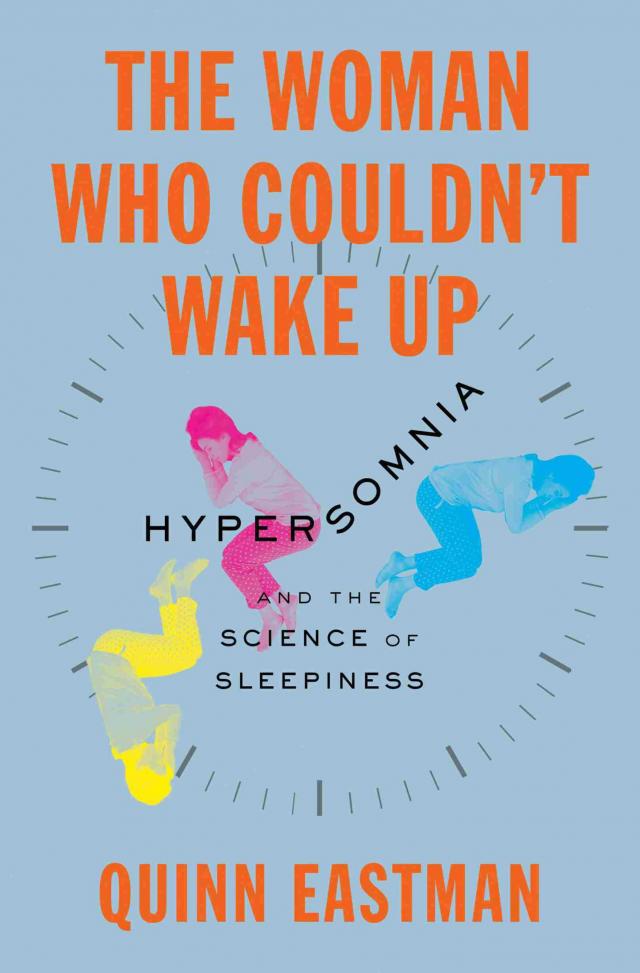
The woman who couldnt wa.., p.37
The Woman Who Couldn't Wake Up,
p.37


37. Shaotong Zhu et al., “Structure of a Human Synaptic GABA-A Receptor,” Nature 559 (2018): 67–72.
38. Michelle D. Brot et al., “The Anxiolytic-Like Effects of the Neurosteroid Allopregnanolone: Interactions with GABA-A Receptors,” European Journal of Pharmacology 325 (1997): 1–7.
39. Ciaran O’Boyle, Ronan Lambe, and Austin Darragh, “Central Effects in Man of the Novel Schistosomicidal Benzodiazepine Meclonazepam,” European Journal of Clinical Pharmacology 29 (1985) 105–8.
40. Roche Products Ltd., Hypnovel and Anexate product literature, c. 1987, Roche archives, HAR PD.3.1 DMC-110342.
41. Warren E. Leary, “F.D.A. Assailed on Approval of Drug,” New York Times, May 6, 1988.
42. Rainer Dorow et al., “Clinical Perspectives of Beta-Carbolines from First Studies in Humans,” Brain Research Bulletin 19 (1987): 319–26; Peter R. Bieck, “Human Pharmacology of CGS 8216, a Benzodiazepine Antagonist,” Clinical Neuropharmacology 7S (1984): S365.
43. Rainer Dorow et al., “Severe Anxiety Induced by FG 7142, a Beta-Carboline Ligand for Benzodiazepine Receptors,” Lancet 322 (1983): 98–99.
44. Wallace B. Mendelson et al., “A Benzodiazepine Receptor Antagonist Decreases Sleep and Reverses the Hypnotic Actions of Flurazepam,” Science 219 (1983): 414–16.
45. Philip J. Hilts, “Chemical Discoveries Open ‘Inner Space,’ ” Washington Post, September 6, 1982.
46. Rachel Nave, Paula Herer, and Peretz Lavie, “The Intrinsic Effects of Sarmazenil on Sleep Propensity and Performance Level of Sleep-Deprived Subjects,” Psychopharmacology 115 (1994): 366–70.
47. Minutes of the Central Nervous System Task Force meeting, January 1989, report from Peter Schoch, pp. 14–16, Roche archives, HAR FE.0.4-105726a.
48. Minutes of the Pharmaceutical Research Steering Committee, January 28, 1987, p. 7, Roche archives, HAR FE.0.4-105782.
49. E. Pietro Bonetti et al., “Ro 15-4513: Partial Inverse Agonism at the BZR and Interaction with Ethanol,” Pharmacology, Biochemistry, and Behavior 31 (1988): 733–49.
50. Gina Kolata, “New Drug Counters Alcohol Intoxication,” Science 234: 1198–99 (1986).
51. Robert Langreth, “High Anxiety,” Forbes, November 27, 2000.
52. Daniel F. Schafer and E. Anthony Jones, “Hepatic Encephalopathy and the y-Aminobutyric-Acid Neurotransmitter System,” Lancet 319 (1982): 18–20.
53. Mario Baraldi et al., “Supersensitivity of Benzodiazepine Receptors in Hepatic Encephalopathy Due to Fulminant Hepatic Failure in the Rat: Reversal by a Benzodiazepine Antagonist,” Clinical Science 67 (1984): 167–75.
54. Giuseppe Scollo-Lavizzari, “First Clinical Investigation of the Benzodiazepine Antagonist Ro 15-1788 in Comatose Patients,” European Neurology 22 (1983): 7–11.
55. Giuseppe Scollo-Lavizzari et al., “Reversal of Hepatic Coma by Benzodiazepine Antagonist Ro 15-1788,” Lancet 1324/1325 (1985).
56. Giuseppe Scollo-Lavizzari and H. Mathis, “Benzodiazepine Antagonist (Ro 15-1788) in Ethanol Intoxication: A Pilot Study,” European Neurology 24 (1983): 352–54; European Patent Office, EP 0-398-171-A2, May 11, 1990, https://patents.google.com/patent/EP0398171A2/en.
57. Denis A. Burke et al., “Reversal of Hepatic Coma with Flumazenil with Improvement in Visual Evoked Potentials,” Lancet 332 (1988): 505–6.
58. Peter Ferenci et al., “Successful Long-term Treatment of Portal-Systemic Encephalopathy by the Benzodiazepine Antagonist Flumazenil,” Gastroenterology 96 (1989): 240–43.
59. Anthony S. Basile et al., “Elevated Brain Concentrations of 1,4-Benzodiazepines in Fulminant Hepatic Failure,” New England Journal of Medicine 325 (1991): 473–78.
60. Jamie Talan, “Study of Brain Yields Hope of Treating Hepatic Comas,” Newsday, October 24, 1990.
61. Cihan Yurdaydin et al., “Gut Bacteria Provide Precursors of Benzodiazepine Receptor Ligands in a Rat Model of Hepatic Encephalopathy,” Brain Research 679 (1995): 42–48.
62. Gilles Pomier-Layrargues et al., “Flumazenil in Cirrhotic Patients in Hepatic Coma: A Randomized Double-Blind Placebo-Controlled Crossover Trial,” Hepatology 19 (1994) 32–37.
63. Pascal Perney et al., “Plasma and CSF Benzodiazepine Receptor Ligand Concentrations in Cirrhotic Patients with Hepatic Encephalopathy,” Metabolic Brain Diseases 13 (1998): 201–10.
64. Giuseppe Barbaro et al., “Flumazenil for Hepatic Encephalopathy Grade III and IVa in Patients with Cirrhosis,” Hepatology 28 (1998): 374–78.
65. Samir Ahboucha et al., “Increased Levels of Pregnenolone and Its Neuroactive Metabolite Allopregnanolone in Autopsied Brain Tissue from Cirrhotic Patients Who Died in Hepatic Coma,” Neurochemistry International 49 (2006): 372–78.
66. Stacia Brown, letter posted on Hypersomnia Research site, archived 2014, http://web.archive.org/web/20140802210733/http://hypersomniaresearch.org/media/Hypersomnia-Research-Project.pdf.
67. Catherine A. Christian et al., “Endogenous Positive Allosteric Modulation of GABA-A Receptors by Diazepam Binding Inhibitor,” Neuron 7 (2013): 1063–74.
68. Others have proposed DBI as a “hunger factor” that stimulates appetite and is overabundant in humans and animals with obesity. José Manuel Bravo-San Pedro et al., “Acyl-CoA-Binding Protein (ACBP): The Elusive ‘Hunger Factor’ Linking Autophagy to Food Intake,” Cell Stress 3 (2019): 312–18.
69. Olivia Moody, “Pharmacologically Targeting the GABA-A Receptors in Neurological Disease,” PhD diss., Emory University, 2017, chap. 4, https://etd.library.emory.edu/concern/etds/0c483j381.
70. Test subjects watch a light that flickers at a changing frequency and report when the light appears to become continuous. Natalia D. Mankowska et al., “Critical Flicker Fusion Frequency: A Narrative Review,” Medicina 57 (2021): 1096.
10. WEIRD DRUGS
1. Hypersomnia Research webpage, archived 2014, http://web.archive.org/web/20140802210733/http://hypersomniaresearch.org/.
2. David B. Rye, National Institute for Neurological Disorders and Stroke application, R01NS089719-01A1, 2015.
3. Lynn M. Trotti, National Institute for Neurological Disorders and Stroke application, K23NS083748-01A1, 2014.
4. Lynn M. Trotti et al, “Flumazenil for the Treatment of Idiopathic Hypersomnia: Clinical Experience with 153 Patients,” Journal of Clinical Sleep Medicine 12 (2016): 1389–94.
5. Bruce Jancin, “Flumazenil Effective in Refractory Hypersomnolence,” Chest Physician/MDEdge News, July 12, 2016.
6. Yves Dauvilliers et al., “Absence of γ-Aminobutyric Acid-a Receptor Potentiation in Central Hypersomnolence Disorders,” Annals of Neurology 80 (2016): 250–68.
7. Yves Dauvilliers et al., “Normal Cerebrospinal Fluid Histamine and Tele-methylhistamine Levels in Hypersomnia Conditions,” Sleep 35 (2012): 1359–66.
8. Olivia A. Moody et al., “Rigor, Reproducibility and in vitro CSF Assays: The Devil in the Details,” Annals of Neurology 81 (2017): 904–7.
9. Hanieh Toosi, Esther del Cid-Pellitero, and Barbara E. Jones, “GABA Receptors on Orexin and Melanin-Concentrating Hormone Neurons Are Differentially Homeostatically Regulated Following Sleep Deprivation,” eNeuro 3 (2016).
10. Richard W. Olsen and Jing Liang, “Role of GABAA Receptors in Alcohol Use Disorders Suggested by Chronic Intermittent Ethanol (CIE) Rodent Model,” Molecular Brain 10 (2017): 45.
11. Amy Desmarais, “Rising Voices of Narcolepsy,” Project Sleep, YouTube video posted September 11, 2020, https://www.youtube.com/watch?v=9nxgc2VSP7Y.
12. Hui Shen et al. “A Stress Steroid Triggers Anxiety Via Increased Expression of α4βδ GABA-A Receptors in Methamphetamine Dependence,” Neuroscience 254 (2013).
13. Aarti Kuver and Sheryl S. Smith, “Flumazenil Decreases Surface Expression of α4β2δ GABAA Receptors by Increasing the Rate of Receptor Internalization,” Brain Research Bulletin 120 (2016): 131–43.
14. Francesca Biggio et al., “Flumazenil Selectively Prevents the Increase in Alpha(4)-Subunit Gene Expression and an Associated Change in GABA(A) Receptor Function Induced by Ethanol Withdrawal,” Journal of Neurochemistry 102 (2007): 657–66.
15. Shari Roan, “Addiction Treatment, Novel but Unproved,” Los Angeles Times, October 9, 2006.
16. Walter Ling et al., “Double-blind Placebo-Controlled Evaluation of the PROMETA™ Protocol for Methamphetamine Dependence,” Addiction 107 (2012): 361–69.
17. Marco Faccini et al., “Slow Subcutaneous Infusion of Flumazenil for the Treatment of Long-Term, High-Dose Benzodiazepine Users: A Review of 214 Cases,” Journal of Psychopharmacology 30, no. 10 (2016).
18. Fabio Lugoboni and Roberto Leone, “What Is Stopping Us from Using Flumazenil?,” Addiction 107 (2012): 1369.
19. Gordon Research Conferences, “The Science of Sleep: Emerging Themes and Paradigm Shifts,” March 16–21, 2014.
20. Ren-Qi Huang et al., “Pentylenetetrazole-Induced Inhibition of Recombinant γ-Aminobutyric Acid Type A (GABAA) Receptors: Mechanism and Site of Action,” Journal of Pharmacology and Experimental Therapeutics 298 (2001): 986–95.
21. Hermann Ruef, “Über Klinische Erfahrungen Mit Cardiazol,” Klinische Wochenschrift 4 (1925): 1680–1.
22. M. Herbert Barker and Samuel A. Levine, “Cardiazol,” Archives of Internal Medicine 42 (1928): 14–22.
23. Niall McCrae, “ ‘A Violent Thunderstorm’: Cardiazol Treatment in British Mental Hospitals,” History of Psychiatry 17 (2006): 67–90.
24. Jesse Ballenger, Treating Dementia—Do We Have a Pill for It? (Baltimore, MD: Johns Hopkins University Press, 2009).
25. Emily Underwood, “Can Down Syndrome Be Treated?,” Science 343 (2014): 964–67. Roche took a descendant of flumazenil into Down syndrome clinical trials, but its drug was ultimately unsuccessful. Joerg F. Hipp et al., “Basmisanil, a Highly Selective GABAA-α5 Negative Allosteric Modulator: Preclinical Pharmacology and Demonstration of Functional Target Engagement in Man,” Scientific Reports 11 (2021): 7700.
26. April 2020 interview with Garner. Doses used were typically 100 times lower than seizure-inducing doses.
27. Fabian Fernandez et al., “Pharmacotherapy for Cognitive Impairment in a Mouse Model of Down Syndrome,” Nature Neuroscience 10 (2007): 411–13.
28. Norman F. Ruby et al., “Circadian Locomotor Rhythms Are Normal in Ts65Dn Down Syndrome Mice and Unaffected by Pentylenetetrazole,” Journal of Biological Rhythms 25 (2010): 63–66.
29. Damien Colas et al., “Short-term Treatment with Flumazenil Restores Long-Term Object Memory in a Mouse Model of Down Syndrome,” Neurobiology of Learning and Memory 140 (2017): 11–16.
30. Australian New Zealand Clinical Trials Registry, ACTRN12612000652875, https://www.anzctr.org.au/Trial/Registration/TrialReview.aspx?id=362609.
31. Maria S. Trois et al., “Obstructive Sleep Apnea in Adults with Down Syndrome,” Journal of Clinical Sleep Medicine 5 (2009): 317–23.
32. Damien Colas et al., “Sleep and EEG Features in Genetic Models of Down Syndrome,” Neurobiology of Disease 30 (2008): 1–7.
33. David B. Rye et al, “An Open-Label Study of the Efficacy, Safety and Tolerability of Oral BTD-001 in Adults with Idiopathic Hypersomnia or Narcolepsy Type 2,” Sleep Medicine 40S (2017): e285–86.
34. U.S. National Library of Medicine, “A Study of Safety and Efficacy of BTD-001 in Treatment of Patients with Idiopathic Hypersomnia (IH) or Narcolepsy Type 2,” https://clinicaltrials.gov/ct2/show/NCT02512588; “A Study of Oral BTD-001 in Adults With Idiopathic Hypersomnia (ARISE2),” https://clinicaltrials.gov/ct2/show/NCT03542851.
35. Confirmed via multiple sources, but this person did not agree to discuss PTZ sourcing on the record.
36. Steven R. Gerbsman, “Date Certain M&A of Balance Therapeutics, Inc.,” Gerbsman Partners blog, August 11, 2020, https://blog.gerbsmanpartners.com/2020/08/11/gerbsman-partners-date-certain-ma-of-balance-therapeutics-inc/.
11. THE HEART OF THE BRAIN
1. Ulrich Voderholzer et al., “A 19-H Spontaneous Sleep Period in Idiopathic Central Nervous System Hypersomnia,” Journal of Sleep Research 7 (1998): 101–3.
2. Yves A. Dauvilliers and Luc Laberge, “Myotonic Dystrophy Type 1, Daytime Sleepiness and REM Sleep Dysregulation,” Sleep Medicine Reviews 16 (2012): 539–45.
3. Constantin von Economo, “Encephalitis Lethargica,” Wiener Klinsche Wochenschrift 30 (1917): 581–85.
4. Paul B. Foley, Encephalitis Lethargica: The Mind and Brain Virus (New York: Springer, 2018).
5. L. L. Anderson, Joel A. Vilensky, and R. C. Duvoisin, “Neuropathology of Acute Phase Encephalitis Lethargica: A Review of Cases from the Epidemic Period,” Neuropathology and Applied Neurobiology 35 (2009): 462–72.
6. John A. Sours, “Narcolepsy and Other Disturbances in the Sleep-Waking Rhythm: A Study of 115 Cases with Review of the Literature,” Journal of Nervous and Mental Disease 137 (1963): 525–42.
7. Luman Daniels, “Narcolepsy,” Medicine 13 (1934): 1–134.
8. Eleanore Carey, “I Recover from Sleeping Sickness,” American Mercury 32 (1934): 165–69.
9. Western Samoa was hit by both encephalitis lethargica and flu between 1918 and 1922, but American Samoa was not affected by either. R. T. Ravenholt and William H. Foege, “1918 Influenza, Encephalitis Lethargica, Parkinsonism,” Lancet 320 (1982): 860–64.
10. Sherman McCall et al., “Influenza RNA Not Detected in Archival Brain Tissues from Acute Encephalitis Lethargica Cases or in Postencephalitic Parkinson Cases,” Journal of Neuropathology and Experimental Neurology 60 (2001): 696–704; K. C. Lo et al., “Lack of Detection of Influenza Genes in Archived Formalin-Fixed, Paraffin Wax-Embedded Brain Samples of Encephalitis Lethargica Patients from 1916 to 1920,” Virchows Archiv 442 (2003): 591–96.
11. Robert R. Dourmashkin et al., “Evidence for an Enterovirus as the Cause of Encephalitis Lethargica,” BMC Infectious Diseases 12 (2012): 136.
12. Russell C. Dale et al., “Encephalitis Lethargica Syndrome: 20 New Cases and Evidence of Basal Ganglia Autoimmunity,” Brain 127 (2004): 21–33.
13. Clifford B. Saper, Thomas E. Scammell, and Jun Lu, “Hypothalamic Regulation of Sleep and Circadian Rhythms,” Nature 437 (2005): 1257–63.
14. Clifford B. Saper and Bradford B. Lowell, “The Hypothalamus,” Current Biology 24 (2014): PR1111–16.
15. Bedřich Roth, Narcolepsy and Hypersomnia (Basel: Karger, 1980), 224.
16. Ayelet Snow et al., “Severe Hypersomnolence After Pituitary/Hypothalamic Surgery in Adolescents: Clinical Characteristics and Potential Mechanisms,” Pediatrics 110 (2002): e74.
17. Gerald M. Rosen et al., “Sleep in Children with Neoplasms of the Central Nervous System: Case Review of 14 Children,” Pediatrics 112 (2003): e46–54.
18. Mitchell G. Miglis et al., “Frequency and Severity of Autonomic Symptoms in Idiopathic Hypersomnia,” Journal of Clinical Sleep Medicine 16 (2020): 749–56.
19. Lynn M. Trotti and Donald L. Bliwise, “Brain MRI Findings in Patients with Idiopathic Hypersomnia,” Clinical Neurology and Neurosurgery 157 (2017): 19–21.
20. Walle J. Nauta, “Hypothalamic Regulation of Sleep in Rats,” Journal of Neurophysiology 9 (1946): 285–316.
21. In addition to GABA, hypothalamic preoptic neurons produce neuropeptides such as cholecystokinin, which can induce sleep in the context of satiety. Shinjae Chung et al., “Identification of Preoptic Sleep Neurons Using Retrograde Labelling and Gene Profiling,” Nature 545 (2017): 477–81.
22. Jonathan E. Sherin et al., “Activation of Ventrolateral Preoptic Neurons During Sleep,” Science 271 (1996): 216–19.
23. Mohammed Aftab Alam et al., “Neuronal Activity in the Preoptic Hypothalamus During Sleep Deprivation and Recovery Sleep,” Journal of Neurophysiology 111 (2014): 287–99.
24. Ronald Szymusiak et al., “Sleep-Waking Discharge Patterns of Ventrolateral Preoptic/Anterior Hypothalamic Neurons in Rats,” Brain Research 803 (1998): 178–88.


