

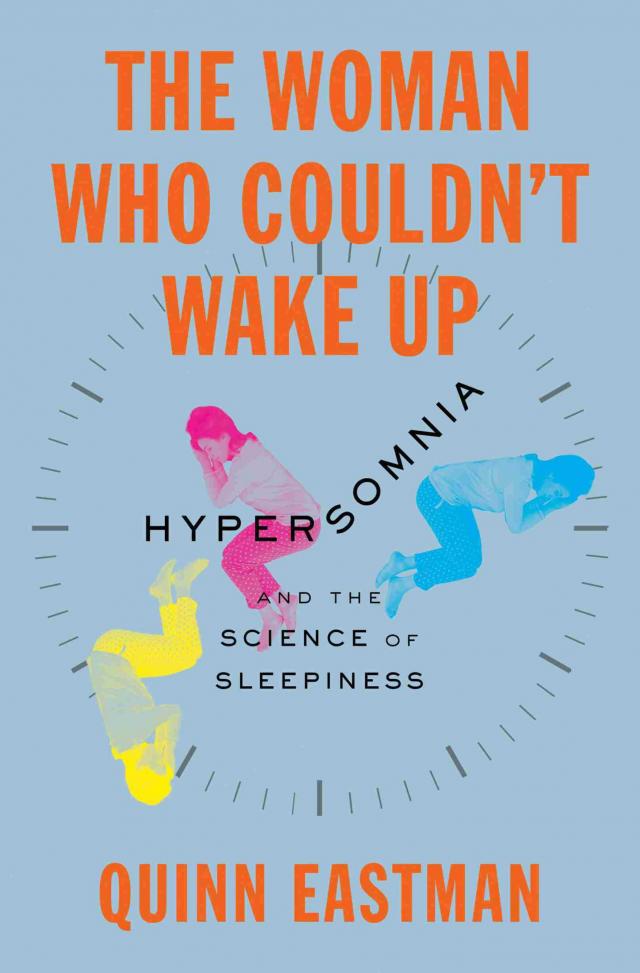
The woman who couldnt wa.., p.39
The Woman Who Couldn't Wake Up,
p.39


23. Aditya Ambati et al., “Mass Spectrometric Characterization of Narcolepsy-Associated Pandemic 2009 Influenza Vaccines,” Vaccines 8 (2020): 630.
24. David Scott and Ann Enander, “Postpandemic Nightmare: A Framing Analysis of Authorities and Narcolepsy Victims in Swedish Press,” Journal of Contingencies & Crisis Management 25 (2017); Elizabeth Miller et al., “Risk of Narcolepsy in Children and Young People Receiving AS03 Adjuvanted Pandemic A/H1N1 2009 Influenza Vaccine: Retrospective Analysis,” BMJ 346 (2013): f794.
25. Fang Han et al., “Narcolepsy Onset Is Seasonal and Increased Following the 2009 H1N1 Pandemic in China,” Annals of Neurology 70: 410–17 (2011).
26. Narong Simakajornboon et al., “Increased Cases of Childhood Narcolepsy After the 2009 H1N1 Pandemics,” Sleep 40S (2017): 337.
27. Kate Kelland, “How Vaccine Scares Cast Shadows Over Science,” Reuters, March 21, 2013, https://in.reuters.com/article/vaccines-narcolepsy-science/special-report-how-vaccine-scares-cast-shadows-over-science-idINDEE92K06920130321.
28. Kate Kelland, “Insight: Evidence Grows for Narcolepsy Link to GSK Swine Flu Shot,” Reuters, January 22, 2013, https://www.reuters.com/article/us-narcolepsy-vaccine-pandemrix/insight-evidence-grows-for-narcolepsy-link-to-gsk-swine-flu-shot-idUSBRE90L07H20130122.
29. Helen Branswell, “A Stubborn Medical Mystery: Was Pandemic Flu Vaccine Tied to an Increase in Narcolepsy Cases?” STAT, July 5, 2018.
30. Daniel Weibel et al., “Narcolepsy and Adjuvanted Pandemic Influenza A (H1N1) 2009 Vaccines—Multi-country Assessment,” Vaccine 36 (2018): 6262–11.
31. Rebekah H. Borse et al., “Effects of Vaccine Program Against Pandemic Influenza A(H1N1) Virus, United States, 2009–2010,” Emerging Infectious Diseases 19 (2013): 439–48.
32. Pierre Verger, “Prevalence and Correlates of Vaccine Hesitancy Among General Practitioners: A Cross-sectional Telephone Survey in France, April to July 2014,” EuroSurveillance 21 (2016): 30406.
33. Britta Lundren, “Narrating Narcolepsy—Centering a Side Effect,” Medical Anthropology 34: 150–65 (2015).
34. Azvolinsky, “In Dogged Pursuit of Sleep.”
35. Daniela Latorre et al., “T Cells in Patients with Narcolepsy Target Self-Antigens of Hypocretin Neurons,” Nature 562 (2018): 63–68.
36. Guo Luo et al., “Autoimmunity to Hypocretin and Molecular Mimicry to Flu in Type 1 Narcolepsy,” Proceedings of the National Academy of Sciences 115 (2018): E12323–32.
37. Andreas Lutterotti, “Is It Time for Immunotherapy Trials in Narcolepsy?,” Journal of Clinical Sleep Medicine 13 (2017): 363–64.
38. Thomas E. Scammell et al., “Treatment of Narcolepsy with Natalizumab,” Sleep 43 (2020): zsaa050.
39. Kelsey Biddle, “Living with Narcolepsy, Running for a Cure,” Invisible Illness (blog) October 29, 2018, https://medium.com/invisible-illness/living-with-narcolepsy-running-for-a-cure-3242f9040188.
40. Andrew C. Cogswell et al., “Children with Narcolepsy Type 1 Have Increased T-cell Responses to Orexins,” Annals of Clinical and Translational Neurology 6 (2019): 2566–72.
41. Natasja Wulff Pedersen et al., “CD8+ T cells from Patients with Narcolepsy and Healthy Controls Recognize Hypocretin Neuron-Specific Antigens,” Nature Communications 10 (2019): 837.
42. Mignot said molecular mimicry is still the most likely explanation for NT1 autoimmunity. Guo Luo et al., “Characterization of T cell Receptors Reactive to HCRT NH2, pHA 273–287, and NP 17–31 in Control and Narcolepsy Patients,” Proceedings of the National Academy of Sciences 119 (2022): e2205797119.
43. Tobias V. Lanz et al., “Clonally Expanded B cells in Multiple Sclerosis Bind EBV EBNA1 and GlialCAM,” Nature 603 (2022): 321–27.
44. Masataka Wada et al., “Neuroimaging Correlates of Narcolepsy with Cataplexy: A Systematic Review,” Neuroscience Research 142 (2019): 16–29.
45. Thomas C. Thannickal et al., “Localized Loss of Hypocretin (Orexin) Cells in Narcolepsy Without Cataplexy,” Sleep 32 (2009): 993–98.
46. Fabio Pizza et al., “Primary Progressive Narcolepsy Type 1: The Other Side of the Coin,” Neurology 83 (2014): 2189–90.
47. Sarah W. Black et al., “Partial Ablation of the Orexin Field Induces a Sub-narcoleptic Phenotype in a Conditional Mouse Model of Orexin Neurodegeneration,” Sleep 41 (2018): zsy116.
48. Leon Rosenthal et al., “2018 Worldwide Survey of Health-Care Providers Caring for Patients with Narcolepsy,” Sleep Medicine 82 (2021): 23–28.
49. Alyssa Frank, “Orexin-A/Hypocretin-1 for the Diagnosis of Type 1 Narcolepsy,” Mayo Clinic Laboratories, May 31, 2019, https://news.mayocliniclabs.com/2019/05/31/orexin/.
50. This idea comes from a presentation by Tom Scammell.
51. Zan Wang et al., “Case Report: Dysfunction of the Paraventricular Hypothalamic Nucleus Area Induces Hypersomnia in Patients,” Frontiers in Neuroscience 16 (2022): 830474.
52. Phillipp Valko et al., “Increase of Histaminergic Tuberomammillary Neurons in Narcolepsy,” Annals of Neurology 74 (2013): 794–804.
53. Yo Yamada et al., “Chronic Brain Histamine Depletion in Adult Mice Induced Depression-like Behaviors and Impaired Sleep-Wake Cycle,” Neuropharmacology 175 (2020): 108179.
14. EVERYTHING OFF LABEL
1. Dean Jordheim, Idiopathic Hypersomnia group Facebook thread, February 24, 2014.
2. Lynn Marie Trotti et al., “Disease Symptomatology and Response to Treatment in People with Idiopathic Hypersomnia: Initial Data from the Hypersomnia Foundation Registry,” Sleep Medicine 75 (2020): 343–49.
3. David Cavalla, Off-Label Prescribing (Chichester: Wiley-Blackwell, 2015).
4. Timothy I. Morgenthaler et al., “Practice Parameters for the Treatment of Narcolepsy and Other Hypersomnias of Central Origin,” Sleep 30 (2007): 1705.
5. “2021 AMA Prior Authorization (PA) Physician Survey,” American Medical Association website, February 18, 2022, https://www.ama-assn.org/system/files/prior-authorization-survey.pdf.
6. “Our Struggle for Prescription Drug Coverage—2019 Survey Results,” Hypersomnia Foundation website, https://www.hypersomniafoundation.org/our-struggle-for-prescription-drug-coverage-2019-survey-results/.
7. Brian C. Callaghan et al., “Out-of-Pocket Costs Are on the Rise for Commonly Prescribed Neurologic Medications,” Neurology 92 (2019): e2604–13.
8. United Healthcare, “Clinical Pharmacy Program Guidelines for Provigil, Nuvigil,” accessed March 2021, https://www.uhcprovider.com/content/dam/provider/docs/public/commplan/az/pharmacy-clinical-guidelines/AZ-Provigil-Nuvigil-Clinical-Guidelines.pdf.
9. U.S. House of Representatives, Committee on Energy and Commerce, Subcommittee on Health and the Environment, “Health and the Environment Miscellaneous” (testimony for Orphan Drug Bill), 97th Congress, March 8, 1982, 7.367–8, https://catalog.hathitrust.org/Record/100663397.
10. Sarah Jane Tribble and Sydney Lupkin, “Government Investigation Finds Flaws in the FDA’s Orphan Drug Program,” Kaiser Health News, November 30, 2018, https://khn.org/news/government-investigation-finds-flaws-in-the-fdas-orphan-drug-program/.
11. Tufts Center for Study of Drug Development, “Tufts CSDD Impact Report,” July/August 2019.
12. Rachel D. Teodorini, Nicola Rycroft, and James H. Smith-Spark, “The Off-Prescription Use of Modafinil,” PLOS One, February 5, 2020.
13. Lenny Bernstein, “Ambien Should Not Be Handed Out ‘Like Candy,’ Experts Say of Ronny L. Jackson’s Alleged Practices,” Washington Post, April 25, 2018.
14. Maria J. Hyland, “The Drugs Do Work: My Life on Brain Enhancers,” Guardian, May 3, 2013.
15. Michel Billiard and Roger Broughton, “Modafinil: Its Discovery, the Early European and North American Experience in the Treatment of Narcolepsy and Idiopathic Hypersomnia, and Its Subsequent Use in Other Medical Conditions,” Sleep Medicine 49 (2018): 69–72; Helene Bastuji and Michel Jouvet, “Successful Treatment of Idiopathic Hypersomnia and Narcolepsy with Modafinil,” Progress in Neuro-Psychopharmacology & Biological Psychiatry 12 (1988): 695–700.
16. Helene Bastuji, “Michel Jouvet as a Clinical Neurophysiologist and Neurologist,” Sleep Medicine 49 (2018): 73–77.
17. Food and Drug Administration, NDA 20–717, Clinical Review Section 2.5, http://web.archive.org/web/20060825161425/http://www.fda.gov/cder/foi/nda/98/020717A_Provigil_medr_P1.pdf.
18. J. S. Lin et al., “Role of Catecholamines in the Modafinil and Amphetamine Induced Wakefulness,” Brain Research 591 (1992): 19–26.
19. Food and Drug Administration, NDA 20-717, Division Director memo, September 8, 2003: “The sponsor has chosen to assess Provigil’s effect on the objective measures MWT or the MSLT. These measures are widely used in the field, but it is worth asking if the sponsor should have, instead, assessed the drug’s effect with more direct, or perhaps face valid, measures of sleepiness. For example, one could imagine that, instead of the laboratory-based MSLT or MWT, one could count episodes of falling asleep during the day in patients with narcolepsy, or motor vehicle accidents during the day in patients with OSAHS, or number of work-related accidents while patients with SWSD were working.” https://wayback.archive-it.org/7993/20170405140917/https://www.fda.gov/ohrms/dockets/ac/03/briefing/3979B2_02_FDA-Division%20Director%20Memo.htm.
20. U.S. Modafinil in Narcolepsy Multicenter Study Group, “Randomized Trial of Modafinil for the Treatment of Pathological Somnolence in Narcolepsy,” Annals of Neurology 43 (1998): 88–97; U.S. Modafinil in Narcolepsy Multicenter Study Group, “Randomized Trial of Modafinil as a Treatment for the Excessive Daytime Somnolence of Narcolepsy,” Neurology 54 (2000): 1166–75. Those with severe cataplexy could not be enrolled.
21. Donald R. Jasinski, “An Evaluation of the Abuse Potential of Modafinil Using Methylphendiate as a Reference,” Journal of Psychopharmacology 14 (2000): 53–60.
22. Department of Justice, “Schedules of Controlled Substances: Placement of Modafinil Into Schedule IV,” Federal Register 64 (1999): 4050–52, https://www.deadiversion.usdoj.gov/fed_regs/rules/1999/fr0127.htm.
23. Erica Goode, “New Hope for the Losers in the Battle to Stay Awake,” New York Times, November 3, 1998.
24. Jonathan P. Wisor et al., “Dopaminergic Role in Stimulant-Induced Wakefulness,” Journal of Neuroscience 21 (2001): 1787–94.
25. Thomas E. Scammell et al., “Hypothalamic Arousal Regions Are Activated During Modafinil-Induced Wakefulness,” Journal of Neuroscience 20 (2000): 8620–28.
26. Jonathan Wisor, “Modafinil as a Catecholaminergic Agent: Empirical Evidence and Unanswered Questions,” Frontiers in Neurology 4 (2013): 139.
27. Food and Drug Administration, NDA 20-717, briefing material for 2003 advisory committee meeting, p. 10, https://wayback.archive-it.org/7993/20170405140858/https://www.fda.gov/ohrms/dockets/ac/03/briefing/3979B2_01_Cephalon-Provigil.htm.
28. Food and Drug Administration, NDA 20-717, Leber approvable memo, p. 12, https://web.archive.org/web/20060825161512/http:/www.fda.gov/cder/foi/nda/98/020717A_Provigil_medr_P4.pdf.
29. Food and Drug Administration, NDA 20-717, January 2002 warning letter from Regulatory Review Officer.
30. Steven R. Brown, “Disease Mongering and Excessive Daytime Sleepiness,” American Family Physician 80 (2009): 775–78.
31. Aaron Kesselheim et al., “The Prevalence and Cost of Unapproved Uses of Top-Selling Orphan Drugs,” PLOS One 7 (2012): e31894.
32. Jerome Groopman, “Eyes Wide Open,” New Yorker, December 3, 2001.
33. Andrew Pollack, “A Biotech Outcast Awakens,” New York Times, October 20, 2002.
34. Harvard Medical School press release, May 11, 2004, https://www.eurekalert.org/pub_releases/2004-05/hms-thm051104.php.
35. Charles Czeisler et al., “Modafinil for Excessive Sleepiness Associated with Shift-Work Sleep Disorder,” New England Journal of Medicine 353 (2005): 476–86.
36. Tim Lougheed, “An Assault on Sleep,” Ottawa Citizen, May 13, 2002.
37. Nancy J. Wesensten et al., “Maintaining Alertness and Performance During Sleep Deprivation: Modafinil Versus Caffeine,” Psychopharmacology 159 (2002): 238–47.
38. Allan I. Pack, “Should a Pharmaceutical Be Approved for the Broad Indication of Excessive Sleepiness?,” American Journal of Respiratory and Critical Care Medicine 167 (2003): 109–11.
39. Food and Drug Administration, Peripheral and Central Nervous System Drugs Advisory Committee meeting transcript, September 25, 2003, https://wayback.archive-it.org/7993/20170404075340/https://www.fda.gov/ohrms/dockets/ac/03/transcripts/3979T2.htm.
40. Andrew Pollack, “Regulators Reject a Drug Maker’s Plan to Use Its Alertness Pill to Overcome Jet Lag,” New York Times, March 29, 2010; Russell P. Rosenberg et al., “A Phase 3, Double-Blind, Randomized, Placebo-Controlled Study of Armodafinil for Excessive Sleepiness Associated with Jet Lag Disorder,” Mayo Clinic Proceedings 85 (July 2010): 630–38.
41. Charles H. Adler et al., “Randomized Trial of Modafinil for Treating Subjective Daytime Sleepiness in Patients with Parkinson’s Disease,” Movement Disorders 18 (2003): 287–93; Kottil W. Rammohan et al., “Efficacy and Safety of Modafinil (Provigil®) for the Treatment of Fatigue in Multiple Sclerosis: A Two Centre Phase 2 Study,” Journal of Neurology Neurosurgery & Psychiatry 72 (2002): 179–83; Udo A. Zifko et al., “Modafinil in Treatment of Fatigue in Multiple Sclerosis. Results of an Open-Label Study,” Journal of Neurology 249 (2002): 983–87; Charles DeBattista et al., “Adjunct Modafinil for the Short-Term Treatment of Fatigue and Sleepiness in Patients with Major Depressive Disorder: A Preliminary Double-Blind, Placebo-Controlled Study,” Journal of Clinical Psychiatry 64 (2003): 1057–64.
42. Department of Justice press release, “Biopharmaceutical Company, Cephalon, to Pay $425 Million & Enter Plea to Resolve Allegations of Off-Label Marketing,” September 29, 2008.
43. Food and Drug Administration, NDA 20-717/S-019, briefing document for Psychopharmacologic Drugs Advisory Committee, March 23, 2006, pp. 55–60, https://wayback.archive-it.org/7993/20170405070734/https://www.fda.gov/ohrms/dockets/ac/06/briefing/2006-4212b1-01-cephalon-background.pdf.
44. Jon Hamilton, “FDA Committee Rejects ADHD Use for Modafinil,” NPR, March 24, 2006.
45. Lin Cheng, “Current Pharmacogenetic Perspective on Stevens-Johnson Syndrome and Toxic Epidermal Necrolysis,” Frontiers in Pharmacology 12 (2021): 588063.
46. Food and Drug Administration, Drug Safety Newsletter 1 (2007): 5, https://web.archive.org/web/20090119121242/http://www.fda.gov/cder/dsn/2007_fall/2007_fall.pdf.
47. European Medicines Agency, “Assessment Report for Modafinil Containing Medicinal Products,” section 1.1, January 27, 2011, https://www.ema.europa.eu/en/documents/referral/modafinil-h-31–1186-article-31-referral-assessment-report_en.pdf.
48. European Medicines Agency, “Assessment Report for Modafinil Containing Medicinal Products,” annex I–IV, January 27, 2011, https://www.ema.europa.eu/en/documents/referral/modafinil-article-31-referral-annex-i-ii-iii-iv_en.pdf.
49. Regis Lopez et al., “French Consensus. Management of Patients with Hypersomnia: Which Strategy?,” Revue Neurologique 173 (2016): 8–18.
50. Julia Chapman et al., “Modafinil/Armodafinil in Obstructive Sleep Apnoea: A Systematic Review and Meta-analysis,” European Respiratory Journal 47 (2016): 1420–28.
51. Pierre Philip et al., “Modafinil Improves Real Driving Performance in Patients with Hypersomnia: A Randomized Double-Blind Placebo-Controlled Crossover Clinical Trial,” Sleep 37 (2014): 483–87.
52. Geert Mayer et al., “Modafinil in the Treatment of Idiopathic Hypersomnia Without Long Sleep Time—a Randomized, Double-Blind, Placebo-Controlled Study,” Journal of Sleep Research 24 (2015): 74–81.
53. Yuichi Inoue, Toshiyuki Tabata, and Naoji Tsukimori, “Efficacy and Safety of Modafinil in Patients with Idiopathic Hypersomnia Without Long Sleep Time: A Multicenter, Randomized, Double-Blind, Placebo-Controlled, Parallel-Group Comparison Study,” Sleep Medicine 80 (2021): 315–21.
54. Carl A. Roberts et al., “How Effective Are Pharmaceuticals for Cognitive Enhancement in Healthy Adults? A Series of Meta-analyses of Cognitive Performance During Acute Administration of Modafinil, Methylphenidate and D-amphetamine,” European Neuropsychopharmacology 38 (2020): 40–62.


