The house across the lak.., p.13
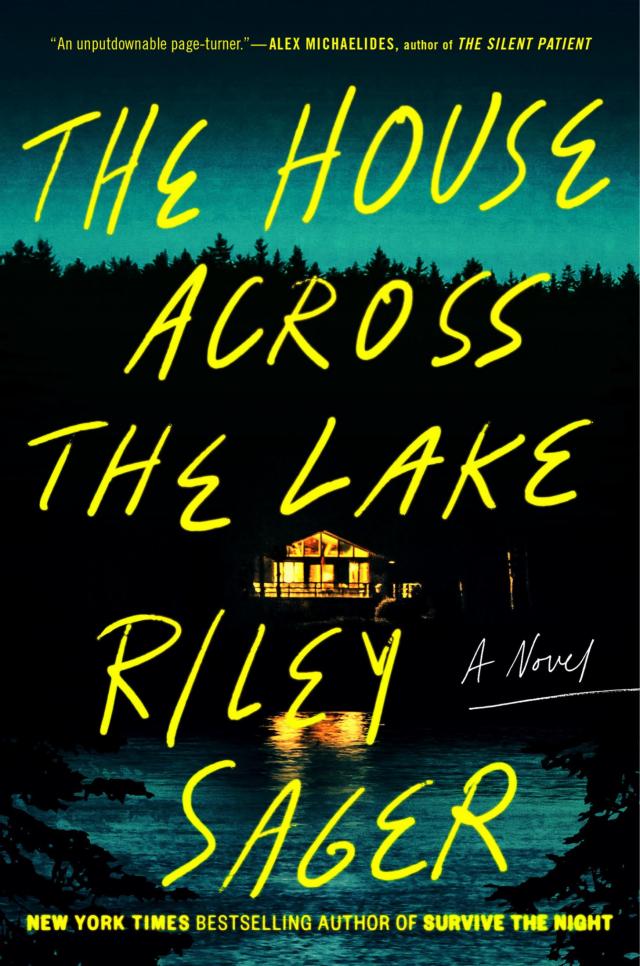
The House Across the Lake,
p.13


Detective Wilma Anson isn’t even close to what I expected. In my mind, I pictured someone similar to the detective I played in a three-episode arc of Law & Order: SVU. Tough. No-nonsense. Dressed in the same type of function-over-style pantsuit my character wore. The woman at my door, however, wears purple yoga pants, a bulky sweatshirt, and a pink headband taming her black curls. A yellow scrunchie circles her right wrist. Wilma catches me looking at it as I shake her hand and says, “It’s my daughter’s. She’s at karate class right now. I have exactly twenty minutes until I need to go pick her up.”
At least the no-nonsense part meets my expectations.
Wilma’s demeanor is softer to Boone, but only by a degree. She manages a quick hug before spotting the liquor cabinet two rooms away.
“You okay with that around?” she asks him.
“I’m fine, Wilma.”
“You sure?”
“Certain.”
“I believe you,” Wilma says. “But you better call me if you so much as think of touching one of those bottles.”
In that moment, I get a glimpse of their relationship. Former colleagues, most likely, who know each other’s strengths and weaknesses. He’s an alcoholic. She’s support. And I’m just the bad influence thrown into the mix because of something suspicious taking place on the other side of the lake.
“Show me the house,” Wilma says.
Boone and I lead her to the porch, where she stands at the railing and takes in the dark sky and even darker lake with curious appraisal. Directly across from us, the Royce house has lights on in the kitchen and master bedroom, but from this distance and without the binoculars, it’s impossible to pinpoint Tom’s location inside.
Wilma gestures to the house and says, “That’s where your friend lives?”
“Yes,” I say. “Tom and Katherine Royce.”
“I know who the Royces are,” Wilma says. “Just like I know who you are.”
From her tone, I gather Wilma’s seen the terrible-but-true tabloid headlines about me. It’s also clear she disapproves.
“Tell me why you think Mrs. Royce is in danger.”
I pause, unsure just where to begin, even though I should have known the question was coming. Of course a police detective is going to ask me why I think my neighbor did something to his missing wife. I become aware of Wilma Anson’s stare. Annoyance clouds her features, and I worry she’ll just up and leave if I don’t say something in the next two seconds.
“We heard a scream this morning,” Boone says, coming to my rescue. “A woman’s scream. It came from their side of the lake.”
“And I saw things,” I add. “Worrisome things.”
“At their house?”
“Yes.”
“How often are you there?”
“I haven’t been inside since they bought the place.”
Wilma turns back to the lake. Squinting, she says, “You noticed worrisome things all the way from over here?”
I nod to the binoculars sitting on the table between the rocking chairs, like they have been for days. Wilma, looking back and forth between me and the table, says, “I see. May I borrow these?”
“Knock yourself out.”
The detective lifts the binoculars to her eyes, fiddles with the focus, scans the lake’s opposite shore. When she lowers the binoculars, it’s to give me a stern look.
“There are laws against spying on people, you know.”
“I wasn’t spying,” I say. “I was observing. Casually.”
“Right,” Wilma says, not even bothering to pretend she thinks I’m telling the truth. “How well do each of you know them?”
“Not well,” Boone says. “I met them a couple of times out and about on the lake.”
“I only met Tom Royce twice,” I say. “But Katherine and I have crossed paths a few times. She’s been over here twice, and we talked after I saved her from drowning in the lake.”
I know it’s wrong, but I’m pleased that last part of my sentence seems to surprise the otherwise unflappable Wilma Anson. “When was this?” she says.
“Day before yesterday,” I say, although it feels longer than that. Time seems to have stretched since I returned to the lake, fueled by drunken days and endless, sleepless nights.
“This incident in the lake—do you have any reason to believe her husband had something to do with it?”
“None. Katherine told me she was swimming, the water was too cold, and she cramped up.”
“When you talked to her, did Katherine ever give any indication she thought her husband was trying to do her harm? Did she say she was scared?”
“She hinted that she was unhappy.”
Wilma stops me with a raised hand. “That’s different than fear.”
“She also told me there were financial issues. She said she pays for everything and that Tom would never agree to a divorce because he needed her money too much. She told me he’d probably kill her before letting her leave.”
“Do you think she was being serious?” Wilma asks.
“Not really. At the time, I thought it was a joke.”
“Would you joke about a thing like that?”
“No,” Boone says.
“Yes,” I say.
Wilma brings the binoculars to her eyes again, and I can tell she’s zeroed in on the lit windows of the Royce house. “Have you seen anything suspicious inside? You know, while casually observing?”
“I saw them fighting. Late last night. He grabbed her by the arm and she hit him.”
“Then maybe it’s for the best that they’re currently apart,” Wilma says.
“I agree,” I say. “But the big question is where Katherine went. Her husband says she’s back at their apartment. I called a friend in the city, who went there and checked. The doorman said she hasn’t been there for days. One of them is lying, and I don’t think it’s the doorman.”
“Or maybe it’s your friend who lied,” Wilma says. “Maybe she didn’t talk to the doorman at all.”
I shake my head. Marnie wouldn’t do that, no matter how fed up she is with me.
“There’s also this.” I show Wilma my phone, Instagram already open and visible. “Katherine allegedly posted this from their apartment today. But this picture wasn’t taken today. Look at the leaves in the trees and the calendar on the wall. This was likely taken weeks ago.”
“Just because someone posts an old photo doesn’t mean they’re not where they say they are,” Wilma says.
“You’re right. But Katherine didn’t even take that picture. Her husband did. If you look closely, you can see his reflection in the teakettle.”
I let Wilma peer at the picture a moment before switching from Instagram to Mixer. I point to Katherine’s red triangle, nestled right next to the one belonging to her husband. “Why would Katherine post an old photo she didn’t even take? Especially when, according to the location-tracking software on her husband’s app, her phone is still inside that house.”
Wilma takes my phone and studies the map dotted with red triangles. “This is like a thousand privacy invasions in one.”
“Probably,” I say. “But don’t you think it’s weird Katherine would leave and not take her phone?”
“Weird, yes. Unheard of, no. It doesn’t mean Tom Royce did something to his wife.”
“But he’s covering up where she is!” I realize my voice is a bit too loud, a tad too emphatic. Faced with Wilma’s skepticism, I’ve become the impatient one. It also doesn’t help that I snuck two more gulps of bourbon while Boone used the powder room before Wilma arrived. “If Katherine’s not here, but her phone is, that means Tom posted that photo, most likely trying to make people think Katherine is someplace she’s not.”
“He also bought rope, a tarp, and a hacksaw,” Boone adds.
“That’s not illegal,” Wilma says.
“But it is suspicious if your wife has suddenly disappeared,” I say.
“Not if she left of her own accord after getting into a heated argument with her husband.”
I give Wilma a curious look. “Are you married, Detective?”
“Seventeen years strong.”
“And have you ever gotten into a heated argument with your husband?”
“Too many to count,” she says. “He’s as stubborn as a mule.”
“After those arguments, have you ever gone out and bought things you could use to hide his body?”
Wilma pushes off the railing and drifts to the rocking chairs, handing me the binoculars in the process. She sits, twisting the scrunchie around her wrist in a compulsive way that makes me think it doesn’t belong to her daughter at all.
“You seriously think Tom Royce is over there right now chopping up his wife?” she says.
“Maybe,” I say, slightly horrified that not only am I thinking it, but I now consider it a more likely scenario than Katherine running away after an argument with her husband.
Wilma sighs. “I’m not sure what you want me to do here.”
“Confirm that Tom Royce is lying,” I say.
“It’s not that simple.”
“You’re with the state police. Can’t you trace Katherine’s phone to check and see if she’s called someone today? Or look at her bank and credit card records?”
Impatience thins Wilma’s voice as she says, “We could do all of those things—if Katherine is reported missing to the local authorities. But I’m going to be straight with you here, if you do it, they’re not going to believe you. People are usually reported missing by someone closer to them. Like a spouse. Unless Katherine has other family members you might know about who are also worried about her.”
Boone looks to me and shakes his head, confirming that both of us are clueless about Katherine’s next of kin.
“That’s what I thought,” Wilma says.
“I guess searching the house is out of the question,” I say.
“It most definitely is,” Wilma says. “We’d need a warrant, and to get that we’d need a clear indication of foul play, which doesn’t exist. Tom Royce buying rope and a hacksaw isn’t the smoking gun you think it is.”
“But what about the scream?” Boone says. “Both of us heard it.”
“Have you considered that maybe Katherine had an accident?” Wilma looks to me. “You told me she almost drowned the other day. Maybe it happened again.”
“Then why hasn’t Tom reported it yet?” I say.
“When your husband went missing, why didn’t you report it?”
I had assumed Wilma knew all about that. She might even have been one of the cops I talked to afterwards, although I have no memory of her. What I do know is that, by bringing it up now, she can be a stone-cold bitch when she wants to be.
“His body was found before I got the chance,” I say through a jaw so clenched my teeth ache. “Because people immediately went looking for him. Unlike Tom Royce. Which makes me think he’s not concerned about Katherine because he knows where she is and what happened to her.”
Wilma holds my gaze, and the look in her large hazel eyes is both apologetic and admiring. I think I earned her respect. And, possibly, her trust, because she breaks eye contact and says, “That’s a valid point.”
“Damn right it is,” I say.
This earns me another look from Wilma, although this time her eyes seem to say, Let’s not get too cocky.
“Here’s what I’m going to do.” She stands, stretches, gives the scrunchie on her wrist one last twirl. “I’ll do a little digging and see if anyone else has heard from Katherine. Hopefully someone has and this is all just a big misunderstanding.”
“What should we do?” I say.
“Nothing. That’s what you should do. Just sit tight and wait to hear from me.” Wilma starts to leave the porch, gesturing to the binoculars as she goes. “And for God’s sake, stop spying on your neighbors. Go watch TV or something.”
After Wilma leaves, taking Boone with her, I try to follow the detective’s advice and watch TV. In the den, sitting in the shadow of the moose head on the wall, I watch the Weather Channel map the storm’s progress. Trish, despite no longer being a hurricane, is still wreaking havoc in the Northeast. Right now, she’s over Pennsylvania and about to bring her strong winds and record rains into New York.
Vermont is next.
The day after tomorrow.
Yet another thing to worry about.
I change the channel and am confronted by an unexpected sight.
Me.
Seventeen years ago.
Strolling across a college campus strewn with autumn leaves and casting sly glances at the blindingly handsome guy next to me.
My film debut.
The movie was a vaguely autobiographical dramedy about a Harvard senior figuring out what he wants to do with his life. I played a sassy co-ed who makes him consider leaving his long-term girlfriend. The role was small but meaty, and refreshingly free of any scheming bad-girl clichés. My character was presented as simply an appealing alternative the hero could choose.
Watching the movie for the first time in more than a decade, I remember everything about making it with dizzying clarity. How intimidated I was by the logistics of shooting on location. How nervous I was about hitting my marks, remembering my lines, accidentally looking directly into the camera. How, when the director first called action, I completely froze, forcing him to pull me aside and gently—so gently—say, “Be yourself.”
That’s what I did.
Or what I thought I did. Watching the performance now, though, I know I must have been acting, even if it didn’t feel like it at the time. In real life, I’ve never been that charming, that bold, that vivid.
Unable to watch my younger self a second longer, I turn off the TV. Reflected in the dark screen is present me—a jarring transformation. So far removed from the vibrant young thing I’d just been watching that we might as well be strangers.
Be yourself.
I don’t even know who that is anymore.
I’m not sure I’d like her if I did.
Leaving the den, I go to the kitchen and pour myself a bourbon. A double, to make up for what I missed while Boone was here. I take it out to the porch, where I rock and drink and watch the house on the other side of the water like I’m Jay Gatsby pining for Daisy Buchanan. In my case, there’s no green light at the end of the dock. There’s no light at all, in fact. The windows were dark by the time I returned to the porch, although a quick look through the binoculars at Tom’s Bentley tells me he’s still there.
I keep watching, hoping he’ll turn on a light somewhere and provide a clearer idea of what he might be up to. That’s what Wilma wants, after all. Something solid onto which we can pin our suspicions. Even though I want that, too, I get queasy thinking about what, exactly, that something solid would be. Blood dripping from Tom’s newly purchased hacksaw? Katherine’s body washed ashore like Len’s?
There I go again, thinking Katherine is dead. I hate that my mind keeps veering in that direction. I’d prefer to be like Wilma, certain there’s a logical explanation behind all of it and that everything will turn out right in the end. My brain just doesn’t work that way. Because if what happened with Len has taught me anything, it’s to expect the worst.
I take another sip of bourbon and bring the binoculars to my eyes. Instead of focusing on the still frustratingly dark Royce house, I scan the area in general, taking in the dense forests, the rocky slope of mountain behind them, the jagged shore on the far edges of the lake.
So many places to bury unwanted things.
So many places to disappear.
And don’t even get me started on the lake. When we were kids, Marnie would tease me about Lake Greene’s depth, usually when both of us were neck-deep in the water, my toes stretched as much as possible to retain the faintest bit of contact with the lake bed.
“The lake is darker than a coffin with the lid shut,” she’d say. “And as deep as the ocean. If you sink under, you’ll never come back up again. You’ll be trapped forever.”
While that’s not technically true—Len’s fate proved that—it’s easy to imagine parts of Lake Greene so deep that something could be forever lost there.
Even a person.
That thought takes more than a gulp of bourbon to chase from my brain. It takes the whole damn glass, downed in a few heavy swallows. I get up and wobble into the kitchen, where I pour another double before returning to my post on the porch. Even though I’ve now got a hearty buzz going, I can’t stop wondering, if Katherine really is dead, why Tom would do such a thing.
Money is my guess.
That was the motive in Shred of Doubt. The character I played had inherited a fortune, her husband had grown up dirt poor—and he wanted what she had. Snippets of things Katherine said to me float through my bourbon-soaked brain.
I pay for everything.
Tom needs me too much to agree to a divorce.
He’d kill me before letting me leave.
I head inside, grab my laptop from the charging station in the den, say hi to the moose head, and go upstairs. Snuggled in bed under a quilt, I fire up the laptop and Google Tom Royce, hoping it’ll bring up information incriminating enough to persuade Wilma that something is amiss.
One of the first things I see is a Bloomberg Businessweek article from last month reporting that Mixer has been courting venture capital firms, seeking a cash influx of thirty million dollars to keep things afloat. Based on what Katherine told me about the app’s lack of profitability, I’m not surprised.
“We’re not desperate,” the article quotes Tom as saying. “Mixer continues to perform above even our loftiest expectations. To take it to the next level as quickly and as efficiently as possible, we need a like-minded partner.”
Translation: He’s absolutely desperate.