The house across the lak.., p.17
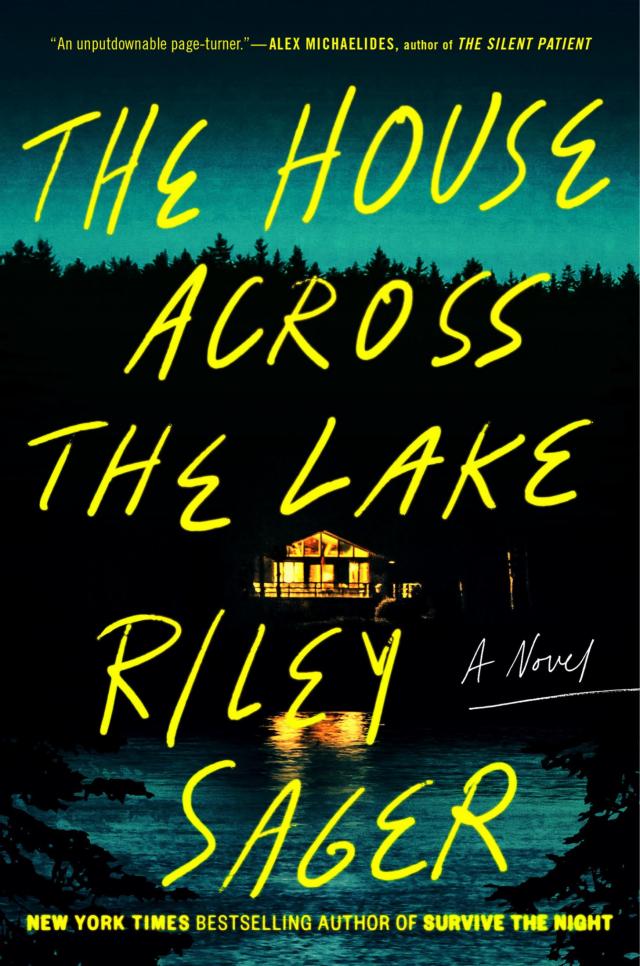
The House Across the Lake,
p.17


Another shiver hits me. One of those full-body ones that rattle you like a cocktail shaker.
The police think Tom is a serial killer.
Although Wilma didn’t say it outright, the implication is clear.
They think he did it.
And the situation is all so much worse than I first thought.
NOW
I grip the knife tighter, hoping it will mask the way my hand is still shaking. He looks at it with feigned disinterest and says, “Am I supposed to feel threatened by that? Because I don’t.”
“I honestly don’t care how you feel.”
It’s the truth, although slightly overstated. I do care. I do want him to feel threatened. But I also know it doesn’t really matter. The most important thing is getting him to talk, and if matching him in indifference will do the trick, then I’m willing to go there.
I return to the other bed in the room, putting down the knife and picking up the glass of bourbon on the nightstand.
“I thought you were going to make coffee,” he says.
“Changed my mind.” I hold out the glass. “Want some?”
He shakes his head. “I don’t think that’s a good idea. I want to keep my mind clear.”
I take a sip. “More for me then.”
“You might also want to think about keeping a clear head,” he says. “You’ll need it during this battle of wits you seem to think we’re playing.”
“It’s not a battle.” I take one more drink, smacking my lips to let him know how much I’m enjoying it. “And we’re not playing anything. You’re going to tell me what I want to know. Eventually.”
“And what will you do if I don’t?”
I gesture toward the knife sitting next to me on the bed.
He smiles again. “You don’t have it in you.”
“You say that,” I tell him, “but I don’t think you fully believe it.”
Just like that, the smile disappears.
Good.
Outside, the wind remains at full howl as rain continues to pummel the roof. The storm is supposed to end by dawn. According to the clock between the beds, it’s not quite midnight. Even though there’s a lot of time between then and now, it might not be enough. What I plan on doing can’t be done in broad daylight, and I don’t think I can remain in this situation until tomorrow night. I might go mad by then. Even if I don’t, I suspect Wilma Anson will be coming around again first thing in the morning.
I need to get him talking now.
“Since you refuse to talk about Katherine,” I say, “tell me about the girls instead.”
“What girls?”
“The ones you murdered.”
“Ah, yes,” he says. “Them.”
The smile returns, this time so twisted and cruel that I want to grab the knife and plunge it right into his heart.
“Why—” I stop, take a deep breath, try to gain control over my emotions, which hover somewhere between rage and revulsion. “Why did you do it?”
He appears to think it over, even though there’s not a single reason he could offer that would justify what he’s done. He seems to realize this and gives up. Instead, with that twisted smile still intact, he simply says, “Because I enjoyed it.”
BEFORE
When she leaves, Wilma Anson takes the piece of broken wineglass with her. The way she carries it to her car, holding the baggie at arm’s length like there’s a moldy sandwich inside, tells me she already thinks it won’t lead to anything. I’d be annoyed if I weren’t so caught off guard by what we’ve just been told.
She thinks Tom Royce is a serial killer.
She thinks Katherine thought that, too.
And that now Katherine is dead or in hiding because of it.
Wilma was right. This is a lot bigger than Katherine’s disappearance. And I have no idea what to do now. I know what Marnie and my mother would say. They’d tell me to protect myself, stay out of the way, not make myself a target. I agree, in theory. But the reality is that I’m already a part of this, whether I want to be or not.
And I’m scared.
That’s the brutal truth of it.
After watching Wilma drive away, I return to the dining room, looking for Boone. I find him on the porch instead, gripping the binoculars and staring at the Royce house on the other side of the lake.
“The bird-watching is amazing this time of year,” I say. “All that plumage.”
“So I hear,” Boone says, indulging me and my weak attempt at a joke.
I settle into the rocking chair beside him. “Any sign of Tom?”
“None. But his car is still outside, so I know he’s there.” Boone pauses. “You think Wilma’s right? About Tom being a serial killer?”
I shrug, even though Boone can’t see me because he’s still looking through the binoculars. Watching him observe the Royce house so intently gives me an idea of how I’ve looked the past few days. Parked on this porch. Binoculars pressed to my face. Focused on nothing else. It isn’t a great look, even on someone as absurdly handsome as Boone.
“I think she could be onto something,” he says. “Tom’s been in the area a lot, something I never understood. He’s rich. His wife’s a supermodel. They could go anywhere. Hell, they could probably buy their own private island. Yet they always chose here, the backwoods of Vermont, where it’s quiet and he’s less likely to be disturbed. Then there’s the fact that I always got a weird vibe from him. He seems so . . .”
“Intense?” I say, echoing Marnie’s description of Tom Royce.
“Yeah. But it’s a quiet intensity. Like there’s something simmering just below the surface. Those are the kind of people you need to watch out for. Thank God you were doing just that, Casey. If you hadn’t been watching, no one might have noticed any of this. Which means we can’t let up now. We need to keep watching him.”
I turn toward the lake, focused not on the Royce house but the water itself. Now streaked with afternoon sunlight, it looks peaceful, even inviting. You’d never guess how deep it is or how dark the water can get. So dark you can’t tell what’s down there.
Maybe Megan Keene.
And Toni Burnett.
And Sue Ellen Stryker.
Maybe even Katherine Royce.
Thinking about multiple women resting among the silt and seaweed makes me so woozy I grip the rocking chair’s armrests and look away from the water.
“I don’t think Wilma would like that,” I say. “You heard what she said. She wants us to stay out of the way and let the police handle it.”
“You’re forgetting she also said they wouldn’t have made the connection between Katherine and that postcard without us. Maybe we can find something else that will be of use to them.”
“What if we do? Will they actually be able to use it?”
I think about everything I saw in the Royce house. Katherine’s phone and clothes and the treasure trove of information on that laptop. It’s maddening that none of it can be used against Tom, even though all of it points to him being guilty of something.
“This is different than you breaking into their house. That was illegal. What I’m talking about isn’t.”
Boone lowers the binoculars and gives me a look bright with restless excitement. The opposite of how I’m feeling. Even though I have no idea what he’s planning, I don’t think I’m going to like it. Especially because it sounds like Boone has more in mind than just watching Tom’s house.
“Or we could do what Wilma told us to do,” I say. “Which is nothing.”
That suggestion does little to douse the fire in Boone’s eyes. In fact, he looks even more determined as he says, “Or we could stop by the store Megan Keene’s parents own. Maybe look around, ask a few innocent questions. I’m not saying we’ll crack this case wide open. Hell, most likely it’ll lead to nothing. But it’s better than sitting here, waiting and watching.”
He jerks his head toward the other side of the lake. There’s frustration in the gesture, telling me this isn’t just about Tom Royce. I suspect it’s really about Boone, having once been a cop, now longing to be part of the action again. I understand the feeling. I get fidgety every time I watch a really good movie or see a great performance on TV, my body longing to again get onstage or be in front of the camera.
But that part of my life is over now. Just as being a cop is for Boone. And playing detective isn’t going to change that.
“It could be exciting,” he says, nudging my arm with one of his formidable elbows. “And it’ll be good to get out of the house for a bit. When was the last time you left this place?”
“This morning.” Now it’s my turn to gesture to the Royce house. “Being in there was enough excitement for one day.”
“Suit yourself,” Boone says. “But I’m going with you or without you.”
I almost tell him it’ll be without me. I have no desire to get wrapped up in this more than I already am. But when I consider the alternative—being alone here, waiting for something to happen, trying not to watch when I know I will—I realize it’s best to stick with the hot former cop.
Besides, he’s right. It will do me some good to get away, and not just from the house. I need a break from Lake Greene itself. I’ve spent too much time gazing at the water and the home on the opposite shore. Which is exactly what I’ll be doing if Boone leaves alone. The idea of me sitting here, staring at the sun-speckled water, thinking about all the people who might be resting at the bottom, is so depressing I have no choice but to agree.
“Fine,” I say. “But you’re buying me an ice cream on the way home.”
A grin spreads across Boone’s face, one so big you’d think I just agreed to a game of Monopoly.
“Deal,” he says. “I’ll even spring for extra sprinkles.”
The store Megan Keene’s family runs is part supermarket, part tourist trap. Outside, facing the road in an attempt to lure passing motorists, is a chainsaw sculpture of a moose. Draped over the front door is a banner telling everyone they sell maple syrup, as if that’s a rarity in syrup-drenched Vermont.
It’s the same inside. A mix of blandly functional and effusively homey. The aforementioned maple syrup sits in an antique bookcase right by the door, lined up in sizes ranging from shot glass to gallon jug. Next to it is a bourbon barrel filled with plush moose and bears, and a wire rack of postcards. I give it a rickety spin and spot the same card Wilma Anson showed us. I recoil at the sight of it, nearly bumping into yet another wood-carved moose, this one with knit hats placed on its antlers.
The store becomes more utilitarian the farther back we go. There are several aisles bearing canned goods, boxed pasta, toothpaste, and toilet paper, most of it cleared out in anticipation of the approaching storm. There’s a deli counter, a frozen food section, and a checkout area bursting with the convenience store staples of lottery tickets and cigarettes.
When I see the girl manning the cash register, my heart skips two beats.
It’s Megan Keene.
Even though her face is in profile as she stares out the window at the front of the store, I recognize that fresh-scrubbed prettiness from the photo I’d seen an hour ago. For a moment, shock holds me in its grip.
Megan isn’t dead.
Which means maybe none of them are.
This was all some big, horrible misunderstanding.
I’m about to grab Boone and tell him all of this when the girl behind the cash register turns to face me and I realize I’m wrong.
She’s not Megan.
But she is definitely related to her. She has the same blue eyes and picture-perfect smile. My guess is a younger sister who blossomed into the girl-next-door sweetheart Megan seemed to be.
“Can I help you?” she says.
I don’t know how to respond, partly because the shock of seeing who I’d thought was Megan is slow to leave me and partly because Boone and I never discussed what to do or say when we reached the store. Luckily, he answers for me.
“We’re just browsing,” he says as he approaches her. “Saw the moose outside and decided to stop in. It’s a nice store.”
The girl looks around, clearly unimpressed by the shelves and souvenirs she sees every day.
“I guess,” she says. “My parents try their best.”
So she is Megan’s sister. I’m proud of myself for guessing that, even though the resemblance is so uncanny that most people would.
“You get a lot of business on the weekends, I bet,” Boone says.
“Sometimes. It’s been a good fall. Lots of people have come up to see the leaves.”
I notice something interesting as the girl talks. She isn’t looking at Boone, which is where I’d be looking if I were her. Instead, she keeps glancing my way.
“Are you on Mixer?” Boone asks as he takes out his phone.
“I don’t think so. What’s that?”
“An app. People link to their favorite businesses so their friends can see.” He taps his phone and shows it to the girl. “You should be on it. Might be a way to bring in some extra business.”
The girl looks at Boone’s phone for only a second before glancing at me again. It’s clear she recognizes me but isn’t sure from where. I get that a lot. I only hope it’s from my film and television work and not one of the tabloids filling the magazine rack within eyeshot of the register.
“I’ll ask my parents,” the girl says as she turns back to Boone’s phone.
“It’s a great app. The guy who invented it lives nearby. He’s got a house on Lake Greene.”
Until now, I’d been wondering why Boone was steering the conversation toward Mixer. But when he taps his phone again and brings up Tom Royce’s profile, I understand exactly what he’s doing.
“His name is Tom,” Boone says as he shows off Tom’s picture. “You ever see him come into the store?”
The girl studies Boone’s phone. “I’m not sure. Maybe?”
“He’s very memorable,” Boone says, prodding. “I mean, it’s not every day a tech millionaire comes to your store.”
“I’m only here after school and on weekends,” the girl says.
“You should ask your parents then.”
She gives a nervous nod before looking at me again, only this time I think she’s seeking someone to rescue her from the conversation. She seems so vulnerable—so goddamn young and in need of protection—that I’m overcome with the urge to hop the counter, pull her into a tight hug, and whisper how sorry I am for her loss. Instead, I approach the register and nudge Boone aside.
“You’ll have to excuse my boyfriend,” I say, the word slipping out before I can think of a better alternative. “He’s trying to distract you from the reason we really came inside.”
“What’s that?” the girl says.
Boone drops his phone back into his pocket. “I’m curious about that myself.”
A second ticks by while I come up with a good excuse for entering the store. “I wanted to know if there are any good ice cream places in the area.”
“Hillier’s,” the girl says. “It’s the best.”
She’s not wrong. Len and I went to Hillier’s, a quaint little dairy farm a mile down the road, several times last summer. We’d get our favorites and eat them on the wooden bench out front. Pistachio in a waffle cone for me. A cup of rum raisin for him. I can’t remember the last time we were there, which seems like a thing someone would want to remember. The last ice cream cone with your husband before he died.
I look at Megan’s sister and wonder if she has a similar problem. Unable to remember so many last moments because she was blithely unaware of their finality. Last sisterly chat. Last sibling spat. Last ice cream cone and family dinner and wave goodbye.
Thinking about it makes my heart ache. As does wondering if Toni Burnett and Sue Ellen Stryker also have sisters who miss them and mourn them and wish, deep down in dark parts of their hearts they don’t tell anyone about, that someone would just find their bodies and put them out of their misery.
“Thanks,” I say, giving her a smile that in all likelihood looks more sad than grateful.
“I’m not sure they’re open right now, though. It’s the off-season.”
“Do you sell ice cream?”
Megan’s sister points to the frozen food section. “We have gallon containers, quarts, and a couple of individual novelty cones.”
“That’ll do just fine.”
I grab Boone by the elbow and pull him to the ice cream case. As we look at our options, he leans in and whispers, “Boyfriend, huh?”
Warmth spreads across my cheeks. I pull open one of the freezer doors, hoping a blast of frigid air will cool them down, and snag a red, white, and blue Bomb Pop. “Sorry. It’s all I could come up with on short notice.”
“Interesting,” Boone says as he picks out a chocolate-covered Drumstick. “And just so you know, there’s no need to be sorry. But I do think we’re going to have to keep up the ruse until we’re out of the store.”
With a wink, he takes my hand, his palm hot against mine. It feels strange to have something so cold in one hand and so warmly alive in the other. As we return to the cash register, my body doesn’t know if it should sweat or shiver.
Megan’s sister rings up our order, and Boone releases my hand just long enough to pull out his wallet and pay. As soon as the wallet’s back in his pocket, he reaches for my hand again. I grasp it and let myself be led out of the store.
“Thanks for your help,” Boone says over his shoulder to Megan’s sister.
“Anytime,” she says. “Have a nice day.”