The twins, p.29
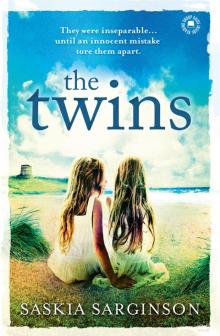
The Twins,
p.29


READING GROUP DISCUSSION POINTS
* Do you think that being a twin is a comfort or a constraint for Viola and Isolte–as children and then, later, as adults?
* Viola’s self-punishment as an adult is obvious–but in what ways does the adult Isolte also inflict punishment on herself?
* In what way do you think Viola’s obsession with flight links into her eating problem?
* Why doesn’t Isolte tell her sister the truth about John and pass on his message about the stone?
* Who changes the most throughout the story and why?
* What is the central theme of the book and how did it resonate with you?
* What could the Martello tower stand for, symbolically and metaphorically, in the novel?
* Fairy tales are referenced several times in the novel–do you think that this book could be read like a modern fairy tale?
* Compare and contrast the settings of rural Suffolk and London and how these environments impact on both Viola and Isolte.
* Why do you think the author doesn’t reveal what happened to Polly–and how does this unanswered question affect the book?
Saskia Sarginson grew up in Suffolk, in the middle of a forest. She has four children and lives in London. This is her first novel.
AUTHOR Q&A
What inspired you to write The Twins?
Having identical twin girls gave me the opportunity to study the fascinating relationship they have with each other: the struggle for power and identity, the competition between them, but also the unspoken loyalty and the extraordinary bond they share. I knew that I wanted to write a story with identical twins at its centre. But I also wanted to test the limits of the relationship inside the story.
I chose to set it in Suffolk because I grew up there and find the area inspiring to write about; with its dense pine forests and bleakly beautiful shingle beaches, it’s rich in atmosphere, myth and history.
Why did you choose 1972 and 1987 as your main dates?
I wanted to set it in a time before technology took over, with no mobiles or CCTV–it meant that Polly’s disappearance could have happened more easily and left no traces. In 1972 there was little TV and no computer games and at that time Suffolk was off the beaten track and unspoilt–the perfect place for Rose to run to, and for the girls to run wild. Thatcher’s Britain in 1987 was an interesting period and one that I remember well–it was a good contrast to Rose’s hippy ideals. Those dates also have key events in them that I wanted to weave into the novel. I love retro novels–particularly ones in a time that is full of personal nostalgia for me and, I hope, many readers.
What do you think happens to Isolte/Ben and Viola/John in the end?
Although I left the ending a little open, I always intended that there would be a feeling of hope. There is no such thing as ‘happy ever after’, but I wish good things for all of them when they walk off that last page.
Why do you never reveal what happens to Polly?
I think that revealing what happened to Polly would have nudged the book into the genre of crime fiction. Also, leaving something unsaid is often more powerful than stating it, and I wanted her unexplained loss to stand for the loss we all experience as humans.
What comes first for you–plot or characters, and how do they evolve?
Characters always come first; and with them a feel for what I want to say in the book, the central themes and ideas. As the characters develop they seem as real as my own family and I begin to fall in love with them. The plot stays flexible; you can’t be rigid about what is going to happen or how it happens. That is one of the most exciting things about writing–never knowing exactly what is going to happen next!
Have you always written?
Since childhood I’ve written short stories and poems. My working life has been spent as a journalist, copy writer, ghost writer and script reader. But it was only in my forties that I had the confidence to sit down and attempt to write a novel. I was used to writing short stories, but I soon discovered that the longer length was a format that I loved.
Did doing an English degree as a mature student influence your decision to write a novel?
Definitely. Doing an English Literature degree at Cambridge with three small children to care for was challenging, but it was also liberating, exciting and inspiring. I received a lot of encouragement in my creative writing from some of the tutors. It really did change my life. Afterwards I began to take writing fiction seriously.
What advice would you give to others who also want to start writing fiction?
It’s never too late to begin. But you have to want it with a passion that borders on obsession, because it requires hard work, total commitment and the ability to pick yourself up each time you have been felled by rejection, criticism or disappointment and somehow maintain faith in yourself.
What does it feel like to have your debut novel in print?
Extraordinary. When I finally allowed myself to believe that it was really happening, my overriding feeling was one of immense relief and a sense of being very lucky. My anticipation about how it’ll be received out there in the world is tinged with nerves–it’s odd to have something so intimate and close to you put into the public domain.
What are you working on next?
I’m working on another retro novel (60s through to early 80s) also set in Suffolk–but this time the story plays out against the backdrop of marshes, mudflats, the river and a forbidden island. It’s about Eva, a teenager who is thought to have drowned, and what actually happened to her. Meanwhile, despite being the only one who thinks she’s alive, her younger sister is determined to bring Eva back. There is also the story of Eva’s parents and the lie they told about Eva’s history that triggered the tragedy in the first place.
WHAT IS ON SASKIA SARGINSON’S BOOKSHELF?
These are some of my all-time favourite reads:
* I Capture the Castle, Dodie Smith
* Bonjour Tristesse, Françoise Sagan
* The Great Gatsby, F. Scott Fitzgerald
* The War Between the Tates, Alison Lurie
* The Waves, Virginia Woolf
* The English Patient, Michael Ondaatje
* The Little Friend, Donna Tartt
* Housekeeping, Marilynne Robinson
* The Hours, Michael Cunningham
* The Cantos, Ezra Pound
* If This Is a Man, Primo Levi
* The Myth of Sisyphus, Albert Camus
* The Garden Party and Other Stories, Katherine Mansfield
* The Princess and Other Stories, Anton Chekhov
* Madame Bovary, Gustave Flaubert
* The Pickup, Nadine Gordimer
WHAT IS SASKIA SARGINSON READING NOW?
* A Field Guide to Getting Lost, Rebecca Solnit–on the go
* The Uninvited Guests, Sadie Jones–just finished
* A Painted Field, Robin Robertson, poetry–on the go
* The Panopticon, Jenni Fagan–about to start
SASKIA SARGINSON’S TOP WRITING TIPS
* Believe in your story and love your characters with conviction but don’t get stuck in a rut; be prepared to rethink things and to cut brutally when necessary. It’s true what they say about murdering your darlings
* Write every day. Read constantly
* Persevere. It can take years and years to get published. You need to be tough
* Nothing you write is ever a waste. Treat every short story or novel you write as a learning curve and a path to better writing
* Be disciplined and take your writing time seriously–set aside a certain time and then stick to it
* Start with something you know because that will give you confidence–but if you’re not working on a biography then fictionalise right from the start. Writing literally about real people and situations will only cramp your fiction style and inhibit your imagination
* Don’t be afraid. Get things down on paper quickly. Once you have something there then you can begin to edit, rewrite, polish and shape. It’s like making a sculpture, but you have to give yourself the raw material before the real work begins as you chip and chisel away at it
* Choose a few trusted people to be your readers. Let some of them read drafts as the book develops. Then give the completed first draft to someone who hasn’t seen anything of the book in development. Listen to all their opinions and ideas while staying true to your own gut instinct.
If you enjoyed THE TWINS,
be on the look out for Saskia Sarginson’s next novel:
WITHOUT YOU
1984, Suffolk
When 17-year-old Eva goes missing at sea, everyone presumes that she tragically drowned. Her parents’ relationship is falling apart, undermined by guilt and grief. But her younger sister, Faith, refuses to consider a life without Eva; she’s determined to bring her sister home alive.
From Faith’s bedroom window she can see the island that she used to visit secretly with her carefree sister, back when life was normal—and their family was happy. The island is out of bounds, mysterious, and dotted with windless concrete huts. But Eva used to call it ‘their’ island. It was a place where, together, they felt wild and free.
Faith can see the island, but cannot see onto the island. She cannot know that, inside one of the concrete huts, Eva is being held captive. That Eva has been told a damaging lie about her family. That Eva is fighting to survive—and return home.
One
Suffolk, July 1984
There are boys fishing for crabs off the quay. I stop dead in the sunshine, blinking and uncertain. Then it’s OK because it’s nobody I know. Just townie kids here for the summer holidays. They’re squatting next to buckets, poking at crabs they’ve caught on lines baited with bacon rind, strangers with pale skin and funny accents.
When it’s low tide I’m allowed to sit on the end of the quay, swinging my legs over the edge. There’s only a couple of feet of water around the slimy wooden base, clumps of brown bladderwrack tangling under the surface. Even if I was stupid enough to fall in, I’d be able to stand up, my toes squelching in the mud. It’s already hot. The sky is clear, and there’s a breeze strong enough to set masts clanking. Seagulls hover overhead, alien eyes swivelling for scraps of bacon fat. Their wings are bright against the sun.
Ted, the quay master, walks by with a coil of rope over his shoulder and ruffles my hair with his thick hand, ‘Not crabbing today, Faith, eh?’ he says in a normal, friendly voice, but the look he gives me is like all the other adult’s–full of pity for the little girl with the drowned sister. I concentrate on watching a plump boy hauling up his line, hand over careful hand, leaning over to see if he’s caught anything. There is a barnacled crab at the end, hanging onto the bacon with pincer claws. Just as the boy is about to reach out and grab it, the crab falls with a splash. Crabs that have been caught before know exactly when to let go, escaping with shreds caught in their cunning jaws. I watch the boy’s face, how his mouth droops and his cheeks redden. He scowls at me.
I shut my eyes with a snap and turn away, telling myself to ignore him: sticks and stones. I begin to hum under my breath. Hello Dolly, you’re still glowin, you’re still crowin, you’re still goin strong…
The boats on the river flit past on gusts of wind. Red, white and brown sails flapping. It used to be Dad and Eva out there. You could hear him shouting from the shore. Mum said it was embarrassing. Dad has always had a temper. In a boat he was worse. Eva ignored him or shouted back, standing up to her knees in the river, Dad struggling with the ropes, ‘Keep her steady, damn it!’ But then they’d go off and by the time they came back, windblown and red-cheeked, they were smiley and pleased with themselves, talking about how they went past the island and out to sea.
Dad hasn’t lost his temper since the accident. He can’t remember what happened the day that he and Eva sailed into the storm. The boat capsized and Dad lost consciousness. He was fished out of the water by the coast guard but they never found my sister. The doctor says Dad’s put up barriers in his mind and I know that Mum is angry with him for keeping the barriers there when there are so many questions to answer. Eva’s lifejacket was found floating in the waves. Mum keeps asking why he let Eva sail without it and Dad swears that she must have been wearing it. Dad has sold the boats, says he’ll never sail again. I don’t mind. I’m not a sailor. Capsizing was the worst. But they were Eva’s boats too.
Still humming, I shade my eyes to stare at the island. It lies beyond the mouth of the river, about half a mile off shore. A long time ago it was connected to a spit of land that runs along the other side of the river. But tides and waves have worn the spit away. Without the boats, without Eva, there’s no way I can go back there. It’s private, out of bounds, when Eva and I landed we had to do it in secret. The island squats on the horizon, the pagodas sticking up like weird chimneys. I screw up my eyes against the glare and think about the last time I was there with Eva.
The boat flew over the water’s surface, spray kicking up under the prow. Stars rose from the glittering river to break against my gaze. The sail strained, fat with wind. Eva, sitting at the tiller behind me, was already ducking her head ready for the swing of the boom.
‘Hey Shrimp, going about!’ she yelled and I released the jib.
The dingy turned and slowed inside the choppy waves. Then with a snap, the wind caught the sail again. I yanked as hard as I could, my fingers tight around wet rope and we were flying across the water towards the island. I wasn’t frightened in a boat with Eva. She’s a good sailor.
We sailed onto the gravelly beach. The boat made a crunching noise, stones grating against the hull, scraping the paint. Eva winced. Dad would be furious. We left the boat half hidden, pulled up on the shingle, with a big stone over the anchor to keep her safe.
‘Race you to the other side!’ Eva called. It wasn’t a fair race. She’s seven years older than me and her legs are twice as long as mine. I followed her, slipping on mud, splashing through shallow rivulets and puddles. I was glad to be on land again, relieved by the feel of earth under my feet. The island slopes up from the shore becoming stony and dry. Gorse bushes cling, withered and stunted, to the pebbly, windswept crest. And then the land falls away and there is nothing but the grey of the North Sea, seagulls wheeling and crying as if they’re flying over the edge of the world.
Stripping off her shirt and jeans, Eva threw herself into the waves in her knickers and bra. I sat on the steep bank of pebbles, watching. I can’t swim properly. I can manage a doggy-paddle if I have to, swimming with my head clear of the water, mouth open to gasp air. I’m frightened by the waves. Whenever I wade into the sea, they push me over and drag me across sharp stones, splashing salt into my eyes, knocking the breath out of my lungs. I come out covered in bruises. I hate getting wet as much as I hate being cold.
‘You’ve got to stop being a wimp!’ Eva shouted. ‘There’s nothing to be frightened of. Just let yourself float. Let the waves do the work for you.’
She couldn’t understand what it was like to be afraid of the currents or unseen fish slipping past her legs, or a wave taking her out to sea. When I was a baby, they put a lifejacket on me and tied a rope around my waist, letting me bob up and down at the end of the tether, believing that I’d learn to swim like Eva had. But I didn’t. I screamed and cried until Mum or Dad hauled me onto dry land, blotting the wet from my face, frowning at me anxiously.
I shivered, watching Eva swim back and forth, battling through the big brown waves. Her arms gleamed as they powered up and over her head, pulling her along. She only swam for a little while. It was too cold, even for her. When she was swimming, her movements were exact and elegant, but it’s impossible to walk on shingle bare-foot with any dignity and it made me laugh the way she staggered out, hobbling and wincing over the stones, limbs jerking like a rag-doll. To pay me back she flicked water from her dark hair at me as she knelt down, panting, her clothes in her arms. I could feel her energy, bright as the drops of moisture on her skin. Eva seems more alive than other people.
She lay back on her elbows. It was just me and her on the long deserted beach, as if we were the only ones alive on a planet made of shingle, sea and sky.
‘What a mess,’ Eva was saying, gazing at the rubbish that had been thrown over-board: plastic bottles, yoghurt pots, corks and bits of rope and odd shoes caught up in twists of seaweed and driftwood at the tide-line. ‘Honestly – sometimes I wonder why we love it so much.’
I followed her gaze. Sometimes really disgusting things like tampax or nappies got washed up on the beach. But I couldn’t see anything revolting. She’d taken a cigarette out of her jacket pocket and lit it with difficulty, cupping her hands around the match and turning her head away from the wind. Her fingers were pink tipped and puckered by seawater. Inhaling deeply, she sighed. ‘Maybe ‘cos it belongs to us.’
The island didn’t belong to us. It belonged to The Ministry of Defence. It still does. We were trespassing. Half the island is fenced off by trailing wire and ruined by derelict huts, crumbling roads, rolls of razor wire and the concrete pagodas. People say they were laboratories, used for atomic weapon research. The project’s been abandoned and the buildings lie empty and forbidden. I don’t like them, especially the pagodas. It feels as though things inside watch you, although there are no windows. Blank walls stare. Eva’s smoke made my nose itch. I turned my head away. She would be in trouble if Mum and Dad knew.