

The killing of tupac sha.., p.21
The Killing of Tupac Shakur,
p.21
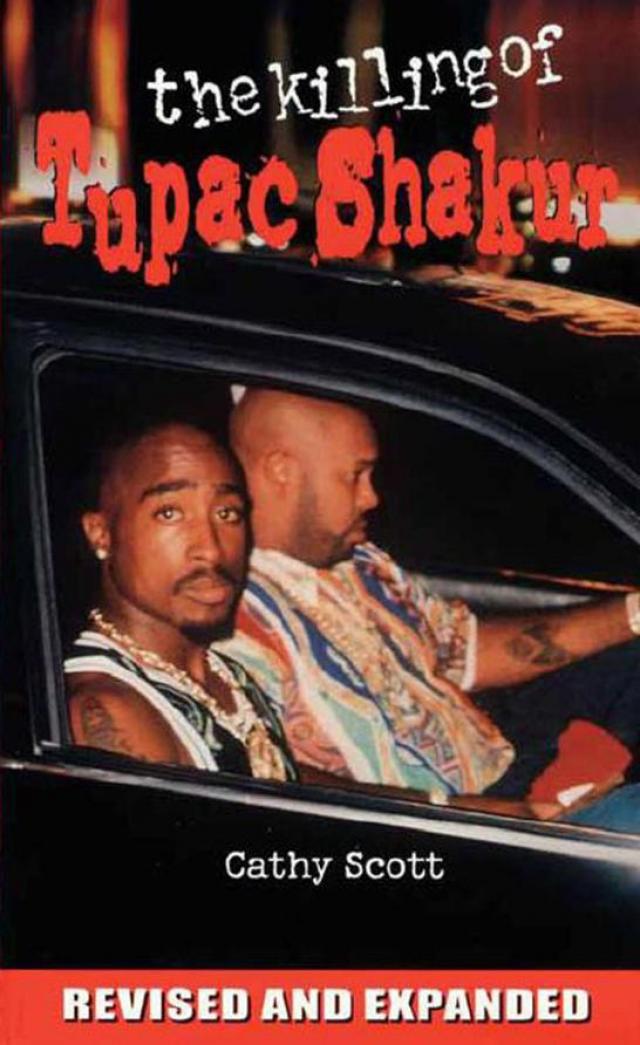


“Why is it mandatory that I get respect?” Tupac said to writer William Shaw. “I know other people who are just as successful as me and you can call them a bitch ... but if somebody calls me a bitch, I don’t care if we’re in court, we’re going to fight.” In his world, he told Shaw, “All good niggers, all the niggers who change the world, die in violence. They don’t die in regular ways. Motherfuckers come take their lives.”
Some observers maintained, however, that the bicoastal feud was more about money and women than personalities, that it was these tangible status symbols that led to the professional jealousies.
Producer Jermaine Dupree, a friend of Puffy Combs, told Newsweek: “This industry has a problem with people thinking there isn’t enough room for everyone. It’s the attitude that, ‘If you got it, I can’t have it, so I am going to take it.’ That’s why these deaths are happening.”
But of course, the rivalry motive was far more involved than that. Deep down, Tupac wondered whether Biggie really had set him up to get robbed and shot at Quad Studios in 1994. Though he occasionally denied it, Tupac told San Francisco deejay Sway two months before he was killed, “Strangers, niggas in jail told me, ‘Hell, you don’t know who shot you? Biggie’s homeboys shot you.’”
“Tupac really believes Biggie and them shot him,” veteran rapper lce-T said in a Vibe magazine interview. “If somebody thinks they shot them, it’s on for life.”
Biggie responded to Tupac’s accusations. “The rumor that’s spreading is all this shit like I set him up—you know what I’m saying?—and that’s crazy,” he told MTV.
Biggie asked for but never got an apology from Tupac. “It’s real niggahs in the streets thinking, ‘That’s fucked up what Big did to Tupac.’ I think that should be erased,” Biggie said. “As far as with me, he always gonna be my man. ... But he need to just check himself. And I want an apology, ‘cause I don’t get down like that.”
Instead, after Tupac signed with Death Row, he responded by publicly attacking Biggie, even bragging that he’d had sex with Biggie’s wife Faith Evans. Then in 1996 at the “Soul Train” Awards in Los Angeles, Biggie’s armed bodyguard got into a fight with an armed associate of Tupac’s backstage at the Shrine Auditorium. That’s when the rivalry started being referred to as an East Coast-West Coast rap war.
On the other hand, Tupac’s cousin, Chaka Zulu, told a reporter, “I don’t think [the feud] came out of Pac’s camp. I think it came from people that are caught up in the hype of the East Coast-West Coast thing.”
Biggie and his friends continued to vociferously deny the accusations. Lance “Un” Rivera, Biggie’s partner in the Brooklyn record-label-management company Undeas Recording, said in a published interview that the accusations were unfounded.
“He and Tupac didn’t have no beef,” Rivera told Rolling Stone magazine. “They was real close friends. Tupac developed a hate for him. [Biggie] couldn’t understand what it was, but he never responded. He said, ‘I’m not going to feed into it.’”
Biggie, in his last interview, published in The Source the week after his death, again insisted that the rift between him and Tupac was blown out of proportion. But no one has ever said whether Biggie had an alibi for either—or both—the Manhattan and Las Vegas shootings of Tupac. When asked, the police said they didn’t know, because Biggie was never a suspect.
The rivalry wasn’t relegated just to Tupac and Biggie. It went right to the top. Suge Knight’s Death Row Records had been battling Puffy Combs’ Bad Boy Entertainment for control of the multimillion-dollar rap-music industry for a few years, and the rivalry heightened further, some say, after the 1995 The Source Awards in August at the Paramount Theater in Manhattan, when Suge criticized Combs on stage, making fun of his appearances on videos with Bad Boy artists. Suge was an award presenter. Before he left the stage, he said, “If you don’t want the owner of your label on your album or in your video or on your tour, come sign with Death Row.”
This was an obvious shot at Combs, who occasionally appears in his rappers’ videos and often raps on their albums. Puffy was shocked by Suge’s blatant and public disrespect. Some say a battle to the death began that night. A few months later at a party for producer Jermaine Dupree, a Death Row employee and Suge’s close friend Jake Robles was shot. When he died a week later, Suge blamed Puffy Combs, calling it a hit. No one was ever arrested and Puffy has denied any involvement.
Movie actor Warren Beatty became friendly with Suge while researching a movie project set in the rap world. Beatty dismissed talk that Suge would retaliate against Puffy for Jake’s death.
“It’s sort of hard to keep up with the apocryphal on Suge,” Beatty told the New York Times. “I mean, Puff Daddy, Muff Daddy, whatever. I know Suge was very close to the man who died. And I know he was very upset. The apocryphal is just talk, even when it’s pungent.”
Still, rumors persisted, and if they had any substance, the feud had escalated. Now people were being marked for death. What may have started out as hype to sell records had turned violent.
Steve Jackson, a rap-music producer who was with Biggie the night he was killed, told the Village Voice, “You know as well as I know that people wanna avenge Biggie’s death, man, because they are very sad over the fact that he was set up. They have friends and their friends have friends and their friends want revenge. You still have Suge Knight, you still have Puffy Combs, you still have their friends. You still have the East, you still have the West.
“Now everybody is scared,” Jackson continued. “I don’t think it would be in the best interest of Puffy to go back to L.A. any time in the future. I don’t think he should go back, period. I think they’re definitely going to try to kill him. Somebody is out to kill him, just as they killed Biggie Smalls.”
“It’s a war that neither Death Row nor Bad Boy can contain,” Village Voice reporter Peter Noel wrote on March 25, 1997. “Combs, Knight, and Snoop Doggy Dogg are undoubtedly concerned for their own lives.”
Dominique DiPrirna, a deejay at L.A.'s KKBT, expressed shock at the violence surrounding rap. “What you have are two of our biggest stars killed—shot down—within six months,” he said. “This is out of control.”
• • •
While the East-West record-label rivalry was an early theory for a motive in the shooting, many blamed another, more obvious, one: rivalry and the ongoing battle between the Bloods and Crips street gangs. In the days immediately following the shooting, rumors ran rampant that Tupac had taken a bullet intended for Suge, that Tupac had died in a war involving gang members from Suge’s old Compton neighborhood.
Vibe Editor-in-Chief Alan Light saw it this way: “[I] wouldn’t be surprised if it didn’t have anything to do with Tupac, but is more related to Suge,” Light told me in a telephone interview. “There have been up to three contracts on [Suge’s] life at any given moment. He’s very public ... about his gang affiliation. There are a lot of people with a lot of issues with him.”
In a photo taken just minutes before Tupac was shot, Suge is pictured holding a blood-red rag in his hand, a well-known sign of Bloods affiliation. Meanwhile, Orlando Anderson, roughed up by Tupac’s crew at the MGM Grand the night of the shooting, was, according to Compton police, a reputed member of the Southside Crips.
According to a police affidavit, two months before Tupac was killed, there was a confrontation between some Crips and Bloods at the Lakewood Mall near Compton. Travon Lane, a.k.a. Tray Dee, a Mob Piru member and rap singer, was in the mall’s Foot Locker store with Kevin Woods, also a known Piru, when they were confronted by about eight Southside Crips members. The two crews fought and Tray’s diamond-laden Death Row pendant was stolen.
On September 7, Tray was in Las Vegas for the Tyson-Seldon fight with Suge, Tupac, and Death Row associates. After the boxing match, Tray told his friends he’d recognized Orlando Anderson as one of the Crips who stole his pendant. Tupac, Suge, and the crew stomped and kicked Orlando, which was captured on the now-famous MGM Grand surveillance videotape. Police in the L.A. area were given this information from L.A. gang-member informants.
Vegas police have said that since the night of the Tupac shooting they have not been able to speak with Travon Lane, who, the Compton Police affidavit asserts, was involved with in the first scuffle with Orlando Anderson at the Lakewood Mall, pointed out Orlando to Tupac at the MGM Grand, and was overheard at Club 662 hours after the shooting identifying Orlando Anderson as the shooter. Efforts to talk with Travon Lane were unsuccessful.
Could Orlando have caught up with Suge and Tupac later that evening and taken his revenge? Did Orlando Anderson have an alibi at 11:10 p.m. on September 7th? Las Vegas police won’t say. “We usually don’t comment on statements made by potential witnesses and suspects,” Sergeant Kevin Manning said.
The random (or semi-random) theory supposes that rival gang members simply happened upon the Death Row caravan at Flamingo and Koval. And, finding themselves in a serendipitous position, perpetrated a spontaneous attack.
George Kelesis, the Las Vegas attorney who’d organized the benefit at Club 662 the night of the shooting, told me, “I never really have reconciled it. I’ve heard so many stories. ... It could have been, in my mind, as simple as just some gang-banger trying to make a name for himself. The possibilities are infinite. To buy into the story that it was [planned], how in God’s earth did they pull it off? Tupac drove into Las Vegas at the last minute. Plans change.
“I was supposed to go in the limo with Suge, but people started lining up at Club 662 at 5 o’clock. I couldn’t leave the benefit, so Suge went in [Tupac’s] car. Everything that happened prior to the fight was all last minute. The plans were changed at the last minute and nobody, not even us, knew it. Suge was going to come late and a lot of stars were coming late. I think the shooting was happenstance. If it was a plan to kill him, then those guys were good, because they had to have a crystal ball to figure it out.”
The theory that Tupac’s death was the result of a random shooting simply doesn’t hold up. There is too much evidence to point to a gang-related shooting.
Still, in either the retaliation or the random scenarios, it’s possible that it wasn’t Tupac who was specifically targeted. Killing Tupac or Suge would have sufficed, and circumstances (the traffic pattern) resulted in Tupac’s side of the car taking the brunt of the attack.
If nothing else, any version of the gang motive provides an easy out for investigators. “In my opinion, it was black gang-related, probably a Bloods-Crips thing,” Metro gang detective Chuck Cassell told Kevin Powell. “Look at [Tupac’s] tattoos and album covers—that’s not the Jackson 5. ... It looks like a case of live by the sword, die by the sword.”
At the hospital the afternoon Tupac died, Patricia Cunningham, the radio reporter for Sheridan Broadcast, who’d spent the week in the hospital with Billy Garland Tupac’s father, and Kidada Jones, Tupac’s girlfriend, hinted that there would be retaliation for Tupac’s death. “You’re not going to hear any talk about retaliation here. That’ll come later,” she said to me as she stood inside the trauma center’s lobby.
Marcos, a friend of Tupac’s who had met him on the set of a video 18 months earlier, sat on the hood of a white BMW parked outside the trauma center 30 minutes after Tupac was pronounced dead. Marcos was wearing a collarless crisp white shirt and white shorts. A couple of his friends stood stoically beside him. They all had the “L.A. look” with their clothing style and jewelry. As Marcos began talking to reporters, his friends backed away.
When asked, “Why are you here?” Marcos looked down and answered quietly, “Man, to show my respect to Tupac. To show respect to his family and his mother. We’re here for her. We’re here for Pac.”
After the reporters were done with Marcos, I stuck around and asked him if friends of Tupac knew who Tupac’s assailant was. He said, “Yeah, we know. We know who did it.”
Then I asked why, if they knew who the shooter was, didn’t they tell the police?
He replied, “Nobody wants to help the police. What for? What are they gonna do? They can’t bring him back.”
When I asked whether the assailants eventually would leak information that they shot Tupac, he said, “They already have.” He declined to say who. All he’d say was, “They’re not from Las Vegas.”
• • •
Finally, could Suge have possibly ordered Tupac hit to sell more records? Some observers don’t think it’s as farfetched as it sounds. As one insider put it, “Think about it. Tupac’s worth more dead than alive.”
According to a police source, Suge Knight had been considered a possible suspect from the beginning, especially in light of rumors that a hefty life-insurance policy had been taken out on Tupac before his death. According to the rumors, after Tupac signed with Death Row, a $4 million insurance policy was written on him, naming Death Row, not Tupac’s family, the beneficiary.
Richard Fischbein, Afeni Shakur’s attorney who also represents the Tupac estate, said he, too, had heard talk about the insurance policy, but said, “We haven’t been able to substantiate it.”
Las Vegas Police Sergeant Kevin Manning said that no one, including Suge Knight, had been eliminated as a potential suspect. But when asked what Knight could have gained financially with Tupac gone, Manning said, “I have no comment about the money.”
However, a search for such an insurance policy came up empty. A representative for the California’s Office of Insurance said no claims of fraud and no investigations had been opened in the Shakur case. It’s not known which company, if any, wrote a policy.
“Death is a commodity, you know?” commented Ramsey Jones, a clerk at Tower Records in Greenwich Village, New York, explaining to The Associated Press why he couldn’t keep Biggie’s CDs on the shelf (they were selling quicker than he could stock them).
A music-industry insider who asked not to be identified had this to say. “Here’s my theory. [At first], these rap artists are small-time investments. They’re lucky if they make one album. When they start getting up to four albums, they’re big investments. Then they become a liability. [And they remain] a liability as long as they’re alive. They lead lavish lifestyles and get in trouble. Tupac Shakur and Biggie Smalls, they got themselves in trouble a lot. They had big mouths. The record companies had to bail them out all the time, get them out of trouble. They had to keep throwing money at them for their lifestyles—their cars, their cribs, their women.
“But if they’re dead and they’ve already cut their albums, the record companies are just selling their albums. They’re not giving the money to them any more. They don’t cost them anything. The green keeps coming in, but they don’t have to spend anything to get it, you understand? Green comes in and nothing goes out to the rappers because they’re dead.”
That’s not exactly accurate. In both the Tupac and Biggie cases, their estates continue getting royalties, long after they’ve been buried. At the time of his death, Tupac had some 200 songs recorded—potentially worth hundreds of millions of dollars. Worth more dead than alive? Unlikely. Still, by all accounts, he’d certainly taken on the posture of a liability. Tupac’s star was still on the rise; however, his interests appeared to be shifting slightly, broadening to include a (time-consuming) movie career. Worse yet, Tupac reportedly was putting out feelers for a new record company to produce his albums once he fulfilled his three-album contract with Death Row.
“A few days before he was killed, he [Tupac] formally sent a letter telling David Kenner that he no longer could represent him, basically firing him,” said Rick Fischbein.
On top of that, Tupac may have been beginning to make noises about money. Death Row Records said that at the time of his death Tupac owed $4.9 million to the record label, even though he sold more than $60 million in albums for them. The money Tupac owed, Death Row claimed, was for services rendered—including Tupac’s jail bond money.
But Afeni Shakur has said that her son questioned where all the money his albums were generating was going.
Fischbein said that Suge would throw money at Tupac periodically to keep him happy. “He asked over and over again for accountings of the things that he did, the monies that came in, and he never got it. When he screamed loud enough, I’m told, they would—someone would bring over a car and say, ‘Tupac, here’s a Rolls Royce,’ and he’d drive it around. Then when he died the family found out none of it was his.”
Also brought into question has been Suge’s decision to leave the scene of the shooting and head in a direction away from area hospitals. It’s a mistake easily dismissed given the confusion of the moment. Much more interesting is George Kelesis’ statement that a planned effort would have required a “crystal ball” because nobody knew the night’s plans until the last minute. Suge knew.
But reality takes hold when you consider the actual course of events. It seems inconceivable that Suge would risk putting himself in the path of 13 shots sprayed from a semiautomatic weapon, and, in fact, take a bullet in the head to distance himself from Tupac’s murder. If he’d known what was coming, you’d think he would have at least worn a bulletproof vest that night to help ensure his safety. He didn’t.
In an interview with Lena Nozizwe on “America’s Most Wanted,” Suge said as much, calling speculation that he had arranged the shooting ludicrous. “If you look at any interview that Tupac did, if you look at any video, any TV show he did, one thing he always did was praise Death Row. And me and him praised each other. ‘Just shoot me in my head, make sure you hit me in my head, so it can look good.’ That’s crazy.”


