The scrolls of sin, p.10
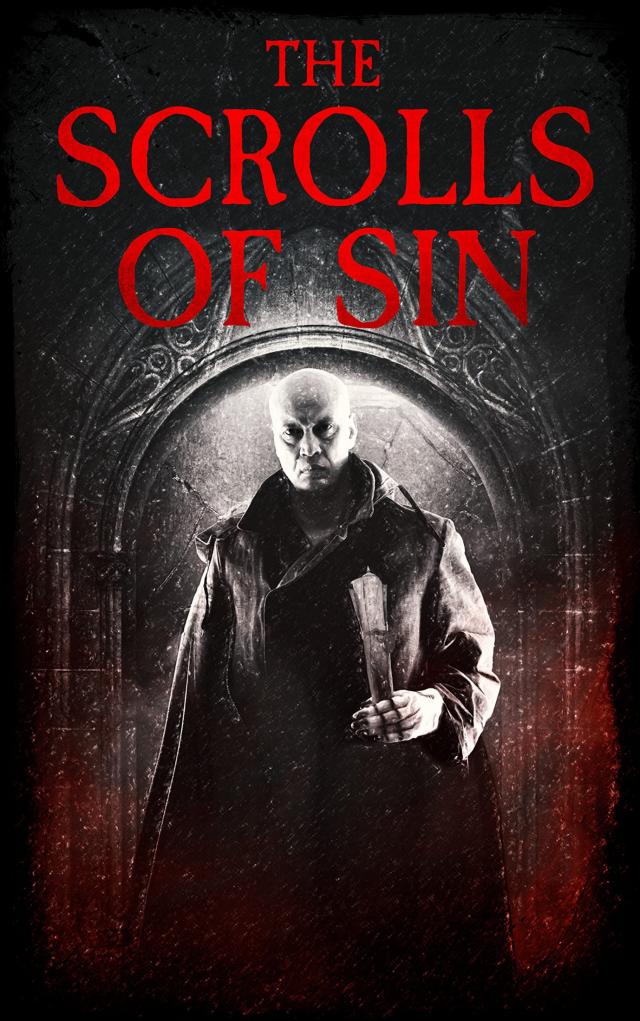
The Scrolls of Sin,
p.10


“It’s not just a little money he’s owed,” one Scepter whispered to the next. “It’s a damn ship’s worth.”
The other, ensuring neither Lord Rinmauld Rogaire nor Maecidion the Virulent were watching, whispered: “It’s not just about a fortune now. Being hamstrung, humiliated, he’ll never forget.”
“Rinmauld,” Maecidion spoke, rapping a whitened knuckle on his table, “your seed…and theirs.”
II
The Mortician’s Tale
Part One
I enjoy my work, being a mortician, and how I ended up here is ultimately the story I wish to tell. It’s an occupation I’m not surprised I ended up in, though it was not my original dream. But that’s the case of all men who hold down honest wages.
I work at the Nilghorde Pauper Morgue, where endless droves of vagrants are flopped out of carts and off horse backs to land on my table. With me they all end. It’s a brief inspection really, well that and some paperwork, as per a severely outdated policy that began in the Years of Peace, when the red, scale mail, sabers, and spears of the Conqueror’s soldiers became the blue, chainmail, sabers, and clubs of the Metropolitan Ward.
After initial duties, the corpses are usually tossed down into the Pauper Vault, the mass grave of our fair city. My work is not limited to the homeless, of course, for there are many orphans, prostitutes, what have you. There is even the occasional victim of a crime of passion, one whose aggressor possessed the quick wit to pay off one of my bosses. I can safely say I’ve seen every level of our opulent society on my table at some point or another.
Now, as I toil among the dead, the statues of Do-Gooder’s Row are finished, polished weekly by working parties sent from the Municipal Dungeon. Never one to forgo the juices of irony, tonight’s assignment was brought to me from the vast confines of the Row. These poor sots killed each other over a damned mule cart. A mule cart! All five of them. Skewered and heads busted over life’s wares and trinkets—though such wares and trinkets feed the desperate gullet, as I used to know all too well. Snier also knew this. I’ll get to him later. He is, or, I’ve grown to worry, was one of the wiliest men ever to be met in Nilghorde—and that is no small feat, considering my home’s rather well-deserved reputation for what I’d once heard coined “pleasant predation.” I reckon that, if he would have slipped into this fiasco, Snier would have picked these dead men clean before the first horse hoof had echoed. But who knows where some end up, especially those prone to the ebb and flow like flotsam.
Ready for the table, all ten eyes have curiously found a way to look into one another. Flopped off a Ward cart to form a crude ring on my floor, Somyellia would have likely been able to summon some obedient demon straight up from its center.
And I must say, before embarking on this tale of magic and murder, I think this ring of dead men is fitting. An apt metaphor, if you will. Yes, morticians can be as lettered as they are solitary. Apt metaphor in that what lies ahead is more than just corpses on floors, but different people—characters on this grand macabre stage— different angles to be presented. Some would say it’s the only way. Even time itself can become angular, for what is time to the dead? For this is the province we now call Rehleia, and most of us are inescapably linked, even if some will never know.
I can’t impress that, this linkage, enough. Leading me, if you are one unfamiliar with our ways, to beg for what you may call some pre-tale forgiveness.
Rehleian tales are often told by a choir of orators. Some in your standard harmony; others, calculated step-overs as if competing for stardom and the license to history. These dead men here, my work tonight: The Ward did say there were others, the stronger ones, the ones with knife-skills and a wolf’s temper, those who lived, and ran off with hands full as law enforcement rained down upon the dead and dying. Based on the tattooing, and choice of rags signifying to us locals what district they scoundrel’d out of, these men here were unacquainted, perhaps happenstance and hunger propelling their feet to the base of those standing tall on Do-Gooder’s Row. Yet they would be so eternally connected. Please remember this, the web and how the spiders tell of it, as it is our way, in the city of Nilghorde, all of Rehleia, and I’d be willing to bet a coin or two throughout all Mulgara.
It is convenient last night’s bloodbath allows me to mention Do-Gooder’s Row. When its knees or eyes were chiseled free from the towering lines of dull white, these moments have served as time-keeping devices for us Rehleians. The chiseling began the day our Years of Peace were declared. And much like my own life, happenings and fortunes have often been remembered by what stage the statues were in when life gave us our surprises.
These days, champions like Zaderyn Fover, a citizen who dove into the Black Tongue only to be carried off by its currents while trying to save a drowning child, shine bright and polished. But much of my tale will pull us back, back when the statues were but ugly rectangles crowned with faces and shoulders tortured by tumors of marble.
*
My name is Seasmil Oleugsby. Most would say I am a large man. I’d concur; made from the heavy lifting, but not solely due to. When I am handling the corpses, my hair is tied in a ponytail; black hair, though, like the many scars on my skin, it wasn’t always that way.
I was named after my great-grandfather, who led a charge on a camp of cannibal pirates off the coast of Suela. His name grew to legendary status, despite a rather gruesome end. He and his company were roasted alive in suits of hardened clay. Apparently there is a holiday in that idol-worshipping land that still mimics all of this. A ragged sailor once told how the women rub their clitorises on the face of the still-screaming meal to be. I often wondered if my ancestor had suffered this intriguing punishment, and if he had felt a final delight before the world went dark. It was a neglected portrait that hung from a wall during my youth that told me from him I’d inherited the Oleugsby menace: flat forehead, deep-set eyes, and a square jaw.
I was born and raised in Nilghorde; in the Templeton District to be exact, designated for the martial servicemen and their families. We were on an edge of the city, where the farthest line of homes faced a great forest. Templeton was a sturdy square, once cut from the forest and sown on the Nilghorde quilt. Inside our heavily patrolled borders sat the steep-roofed stone houses surrounded by all you’d expect to see in the farmlands.
And I do mean heavily patrolled. Despite it being a district in Nilghorde, there was little crime. Most of the watchmen and the Metropolitan Ward lived there. They hadn’t busted heads all over this land to allow swarms of riffraff to spill into their own domiciles. But in the earlier days, when the Conqueror was waging war and the future-wardsmen were his soldiers, Templeton was a place where fathers were gone most of the year, leaving children to be raised by elder siblings or their promiscuous mothers.
I was an only child, but that was just fine by me. From the beginning, I’d always fallen deep into the joys of solitude and imaginary friends. These playmates inhabited holes in trees and pawed the floor under my bed. By the time I was catching up to the height of my mother, I had shed any interest in sports or games played out in the streets.
That, though, wasn’t from being alone too much—as Mother quibbled at times. I’d discovered the world of science. I begged Mother for an alchemy set. After much whining and mutinies at the dinner table, she caved and brought me a little wooden box. It wasn’t just filled with mineral pouches, corked vials, and tiny cutting tools—it bore wonder. In my hands were the keys to the doors of the natural world.
The little box became my obsession. The few friends who still lingered about stopped knocking on our door. Mother’s pleas to go outside and play eventually stopped too. Far less gratifying, imaginary friends turned to dust. One by one, faint screams, audible to my ears alone, and then there were only shadows. I particularly remember the elf in the old elm on the edge of Templeton Park. He sat crouching in the canopy, silent as always. His stare haunted me for a long time. Disapproving of me leaving the mists of fairyland for pragmatism was certainly understandable. But it also couldn’t be stopped.
I eventually focused on the visceral endeavors and varied my experiments greatly, from futile attempts at tracking stars to more enjoyable branches dealing with the inner workings of anything I could either trap, scavenge, or lure with meat.
*
“Seasmil,” I often have to tell myself. “If you are going to go into the backstory, be sure not to leave out the most important stuff.” For backstory is merely useful for jutting us forward into that great, mysterious yonder. And I should know this, being I’ve spent more nights falling through book’s pages than your average paid scholar. With this bit in mind, telling my tale would be a wide chasm from thorough if I failed to tell of my father, in his entirety, as is best known to me.
No, not some Ordrid—though you may have anticipated such a revelation due to, among other things, my habits and choice of work.
No, my father was Augnor Oleugsby, a cavalryman in the notorious regiment Swift Saber. The SS was a highly deployed unit under the Conqueror himself, and subsequently, I don’t have any recollection of my father in the house amid my earliest years. Despite his absence, we did not struggle. Charges and pillages accumulated, bringing back chest upon chest of jewels and coin.
My father was a beast of a man, a stone golem with legs like unhewn trees, and a neck like an oxen in the farmlands where Mother had come out of.
The first memory I can muster was of him telling Mother a spirited story. With the smell of the saddle still lingering, he recounted riding through the farmlands of Serabandantilith and mowing the villagers down like grass. I didn’t hear the whole tale, and time has a way of inflating and deflating the sanctity of memory, but I do remember a comparison of some people to the height of our kitchen cupboard. I was eye level with the cupboard myself back then and tried to make sense of how men were so small in other lands. As was her nature, or at least her developed one, Mother listened half-heartedly, trying multiple times in vain to clue Father in that I was listening, and do so without infuriating him.
Whether Father was riding the famed memory of his grand-father, or was an exemplary soldier, or a combination of the two, I do not know, but he’d embarked on a career in which he was being groomed for a lofty and prestigious rank. Chief Horseman perhaps, or maybe a lower seat in the Office of Scepters when his ruthlessness left the saber and moved to an inkwell. All I know is, wherever he was slotted to go came to a sudden and unmovable halt when I was about ten.
We never really knew where he was or when he’d be returning. There were the wives meetings, where the senior crone married to some military relic long overdue for retirement would disseminate the latest news through scroll and lecture. Mother hated those. In one of her more humorous moments, she reenacted how catty they all were and how without delay the meetings would degrade to drunk clucking hens gossiping over which watchmen was the most endowed and notes on his availability.
So, it’s no surprise to me now that one fateful winter, when Father was supposed to be on the forefront of some vague campaign, he was attending to the wife of a field grade commander in his SS.
We found out weeks after. Father had returned home a wretch, reluctantly telling Mother that he was done deploying due to “some arbitrary insubordination.” For all the stolen gold in the Thunder Bustle, I couldn’t fathom why Mother didn’t tear the house apart and leave him emasculated after he had fallen asleep. She took it on the chin and seemed to recover back to her dismal role as housewife to the once-great warrior. You would have barely noticed anything at all, save the additional silence at the table and the lines in her face that had deepened. But hindsight is an unchained dragon, cruel but liberated. I know now why Mother remained in that house in Templeton.
Despite a heated debate among his superiors, Father was allowed to retain a paying position. As a man it occurred to me maybe it was his greatest detractors who gleefully fought for this altered retention. Demoted to a stable master for one of the SS garrisons, our once healthy stock of horses were sold off, their mountain of feed abandoned to mottle with the fungi that I examined and the vermin that I caught.
Most of the time, Father would bring his work home with him—we certainly had the room in the stables. Mother once whispered he was too embarrassed to be seen in his billet by his former brethren.
One of the few reasons he wasn’t pulled apart by a departing pair of Saber warhorses was he’d saved the life of an esteemed officer. At the time Father’s infidelities were being exposed, this officer had climbed to the seat of Vice Chief Horseman and had enough clout to muffle the baying of the scorned husband. Although the Vice Chief’s influence spared my father, the same could not be said for his loose-ring-bearing mistress, whose corpse dangled on the Tower of the Waning Moon for a season of crows and maggots.
This Vice Chief’s generosity bore our family other gifts too. Soon after the SS returned from the deployment where Father had saved his life, he came to our home one evening for a dinner. And not any ordinary dinner. Mother had banged around in the kitchen almost as frantic as she did over her wardrobe, ending it stuffed in a dress never to be seen again, and in front of a meal so large my boyish brain anticipated the Conqueror’s entire army.
He was a noble-looker, the type whose gray feathered hair and blue eyes made you wonder why he’d ever signed on to shit next to men with blade wounds stitched by other lugs; squatting over the same trench, dug by men for whose wounds there was no fixing. He left us with a chest that chunked when it hit the floor, and he sang Father’s praises until the night drew me weary. Right before he departed, he brought me from his carriage a baby lamb, black as midnight. My best guesses were it was either some custom of warrior etiquette—a gesture of giving life to the seed of the man who saved his—or a grand display of appreciation for Mother’s cooking.
Though I was informed of every glorious detail, it was still hard not to wonder if Father had really dashed into that ambush to save him not for duty or for that brotherly love soldier-types love to go on about, but rather to quench a bloodlust. Truth is, that Vice Chief knew my father in a way I never did. I would be false to not say that a lifetime ago I wished to see this man, to sit on his knee and partake in his celebrations, to wear his giant helmet and be tossed in the air. Bruises simply meant I received something different.
My experiments on our neighbor’s cat brought a particular salvo, and the manner in which I returned the feline only heated the beating. Around that time, stable work lost a lot of its demand. To fill the gap, Father took an avid interest in denouncing my hopes and daily endeavors. That damn cat was all it took. The alchemy kit was pried from my hands, only to be shoved against my chest a moment later. I wept without restraint when I was ordered to break all the vials. Afterward I assumed the usual stance and held firewood above my head until my shoulders screamed. Somewhere in this memory I recited the piece of martial jingle I’d recite a thousand times: the SS creed. As an adult my mind has shunted all but two stanzas:
One rider, ten riders, or riders score
Through pain, through cold, through plain, through moor
I don’t think he ever planned for me to be a warrior, and if he did, he surely changed his mind after his demotion. “Bunch of damn beggars in armor,” he’d say. “Lousy mob whores praising the cowardly; worshipped those that pass out bread instead of the blade.”
This, of course, worked to my benefit. The rank and file could march off our land’s tallest cliff for all I cared. Like most children in Templeton, I enjoyed a comprehensive education, poring over sonnets and rattling an abacus with a series of tutors—maybe even more so, since no son of Augnor would wear armor in peacetime. My favorite subject was unsurprisingly biology, and it may have been boyish defiance, but Father’s soldier’s disdain for the arts and academia only strengthened my resolve to not only be a man of science but a medical doctor. So what if my tastes were a little unorthodox from the start?
With funding procured from Mother’s undergarments drawer, which had been procured from Father’s last heavy chest, I built an upgraded version of my laboratory—this time in the cobweb-infested cellar of our most vacated and dilapidated barn. Once I was sure the ogre who stalked my waking life was unaware of operational headquarters, I continued to explore the governing of all life-forms that I could drag through the candlelight.
Around the time when hair began to sprout in new places, I snuck out one night and penetrated deep into the city. I scurried through alleys. At the risk of abduction or worse, I finally found what I was searching for outside the back of a noisy brothel. It was soft, pink, and barely dead. I brought it home and down into the cellar. It was the first of its kind, but surely not the last.
*
“Leading minds say all this gods talk is nonsense,” my old tutor used to say. “Tubes and muck are we.”
One of many in a long line of educators that ran screaming from our home, this tutor had been a student himself. The Institute of Human Sciences, Rehleia’s premier medical school, was placed on a Nilghorde hill like some jaded royalty. More than just eliminative materialism, I learned from this scholar that the Institute did all sorts of fascinating studies in its grand halls. The true tome of treasure came the day he brought me an old course book of his. I hid it deep in the cellar, behind a skull of a large dog and several jars of entrails from woodland fauna. The findings within the book were a stream of wonder. And soon a river.
I have been accused of being a callous man, solitary and apathetic to the plight of others, but I can say that if that is so, that I wasn’t always. This tutor had been warned by Father, backed against a wall in our den, random sharp object to his neck, not to encourage my peculiarness and stick to the curriculum. When a distant neighbor called upon our door to ask if we’d seen her dog, not only did I receive a staunch one, but the best teacher I ever had collected his last payment with the helpful removal of his front row of teeth.