The scrolls of sin, p.33
The Scrolls of Sin,
p.33
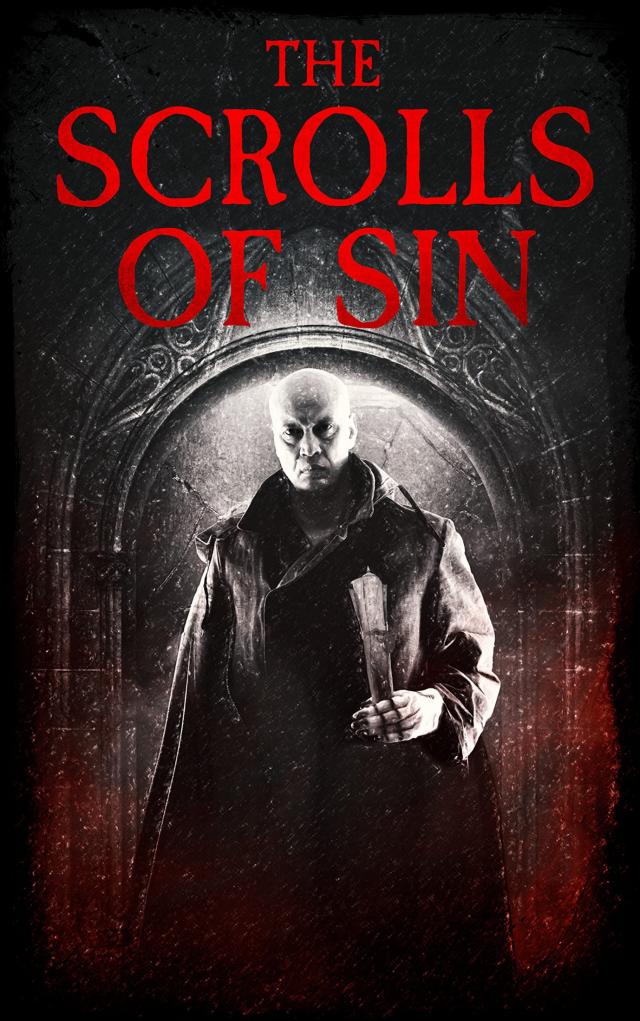


Years ago, he’d sensed the death no one can escape. So he did what he’d done before: select and synthesize. In so doing he now lived, and in suitable form. He had usurped the Rogaire wealth, punished that House, and Morlia had easily seduced and married Rinmauld’s blockheaded heir. She’d bore Irion a son and Rinmauld’s was sent slowly to oblivion pawing and munching on some screaming, troublesome rogue.
It was just such a type of rogue, Irion worried, looking over again at the garroting chair, that he may have been forced to suffer yet again.
A decade had passed since he’d stepped into the shock and awe of a converted society, assuming the role of stepfather while being handed the keys to the marvelous Rogaire treasury. During Morden’s earliest years, Irion had good reason to lay tucked away in the Thunder Bustle. There were mighty webs still to weave, plus, he’d wanted Morlia’s highly talked-over remarrying to not appear too soon. Rogues had forced his hand. Two thieves had done something he hadn’t predicted and now fate seemed intent on sinking her conspiring fangs into his hide once more.
“I must say I don’t care for surprises.” Irion walked about the cramped stone room, gathering his strength. When he finally spoke again, Arcus and his guards watched as Irion’s own chant blasted out the light of every torch.
A guard, privy to the ritual, had been assigned the flint and steel. In the darkness Arcus heard the man’s armor clunk and creak as he moved to relight the torches as Irion’s voice grew louder.
“If it were my eyes, we could see.” Arcus, tight against the chair as wire, ground his teeth and whispered, “Shut your mouth.”
One torchlight, two torchlight, three; the pale shape of Irion clung to the paler shape on the bier. Irion’s hands hovered over Morden’s eyes and heart, and then Morden sat up and puked.
Two guards fainted. All three choiring Ordrids chortled dark cheers, hugging one another. But Irion did not share their merriment.
Blabbering and belching, flopping and farting, the only heir of the made-powerful Irion was an ongoing display of jabbering-limbed meat.
Irion hung his head. And then he called for a guard’s sharpest dagger.
Irion had long debated if Morden’s weakness was a remnant of his first death, but after years of balking most forms of study, he came to the sad conclusion his son, no matter the tutoring, took after influences of the old Irion’s blood.
The slice was swift and clean, flowing free from Morden’s throat a blood that was still reviving from the cold of the dead. The guard lit the last torch and then none in the room dared move.
“We’re in for it now,” someone in Arcus said. He then saw the hammer levitating, moving from near the cold iron stove towards the ring of guards. Arcus’s eyes bounced from the hammer to the guards, from Irion to the heavy hammer he floated down into a guard’s hands.
“Only after his bones are splinters,” Irion said, heading for the stairs.
“And after, my lord?” asked the guard.
“Get them out of my sight. Both of them.”
“Begging your pardon, but where, my lord?”
Irion turned once more to look upon the abysmal scene. “A place fitting such lowness.”
And so happened Arcus Zevon was thoroughly beaten. When he could scream no longer, he was choked to death in the garroting chair.
*
Ghouls always came back once their borrowed guise was slain, but few came back in such excruciating pain as Gorial now did. Standing was useless. His legs, thick and sinewy as the roots that burrowed through graveyard earth, were shot through with bolts of lightning. They’d been smashed so that not even the retrograde back, usually a moment of pleasure, could mend the cruel human doings. One of his arms hung limp and broken. A grinding tore through him as he sucked in the hot air. His arches, once high as grasshoppers, were now smashed flat.
“What an awful dream,” he said to the pure blackness that surrounded him. With his working arm he reached, clasping his talons around nothing.
In the long nightmare he’d suffered, a willful meal had beat him into a realm of helplessness like a shovel patting down a troublesome patch of mud. It was no trick of the mind, he soon realized, though it was surely, yes, a nightmare. He couldn’t remember the man he’d eaten, more now a dim apparition in a fitful dream. Strange he couldn’t remember, he mused as he grimaced, trying in vain to upright himself onto his haunches. Whatever end he—they’d—incurred must have been an inexplicably bad.
But he remembered Irion.
An anger so wrenching it bristled his hair was vanquished by another bolt of pain. Still, Gorial tried to unseat the object that had been poking him in the back. Most retrogrades, he’d come to on war-made piles or once on a cart for the wounded. But, even moonless nights bore stars. Here—down here—there were none.
“I am underground,” the ghoul affirmed, sniffing the wondrous decay about him. “A bit of good news, yes.”
Although his growls echoed off earthen walls, his ears knew he now sat in something more like a cavern. Had his last host been slain in a cave? No, he thought, reaching behind him. There may have been plenty of bandits and baiters, but caves near the city of Nilghorde had to be rare.
The ghoul gripped the protruding nuisance behind him and dislodged it. “A bone?” he wondered, squinting down at its white human brightness. “A bone,” he said, forgetting for a moment his pain to suck in with his returning senses the rotting hills before him.
Though it hurt his neck, Gorial looked up at what was no sky. Cracks in the vault door’s frame, no matter how well carved, struck even a starved, battered ghoul as crude. Light from a day burning above filtered down to not only illumine the cracked femur in his grasp, but a larder so grand the sudden shift in emotion almost toppled him down a heap of maggot-crazed flesh that he perched on like a king.
He laughed. He cried. He screamed in pain as he tossed into the vault’s fly-swarmed air a delightful skull after he kissed its beautiful grinning teeth.
“The Pauper Vault!” Every ghoul from the fishy docks of Nilghorde to the dry sands of Azad had heard the legends, laid their ear as they suckled as yellow-eyed pups to lustful tales of paradise. Newer ghouls had set out on pilgrimages, never to be heard from again. “And I’m not leaving either,” he whispered.
Gorial listened. He heard the rustle of his own breath, returning in a fit of pain so fierce he could only squint. Entrances to tunnels could be seen as he slowly reopened his eyes. Ghouls knew of this place, many of them. His solitary kingdom would be short-lived, destined forever to crawl and rip scraps as the more able of his unsympathetic lot watched on with glee.
Irion. That moon-headed Ordrid; he’d done this. The cause of his sorrows probably sat somewhere in the brutal brightness of the Upper World right now, laughing at his expense, sucking down that awful thing they called wine.
This time the ghoul’s cries shared no joy. Ironic, the humor of fate. Here he sat atop the fabled vault, but here he would dine a broken, ruined creature. Sucking up his tears, he decided to dig into his first meal and hope his spirits would revive.
Doing so, he saw he’d come alongside a fresh one. Carrion was just starting to strut and preen on the unmangled limbs. He flipped it on its back, gasping at the hilarity. Irony, yes. Humor beyond measure. Fate? Just perhaps. He salivated and licked his lips, staring down for a long while at the amazingly familiar corpse.
That horrible Ordrid had known much of ghouls. Had he really been so careless? “Seems so,” Gorial said, running a long talon down Morden’s cheek.
It made for difficult work, cracking open the chest with only one hand. Once the ribs were wide and breast bone a flung, forgotten dream, Gorial pried the tough heart from its tubing. Each bite he savored, until it was gone and the forehead of the flavorful Ordrid sparkled with the wings of flies. He waved the little bastards away. This next part was to be more than special. Plans—big plans—teemed in Gorial’s brain. “On that very note,” he snickered, then bent down to clamp his jaws around Morden’s skull.
Depending on mood and if others of his kind were gibbering within earshot, Gorial would use his teeth to saw off the top of a corpse’s head as clean as humans did a jar. But only now, stooped over so, did the ghoul learn yet another of his many wounds. Some bone in his neck had been cracked. “All the more reason,” he uttered, doubling in his efforts and forgoing artistry. He began to scoop out clods of the Ordrid’s brain and gobble them down.
It tasted so good that he—
“Gods of Below!” Morden suddenly shrieked, toppling down the putrefied heap to scream: “Help! Help! Help me!”
“Get back down,” Gorial said, surmounting the hill. “And stay there, weakling.” The decomposition was glorious. “Now this is a resurrection!”
Gorial now remembered more. He looked down at the emptied body of his newest host. Host—he snorted, dancing a jig with working legs so reckless he himself toppled down the hill. This was no host. “A human easily overpowered!” he yelled, staring with inferior eyes into the blackness echoing his triumph.
Morden ascended the rotting heap to peer up at the slivers of the sun. When he would eventually tire of the Upper World, this feast, forever restocked, would be right here waiting. There were considerations to make. His bare foot pressed upon a decayed face. He hardly noticed the rot-crazed flies swarming about his new and sensitive flesh. He’d hardly felt the rats nibbling, scrutinizing if his feet, indeed, belonged to the living.
Yes, the ghoul procures the memories of who it devours, but never before had he wandered so blissfully in the enchantment of a nemesis’s kin. In this mind, his mind, one easier to subsume than prying open a water-rotted coffin with two good hands, in this weak and spiteful mind spun dead deeds more beautiful than a swirling museum. Gorial parsed Morden, looking for anything to use against Irion. His waded through tedious sightings: the smell of sweets and a mother’s fawning praise; the unspooling of string to trip a slim and slinking butler; an agony of pain as a throat is crushed, a sudden reawakening and the hilt of someone’s sword gripped tightly in a trembling hand.
Recent years fared more interesting. Entire clumps of Irion’s teenage life came to full pageantry. Sailing beyond the mausoleum of imaged evenings spent self-stimulating, Gorial watched on with wrathful hope as the fondler’s father begin appearing more and more.
A long while the ghoul sat, and a long while he punched his human body, as the damn boy had continuously paid no heed to family secrets. Then, distracting himself with an elbow caught in a sunray and needing to be gnawed, a new memory began to take hold. Flies flew. Rats scampered. Stranger things clinging to the walls beat their wings or slowly coiled. For what he witnessed made the ghoul howl through human cords in pure, bone-shaking glee.
*
Gorial got sick of being Morden fast. Riding that cheerless self-centeredness was like breaking open coffin after coffin just to find nothing but hot, stuffy air. Once committing Morden’s secrets to his own enduring memory, Gorial shucked the young Ordrid to gorge himself on new corpses.
And so he fed, until his broken limbs could hardly support the paunch that rubbed helplessly against the cadavers he crawled over. His kind returned to the vault in droves, tired of their capers and eager to dine—delighting in their newfound oddity. He slithered and supped and he cursed his fate as the laughingstock of the fitter ghouls, until, one day, while he was alone once more, a little girl happened to skip by the vault’s opened door.
As he’d been informed by those he ate, Nilghorde had suffered a minor rebellion. There was some lofty bard, so long dead that dreams of his consumption were pointless. He’d been banned up there. A fortunate event for the ghouls. Inveterate poets formed en masse to protest, sucking in others, resulting in a glorious stampede by the Metropolitan Ward.
Now, day and night, the aftermath was still being hurled down into the catacombs, so much so the iron door above had been deemed too troublesome to shut.
Gorial picked a piece of grizzle from his teeth, happy he was tucked under a roof of limbs and guts still letting out their stenches. Hugged by the arms of a poet whose skull had been crushed by a horse, the ghoul was now so close to the square of sky, another minor rebellion and he’d be free—to do what, he could not say.
Those who dumped the bodies mumbled their logistical concerns, one even praising “ghouls be about” to soften the growing mountain. Gorial’s snicker ended with a row of heads peering down. The sun, forever cruel, made black smudges of those it burned beyond. Gorial’s edible roof served him, though in the places where concealment faltered sharp rays had slipped past backs and swollen tongues to scorch him to blisters. Worth it, it was. For the best and juiciest crowned the pile.
A beggar’s blouse tied around his eyes had allowed him glimpses up into the daylit world. He tightened its knot, moving slow as worms not to alert the lone smudge staring down at him now.
Strange that a human child would delight in walking amongst the graves. Ghouls knew the human fear of death and their never-ending superstitions. Her humming leveled in one moment all Gorial thought he’d known of children. She did not lean over the granite frame of the Pauper Vault to weep a mournful ballad. She whistled and sang, her hair blowing in the bright wind below the sun. She was happier than any single memory in Morden Ordrid’s entire sour life.
“Oh,” she called down. “How I wish just one of you could talk. I do think I would have things to ask. Like…” The little wonder leaned harder against the frame. Even through the tattered blouse of a trampled beggar Gorial could see her arch her neck and look up at the clouds. “Hmm,” she said, calling upon their inspiration. “I know: what does Tersiona look like? Oh, and do we eat and drink after we die?”
Gorial surveyed the larder, quickly picking a bagwoman whose head and breasts were within reach. With the utmost subtlety, as the child swirled her dress and sang one question down after another, he cracked the woman open.
“Oh, yes, and after we die, can we fly?”
“But of course, deary,” an old crone croaked up from the depths. “Fly and eat and more.”
With eyes better suited for the sun, Gorial saw: her hair was black as a raven, how it became a stiffened blur as she, about half the height of a full-grown human, bolted from the edge at such panicked speed he couldn’t help but cackle. And with the old bagwoman’s eyes Gorial saw the child return.
Peeking over the rim, the child asked: “Are you okay? How did you get down there?”
“A poor old woman,” he said, crawling out from under the others. “A poor old woman,” he said, standing upright, so close now the old woman’s matted grey head nearly protruded out into the light. “A poor old woman should be advised not to fall asleep on certain stoops. Took me for dead, they did. Dear girl, might I ask you, is there anyone else up there?”
“No—wait!” the child cried, having shifted in one instant from fleeing terror to ardent help. “I can go get my dad. I will get him now—wait right there.”
“Just a moment, deary.” Why am I doing this? Gorial thought as he waved her back. Whim, of course, for little else drives a ghoul’s sportive nature. The child had tickled his curiosity. If the child summoned an adult, the game they’d just begun would vanish, and possibly priests and sworders emerge.
But there was something else, a stronger more immediate reason he wanted the child to stay. He didn’t like to admit it. He’d spent centuries with Ghila, cavorting and clamoring under the soil of graves or the light of a good moon. Ghila, now gone and, he dared hope, maybe, possibly searching for him now; her absence: he now truly felt the emptiness the lack of her company had imparted him with. It was perhaps this reason above all else he desired to banter with the quirky little human girl, but, if he were a fiend prone to superstition, he may have soon believed her to be an instrument of fate.
“Well, okay,” the girl said, turning from where she’d intended to run to stare back down into the vault. “What is your name?”
“Oh, Ghila. Ghila is my name. Thank you for asking, sweet girl. And yours? What might yours be?”
“Niera. Niera Oleugsby.”
If he’d been in his true form, his yellow eyes would have keened right then to a predatory glimmer. The old woman’s face creased for a moment, then the mirth was gone. But her eyes, hungry and livid, gleamed like blazing coals.
“O-lee-ogz-bee?”
“Yes, ma’am. My father’s Seasmil.”
He couldn’t believe it. “Seasmil Oleugsby, you say? Are you sure?”
“Why of course I’m sure,” she larked. “He’s in charge of this place…do you know him?”
“Oh, plump and so sweet you are.” Gorial called upon the flesh to rear what he hoped was a bright smile. “Lean closer, Niera. Good, that’s good. The fates are kind to an old woman. Oh, Niera. How I have a little tale for you.”
*
It had been many years since Seasmil had killed his bosses and took over the Pauper Morgue. The place looked the same, the glass dome above his worktable still filtered down orange and wholesome the day’s Nilghorde sun, but each year that passed the bodies undoubtedly felt heavier and heavier.
Unusually attentive to the day’s load, he surmised his self-aware attention to tumors and stab wounds was driven by the circus that had been ongoing down the path. The city had hired a gang of miscreants to rid the affected streets of the prior night’s explosion over Vandahl. As he worked he mused how if he would have been ten or fifteen years younger—if not so much grey streaked his hair and he didn’t own a gut that hung over his belt—that he, the greatest lover of Vandahl to recite a drunken teary sonnet, would have gladly met his end last night with those braver souls.
Having a kid also put a wet blanket on such ambitions. As if summoned by his thoughts, the door swung open and Niera ran in.