The scrolls of sin, p.9
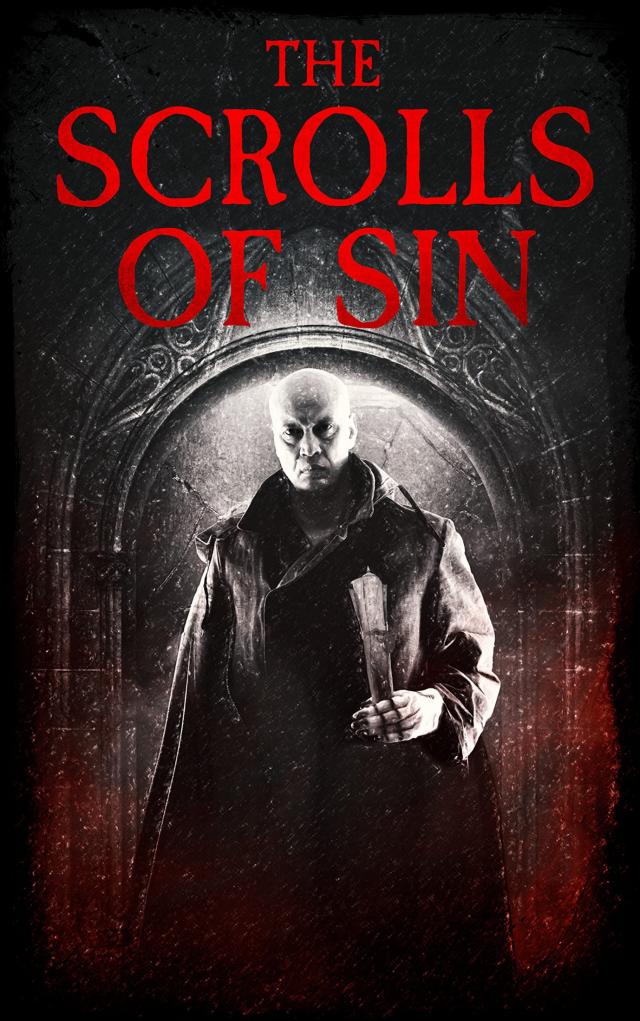
The Scrolls of Sin,
p.9


The House of Ordrid, foulest of the families, still claims their stronghold right here in Nilghorde. Perched nigh the House of Lotgard, it was the talk of the streets, when by falling of the inevitable stone the pond would usher ripples to waves, and those waves to bitter, inner-city war.
Despite the emotions their name could provoke, the Ordrids had remained quiet in the years leading up to the final battle. Ever since their warring with the Ouvarnias, the slinking madmen and witches preferred rather to swirl spells from the sidelines, manipulating moments to their own end.
But for all their magic, all their cunning, no spell nor chant nor lecherous cantrip could stop the marshalling of the mightiest army our land had ever seen. The campaign had rolled across the hills to Pelliul, up rugged mountains where men choked on thin air, southward to Oxghorde, to the very shores of the southern sea, and when the Conqueror cast his eyes north, toward home, his warhorses soon blew their steam on the black doors of the Ordrid keep.
I need not write what happened. The carnage, spewing forth from every door and gate burst open, brought the night of death, or as popularly ascribed: The Night of Death. From the passing of moonset to the first twinkle of dawn, more Orisulans were killed than in entire years already carved and speared into history. Steaming slop all over, I, Propagord Phern, had to desist my clerk duties to burn wiggling stumps in a ratty inn.
Many Ordrids there were. Females shot at us from balistraria or parapet with arrows dipped in every type of villainy. Their men led mercenaries from the hills and pirates from Quinnari, down to us: allies whom the world knew not trafficked alongside the House, promised inception into their powers, if not already versed.
These foul lines that broke over us like a wave at least bled and spit and feared as do normal, vile men. There were other fiends, though, in spiked armor sealed so no man could discern what brought down heavy sword or squealed in hateful pain as it was run through. Yet even these mysteries bled.
Both sides collided. Both suffered loss. Then, making stump duty obsolete, curses from a high window rolled over us like a bellowing disease. Here, I tell you, real as the rug beneath my feet rose the dead.
A lone Ordrid, hardly old enough to fill armor, had fallen in such a way that he crowned a lifeless pile. The red and gold of ours and the dead black of theirs, and above it all that lad, who began to move.
At first it was just a twitch, then a wiggle. His arm had been pulled to ribbons, yet that bloody mess seized a footman’s flail and this corpse missing half its head rose to stare at the moon.
No, the moon merely sat by, voyeuristic beyond the bulked keep. It was that foul voice, calling him, calling them, for soon that entire pile stood erect.
No dead were spared. Men who cleaved one another right behind the veil were in one sickening swoosh sucked back, and now walked undivided. We, the living, were their enemy, which their mangled limbs and run-through hearts attacked in blindness.
They weren’t fast. They were not able. But they were dead, and when we fell them for a second time it would be but a horrid moment before taxed, living hearts had to pump and burn to hack them again.
By the fourth resurrection, there were those who’d succumbed to exhaustion. Bitten and clawed, they arose members of the filth. By the sixth the sun was rising, and that evil hill crawled with more dead than living.
The barely dead rose, lustfully obeying the curser who loomed above us. But our army was not done. I believe at one point I even held a sword, to what good, I cannot say.
*
From the start, even before the first blade cut or first man fell, the battle was never between the banner I’d served and the mailed riffraff frothing from the keep. It was between the Conqueror and the Ordrid’s grim tyrant, Maecidion. Killing the Lord’s emissaries and sending back their remains in a way I will not describe, the offer of peace was rejected; Maecidion choosing to doom thousands rather than bow his House himself to a sovereign.
The night’s unprecedented slaughter was outdone the next day. By the following, crows and other devourers came to the carrion dreaming. Not even the blackest of magic could keep count of the fallen, and slowly more of the dead stayed as such. Above the dead at dawn they awakened, the crows, and the ditch below the daily feast filled with the puss and bile and blood we slipped in on our way to victory.
Storming from the keep, Maecidion’s sons led a mounted charge so fierce we were pushed all the way back to the Morgeltine. There, pinned against marble, the Conqueror concentrated his force on the heads of the snake, lopping off all three in turn. Lower Ordrids and the polluted mercenaries in their clutch scrambled back up. The undead whose assault never vanquished were rounded up and hacked to bits.
Some of my Lord’s top staff by then were Ouvarnia. Looking through the council notes, two lines of prominence: “Ouvarnian lore suggested burning all war dead. The Conqueror saw wisdom, gathering the dead (regardless of allegiance) and ordering them thrown into fires stoked at the bottom of the cobbled hill, sieged without relent.”
Key to our victory was that order, for it ceased the resurrections and galvanized the men. Some would call it an error, citing the black forever of Ordrid vengeance. I will go to my grave defending its soundness. However the befuddlement of history chooses to view tossing Maecidion’s sons’ corpses in the flames, it was three fewer able to rise again.
*
“Bring your weapons,” he said, “if you must.” Doors sealed by tar and incantation had opened, revealing Morfil Ordrid with his arm in a sling.
The Conqueror removed his diamond-studded helmet; the first of the blond heads to bud a line of Lotgards, standing impatiently in dented armor. Morfil, his skin pale as his hair black and stringed, softened his leer, ushering in my Lord. Following in file was the entire cabinet: a cohort of distant cousin generals, Ouvarnian equestrians, me, and Rinmauld Rogaire. More on that scoundrel forthcoming.
We were led through a barbican, where from aphotic shadow emerged porters and pages to relieve us of our burdens. Staring into the eyes of these living dead reminds one of a shark’s, washed ashore.
“Record this,” my Lord spoke unto me, and I have it here now: “The fortress of our last enemy, soon ally, be it bleak and stricken by wicked, wizened force, has initiated a parley unto which we humbly accept.”
The sky hung above us, overcast and grim as all who ornamented the courtyard walls. Through some sort of garden we marched, confronted by another batch of undead; these though idle, arrayed in the regalia of their masters. Atop staircases and beyond the grip of “art” following you with painted eye, we were seated at a long table centering a plain room. Slaves attended sconces. I looked beyond the candlelight at the table’s head.
To his left uprighted a canine so large its pointy ears could prick a man’s throat. At his right went Morfil, understood to be second in their command. Morfil, who had been our escort and directed our seating, had also lamentably lacked the courage those three princes had, and had embarked for decades on every which way to pervert or weaponize the talents of frogs, worm, or bat. Yet what bookended Maecidion were but penumbras against a void. The void itself, concealed under prosaic blacks of coal and onyx, wore the visage of an old man, tightened by the skin of the tomb.
His face held the most single-minded concentrated look ever cast on a crowd, and his entire form seemed to pull the black from every corner of the floors to the high, unseen ceiling, to the needlepoint oblivion of his eyes.
My Lord, approaching forty, and the old confusedly elder septuagenarian sat across from the other. Cats in a contested alley could no better give a preamble for confrontation. I found a block of wall unfilled by burning sconces or on-duty undead, ready, as best I could, to transcribe what was to follow.
*
A slave staggered with a tray. “That’ll be enough,” my Lord commanded, slapping away the chalice intended for him and soaking the corpse. “Enough with your breed of hospitality. You may chain that beast, Maecidion. You’re safe.”
“That I do know,” Maecidion said, patting his creature.
“You know much,” my Lord replied. “How to raise the dead and when best to surrender. Lovely home. But all this trouble to defend cobwebs?” Morfil grabbed for his own when my Lord unsheathed his sword. The cabinet laughed. “We can get rid of them too, if you like.”
Maecidion joined the mirth, eking out a smile he perhaps believed would appear gay. “You must forgive Morfil,” he said. “We perceive naked blades with intent.”
“There is intent, ruler. Better it twirl in your candles than in any more necks of the…of our people.”
“Oh, but the people who are mine, we are not inclined to share. Their heart beats affirmed, free blood, and my larking cubs, too, hear whispered truth of the gods.”
“I know a truth as well, supreme Ordrid. Reap what is yours while you are fit to. Did your gods suggest yet ceasing this despicable resistance?”
Things went on like this for a while, a back and forth of cooling words and implied threats, until, at last, talk settled on a proposal of peace. Maecidion’s lips grew white. “What are the terms?”
“Fully surrender. Rekill these abominations infesting your keep. Agree to inspections, thrice per year and—”
“Thrice,” Maecidion said, and in a way that caused Morfil and that dog to both break their glares and watch his mouth as he spoke next: “That was the number. Three sons, I had. Sons you slew.”
My Lord barmed at the interruption. “How many sons have you insisted die this week?”
“That was their number.”
“Agree to inspections and you can—”
“It is not their death that troubles us, you know, but that you burned them.” Maecidion spoke, deeper: “We are unable to bring them back.”
My Lord cleared his throat. “Who would want to be brought back,” he pointed at the nearest slave, putting my eyes on its preternatural quietude, “like this?”
The Conqueror grabbed his chest. He pulled at his breastplate with one hand and white-knuckled the hilt of his damn sword with the other. His generals shed him free. We gazed in horror at the unarmored sight, gasping on the stone floor, eyes wider than the moon.
An Ouvarnia was the one who said it: “Look,” swinging the cabinet’s entire focus onto, “his hand.”
What we saw, what that villain was doing, even I, trained recorder, ardent observer, am unable to describe with pure confidence. The best I can cobble is thus:
Maecidion sat on his throne, leaned forward. His hand was holding holding empty air; between his thumb and fingers the space of a human heart. He squeezed…nothing, yet my Lord agonized. My Lord writhed, and when that foul man balled his bony fist my Lord moved no longer.
“Seize him!” one general shouted, hiding behind the rest.
Dead servants did not unfix themselves, as for some reason I thought they would. Even when the necromancer called “One,” then through a smirk Morfil sang “Two.” Then, yes, that gargantuan canine barked three room-rattling barks, one for each time Maecidion animated my Lord—I still attest brought my Lord back to life, just to smite him back down.
Then, we saw the Conqueror burst into a lifeless flame, its heat so violent the chair he had fallen from withered to pitch.
*
“Well done,” Rinmauld Rogaire said. No figment of my imagination could his words have been either, for after my shock waned he said it again, aloud and across the perilous table.
*
It’s the unwritten parts of the deal which followed that I spewed out yesterday under the tower. How could I not—a great man’s loyal subject, left to right the wrongs of a horrid lie?
Perhaps a week after this cataclysm, summoned and gathered were those who’d once sworn allegiance to the Conqueror, and were now ready to accept their Scepterhood. The House of Ordrid officially declared peace. The cunning cabinet wasting no time, they started the rumor and mandated its revelation to a crystalizing Chapwyn leadership: after a full victory, the benevolent Conqueror went into seclusion in his palace.
It took patience and an ear pressed against a door, but I affirm the Apex Scepters concocted the myth the Conqueror is immortal. Yet, I’m unsure if it can be traced, what source the secondary rumors sprouted from. Surely the Apexes, Rinmauld and some Lotgard who toes the family line, wouldn’t have suggested Maecidion gifted the Conqueror with immortality. Our people believe this—even some Lotgards!—pelting one another with tepid regurgitations that the gesture was a victor’s trophy, or, as some of the more rationally fooled insist, to show his forever-enemy the blessings of death.
Amusing, the contrast. Shaken by the display of that arisen, rearisen army, necromancy was formally outlawed.
Maecidion and his kind have been allowed to practice in private. As a confirming gesture, the House’s hoods and witches were given the heap of battle-dead that had yet to be buried.
In return for his “cooperation,” the foul House is to receive an imposing portion of the war spoils now that we’ve signed an agreement with Azad (under the guise my Lord, alive and well, orchestrated the plans). It was good to see those desert rats laid out and gutted on their own, awkward shields. At least some brightness belies what dark days surely lie ahead.
“Years of Peace” indeed—the new term being tossed around and carved on every gleaming balustrade. If my fears prove correct, just as the belying brightness above, at least I will be pardoned from hearing that insufferable term. Year zero, or one, or whatever, began the moment Maecidion the Virulent and a former war cabinet, turned Scepters with birth-gunk still in their ears, all walked out in a show of brain-numbing unity.
I learned the weight of the liquor bottle. Relegated to errand boy of a new Lotgard, I didn’t last a year. Whispers observing where my allegiance still lay finally cast me out onto the street and into this hovel.
Before they did, though, I stood and scribbled when our land was renamed.
Petty I may very well be, for wishing this flippancy exposed, but pettier still are boys seated in thrones.
At first, it made sense if the necromancer gave us our new designation, as he brokered uncanny, fearful power. But Apex Scepter Lord Rinmauld Rogaire held power too. But the necromancer had just expressively destroyed my Lord. So both concocted the word.
The Virulent used the two letters beginning each of his dead son’s names. Rinmauld capped it off “with a letter fit for Rogaires.” Hideous. Thus, “Rehleia” was born, “Orisula” stuffed into scrolls on an unattended shelf.
What follows you need not a scribe or historian to tell. Rehleia is now unified under a central government. Connecting our cities, teeming with veterans of earlier wars, the Metropolitan Ward polices our streets.
Thus lumber the Years of Peace. The Conqueror has become “the Municipal One,” perfectly fusing this contemporary era’s incredible forgetfulness and the domestic saturation which it seems to hinge upon.
Having defeated Azad, our armies are now crushing harmless, helpless Serabandantilith. This avarice is speared and gouged and northwardly blazed with no consent of “the Municipal One,” though the carnage is done under his name.
“Take what is yours while you are able,” he declared, once even to me. And what was his, our precious Orisula, was all the great man ever sought to stitch whole. Conquer, indeed. It is I, his servant, who write in hope of preserving exposing this noble intent.
But I am fearful.
I am
If upon alien years such tales garner uncaused fascinate, I foresee my ending becoming the stuff of trend. I hear them. My stairs. Rain-sogged boots. One plea about the state of leadership has incited some, as I knew they would, to send their executives.
P
REVENGE!
“Lord Warden Rogaire,
Dumb as a bear,
But rich as a sly devil fox.
Stories be told,
And most have to do,
‘Bout fate n’ our big lordly ox.”
—Drinking Song of the Dungeon Guards
I
The Final Meeting
So pleased was he with his latest proclamation, Lord Rinmauld Rogaire could only repeat himself: “Don’t still my heart or turn me to ash.” Lord Rogaire became grimmer, tapping his finger on the wood. “My donations are the only thing stopping those pestering priests from exciting a mob right outside your front door.”
Maecidion Ordrid cast his eyes across his long black table. “Your seed will rue what you’ve done.”
Lord Rinmauld Rogaire looked to his left, then to his right. The other Scepters sat in their seats, pale and stammering. But Lord Rogaire didn’t scare so easily. “Your Virulence, please,” he said, “our world has changed. Can’t you see? Rehleia is a land of peace. Stability.” He pulled from his tunic a gold coin, leering at it. “Wealth. Our people are sick of war, sick of thundering horses and our hacking swords.”
Maecidion was still.
“I’ll keep the gold from the Serabs. I’ll keep the silk and the slaves and whatever else the very army you fought against brought back from Azad. In exchange—”
When Maecidion took to stroking his beard, several Scepters leapt from their chairs and scurried under the table. In his own keep, no less, insults toward the world’s worst necromancer were certain to bring down at least one curse.
“Get up! Get up, you fools.” Lord Rogaire hoisted one by the hair. “In exchange, you may practice your foulness, and I’ll continue muffling the baying of the many who wish to see this keep ground to pebbles. And they can do it, you know? Yes, you must. Even the great spell-weaver must fear the masses grown unified. Otherwise our first meet, with our dearly secluded Conqueror—well, that would have never been. Would it?”
Chair legs squeaked. The meeting finally over, the Scepters of Nilghorde began their exit. Slaves whose inhuman docility unnerved the brand-new rulers handed them their canes.