The case of the lucky lo.., p.10
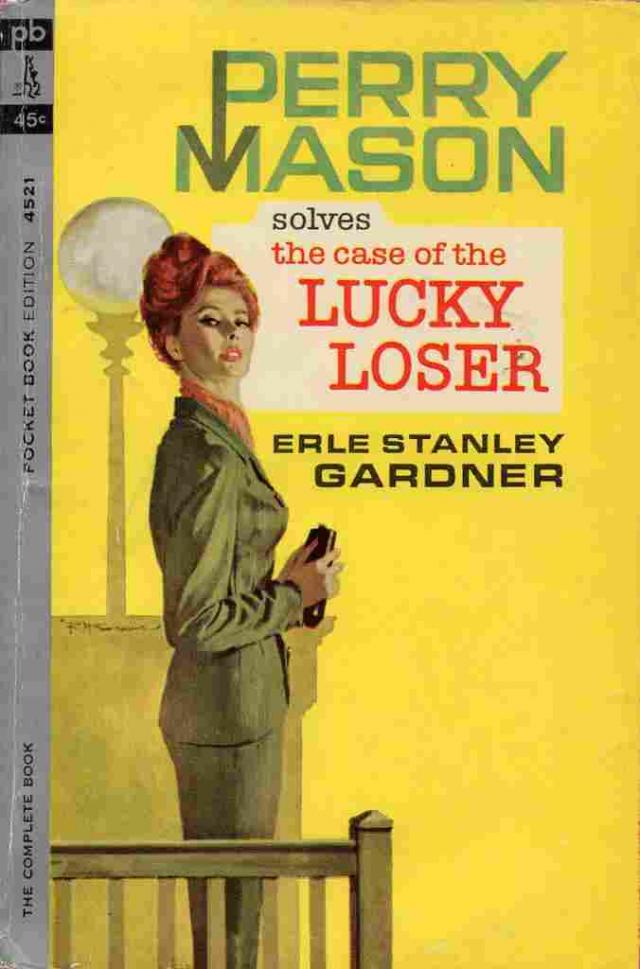
The Case of the Lucky Loser,
p.10


“All right, I guess. She’s always very sweet to her.”
“Ted, look at me. Look me in the eyes. Now tell me, how does she like Dorla?”
Ted took a deep breath. “She hates Dorla’s guts.”
“That’s better. Now, Florence Ingle gave this party?”
“Yes.”
“And you put your uncle and Dorla aboard the train; that is, some of you did?”
“Yes.”
“You left the party to do that?”
“Yes.”
“Where did they take the train?”
“At the Arcade station.”
“And then you went back to the party?”
“Yes.”
“Dorla was to get off the train at the Alhambra-Pasadena station?”
“Yes, sir.”
“And how was she to get back?”
“By taxicab. She was to go back to the house … you know, her house.”
“You went back to the Florence Ingle party?”
“Yes.”
“Now, did Marilyn Keith go back there?”
“Yes, she did. Mrs. Ingle invited her to come along, and she did.”
“Did you talk with her?”
“Mrs. Ingle?”
“No, Marilyn Keith.”
“Some… not much. She’s a very sweet girl and very intelligent.”
“All this was after dinner?”
“Yes, sir.”
“About what time was it when you got back there?”
“I’d say about… oh, I don’t know. I guess it was around eight-thirty or nine o’clock when we got back to Florence Ingle’s house,”
“And how late did you stay?”
“I remember there was some dancing and a little talk and the party began to break up pretty early.”
“How many people were there?”
“Not too many. Around eighteen or twenty, I guess.”
“And you were not driving your sports car?”
“No, I was driving the big car.”
“Why?”
“Because I was taking Uncle to the train and his baggage was in the car.”
“All right. What happened after you went back to the party?”
“I had two or three drinks, not many. But along about ten o’clock I had a Scotch and soda, and I think that almost immediately after I drank that I knew something was wrong with me.”
“In what way?”
“I began to see double and … well, I was sick.”
“What did you do?”
“I wanted to get out in the open air. I went out and sat in the car for a while and then I don’t know … the next thing I knew I came to in the car. I haven’t told anyone else, but Marilyn Keith was driving.”
“Did you talk with her?”
“I asked her what had happened, and she told me to keep quiet and I’d be all right.”
“Then what?”
“I remember being terribly weak. I put my head over on her shoulder and passed out.”
“Then what?”
“The next thing I knew I was in bed. It was four thirty-five.”
“You looked at your watch?”
“Yes.”
“Were you undressed?”
“Yes.”
“In pajamas?”
“Yes.”
“Do you remember undressing?”
“No.”
“Did you go out again after Marilyn Keith took you home?”
“Mr. Mason, I wish I knew. I haven’t told anybody else this, but I just don’t know. I must have.”
“Why do you say you must have?”
“Because I had the key to the car.”
“What do you mean?”
“It was in my trousers pocket.”
“Isn’t that where you usually keep it?”
“That’s where I usually keep the key to my car. Whenever I run the car in, I take the key out and put it in my trousers pocket; but I don’t think Marilyn Keith would have put it there.”
“You don’t leave the cars with keys in them in the garage?”
“No. Everyone in the family has his own key to each of the cars.”
“How well do you know Marilyn Keith?”
“I’ve seen her a few times in my uncle’s office. That’s all.”
“Ever been out with her?”
“No.”
“Do you like her?”
“I do now. I’d never noticed her very much before. She’s Uncle Addison’s secretary. She’d always smile at me and tell me to go right in whenever I went up to visit Uncle Addison. I never noticed her as a woman or thought about her in that way. Then at the party I got talking with her socially and I realized she was really beautiful. Later on, when I got sick… I can’t describe it, Mr. Mason. Something happened. I was leaning on her—I must have been an awful nuisance—and she was so sweet about it, so competent, so considerate. She was sweet.”
“She put you to bed?”
“She took me up to my room.”
“You suddenly realized you liked her?”
“Yes.”
“A little more about Florence Ingle—was she married when your uncle first knew her.”
“Yes.”
“What happened to her husband?”
“He was killed.”
“Where?”
“In a plane crash.”
“A transport plane?”
“No, a private plane. He was doing some kind of prospecting.”
“So Mrs. Ingle became a widow, and how long was that before your aunt died?”
“Oh, six months or so, I guess.”
“And after that Florence Ingle resumed her friendship with your uncle?”
“Yes.”
“Then Dorla came along and whisked your uncle right out from under Mrs. Ingle’s nose?”
“I guess so. I wouldn’t want to say.”
“Is there anything else that you think I should know?”
“Just one thing.”
“What?”
“The speedometer on the big car.”
“What about it?”
“There was too much mileage on it.”
“When?”
“The next morning.”
“Why did you notice that?”
“Because I noticed the mileage when we were at the station. The car had to be serviced and I was going to get it serviced. It had turned up an even ten thousand miles as I was driving to the station, and my uncle remarked about it and said that I was to get it serviced. There shouldn’t have been over another twenty or twenty-five miles on it at the most.”
“But there was more on it?”
“I’ll say there was.”
“How much more?”
“As nearly as I could work it out, about twenty-five miles too much.”
“Did you tell anyone about this?”
“No, sir.”
“Did you tell Howland about it?”
“No, sir.”
“Tell Howland about any of this stuff we’ve been discussing?”
“No, sir. Howland told me that he didn’t want me to tell him anything until he asked me. He said that he liked to fight his cases by picking flaws in the prosecution’s case, that if it came to a showdown, where he had to put me on the witness stand, he’d ask me some questions, but he didn’t want to know the answers until that became necessary.”
“So you didn’t tell him anything?”
“No, sir. I told him I hadn’t hit anyone with the car, and that’s all.”
“But because you had the key in the pocket of your clothes, and because there was that extra mileage on the car, you think it was taken out again?”
“Yes, sir,’ because the key was in my trousers pocket.”
“But how do you know Marilyn Keith drove you straight home? How do you know that she didn’t go out somewhere with you in the car and try to wait until you got sobered up somewhat before she took you home, then decided it was no use and drove you back?”
“I don’t know, of course.”
“All right,” Mason said. “You’ve given me the information I want. Now sit tight”
“What’s going to happen, Mr. Mason? Is the judge going to turn me loose?”
“I don’t think so.”
“Mr. Mason, do you think I.… do you think I could have killed that man? Could have killed anyone?”
“I don’t know,” Mason said. “Someone got a gun out of your cabinet, killed a man, put in fresh shells, and replaced the gun.”
Ted Balfour said, “I can’t understand it. I… I hope I didn’t go out again.”
“If you had, you certainly wouldn’t have taken the gun.”
The young man’s silence caught Mason’s attention.
“Would you?” he snapped.
“I don’t know.”
“What about that gun?” Mason said. “Did you have it with you?”
“It was in the glove compartment of the car.”
“The hell it was”
Balfour nodded.
“Now you tell me why you had that gun in the glove compartment,” Mason said.
“I was afraid.”
“Of what?”
“I’d been doing some gambling … cards. I got in too deep. I was in debt. I’d been threatened. They were going to send a collector. You know what that is, Mr. Mason…when the boys send a collector. The first time he just beats you up. After that… well, you have to pay.”
Mason regarded the young man with eyes that showed sheer exasperation. “Why the hell didn’t you tell me about this before?”
“I was ashamed.”
“Did you tell the police about having the. 22 in the car?”
Balfour shook his head.
“About the gambling?”
“No.”
“Did you tell them about the mileage on the speedometer or about having the key to the car in your pocket?”
“No, sir, I didn’t.”
“When did you take the gun out of the glove compartment and put it back in the gun cabinet?”
“I don’t know. I wish I did. That’s another reason I feel certain I must have taken the car out again after Marilyn Keith took me home. Next morning, the gun was in the gun case in the drawer where it belongs. Marilyn certainly wouldn’t have taken the gun out of the glove compartment. Even if she had, she wouldn’t know where I keep it. It had been put right back in its regular place in the gun cabinet.”
Mason frowned. “You could be in one hell of a fix on this case.”
“I know.”
“All right,” Mason said. “Sit tight. Don’t talk with anyone. Don’t answer any questions the police may ask you. They probably won’t try to get any more information out of you. If they do, refer them to me. Tell them I’m your lawyer and that you’re not talking.”
“And you don’t think the judge will turn me loose on this technicality?”
Mason shook his head. “He’s struggling between his concept of the law and his conscience. He won’t turn you loose.”
“Why did you raise the point?”
“To throw a scare into the prosecutor,” Mason said. “They know now they have a monkey wrench in the machinery which may strip a few gears at any time. You’re just going to have to stand up and take it from now on, Ted.”
“I’ll stand up and take it, Mr. Mason, but I sure would like to know what happened. I—Gosh! I can’t believe that .. well, I just couldn’t have killed the man, that’s all.”
“Sit tight,” Mason said. “Don’t talk with newspaper reporters, don’t talk with police, don’t talk with anyone unless I’m present. I’ll be seeing you.”
Thirty minutes later Judge Cadwell returned to court and proceeded with the habeas corpus hearing.
“Surprisingly enough, this technical point seems to have some merit,” the judge ruled. “It comes as a shock to the Court to think that a defendant could place himself behind such a barricade of legal technicality.
“However, regardless of the letter of the law, there are two points to be considered: I can’t dismiss the possibility that this whole situation has been deliberately engineered so there will be a technical defense to a murder charge. The other point is that I feel a higher court should pass on this matter. If I grant the habeas corpus, the defendant will simply go free. If I hold the defendant for trial by denying the writ, the matter can be taken to a higher court on a plea of once in jeopardy.
“Since a plea of once in jeopardy will presumably be made at the time of the trial of the case, it will be among the issues raised at that trial. This court does not intend to pass on the validity of such a plea of once in jeopardy at this time, except insofar as it applies to this writ of habeas corpus. The Court denies the habeas corpus. The prisoner is remanded to the custody of the sheriff.”
Mason’s face was expressionless as he left the courtroom. Paul Drake buttonholed him in the corridor.
“You wanted the dope on that tape recorder,” Drake said. “I got the serial number, wired the manufacturer, the manufacturer gave me the name of the distributor, the distributor checked his records to the retailer. I finally got what we wanted.”
“Okay,” Mason said. “Who bought it?”
“A woman by the name of Florence Ingle living out in the Wilshire district. Does that name mean anything to you?”
“It means a lot,” Mason said. “Where is Mrs. Ingle now?”
“I thought you’d ask that question,” Drake said. “The answer gave us one hell of a job,”
“Where is she?”
“She took a plane. Ostensibly she went on to Miami, then to Atlantic City, but the person who went on to Atlantic City wasn’t Mrs. Ingle at all. She registered at hotels under the name of Florence Ingle, but it wasn’t the same woman,”
“Got a description?” Mason asked.
“Florence Ingle is about thirty-eight, well groomed, small boned, good figure, rich, a good golfer, brunette, large dark eyes, five feet two, a hundred and seventeen pounds, very gracious, runs to diamond jewelry and is lonely in an aristocratic way. She’s rather a tragic figure.
“The woman who impersonated Florence Ingle was something like her, but was heavier and didn’t know her way around in the high-class places. She was tight-lipped, self-conscious, overdid everything trying to act the part of a wealthy woman. In the course of time she vanished absolutely and utterly, without leaving a trail. She left a lot of baggage in the hotel, but the bill was paid in full, so the hotel is storing the baggage.”
“Never mind all the build-up,” Mason said. “Did your men find out where Florence Ingle is now?”
“Yes. It was a hell of a job, Perry. I want you to understand that—”
“I know, I know,” Mason said. “Where is she?”
“Staying at the Mission Inn at Riverside, California, under the name of Florence Landis, which was her maiden name. She’s posing as a wealthy widow from the East.”
“Now,” Mason said, “we’re beginning to get somewhere.”
CHAPTER 14
Perry Mason stood at the cigar counter for a few minutes. He lit a cigarette, sauntered across to the outdoor tables by the swimming pool, started toward the entrance of the hotel, thought better of it, stretched, yawned, walked back toward the pool, seated himself in a chair, stretched his long legs out in front of him, and crossed his ankles.
The attractive brunette in the sunsuit who was seated next to him flashed a surreptitious glance from behind her dark glasses at the granite-hard profile. For several seconds she appraised him, then looked away and regarded the swimmers at the pool.
“Would you prefer to talk here or in your room, Mrs. Ingle?” Mason asked in a conversational voice, without even turning to glance at her.
She jumped as though the chair had been wired to give her an electric shock, started to get up, then collapsed back in the chair. “My name,” she said, “is Florence Landis.”
“That’s the name you registered under,” Mason said. “It was your maiden name. Your real name is Florence Ingle. You’re supposed to be on a vacation in Atlantic City. Do you want to talk here or in your room?”
“I have nothing to talk about.”
“I think you have,” Mason said. “I’m Perry Mason.”
“What do you want to know?”
“I’m representing Ted Balfour. I want to know what you know and I want to know all you know.”
“I know nothing that would help Ted.”
“Then why the run-around?”
“Because, Mr. Mason, what I know would hurt your client. I don’t want to do anything to hurt Ted. I’m trying to keep out of the way. Please, please don’t press me! If you do, you’ll be sorry,”
Mason said, “I’m sorry, but I have to know what you know.”
“I’ve warned you, Mr. Mason.”
Mason said, “You can talk to me. You don’t have to talk to the prosecution.”
“What makes you think I know anything?”
“When a witness runs away I want to know what she’s running from and why,”
“All right,” she said, “I’ll tell you what it’s all about. Ted Balfour killed that man and then tried to make it look like an automobile accident.”
“What makes you think so?”
“Because Ted was in a jam. Ted had an allowance and he couldn’t afford to exceed it. He got up against it for money and started playing for high stakes, and then he started plunging. He didn’t have the money, but his credit was good and… well, it’s the old story. His cards didn’t come in and Ted was left in a terrific predicament.
“If either one of his uncles had known what he was doing, he would have been disinherited—at least Ted thought so. They had him pretty well scared. Personally, I’m convinced that while they might try to frighten the boy, they never would have gone so far as to disinherit him.”
“Go on,” Mason said. “I take it Ted came to you?”
“Ted came to me.”
“What did he tell you?”
“He told me he had to have twenty thousand dollars. He told me that if he didn’t get it, it was going to be just too bad.”
“What made him think so?”
“He had a letter that he showed me.”
“A letter from whom?”
“He knew who had written the letter, all right, but it was unsigned.”
“Who had written it?”
“The syndicate.”