The case of the runaway.., p.17
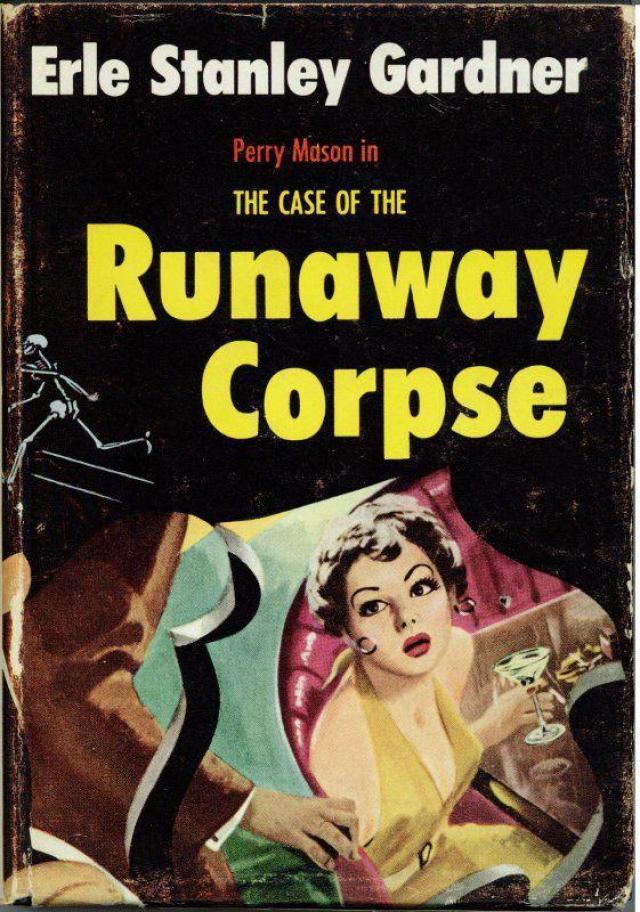
The Case of the Runaway Corpse,
p.17


“You didn’t employ Mr. Mason, did you?” Vandling asked Sara Ansel.
“Me? Certainly not. What would I want with a lawyer?”
“But Myrna Davenport did?”
“She told him what to do.”
“And you told him what to do, didn’t you?”
Well, Myrna was pretty well shaken up and—”
“And you told him what to do, didn’t you?”
“Well, perhaps I explained certain things to him.”
“And you were present at all of the conversation?”
“Yes.”
“Tell us what was said at that conversation.”
“I object,” Mason said. “It’s calling for a confidential communication”
“Not with a third person there,” Vandling said.
Judge Siler said, “This question calls for the instructions that were given Mr. Mason as an attorney by Mrs. Davenport as a client?”
“Yes, Your Honor, in the presence of Sara Ansel, a third person.”
“I don’t think it’s admissible,” Judge Siler said.
“May the Court please, I have, authorities on the subject,” Vandling said, “I think it is quite clearly admissible.”
“Well, I’ll study the authorities,” Judge Siler said, “but I’ll want to take a little time to look them over. I don’t like the idea of introducing evidence of what a client told a lawyer.”
“I will give Your Honor the authorities and you can—”
“Well now, wait a minute,” Judge Siler said. “Why don’t I look those up during the noon hour? Why do you have to bring this question up at this time? Can’t you withdraw this witness and put on another witness?”
“Yes, I suppose I could,” Vandling said.
“Very well. Why not withdraw this witness? We have a question. We have Mr. Mason’s objection to the question. You have some authorities on the point. After the noon recess I’ll rule on the question and then the witness can either answer or not, depending on my ruling, and the attorney for the defense can proceed with his cross-examination.”
“Very well,” Vandling said. “Step down, Mrs. Ansel. You may leave the stand.”
Sara Ansel heaved herself up out of the witness stand, glared at Vandling.
“But don’t leave the city,” Vandling warned. “Remember you are under subpoena. You are to remain in attendance here in court during all of the sessions and you are to be here following the noon adjournment”.
“Yes,” Judge Siler said. “You are under subpoena. Don’t try to leave. You are to be here during the entire trial. Do you understand?”
She studied him contemptuously.
“Do you?” Judge Siler asked, raising his voice and showing some irritation.
“Yes,” she said.
“See that you’re here then,” Judge Siler said. “Call your next witness, Mr. Vandling.”
“I will now call Dr. Renault to the stand.”
Dr. Renault, a slender man about fifty years of age, his manner precisely, coldly professional, took the witness stand and surveyed the district attorney with dark eyes that held no expression whatever. His manner was the carefully cultivated professional manner of a physician who has been on the witness stand before and, while preparing to weigh questions and answers carefully, has a certain professional superiority.
“Your name is Dr. Herkimer Corrison Renault?” Vandling asked.
“That’s right. Yes, sir.”
“You are licensed to practice in this state as a general practitioner, a doctor of medicine?”
“Yes, sir.”
“Oh, we’ll stipulate the doctor’s qualifications subject to the right to cross-examine,” Mason said.
“Where do you practice, Doctor?”
“In Crampton.”
“And have been there for how long?”
“About three years.”
“On the morning of the twelfth you were called on to administer to a patient who was staying at a motel in Crampton?”
“Yes, sir.”
“Who was that patient?”
“Edward Davenport.”
“Did you know him at the time?”
“No, sir.”
“Did yon see the body of Edward Davenport after it was exhumed and prior to autopsy?”
“Yes, sir.”
“Were you present at the autopsy?”
“No, sir.”
“Was the body that you saw the body of the person you had treated on the twelfth?”
“Yes, sir.”
“Did you talk with the defendant on the twelfth of this month?”
“Yes, sir.”
“Did she see the person whom you were treating?”
“Yes, sir.”
‘ ‘Did she make any identification of that person? ‘ ‘
“Yes, sir.”
“Who did she say it was?”
“She identified him as being Edward Davenport, her husband.”
“Now I want you to state exactly what happened in regard to your treatment and in regard to Mr. Davenport’s condition.”
“Well,” Dr. Renault said, “I can’t do that very well without telling you what the patient told me.”
“I assume, Your Honor,” Vandling said, “that there will be some question as to this conversation. I have gathered authorities and am prepared to argue the point. The statements made by the deceased at that time were part of the res gestae. At that time they were not what we would call dying declarations within the strict sense of the word, but they were part of the res gestae and I submit that the doctor’s testimony should be admitted.”
“There isn’t any objection,” Mason said, smiling. “Go right ahead.”
Vandling smiled. “I can see, Your Honor, that counsel is playing a shrewd game. He wishes us to tip our hand as fully as possible.”
“I want to get at the facts,” Mason said.
“And I want to get the facts in,” Vandling retorted.
“Then there’s no occasion for argument,” the judge rebuked. “Counsel may refrain from these personalities. Let’s get at the facts in the case. Answer the question, Doctor. Tell us what happened and you can tell us what he said.”
Dr. Renault said, “He told me that he had eaten a chocolate and had become terribly ill, that his wife was trying to poison him.”
“Did he say when he had eaten a chocolate?”
“At about seven o’clock in the morning.”
“What time was it when you saw him?”
“Between eight and nine.”
“Did he associate the chocolate with his sickness?”
“He did.”
“And just what did he tell you about it?”
“He told me that his wife had poisoned one of her relatives in order to get some money from a dying uncle, that he had recently discovered evidence that indicated she had done the poisoning and that she was intending to get rid of him, that he had tried to take precautions and that he had left a letter so that if anything happened to him the authorities would know what had happened.”
“What did you do?”
“At first I treated him for food poisoning. I thought that his ideas might have become exaggerated. Then I began to think that perhaps he actually had been poisoned. In any event, the man kept sinking, and when it appeared to me his condition was serious I telephoned for his wife. She came up and had with her a relative.”
“You told them that Mr. Davenport was dying?”
“I told them he was seriously ill.”
“And what happened?”
“Some time between two and three o’clock they called me and I rushed down to the motel. I entered the room and found Mr. Davenport dying.”
“Then what happened?”
“I took his pulse. I tried to give him a heart stimulant but he didn’t respond. He became weaker and suddenly died.”
“And what did you do, if anything?”
“I told Mrs. Davenport that under the circumstances I couldn’t sign a medical certificate, that I would have to take steps to preserve the evidence. I locked the door and left.”
“And then what did you do?”
“I notified the authorities.”
“And then what?”
“When I returned with the authorities the corpse had been moved.”
“Just a moment, Doctor,” Vandling said. “You say the corpse had been moved?”
“Exactly,” Dr. Renault announced with scientific precision. “The corpse had been moved.” He waited a moment and then repeated slowly, with emphasis on each word, “The corpse had been moved.”
“What makes you say that, Doctor?”
“Because corpses don’t get up and walk away.”
“You’re satisfied that Mr. Davenport was dead?”
“I know he was dead. I saw him die.”
“There have been cases where mistakes have been made, where a condition of coma has been mistakenly diagnosed as death?”
“I suppose so. I have never made such a mistake. I think that you will find that all of those mistakes are made when a man has been found in a cataleptic condition, or a condition of suspended animation, and the medical practitioner has been misled into assuming that death had taken place. In other words, I don’t think those conditions exist where a medical man is standing by a patient and actually sees death take place.”
“How long were you gone?” Vandling asked. “That is, how long was it from the time you announced to Mrs. Davenport that her husband had died and left the place before you returned with the authorities?”
“I presume it was something like an hour.”
“Then you are prepared to say that Mr. Davenport was dead—at what hour, Doctor?”
“I am prepared to say that he died between two-thirty and three o’clock in the afternoon. I didn’t notice my watch particularly, but it was about that time. I am prepared to state definitely that some person or persons moved his body from the place where he died and where I had left the body, before I returned about an hour later with the officers.”
“Cross-examine,” Vandling said.
Mason said, “Doctor, let’s get this straight. You first saw Ed Davenport between eight and nine in the morning?”
“That’s correct.”
“He told you that he was taken ill about seven o’clock in the morning?”
“Yes, sir.”
“And what were his symptoms when you first treated him?”
“He was suffering from extreme weakness, a condition bordering on collapse.”
“Were any symptoms of arsenic poisoning present?”
“Not at that time. He told me that he had lost everything he had eaten, that he had been purging and vomiting, that he was feeling cold all over and that there were abdominal cramps.”
“Those were not the symptoms of arsenic poisoning?”
“I will say, Mr. Mason, that if the man had ingested arsenic poisoning at say a little before seven o’clock in the morning, that if the condition of his body had been such that a large dose of poison induced almost instantaneous nausea, it is quite possible that the regurgitation of the poison which had been ingested could have been sufficiently complete so that the symptoms would have been those as I found them.”
“Then at that time Davenport told you that he suspected his wife of trying to poison him?”
“Very definitely.”
“That he had eaten a piece of candy from a box that had been placed in his bag by his wife and that he was satisfied he had been poisoned from that piece of candy?”
“Yes, sir.”
“Did he tell yon how it happened that he ate a piece of candy at around seven o’clock in the morning?”
“Yes, sir. He told me that he was sometimes a heavy drinker, that quite frequently when he had this overwhelming urge for alcohol that sometimes he could control it by eating large quantities of sweets.”
“So,” Mason said, “as soon as he became ill he suspected the candy?”
“Well, he didn’t say that in so many words but I gathered that was the general situation. Yes, sir.”
“And he was in a condition of shock, of extreme depression when you saw him?”
“Yes, sir.”
“And he showed no improvement?”
“No, sir.”
“You thought it was possible the end would come?”
“Yes, sir.”
“From this debilitation and shock rather than from arsenic poisoning?”
“Yes, sir, in view of his general physical condition.”
“So you called his wife?”
“Yes, sir.”
“Are you familiar with the symptoms of poisoning from cyanide of potassium?”
“Yes, sir.”
“Now then,” Mason said, “how does it happen, Doctor, or, rather, how do you account for the fact that if this man suspected at nine o’clock in the morning that the first piece of candy was poisoned that he would have taken another piece of candy at three o’clock in the afternoon?”
“Oh, just a moment,” Vandling said. “That question is argumentative.”
“I’m trying to test the doctor’s opinion,” Mason said.
Judge Siler, who seemed to adopt a rather passive position, hoping that counsel would get matters straightened out, looked from one to the other.
“He didn’t,” Dr. Renault snapped.
“Didn’t what?” Mason asked.
“Didn’t take another piece of candy.”
Vandling made a little gesture with his hands, sat down and smiled, said, “Well, go ahead. The doctor seems to be doing, very well.”
“You have heard the testimony of Dr. Hoxie that the man died of poisoning by cyanide of potassium?”
“Yes, sir.”
“Do you have any quarrel with that statement?”
“It is not my province to quarrel with any condition found by the pathologist in making a post-mortem.”
“Well,” Mason said, “did the man die of cyanide poisoning? You saw him die. You know the symptoms. Did he exhibit symptoms of poisoning by cyanide?”
“No, sir, he did not.”
“He did not?” Mason asked.
Dr. Renault set his jaw firmly. “He did not,” he said.
“Then you don’t think poison caused his death?”
“Now, just a moment, Mr. Mason. That’s another matter. I do think poison caused his death.”
“But you don’t think it was cyanide of potassium?”
“No, sir, I do not. I think his death resulted from extreme shock following the ingestion of arsenic poisoning which had been largely eliminated from the system.”
“Now wait a minute,” Mason said. “You were the attending physician. You saw the man die.”
“Yes, sir.”
“And you don’t think his death was caused by cyanide of potassium?”
“No, sir. I do not.”
“Now just a moment, Your Honor,” Vandling said. “This is developing into a situation which I hadn’t anticipated. I am afraid I have to admit that I hadn’t interrogated Dr. Renault as to the cause of death because I felt certain that the presence of poison which had been found at the time of the autopsy would completely answer the question as to the cause of death.”
“You’ll have your opportunity on redirect examination,” Mason said. “I’m asking the doctor specific questions now on cross-examination and I’m getting specific answers. I want to have those answers in the record.”
“Well, they’re in the record,” Vandling said.
“Are you trying to object to my cross-examination?” Mason asked.
Vandling sat down and said, “No, go right ahead. Let’s get the facts, whatever they are.”
Mason said, “Now, let’s get this matter straight, Doctor. You saw the man die?”
“Yes, sir.”
“You are familiar with the symptoms of cyanide of potassium poisoning?”
“Yes, sir.”
“And you don’t think that he died from such poison?”
“I am quite certain he did not. There were none of the typical symptoms. His death was due to weakness, to shock and to an inability to recuperate from the ingestion of poison.”
“You don’t know that he took poison.”
“I know what he told me and I know what his symptoms were.”
“But most of the symptoms were those that he described to you, were they not?”
“Well, he described his symptoms, naturally. A doctor asks a patient those things.”
“You don’t know that he took any poison?”
“I know that his condition was such that it was compatible with the symptoms he had described.”
“He told you that his wife was trying to poison him. He told you that he had taken a piece of candy from a box, that shortly after taking it—”
“Immediately after taking it,” the doctor said.
“All right, immediately after taking it that he was seized with symptoms, with pains, cramps and vomiting.”
“Yes, sir.”
“And it was, Davenport’s opinion this was due to arsenic poisoning?”
“To poisoning. I don’t think he mentioned arsenic. Yes, perhaps he did, too.”
“You’re the one who mentioned arsenic?”
“I may have.”
“The deceased had been in Paradise for some time?”
“So he said.”
“He was on his way to his home in Los Angeles?”
“Yes, sir.”
“And he told you he had eaten a piece of candy and then become ill?”
“I’ve said that many times. Yes, sir. I think I’ve answered that question in one form or another repeatedly.”
“But you don’t know he took a piece of candy?”
“Only by what he told me.”
“You don’t know of your own knowledge that he took a piece of candy?”
“No, sir.”
“But you do know of your own knowledge that he did not die of poisoning by cyanide of potassium?”
“His symptoms were not in any way similar to those I should have expected to find from such poison. No, sir.”
Mason said, “Now I’ll go a little further with you, Doctor. You have stated that the man described his symptoms of poisoning?”
“Yes, sir.”
“And that his condition was compatible with such poisoning?”