The case of the golddigg.., p.17
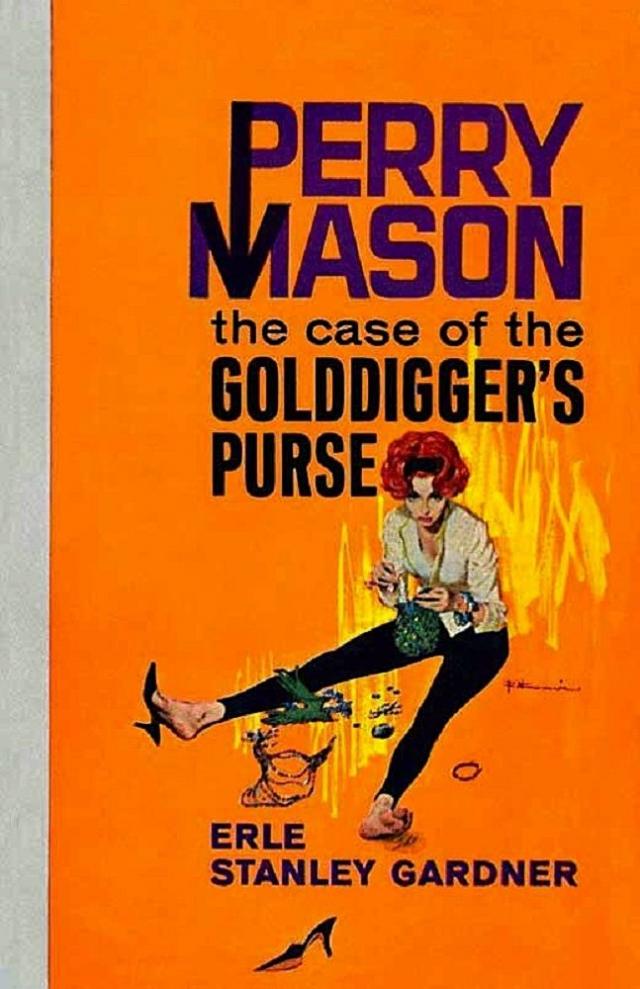
The Case of the Golddigger's Purse (Perry Mason Series Book 26),
p.17


Mason said, “That’s better. Now suppose you tell me the truth. How did you know that bullet was in the tank?”
“How did you know it was a bullet?”
“Never mind,” Mason said, “I’m asking you. How did you know it was in the tank?”
“Mrs. Faulkner told me.”
“Oh, oh!” Mason said. “Now we’re getting someplace. Go ahead.”
“Mrs. Faulkner told me that she was satisfied I’d find a .38 caliber bullet somewhere in the bottom of that fish tank; that she knew Tom was going to be called on to treat those fish; that she wanted to have that bullet recovered, and she also wanted to be absolutely certain that she could prove where the bullet came from. She said that I must arrange it so that both Tom and I were present when the bullet was recovered. Well, that’s about all there was to it, Mr. Mason. When Mr. Faulkner gave me the key, I got hold of Tom, and we intended to recover the bullet first and then come back after Mr. Faulkner had arrived, and treat the fish. But when we got there and let ourselves into the office, the fish weren’t there. For a minute or two, I didn’t know what to do. But then I went ahead just as we’d planned. I took the dipper and we got the bullet out and just then we heard a car coming.”
“You didn’t leave Tom out in the car to watch?”
“No. We both had to go in there. That was the agreement. But we felt certain we had plenty of time. The house next door was dark and I knew that Mr. Faulkner would be at the café for some little time—at least I thought he would. But we heard this car coming and it frightened us and we dashed out in such a hurry that we didn’t dare to take the ladle with us.”
“Then what did you do?”
“Then we drove around the corner and waited until we saw you and Mr. Faulkner drive up. And then we came around there and acted as innocent as possible, pretending that we’d just come from the pet store.”
“And then what did you do with the bullet?”
“I gave it to Mrs. Faulkner.”
“When?”
“Not until last night?”
“Why not until last night?”
“I telephoned her and told her I had it, and she said that it would be all right; that I could have the money all right but that I’d have to wait until the coast was all clear.”
“And then last night?”
“Then last night I took the bullet out to her.”
“Tom was with you?”
“No, I went alone.”
“There was some identification mark on that bullet?”
“Yes. Tom had given me an etching tool and we’d both etched our initials on the base of the bullet. Mrs. Faulkner was very insistent that we do it just that way, and told us to be very careful not to mar the sides of the bullet because she wanted to be able to prove what gun had fired the bullet.”
“How much were you to get?”
“She said that if a certain deal went through, we’d get five hundred, and if another deal went through we’d get two thousand.”
“And then last night you took the bullet out to her?”
“That’s right.”
“When?”
“About half past nine, I guess it was.”
“Half past nine!” Mason exclaimed incredulously.
“That’s right.”
“And where was she?”
“At her house.”
“And she paid you the two thousand dollars?”
“Yes.”
“And that’s where the two thousand came from?”
“That’s right.”
“And this story about Faulkner paying you two thousand was all poppycock?”
“Yes. I had to account for two thousand some way, and I thought that was the best way to account for it, because Mrs. Faulkner warned me that if I ever said anything about that two thousand dollars that she wouldn’t back me up at all, and the taking of that bullet would be burglary, a breaking and entering, and that both Tom and I would go to jail.”
Mason said, “Wait a minute. By half past nine Faulkner must have been dead.”
“Yes, I guess so.”
“Lying there in the bathroom.”
“Yes.”
“Then, when you took the bullet out to Mrs. Faulkner, where was she sitting? In the living room? She must have known her husband was dead by that time, if she was there in the house . . .”
“Not that Mrs. Faulkner,” Sally Madison explained. “Don’t you understand, Mr. Mason? It was the first Mrs. Faulkner, Mrs. Genevieve Faulkner.”
For more than ten seconds, Mason sat in utter silence, his eyes level-lidded, his brows knitted together. “Sally, you’re not lying to me?”
“Not now, Mr. Mason. I’m telling you the absolute truth.”
“Tom will back you up in your story?”
“About recovering the bullet and identifying it. But he doesn’t know the person who was going to pay me the money. Those dealings were all through me.”
Mason said, “Sally, if you’re lying to me now, you’re going to the death chamber just as sure as you’re sitting there, and Tom Gridley will die in jail.”
“I’m telling you the truth, Mr. Mason.”
“You got the two thousand dollars at nine-thirty last night?”
“That’s right.”
“But you did call on Mr. Faulkner?”
“Yes. Between eight and eight-thirty. It’s just like I told you. The door was open just an inch or two. I walked in. There was no one home except Mr. Faulkner. He was telephoning—I guess he’d just finished shaving because there was still just a bit of lather on his face—where the razor had left marks. There was hot water running in the tub and he only had on his undershirt above his trousers. I guess the running water prevented him from hearing the chimes when I pushed the bell button. I walked in because I felt I just had to see him, and his car was parked out in front so I knew he was there.”
“What happened?” Mason asked.
“He told me to get out. He told me that whenever he wanted to see me, he’d send for me, and he was very abusive. I tried to tell him that Mr. Rawlins had told me he’d taken something that belonged to Tom, and that that was just the same as stealing.”
“And what did he do?”
“He told me to get out.”
“Didn’t he give you a check payable to Tom, and offer that as a settlement?”
“No.”
“Just told you to get out?”
“That’s right. He said if I didn’t get out he’d throw me out.”
“And what did you do?”
“I hesitated, and he actually pushed me out, Mr. Mason. I mean he came and put his hands right on my shoulders and pushed me out of the house.”
“Then what did you do?”
“Then I telephoned his first wife and asked her when she wanted to see me, and she told me to telephone again in about half or three-quarters of an hour. I did so, and she told me to come right out; that I could have the money. I went out there and she gave me the two thousand dollars.”
“Anyone else present?”
“No.”
“Did you see a man by the name of Dixon?”
“No.”
“Ever meet him?”
“No.”
“Do you know a man named Dixon?”
“No.”
“Mrs. Faulkner gave you the two thousand dollars. Then what did you do?”
“Then I went back to the pet store and got the panels to treat Staunton’s fish the way I’d promised Mr. Rawlins I would, and—and well, you know the rest, Mr. Mason. I went out to Staunton’s and then I telephoned you.”
Mason said, “Sally, I’m going to take a chance on you because I’ve got to take a chance on you. I want you to say three words for me.”
“What are they?”
“See my lawyer.”
She looked at him in puzzled perplexity.
“Say it,” Mason said.
“See my lawyer,” she repeated.
“You can remember that, all right?”
“Why yes, of course, Mr. Mason.”
“Say it again,” Mason said.
“See my lawyer,” she said.
Mason said, “Sally, from now on those are the only three words you know. If you ever say anything to anybody else you’re sunk. The police will be after you in an hour or so, brandishing that written statement of yours in front of you. They’ll show you inconsistencies. They’ll show you where it’s wrong. They’ll show you where you were lying. They’ll prove this and they’ll prove that and they’ll prove the other. They’ll ask you to explain why you lied about where you went in the taxicab, and they’ll tell you that if you can explain so that the explanation satisfies them they’ll turn you loose; that if you can’t, the only thing that remains for them is to arrest Tom. Do you understand?”
She nodded.
“And what are you to say?” Mason asked her.
She met his eyes. “See my lawyer,” she said.
“Now,” Mason told her, “we’re beginning to get some place. Those are the only three words in the English language that you know from now on. Can you remember that?”
She nodded.
“Can you remember that no matter what happens?”
Once more she nodded.
“And if they tell you Tom has confessed in order to save you and that you shouldn’t let the man you love take the rap and go to the death-house because he’s simply trying to save you, what are you going to say?”
“See my lawyer,” she told him.
Mason nodded to the matron. “That’s all,” he said. “My interview is finished.”
Chapter 14
Genevieve Faulkner lived in a small bungalow that was within half a dozen blocks of the place where Wilfred Dixon maintained his sumptuous bachelor residence.
Mason parked his car, ran up the steps and impatiently rang the bell.
The door was opened after a few moments by Genevieve Faulkner herself.
Mason said, “You’ll pardon me for disturbing you, Mrs. Faulkner, but there are one or two questions I must ask you.”
She smiled and shook her head.
Mason said, “I’m not fishing now, Mrs. Faulkner. I’m hunting.”
“Hunting?” she asked.
“For bear,” Mason said, “and I’m loaded for bear.”
“Oh! I’m sorry I can’t invite you in, Mr. Mason. Mr. Dixon says I’m not to talk to you.”
Mason said, “You paid Sally Madison two thousand dollars for a bullet. Why did you do that?”
“Who says I did that?”
“I can’t tell you that, but I’m stating it as a fact.”
“When am I supposed to have paid her that sum of money?”
“Last night.”
Mrs. Faulkner thought for a moment, then said to Mason, “Come in.”
Mason followed her into a tastefully furnished living room. She invited the lawyer to sit down, promptly picked up a telephone, dialed a number and said, “Can you come over here right away? Mr. Mason is here.” Then she dropped the receiver into place.
“Well?” Mason asked.
“Smoke?” she inquired.
“Thank you, I have my own.”
“A drink?”
“I’d like an answer to my question.”
“In a few minutes.”
She settled down in the chair opposite Mason, and the lawyer noticed the supple grace of her movements as she crossed her knees, calmly selected a cigarette from a humidor and struck a match.
“How long have you known Sally Madison?” Mason asked.
“Nice weather we’re having, isn’t it?”
“A little cool for this time of year,” Mason said.
“I thought so, but then on the whole it’s nice.—You’re sure you don’t want a scotch and soda?”
“No, thank you, I just want an answer to that one question, and I warn you, Mrs. Faulkner, that you aren’t playing around with blackmail any more. You’re mixed up in a murder case up to your ears and if you don’t tell me the truth here and now, I’m really going to turn on the heat.”
“There’s been quite a bit of rain. It’s really nice to see the hills as green as they are now. I suppose we’ll have rather a warm summer. The old timers seem to expect it.”
Mason said, “I’m a lawyer. You’re evidently relying for advice on Wilfred Dixon. Take a tip from me and don’t do it. Either tell me the truth or get a lawyer, someone who knows the ins and outs of law and the danger you’re running if you suppress facts in a murder case.”
“It was really unusually cold around the first of the year,” she said calmly. “Some of the people who have studied weather tell me that doesn’t mean anything, but that if it’s unusually cold around the middle of January it invariably means a cold summer. Personally I can’t see any sense to that. I . . .”
Brakes sounded as a car slid to a stop out in front of the house. Mrs. Faulkner smiled benignly at Mason, said, “Excuse me, please,” and crossed the room to open the door.
Wilfred Dixon came hurrying in.
“Really, Mr. Mason,” Dixon said, “I had hardly thought that you would stoop to this.”
“Stoop to what?” Mason asked.
“After I told you that I didn’t care to have you interview my client . . .”
“To hell with you,” Mason told him. “You’re not a lawyer. You’re a self-styled business counselor or investment broker or whatever you want to call yourself. But this woman is mixed up to her ears in a murder case. She isn’t any client of yours as far as murder is concerned and you have no right to practice law. You go sticking your neck out and I’ll push it back.”
Dixon seemed completely nonplussed at Mason’s belligerence.
“Now then,” Mason went on, “Mrs. Faulkner bribed my client, Sally Madison, to get into the office of Faulkner and Carson and extract a bullet from a fish tank. Last night she gave Sally Madison two thousand dollars in cash for that bullet. I want to know why.”
Dixon said, “Really, Mr. Mason, these statements of yours are most reckless.”
“Play around with fire,” Mason told him, “and you’re going to get your fingers burned.”
“But, Mr. Mason, surely you aren’t making these accusations on the unsupported word of your client.”
“I’m not making any accusations,” Mason said. “I’m stating facts and I’m giving you just about ten seconds to come clean.”
“But, Mr. Mason, your statement is absolutely unfounded. It’s utterly ridiculous.”
Mason said, “There’s the telephone. Want me to call Lieutenant Tragg and let him ask the questions?”
Wilfred Dixon met his eyes calmly. “Please do, Mr. Mason,” he said.
There was a moment of silence.
Mason said at length, “I’ve given this woman some advice. I’m going to give you the same advice. You’re mixed up in a murder case. See a lawyer. See a good one, and see him immediately. Then, decide whether you’re going to tell the truth or whether you want me to call Lieutenant Tragg.”
Dixon indicated the telephone. “As you have so aptly remarked, Mr. Mason, there’s the telephone. I can assure you that you’re at liberty to use it. You talk about calling Lieutenant Tragg. I think we would be very glad to have you call him.”
Mason said, “You can’t monkey with the facts in a murder case. If you paid Sally Madison two thousand dollars for that bullet, that fact is going to come out. I’ll drag it out if I have to spend a million dollars for detective fees.”
“A million dollars is a lot of money,” Dixon said calmly. “You were speaking of telephoning Mr. Tragg, Mr. Mason, or I believe Lieutenant Tragg is the title. If he’s connected with the police I think it would be a good thing to call him. You see, we have nothing to conceal. I’m not, of course, certain about you.”
Mason hesitated.
There was just a glint of triumph in Wilfred Dixon’s eyes. “You see, Mr. Mason, I play a little poker myself.”
Without a word, Mason got up, crossed to the telephone, dialed Operator, said, “Give me police headquarters,” then he asked for Homicide and inquired, “is Lieutenant Tragg in? Perry Mason speaking.”
After a few seconds, Tragg’s voice sounded on the wire. “Hello, Mason. I’m glad you called. I wanted to talk with you about your client, Sally Madison. She seems to have adopted an unfortunate position. There are certain minor discrepancies in a written statement which she gave us, and when we asked her to explain those, she assumed a very truculent attitude and said, ‘See my lawyer.’ ”
“I have nothing to add to that,” Mason said.
There was genuine regret in Tragg’s voice. “I’m really sorry, Mason.”
“I can imagine you are, Tragg. I’m out at the residence of Genevieve Faulkner. She’s Faulkner’s first wife.”
“Yes, yes. I had intended to interview her as soon as I could get around to it. I’m somewhat sorry you beat me to it, Mason. Finding out anything?”
Mason said, “I think you’d better question her at some length about whether or not she saw Sally Madison last night.”
“Well, well,” Tragg said, his voice showing surprise. “Does Sally Madison claim that she saw Mrs. Faulkner?”
“Any statements my client may have made to me are, of course, confidential,” Mason said. “This is just a tip I’m giving you.”
“Thank you very much, Counselor, I’ll get in touch with her.”
“At once, I would suggest,” Mason said.
“At my earliest convenience,” Tragg amended. “Good-by, Mason.”
“Good-by,” Mason said, and hung up. He turned to Wilfred Dixon and said, “That’s the way I play poker.”
Dixon beamed at him. “Very well done, Mason, very well done, indeed. But, of course, as you pointed out to Lieutenant Tragg, you can hardly repeat to him any statements that your client made to you, and as I understand it, your client has already stated she received the two thousand dollars that was in her purse from Harrington Faulkner. It would be rather unfortunate if she should be forced to change her statement.”
“How did you know she had made such a statement?” Mason asked.
Dixon’s eyes twinkled. “Oh, I get around a bit, Mason. After all, you know, while I am not a lawyer, I have to represent the interests of my client—her business interests, you know.”