The case of the golddigg.., p.5
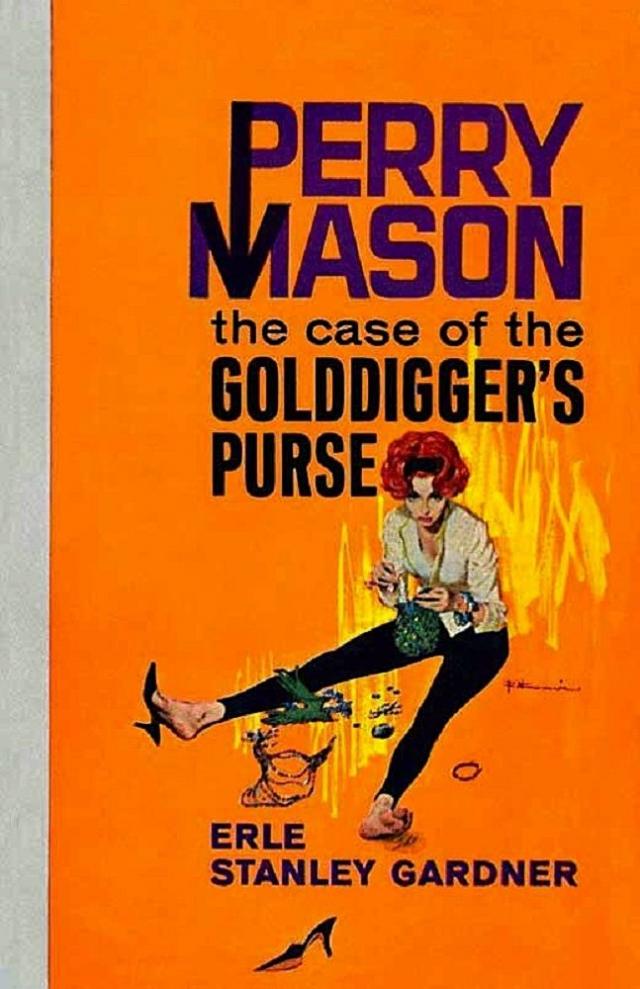
The Case of the Golddigger's Purse (Perry Mason Series Book 26),
p.5


Staunton drew himself up with a dignity so rigid that it might have been a mask to hide fright. “ I certainly would. I don’t consider it any of your business.”
“Suppose I should tell you those fish had been stolen?”
“Were they stolen?”
“I don’t know,” Mason admitted frankly. “But there are some rather suspicious circumstances.”
“Are you making an accusation?”
“Not at all.”
“Well, it sounded to me as though you were. I’ve heard of you and I know you’re a very able lawyer, Mr. Mason, but it occurs to me you had better watch what you say. If you’ll pardon the suggestion, I’m quite capable of running my own business and it might be well if you’d devote your attention to your business.”
Mason grinned, took his cigarette case from his pocket. “Have one?” he asked.
“No,” Staunton said curtly, and stepped back as though to slam the door shut.
Mason extended the cigarette case to Sally Madison, said casually to Staunton, “Miss Madison asked my advice. I was about to tell her that unless you had some satisfactory explanation, I considered it was her duty to report the matter to the police. That, of course, might prove embarrassing. But if you want it that way, it’s all right with me.”
Mason snapped a match into flame, held it to the tip of Sally Madison’s cigarette, then to his own.
“That sounds very much like a threat,” Staunton charged, apparently falling back on a repetition of his previous charge.
By this time, Mason was sure of his man. He blew smoke into Staunton’s face and said, “ It does, doesn’t it?”
Staunton drew back in startled surprise at the lawyer’s insolent assurance. “ I don’t like your manner, Mr. Mason, and I don’t care to stand here and be insulted.”
“That’s right,” Mason agreed. “But you’ve already missed your chance to do anything about it.”
“What do you mean?”
“I mean that if you hadn’t anything to conceal about those fish, you’d have told me to go to the devil five minutes ago and slammed the door. You didn’t have nerve enough to do it. You’re curious as to what I know, and afraid of what I’m going to do next. You’re standing there in a lather of indecision, wondering whether you dare take the chance of slamming the door, rushing inside, and telephoning the man who told you to take care of the fish for him.”
Staunton said, “Mr. Mason, as a lawyer, you’re doubtless aware that you’re defaming my character.”
“That’s right. And as a lawyer, I know that the truth is a defense to slander. So make up your mind, Staunton, and make it up fast. Are you going to talk with me, or are you going to talk to the police?”
Staunton clung to the doorknob for some two or three seconds, then suddenly lost the dignified shell which had been interposed as an ineffectual armor against the lawyer’s attack.
“Come in,” he said.
Mason stood to one side for Sally Madison to precede him into the house.
From a living room on the right, a woman’s voice called, “What is it, dear?”
“A business matter,” Staunton called, and then added, “ some insurance. I’ll take them into the study.”
Staunton opened a door and ushered his visitors into a room which had been fitted up as an office, with an old-fashioned roll-top desk, a safe, a table, a half dozen steel fitting cabinets, and a secretarial desk. On top of the filing cabinets was an oblong glass container filled with water. Two fish swam lazily about in this container.
Mason moved across to look at the fish, almost as soon as Staunton had switched on the light.
“So these,” Mason said, “ are the Veiltail Moor Telescopes, sometimes referred to as ‘The Fish of Death’.”
Staunton said nothing.
Mason curiously regarded the dark fish, their long fins sweeping down in black veils, regarded the protruding eyes which were as black as the bodies of the fish. “Well,” he announced, “as far as I’m concerned, anyone who wants my interest in them can have them. There certainly is something sinister about them.”
“Won’t you sit down?” Staunton ventured, somewhat dubiously.
Mason waited for Sally Madison to seat herself, then stretched himself comfortably in a chair. He grinned over at Staunton and said, “You can spare yourself a lot of trouble and nerve strain if you’ll begin at the beginning and tell your story.”
“Suppose you ask me what you want to know.”
Mason jerked his thumb toward the telephone. “I’ve asked my question. If there’s any more questioning to be done, it’ll be done by the police.”
“I don’t fear the police. Suppose I should just call your bluff, Mr. Mason?”
“Go ahead.”
“I have nothing to conceal, and I have committed no crime. I’ve received you at this unusually late hour because I know who you are and have a certain respect for your professional standing, but I’m not going to be insulted.”
“Who gave you the fish?” Mason asked.
“That’s a question I don’t care to answer.”
Mason took the cigarette from his mouth, casually moved his long legs, and walked over to the telephone, picked up the receiver, dialed Operator, and said, “Give me police headquarters, please.”
Staunton said rapidly, “Wait a minute, Mr. Mason! You’re going altogether too fast! If you make any accusations against me to the police you’ll regret it.”
Without looking around, still holding the receiver to his ear, Mason said over his shoulder, “Who gave you the fish, Staunton?”
“If you want to know,” Staunton almost shouted in exasperation, “it was Harrington Faulkner!”
“I thought it might have been,” Mason said, and dropped the receiver back into its cradle.
“So,” Staunton went on defiantly, “the fish belong to Harrington Faulkner. He gave them to me to keep for him. I write a lot of insurance for the Faulkner-Carson Realty Company. I was glad to do Mr. Faulkner a favor. There’s certainly no law against that, and I think you’ll now appreciate the danger of your position in insinuating the fish were stolen and that I am acting in collusion with the thief.”
Mason returned to his chair, crossed his long legs at the knees, grinned at the now indignant Staunton and said, “How were the fish brought to you—in the tank which is on the filing cases at the present time?”
“No. If Miss Madison is from the pet store, she’ll know that’s a treatment tank they furnished. It’s an oblong tank made to accommodate the medicated panels which are slid down into the water.”
“What sort of tank were they in when you got them?” Mason asked.
Staunton hesitated, then said, “After all, Mr. Mason, I don’t see what that has to do with it.”
“It might be considered significant.”
“I don’t think so.”
Mason said, “I’ll tell you this much. If Harrington Faulkner delivered those fish to you, he did so as part of a fraudulent scheme he was perpetrating, and as a part of that scheme he reported the theft of these fish to the police. Now the police aren’t going to like that. So, if you have any connection with what happened, you had better get into the clear right now.”
“I didn’t have any connection with any fraudulent scheme. All I know is that Mr. Faulkner asked me to take charge of these fish.”
“And brought them to you himself?”
“That’s right.”
“When?”
“Early Wednesday evening.”
“About what time Wednesday?”
“I don’t know exactly what time it was. It was rather early.”
“Before dinner?”
“I think it was.”
“And how were the fish brought to you? In what sort of a container?”
“That’s the thing which I told you before was none of your business.”
Mason once more got up, walked across to the telephone, picked up the receiver and started to dial Operator. There was a grim finality about his manner.
“In a bucket,” Staunton said hastily.
Mason slowly, almost reluctantly, put the receiver back into its cradle. “What sort of a bucket?”
“An ordinary galvanized iron pail.”
“And what did he tell you?”
“Told me to call the David Rawlins Pet Shop, tell them I had a couple of very valuable fish that were suffering from gill disease, for which I understood there was a new treatment furnished by the pet shop. I was to offer to pay them one hundred dollars for treatment of these fish. I did just that. That’s all I know about it, Mr. Mason. My skirts are entirely clean.”
“They aren’t as clean as you claim,” Mason said, still standing by the telephone, “and they don’t cover you as much as you’d like. You forget about what you told the man from the pet shop?”
“What do you mean?”
“About your wife being sick and that she wasn’t to be disturbed.”
“I didn’t want my wife to know anything about it.”
“Why?”
“Because it was a matter of business, and I don’t discuss business with her.”
“But you lied to the man from the pet shop?”
“I don’t like that word.”
“Describe it by any word you like,” Mason said, “but let’s remember that you made a false statement to the man from the pet shop. You did that to keep him from coming in so that he wouldn’t see the fish.”
“I don’t think that’s a fair statement, Mr. Mason.”
Mason grinned and said, “Think it over for awhile, Staunton. Think over how you’re going to feel on the witness stand in front of a jury when I start giving you a cross-examination. You and your clean skirts!”
Mason stepped over to the window, jerked back the heavy drapes which covered the glass and stood with his back turned to the people in the room, his hands pushed down into his trouser pockets.
Staunton cleared his throat as though about to say something, then shifted his position uneasily in the swivel chair. The chair creaked slightly.
Mason didn’t so much as turn around, but stood for some thirty seconds in utter silence, looking out at the section of sidewalk which was visible through the window, waiting while his very silence exerted a pressure.
Abruptly the lawyer turned. “I guess that’s all,” he said to the surprised Sally Madison. “I think we can go now.”
A slightly bewildered Staunton followed them to the outer door. Twice he started to say something but each time choked off the sentence almost at the beginning.
Mason didn’t look around or make any comment.
At the front door, Staunton stood for a few moments watching his departing visitors.
“Good night,” he ventured somewhat quaveringly.
“We may see you again,” Mason said ominously, and kept right on walking toward the parked car.
Staunton abruptly slammed the door shut.
Mason clasped his hand on Sally Madison’s arm, pushed her over to the right across a strip of lawn and toward the stretch of sidewalk which had been visible from the window of Staunton’s study.
“Let’s watch him carefully,” Mason said. “I purposely pulled the drapes to one side and left the telephone turned toward the window. We may be able to get some idea of the number that he dials by watching the motion of his hand. At least we can tell if it’s a number similar to that of Harrington Faulkner.”
They stood just outside of the oblong of light cast from the open window. From where they stood, they could clearly see the telephone and the fish in the tank on the top of the filing cases.
A shadow crossed the lighted oblong on the lawn, moved over toward the telephone, then stopped.
The watchers saw James Staunton’s profile as he held his face close to the fish tank, watching the peculiar undulating motion of the black veils which hung down from the “Fish of Death.”
For what might have been a matter of five minutes, Staunton regarded the fish as though held with a fascination that was almost hypnotic—then he slowly turned away, his shadow moved back across the oblong, and a moment later the lights were switched off and the room left in darkness.
“Do you suppose he knew we were watching?” Sally Madison asked.
Mason remained there watching and waiting for nearly five minutes, then he circled her with his arm, guided her toward the parked automobile.
“Did he?” she asked.
“What?” the lawyer asked, his voice showing his preoccupation.
“Know that we were watching.”
“I don’t think so.”
“But you thought he was going to telephone?”
“Yes.”
“Why didn’t he?”
Mason said, “I’ll be damned if I know.”
“So what do we do now?” she asked.
“Now,” Mason said, “we go to see Mr. Harrington Faulkner.”
Chapter 6
Mason escorted Sally Madison up the walk which led to Harrington Faulkner’s duplex house. Both sides of the building were in the sedate midnight darkness of a respectable house in the residential district.
“They’re asleep,” Sally Madison whispered. “They’ve gone to bed.”
“All right. We’ll get them up.”
“Oh, Mr. Mason. I wouldn’t do that.”
“Why not?”
“Faulkner will be furious.”
“So what?”
“He can be very annoying and disagreeable when he’s angry.”
Mason said, “The man who handles his insurance has stated to both of us that Faulkner brought him those fish on Wednesday night. Some time after that, if this man’s story is true, Faulkner made a great to do about finding the fish gone from the aquarium where they’d been placed. He called the police and made false statements to the police. Under the circumstances, he’s hardly in a position to explode with righteous indignation.”
Holding her arm, Mason could feel her shiver with apprehension. “You’re—different,” she said. “You don’t let these people frighten you when they get angry. They absolutely terrify me.”
“What are you afraid of?”
“I don’t know. I just don’t like anger and fight and scenes.”
“You’ll get accustomed to them before we go very much farther,” Mason said, and jabbed his finger with insistence against the bell button.
They could hear the chimes sounding melodiously from the interior of the house. There followed an interval of some fifteen seconds while Mason and Sally Madison waited. Then Mason pressed his fingers several times against the button, causing the chimes to repeat their summons.
“That should wake them up,” Sally Madison said, unconsciously keeping her voice lowered almost to a whisper.
“It should for a fact,” Mason agreed, pushing the button twice more.
The last notes of the chimes were still sounding when the headlights of an automobile swung around the corner in a skidding turn. The car straightened, slowed abruptly as brakes were sharply applied, swerved into a right-angled turn, and headed up the driveway toward the garage. When the car was halfway up the driveway, the driver, apparently for the first time, saw Mason’s car parked at the curb and the two figures on the porch.
Abruptly, the car slid to a halt. The door opened. A pair of well-curved legs flashed in a generous display, then Mrs. Faulkner slid out from the seat, across the running board to the ground, adjusting her skirts well after she had alighted.
“Yes?” she asked anxiously. “What is it, please? Oh, it’s Mr. Mason and Miss Street. No, it isn’t. It’s Miss Madison. Isn’t my husband home?”
“Apparently not,” Mason said. “If he is, he’s a sound sleeper.”
“I guess he hasn’t returned yet. He said he’d be out until quite late.”
Mason said, “Perhaps we could wait for him.”
“I warn you, Mr. Mason, he won’t be in a good humor if he comes home and finds you waiting. Are you quite certain you want to see him tonight?”
“Quite certain—if it won’t inconvenience you.”
Mrs. Faulkner laughed melodiously, a laugh which seemed to have been practiced assiduously. She said, “Oh well, I’ll let you in and if it’s that important we’ll have some drinks and wait for Harrington to come in. However, don’t say I didn’t warn you.”
She inserted a key in the latch of the door, clicked back the lock, turned on lights in the hallway, and in the living room, and said, “Do come in and sit down. You’re sure it isn’t anything that you could tell me, and then let me tell Harrington in the morning?”
“No. We want to see him tonight. He should be coming in soon, shouldn’t he?”
“Oh, I’m quite certain he’ll be home within an hour. Do sit down, please. Pardon me a moment and I’ll get myself organized.”
She stepped from the room, taking off her coat as she went through the door.
They heard her moving around the bedroom. A door opened. There was a moment of motionless silence, and then her high-pitched, piercing scream knifed through the silence.
Sally Madison glanced inquiringly toward Mason, but the lawyer was already in motion. He crossed the room in four swift strides, jerked open the door of the bedroom and crossed the bedroom in time to see Mrs. Faulkner, her hands held over her face, stagger back from a bathroom which evidently communicated with another bedroom.
“He’s . . . he’s . . . in there!” she said, and wheeled blindly, then lurched into Mason’s arms.
“Take it easy,” Mason said, his fingers gently pulling her jeweled hands away from her eyes.
As his fingers touched her flesh, he realized that her hands were icy cold.
He supported her with one arm, moved toward the bathroom.
She pulled back. Mason released his hold, caught Sally Madison’s eye and nodded. Sally Madison took Mrs. Faulkner’s arm, gently piloted her toward the bed, said, “There, there! Take it easy.”
Mrs. Faulkner moaned, slid down on the bed, her head on the pillow, legs trailing over the edge of the bed so that her feet were dangling halfway between the bed and the floor. Her hands were once more over her eyes. She kept saying, “Oh . . . oh . . . oh . . . !”