The case of the golddigg.., p.8
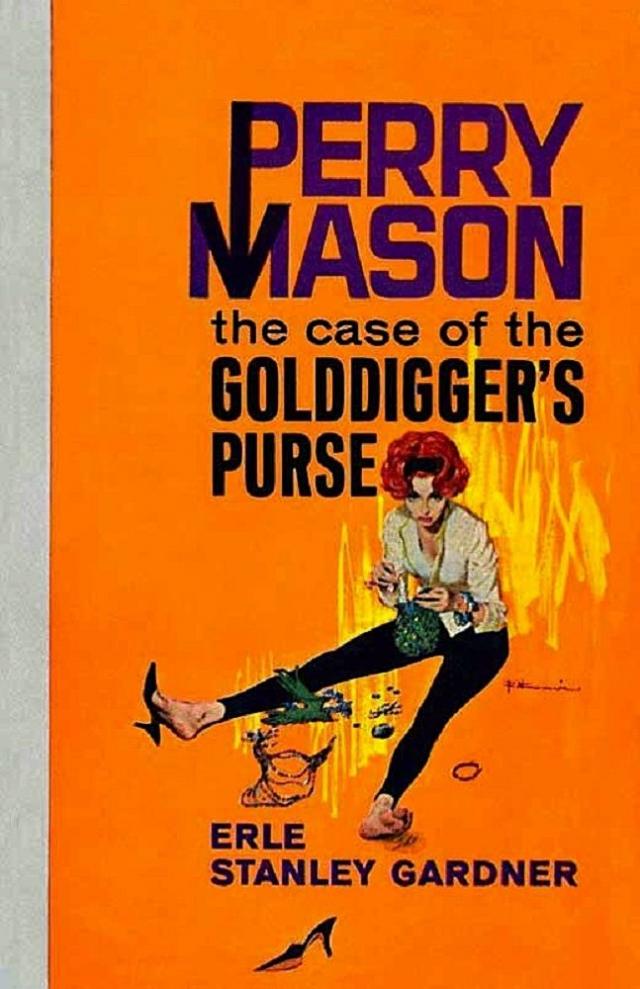
The Case of the Golddigger's Purse (Perry Mason Series Book 26),
p.8


“You mean there wasn’t a single thing in it?” Mason asked.
“Not so much as a burnt match.”
“I don’t get it,” Mason said.
“I didn’t get it at first, myself. It wasn’t until I had driven away from Faulkner’s house that the thing began to register with me. Ever sit in a parked automobile waiting for something to happen and being a little nervous—not knowing what to do with yourself?”
“I don’t believe I have,” Mason said. “Why?”
“Well, I have,” Drake told him, “lots of times. It usually happens on a shadowing job when the man you’re tailing goes into a house somewhere and you just have to stick around and wait, with nothing in particular to do. You begin to get fidgety, and after a while, you begin to play around with the dashboard. You don’t care to turn on the radio because a parked car with a radio blaring out noise is too noticeable, so you just sit there and fiddle around.”
“And empty the ash tray?” Mason asked, his voice showing keen interest.
“That’s right. You’ll do it nine times out of ten, if you sit there long enough. You start thinking of all the little chores there are around a car and the ash tray is one of the first things you think of. You take it out and dump it out of the window on the left-hand side of the car, being sure you’ve got it all clean.”
“Go ahead,” Mason said.
“So,” Drake told him, “after I drove away from Faulkner’s place, I started looking for some place where you could park an automobile and still see the entrance to the Faulkner house.”
“Some place straight down the street?” Mason asked.
“I looked there at first,” Drake said, “but didn’t find anything, so I swung around the corner and found there’s a place on the side street where you can look across a vacant lot and see the front of the Faulkner house, and also the driveway to the garage. Just about as far up the driveway as the point where Mrs. Faulkner parked the car. You’re looking across a vacant lot and between two houses but you can see the place all right. And that’s where I found a pile of cigarette stubs and some burnt matches.”
“What brand of cigarettes, Paul?”
“Three or four. Some with lipstick, some without. Different kinds of matches, some paper matches, some wooden ones.”
“Any identifying marks on the paper matches?”
“To tell you the truth, Perry, I didn’t stay there long enough to look. As soon as I found the place, I beat it back to tip you off. I thought perhaps you’d like to look at it. You were just pulling away from the curb, so I blinked my lights and tagged along behind. I was afraid to pull up alongside because I didn’t want the cop in charge to think I’d discovered something important within four or five minutes after I’d driven away from the place. Not that I think the idea would have registered with him, but it might have, you never can tell. Want me to go back and make a more detailed examination?”
Mason tilted back the brim of his hat, moved the tips of his fingers through the wavy hair on his temple. “Hang it, Paul, if you can see the house from the place where the ash tray was emptied, then anyone standing in the front of the house or on the driveway can look back and see the place where we would be looking the stuff over. Your flashlight would be something they couldn’t overlook.”
“I thought of that,” Drake said.
“Tell you what you do, Paul. Go back and mark the place some way so you can identify it. After that, get a dustpan and brush, sweep up the whole outfit and drop it in a paper bag.”
“You don’t suppose Dorset will think that’s concealing evidence, do you?”
“It’s preserving evidence,” Mason pointed out. “It’s what the police would do if they happened to think of it.”
“But suppose they happen to think of it and the stuff is gone?”
Mason said, “Let’s look at it from the other angle, Paul. Suppose they don’t happen to think of it, and a street-washing outfit comes along and sluices the stuff down into the sewer.”
“Well,” Drake said dubiously. “Of course, we could tell Sergeant Dorset.”
“Dorset has taken Sally Madison out to Staunton’s place. Don’t be so damn conscientious, Paul. Get busy and get that stuff in a paper bag.”
Drake hesitated. “Why should Mrs. Faulkner have been waiting there for you to drive up, and then come scorching around the corner as soon as she saw your car stop?”
Mason said, “It might mean she knew the body was in there on the floor and didn’t want to be the one to discover it, all by herself. It must also mean that she knew Sally Madison and I were going to call at the house, and that in turn means that Staunton must have reached her on the telephone, almost immediately after we left his place.”
“Where would he have telephoned her?”
“Probably at her house. She may have been there with the body on her hands and when she knew we were coming, she saw a chance to give herself a sort of alibi. You know, that she’d been absent all evening and arrived just about the same time we did. That brings us back to what must have happened out at Staunton’s house. I pulled back the drapes on the window of Staunton’s study so I could have a clear view of the telephone from outside the window. I thought he’d be certain to rush to the telephone and call the person who had given him the fish. All he did was switch out the lights in the study. That must mean there’s another telephone in the house. Maybe an extension, maybe even a second line because he seems to do business from the house. I'm going to get a telephone book and look up the address of Faulkner’s partner, Elmer Carson, and see if I can get there before the police do. You beat it up to your office, Paul, get a dustpan and a bag and sweep up that stuff from the ash tray. I’ll drive up to the boulevard and cruise around until I find a restaurant or an all-night drugstore where I can get a telephone directory. Carson lives right around here somewhere. I remember Faulkner saying that while he leased one side of the duplex house from the corporation, Carson had a private residence a few blocks away.”
“Okay,” Drake said. “It’ll take me fifteen or twenty minutes to get to the, office, pick up the stuff and get back.”
“That’s okay. Dorset won’t get back for half an hour, anyway; and the boys he’s left in charge certainly won’t think of scouting around the block and connecting up an empty ash tray in Jane Faulkner’s car with a pile of cigarette stubs at the curb on a side street.”
Drake said, “On my way,” and walked back to his car.
Mason drove rapidly to the main boulevard, cruised along until he found an all-night lunch counter. He entered the place, had a cup of coffee, consulted the telephone directory and, to his chagrin, found that James L. Staunton had two telephones listed, one in his insurance office, one in his residence. Both at the same street address.
Mason then thumbed through the directory to find the residence of Elmer Carson and noted the address. It was exactly four blocks from Faulkner’s residence.
Mason debated for a moment whether to call Carson on the telephone, then decided against it. He paid for his coffee, got in his automobile and drove to Carson’s house. It was dark.
Mason parked his car, climbed to the porch and was ringing the bell for the third time when lights showed in the hallway. A man in pajamas, dressing gown and slippers was outlined for a moment against lights from an inner room. Then he closed the door, switched off lights in the hallway and, walking along the darkened passageway, reached a point where he could switch on the porch light.
Mason stood outlined in the brilliant illumination of the porch light, trying in vain to see through the curtained glass of the doorway into the darkened corridor.
From the inner darkness, a voice called out through the door, “What do you want?”
“I want to see Mr. Elmer Carson.”
“This is a hell of a time to come punching doorbells.”
“I’m sorry, but it’s important.”
“What’s it about?”
Mason, conscious of the fact that his raised voice was audible for some distance, glanced somewhat apprehensively at the adjoining houses, and said, “Open the door and I’ll tell you .”
The man on the inside said, “Tell me and I’ll open the door,” and then added, “maybe.”
“It’s about Harrington Faulkner.”
“What about him?”
“He’s dead.”
“Who are you?”
“My name’s Mason—Perry Mason.”
“The lawyer?”
“That’s right.”
The porch light clicked off. A light was switched on in the corridor. Mason heard the sound of a lock clicking back, then the door opened, and for the first time Mason had a good look at the man who was standing in the corridor. He was, Mason judged, around forty-two or three, a rather chunky individual inclined to baldness at the top and at the back. Such hair as he had had been left long so that it could be trained to cover the bald areas. Now that the man had been aroused from slumber, the long strands of hair hung incongruously down over the left ear almost even with the man’s jawbone. It gave his face a peculiar one-sided appearance which was hardly conducive to the dignity which he tried to assume. His mouth was firm and straight. A close-clipped mustache was just beginning to turn gray. He was a man . who wouldn’t quit easily and wouldn’t frighten at all.
Carson raised rather prominent blue eyes to Mason, said curtly, “Come in and sit down.”
“You’re Elmer Carson?” Mason asked.
“That’s right.”
Carson moved around to close the front door, then ushered Mason into a well-kept living room, scrupulously clean, save for a tray containing cigarette stubs, a champagne cork and two empty champagne glasses.
“Sit down,” Carson invited, gathering the bathrobe around him. “When did Faulkner die?”
“Frankly, I don’t know,” Mason said. “Sometime tonight.”
“How did he die?”
“That also I don’t know. But rather a hurried inspection of the body leads me to believe that he was shot.”
“Suicide?”
“I don’t believe the police think so.”
“You mean murder?”
“Apparently so.”
“Well,” Carson said, “there were certainly enough people who hated his guts.”
“Including you?” Mason asked.
The blue eyes met Mason’s without flinching. “Including me,” Carson said calmly.
“Why did you hate him?”
“Lots of reasons. I don’t see any necessity to go into them. What did you want with me?”
Mason said, “I thought perhaps you could help me ascertain the time of death.”
“How?”
“How long,” Mason asked, “would a goldfish live out of water?”
“Hell, I don’t know. I’m sick and tired to death of hearing about goldfish or seeing goldfish.”
Mason said, “Yet apparently you spent some money on a lawsuit trying to keep a couple of goldfish in your office.”
Carson grinned. “When you start fighting a man, you hit his most vulnerable spot.”
“And his goldfish hobby was Faulkner’s most vulnerable spot?”
“It was the only one he had.”
“Why were you hitting at him?”
“Various reasons. What’s the length of time goldfish could live out of water got to do with the time Harrington Faulkner was bumped off?”
Mason said, “When I looked at the body, there were some goldfish on the floor, one of them gave a feeble flick of its tail. I picked it up and put it in the bathtub. It started to turn belly up, but I understand a few minutes later it had come to life and was swimming around.”
“When you looked at the body?” Carson asked.
“I wasn’t the first to discover it,” Mason told him.
“Who was the first?”
“His wife.”
“How long ago?”
“Perhaps half an hour, perhaps a little longer.”
“You were with his wife?”
“When we entered the house, yes.”
The blue eyes blinked a couple of times rapidly. Carson started to say something, then apparently either changed his mind or hesitated while he searched his thoughts for some suitable phraseology. Abruptly he added, “Where had his wife been?”
“I don’t know.”
Carson said, “Someone tried to kill him last week. Did you know that?”
“I’d heard of it.”
“Who told you?”
“Harrington Faulkner.”
“His wife say anything about that to you?”
“No.”
Carson said, “There’s something strange about that whole affair. According to Faulkner’s story, he was driving along in his automobile and someone took a shot at him. He claims he heard the report of the gun and that a bullet went whizzing past him and embedded itself in the upholstery of the automobile. That’s the story he told the police, but at the time he never said a word to me or to Miss Stanley.”
“Who’s Miss Stanley?” Mason asked.
“The stenographer in our office.”
“Suppose you tell me just what happened.”
“Well, he came driving up to the office and parked his car out in front of the place. I noticed him take out his knife and start digging at the upholstery in the back of the front seat, but I didn’t think anything of it at the time.”
“Then what happened?”
“I saw him go into his house—you know, the other side of the duplex. He was in there for about five minutes. He must have telephoned the police from there. Then he came over to the office and, except for the fact that he was unusually nervous and irritable, you wouldn’t have known anything had happened. There was some mail on his desk. He picked it up and read it, took the letters over to Miss Stanley’s desk and stood beside her while he dictated some replies directly to the typewriter. She noticed that his hand was shaking, but aside from that, he seemed perfectly normal.”
“Then what happened?” Mason asked.
Carson said, “As it turned out, Faulkner put the bullet down on Miss Stanley’s desk when he signed one of the letters she’d written for him, and then she’d placed the carbon copy of the letter over the bullet. But she didn’t notice it at the time and neither did Faulkner.”
“You mean that Faulkner couldn’t find the bullet when the police arrived?” Mason asked, his voice showing his keen interest.
“Exactly.”
“What happened?”
“Well, there was quite a scene. The first thing that we knew about any shooting was a good twenty minutes after Faulkner came in. Then a car pulled up outside, and a couple of officers came pushing into the office and Faulkner spilled this story about having been driving along the road, hearing a shot, and then hearing something smack into the seat cushions within an inch or two of his body. He said he’d dug out the bullet, and the police asked where the bullet was. Then the fireworks started. Faulkner looked around for the bullet and couldn’t find it. He said he’d left it on the top of his desk and finally as good as accused me of having stolen it.”
“And what did you do?”
“As it happened,” Carson said, “I hadn’t moved from my desk, from the time Faulkner came in until the police arrived, and Miss Stanley could vouch for that. However, as soon as I saw what Faulkner was driving at, I insisted the police search me, and search my desk.”
“Did they?”
“I’ll say they did. They took me into the bathroom, took off all my clothes and made a thorough search. They didn’t seem too enthusiastic about it, but I insisted they make a thorough job of it. I think by that time they had Faulkner pretty well sized up as an irascible old crank. And Miss Stanley was hopping mad. She wanted them to bring out a matron to search her. The police didn’t take it that seriously. Miss Stanley was so angry she dam near took off her clothes right there in the office. She was white-faced with rage.”
“But the bullet was on her desk?” Mason asked.
“That’s right. She found it there late that afternoon when she was cleaning up her desk, getting ready to go home. She has a habit of piling carbon copies of stuff on the back of her desk during the day, and then doing all her filing at four-thirty. It was about quarter of five when she found the bullet. Faulkner called the police back again, and when they came, they told Faulkner quite a few things.”
“Such as what?”
“They told him that the next time anybody shot at him, he should stop at the first telephone he came to and notify the police at once, not wait until he got to his home and not go digging out any bullets. They said that if the bullet had been left in the car the police could have dug it out and used it as evidence. Then they might have been able to identify the gun from which it had been fired. They told him that the minute he dug that bullet out, it ceased to be evidence.”
“How did Faulkner take it?”
“He was pretty much chagrined over finding the bullet right where he’d left it, after making all that fuss and excitement.”
Mason studied Carson for several thoughtful seconds. “All right, Carson,” he said, “now I’ll ask you the question you’ve been hoping I wouldn’t ask.”
“What’s that?” Carson asked, avoiding his eyes.
Mason said, “Why did Faulkner drive to his house before he notified the police?”
Carson said, “I suppose he was frightened and afraid to stop.”
Mason grinned.
“Oh well,” Carson said impatiently, “your guess is as good as mine, but I suppose he wanted to see if his wife was home.”
“Was she?”
“I understand she was. She’d been quite nervous the night before and hadn’t been able to sleep. About three o’clock in the morning she’d taken a big dose of sleeping medicine, and she was still asleep when the officers went in.”