The case of the golddigg.., p.21
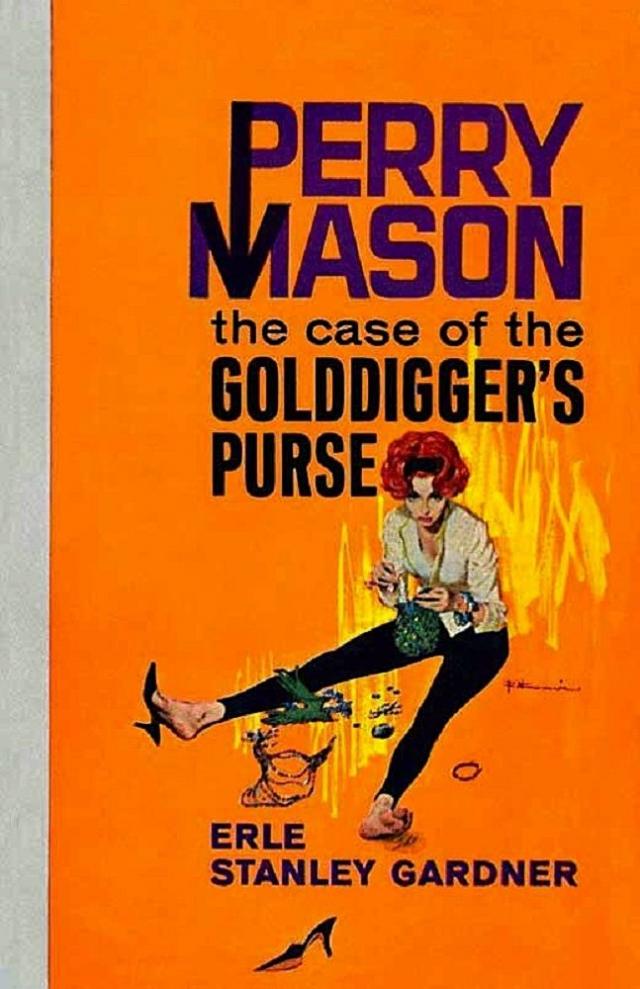
The Case of the Golddigger's Purse (Perry Mason Series Book 26),
p.21


Mason said, “If I get the opportunity to crucify her, I’m going to do it. You know as well as I do she’s lying about having spent the evening with Adele Fairbanks. She pulled the wool over Sergeant Dorset’s eyes there. She pretended to be ill and suffering so greatly from shock she simply had to have a girl friend come down to stay with her. She summoned the girl friend whom she knew she could depend upon to back her up in anything she said. And while Dorset was chasing around to Staunton’s place with Sally Madison, Jane Faulkner and Adele Fairbanks were hatching up their cute little alibi about having been together and having gone to a movie. Lieutenant Tragg would certainly never have let Mrs. Faulkner slip one over on him like that.”
“I’ll say he wouldn’t,” Drake said. “That certainly was a raw deal.”
Mason said, “Of course, Paul, someone must have been in that room with that corpse at least two or three hours after the murder was committed.”
“On account of the one live goldfish?” Drake asked.
“On account of the one live goldfish,” Mason said.
“It might have been one that happened to light in a low place in the bathroom floor where the water would collect in a little puddle and give him an opportunity to get just a little oxygen out of the water—just enough to keep him alive.”
“It could have been,” Mason said, and then added, “I consider the chances of that about one thousand to one.”
“So do I.”
“You take the fact that someone must have been in that room, coupled with the fact that we know Jane Faulkner was waiting around the corner where she could see us drive up to the house, and there’s only one answer.”
“I don’t see what good it’s going to do if you could prove that she was lying about having been in the room with the body,” Drake said. “In any event, her husband must have been dead at that time.”
Mason said, “They’re pinning a murder on my client simply because she told a few fibs. I’d like to prove someone else was telling lies as well. It all gets back to Staunton and the fact that he must have telephoned Mrs. Faulkner we were coming.”
Drake said, “I’ve got someone working on that, Perry. I won’t burden you with details, but it occurred to me there was only one way to check Staunton’s phone call.”
“How was that?”
“Through his wife. And in doing that I found out a few incidental facts.”
“Go ahead,” Mason said. “What did you find and how did you do it?”
“There was only one way of going at it,” Drake said. “That was to plant some good operative in the house who would take the part of a servant and who could pump Mrs. Staunton. I’ve got an operative right there in the house who’s checking up on things. Mrs. Staunton is tickled to death. She thinks this girl is the best all-around maid she ever had.” Drake grinned and went on, “What Mrs. Staunton doesn’t realize is that she’s getting maid service from a twelve-dollar-a-day detective and that the minute this girl gets the information she wants, she’ll dust out of there, leaving Mrs. Staunton with a sink full of dirty dishes.”
“Any reports on the phone call?” Mason asked.
“Nothing on that as yet,” Drake said.
“Keep after it,” Mason told him. “That’s an important angle in the case.”
Drake looked at his watch, said, “I think I’ll give her a ring right now, Perry. I’m supposed to be her boy friend. Naturally, Mrs. Staunton is so tickled with the service she’s getting, she makes no objection whatever when the maid’s boy friend rings up. Of course, this girl may not be able to talk with me, but I have an idea she may be there all alone today. Staunton is hanging around, waiting to be a witness in this case, and there’s a pretty good chance Mrs. Staunton is out. Let me give her a ring.”
Drake pushed back his chair and went out into the main part of the restaurant where there was a phone booth.
Mason said to Della Street, “You know, Della, if it weren’t for the time element in this case, we could bust it wide open.”
“What do you mean?”
“The way the district attorney follows every move Faulkner made up to the time of his death. They pick him up at five o’clock when he went to the bank, and carry him right on through from there. From the bank to the pet shop, from the pet shop to the consulting chemist, from the consulting chemist to his home, and leave him just time enough to get his coat and shirt off when the call to the man at the banquet place is put through, and then Faulkner is heard ordering Sally Madison out. At that time, he’s in a hurry to get dressed and shaved, and go to that banquet. He’s evidently been in that house not over five or six minutes. He’s partially undressed, turned hot water in the bathtub, has lathered his face, shaved and put the razor on the shelf. Hang it, Della, if it weren’t for that fingerprint on the satchel. How I would like to prove that someone entered that house right after Sally Madison went out and pulled the trigger on that gun!”
Della Street asked abruptly, “Do you suppose Sally really got that bullet?”
“She must have. I had doped that out even before I talked with her in jail. I felt certain that she must have been the one who dredged that bullet out of the fish tank.”
“You don’t think she got it for Carson?”
“No.”
“Why?”
“Because Carson didn’t know that anyone had taken the bullet out of there.”
“What makes you think that?”
“Because,” Mason said, “Carson must have been the one who made that final desperate attempt to recover the bullet by siphoning the water out of the tank and turning the tank upside down. And he must have done that on the night Faulkner was murdered. Hang it, Della, let’s go at this thing in an orderly way. Let’s quit letting ourselves be confused simply because we’re representing a client who is lying to us and who has got us into a jackpot. Let’s quit being exasperated and use our brains as reasoning machines.”
“No matter how you reason,” Della Street said, “you always come back to the same focal point in the case that no matter how much others may have been mixed up in it, Sally Madison was the one who opened that satchel and took out the money, the one who threw the empty satchel under the bed, the one who was found in possession of a part of the money.”
Mason started drumming with the tips of his fingers on the white tablecloth.
Paul Drake pushed open the door to enter the private dining room.
“Anything new, Paul?” Mason asked.
“This operative of mine is alone in the house, just as I thought. She’s been there all by herself ever since nine o’clock. Naturally, she’s been busy!”
“Prowling around?”
“That’s right. She’s stumbled across some interesting sidelights but nothing particularly startling.”
“What are the sidelights?”
“Apparently Faulkner had been financing Staunton in some sort of a mining activity.”
Mason nodded. “I had assumed all along that Faulkner must have had some hold on Staunton; otherwise he wouldn’t have taken the fish out there and told Staunton what to do—you know the fact that Staunton handled insurance business for the real-estate corporation isn’t anything that would give Faulkner such a leverage. Of course, Staunton might have mentioned that when I was talking with him, but he probably thought it was none of my business and simply mentioned the insurance matter.”
Drake said, “One thing my operative told me has me stumped.”
“What?”
“Talking with Mrs. Staunton last night, she found out that on the night of the murder the telephone in the house had been out of order. Only the telephone in Staunton’s study was working.”
“Is she sure, Paul?”
“That’s what Mrs. Staunton told her. Mrs. Staunton said she had to go to the study that night when she wanted to telephone. She mentioned it because she doesn’t like the fish and didn’t like to go in the room where the fish were. She said they gave her the creeps, staring at her with those queer, protruding eyes. But that her telephone had been out of order all afternoon and that the company didn’t get it fixed until the next day; that the one in the study was a separate line and was working.”
Mason said, “Hang it, Paul, do you suppose Staunton was smart enough to know what I was doing when I casually walked over and pulled the drapes back and stood looking out of the window?”
“I don’t know,” Drake said. “How long did you watch outside of the house after you went out, Perry?”
“It must have been four or five minutes. Staunton came back and stood looking at the fish. He seemed to be thinking of something—turning it over in his mind. Then he went back and switched out the light. We waited there a few minutes after he’d turned out the light. Of course, he could have deliberately fooled us. I felt certain that if he had been going to telephone somebody, he’d have done the telephoning right then.”
Drake said, “Well, we know that Mrs. Faulkner was out there watching. And you must be pretty certain that she upset that bowl of goldfish within, say, ten or fifteen minutes of the time you got there.”
Mason said, “Of course, the other goldfish were dead, Paul. Only the one that I picked up had just a little life in him.”
“All right, have it any way you want,” Drake said. “The one goldfish was alive. Someone must have put that one goldfish on the floor.”
Mason said thoughtfully, “There was a curved segment of the broken fish bowl that still had a little water left in it. I remember noticing that at the time, and I noticed it on one of the photographs this morning. Now, I’m wondering if that one fish couldn’t have been in that segment that had a little water in it, and then flopped out.”
“That, of course, would mean that the goldfish bowl could have been knocked over a long time before,” Drake said. “Perhaps when Faulkner was murdered, right around eight-fifteen or eight-twenty.”
“I wonder if a goldfish could live that long in such a small amount of water.”
“Darned if I know,” Drake said. “Want me to get a goldfish and try it?”
“I have an idea you’d better,” Mason said.
“Okay. I’ll phone my office and ask them to make the goldfish experiment.”
Perry Mason looked at his wrist watch, said, “Well, I guess we’ve got to go back and take it on the chin some more. Lieutenant Tragg will probably be on the stand this afternoon, and Tragg is a smooth worker. How much of a mining deal was it that Staunton had with Faulkner, Paul?”
“I don’t know, Perry,” Paul Drake said, holding open the door of the dining room. “I may get a little more information later on in the afternoon.”
“I don’t imagine I’d have cared to have Faulkner as a partner in a mining deal,” Della Street said.
“Or in anything else,” Drake observed fervently.
They walked slowly back to the courthouse, and as Judge Summerville reconvened court at two o’clock, Ray Medford, with every indication of smug virtue, said, “I want the record to show that at this time we are turning over to counsel for the defense, for his inspection, three magazines which were found on the floor of the bathroom where the murder was committed. By carefully observing photographs which were taken and using a magnifying glass to bring out details, we are able to state that the magazines as now handed to counsel for the defense are in the order in which they were found on the floor.”
Mason took the proffered magazines and said, “Calling the attention of the Court to the fact that the magazine which was on top, and which bears a peculiar semicircular ink smear, is a current issue, while the bottom two are older numbers.”
“Do you think there’s some significance in that?” Medford asked curiously.
“I do,” Mason said.
Medford started to ask some question, then caught himself in time and regarded Mason with thoughtful speculation as the attorney opened the magazine and riffled the pages.
“Our next witness will be Lieutenant Tragg,” Medford said, “and . . .”
“Just a moment,” Mason interrupted. “I call the attention of Court and counsel to a check which I have just discovered in the pages of this magazine which was on the top of the pile, a blank check which has not been filled in in any way, a check bearing the imprint of the Seaboard Mechanics National Bank.”
Judge Summerville showed his interest. “That blank check was in the magazine, Mr. Mason?”
“Yes, your Honor.”
Judge Summerville looked at Medford. “You have noticed the check, Counselor?”
Medford said, casually, “I think somebody did mention something about a book mark in one of the magazines.”
“A book mark?” Mason asked.
“If it is a book mark,” Judge Summerville said, “it might be interesting to note the place in the magazine where it was found.”
“On page seventy-eight,” Mason said, “which seems to be a continuation of a romantic story.”
“I’m quite certain it has no significance,” Medford said easily. “It was simply a blank check which had been used as a book mark.”
“Just a moment,” Mason said. “Has any attempt been made to get fingerprints from this check?”
“Certainly not.”
“Your Honor, I want this check tested for latent fingerprints,” Mason said.
“Go ahead and test it, then,” Medford snapped.
Mason’s eyes showed that he was excited, but with the ring generalship which had been learned from many courtroom battles, his voice showed no trace of emotion, only that clear resonance which enabled him to hold a courtroom completely spellbound without seeming to raise his voice.
“I call your Honor’s attention,” he went on, “to the fact that in the lower left-hand corner of this check there is a peculiar triangular point of paper adhering to the body of the check. In other words, the check was torn out of a checkbook along a line of perforations, but at the extreme bottom of the check the line of cleavage left the perforations, and a small triangular tongue of paper is adhering to the check.”
Medford said sarcastically, “That happens about half of the time when I tear checks out of a book. It merely means that the check was torn out in a hurry and . . .”
“I think counsel doesn’t get the significance,” Mason interrupted. “ If the Court will notice the checkbook which has been introduced in evidence, and which has the stub showing an amount of one thousand dollars, and the name ‘Tom’ and then the three letters ‘G-r-i’, the Court will notice that in the lower right-hand corner of that stub, there is a little triangular piece of paper missing. It occurs to me that it might be well to compare this check with that stub and see if this isn’t the check which was torn from that stub.”
Medford’s face showed consternation.
“Let’s see that check,” Judge Summerville said abruptly.
Mason said, “May I suggest, your Honor, that the check be handled very carefully and only by one corner so that if there are any fingerprints remaining . . .”
“Quite right. Quite right,” Judge Summerville said.
Mason, holding the check by one corner carried it up to Judge Summerville’s desk. Judge Summerville took the checkbook which had been introduced in evidence from the clerk of the court, and while Medford and Mason leaned over his shoulders, the judge carefully placed the check against the perforations of the checkbook. There was no mistaking the keen interest on the judge’s face.
“It fits,” he said in a tone of finality. “That’s the check.”
“Of course,” Medford started to protest, “that merely means . . .”
“It means that there is less than one chance in ten million that the jagged, irregular lines of that torn piece of paper would coincide with the place which was torn from the check stub unless that was the check that was tom from the book,” Judge Summerville said sharply.
“Therefore,” Mason interposed, “we are faced with a situation where the decedent evidently started to fill out the stub of a check showing a payment made to Tom Gridley of one thousand dollars, but tore the check which was attached to that stub out of the book and placed it within the leaves of this magazine. It is, therefore, quite apparent that the decedent never intended to fill out the check, but only to fill out a check stub, leaving it to appear that he had made a check to Tom Gridley.”
“What would be the object in doing that?” Judge Summerville asked Mason.
Mason smiled. “At the moment, your Honor, the prosecution is putting on its case, and I will therefore leave the answering of that question to the prosecution. When the defendant puts on her case, she will endeavor to explain any evidence that she introduces. And in the meantime, I suggest that the prosecution explain the evidence it introduces.”
“I haven’t introduced it,” Medford said testily.
“Well, you should have,” Judge Summerville told him sharply, “and the evidence is going to be introduced if the Court has to do it on its own motion. But first we’re going to turn that over to a fingerprint expert and see whether any latent fingerprints can be developed.”
“I would suggest,” Mason said, “that the Court appoint its own expert. Not that the police are at all incapable, but they may be somewhat biased.”
“The Court will appoint its own expert,” Judge Summerville announced. “The Court will take an adjournment for ten minutes, during which time the Court will get in communication with an expert criminologist and see what fingerprints can be developed on this check. In the meantime, the clerk will keep this check in his custody. I suggest that we run a pin through this corner and that the check be handled in such a way that any fingerprints which may remain on it will not be disturbed.”
There was just enough accent on the words “which may remain” to make it apparent that Judge Summerville was expressing judicial irritation that the evidence had not been given proper consideration by the police at a time when there would have been a chance of developing latent fingerprints.
Judge Summerville retired with dignity to his chambers and left Medford free to engage in a whispered conference with Sergeant Dorset and Lieutenant Tragg. Dorset, quite plainly, was angry and irritated. But Tragg was puzzled and cautious.