The friend of the family, p.4
The Friend of the Family,
p.4
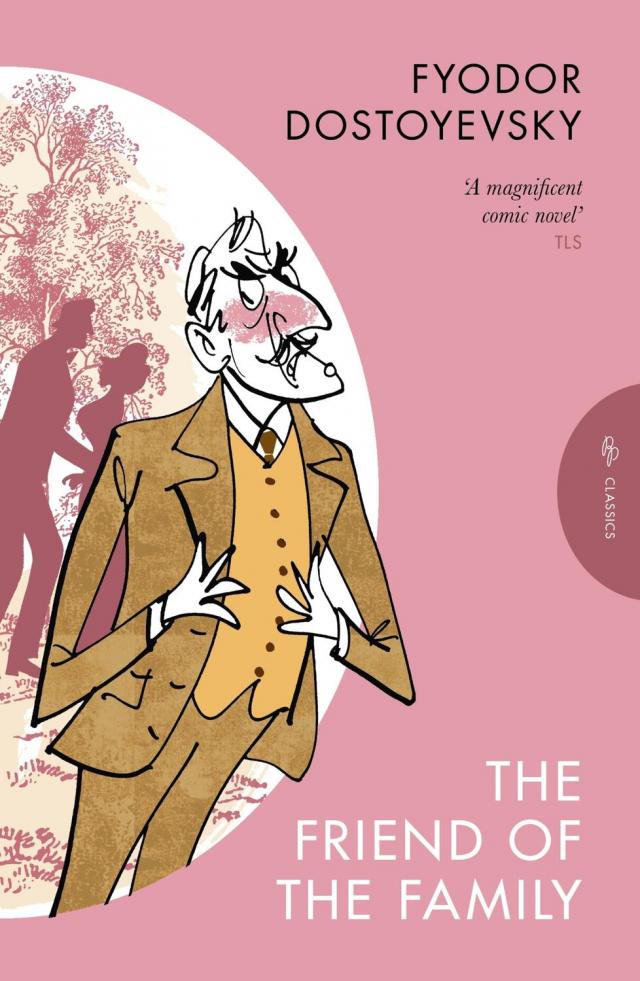


Imagine the most craven and insignificant of social outcasts, utterly useless to man or beast, utterly vile, but inordinately vain, and without a single personal virtue to justify his cankered vanity. Let me state at the outset: Foma Fomich Opiskin was the embodiment of the most boundless vanity, but vanity of a peculiar sort, to be found only in complete nonentities; vanity nurtured by crushing past injuries, long-festering, and from then on oozing envy and poison at every human contact, every encounter with another’s good fortune. Needless to say, all this was seasoned with the most exaggerated sense of offence, the most insanely developed mistrust of the world. Suppose one were to ask where such vanity is born, how it is conceived in such nonentities, such miserable creatures who by virtue of their social status alone ought to know their place — what would the answer be? Maybe there are exceptions, among which my hero did in truth belong. He was indeed an exception to the rule, as the subsequent course of events will prove. Be that as it may, one may well ask the following question: how can one ever be sure that even those who have come to consider it their honour and happiness to be at your beck and call and to play the fool for your exclusive pleasure, how can one be sure that such people have completely renounced all vanity? And what of the jealousies, the intrigues, the malice, the backbiting, the surreptitious hissing in distant corners of one’s own house, somewhere in the same room, at one’s elbow, at one’s very table? … Who knows but that some of these ill-fated outcasts, your clowns and God-forsaken wretches, instead of being cowed by humility, have had their vanity augmented still further by this very humiliation, by the sycophancy, wretchedness and obligation to play the fool enforced upon them, by the extirpation of all individual personality? Who knows but that such warped vanity might perhaps merely be a deceptive manifestation of initially corrupted personal dignity, dignity which might have sustained its first reverses perhaps in childhood, in circumstances of oppression, poverty, filth — perhaps been degraded in the persons of the parents themselves of the future outcast, before his very eyes? But I stated that Foma Fomich was an exception to the general rule. And so he was. He had once tried his hand at literature, and had suffered disappointment and rejection; but, of course, literature has ruined mightier men than Foma Fomich — especially rejected literature. It is also likely, though I don’t know for sure, that attempts to establish himself prior to his literary period had been none too successful either, and that wherever he turned, a smart kick in the pants had been his due rather than a decent wage. I have no definite facts to hand, but according to some enquiries I made, it seemed that Foma Fomich had actually produced a ‘novel’ rather resembling such works as The Liberation of Moscow, Ataman Storm, Filial Love — or Russians in 1104, etc., etc., which in the thirties used to appear every year by the score and afforded such delectable food for the wit of Baron Brambeus. All this, of course, is past history, but the serpent of literary self-love bites deep and the wound never heals, especially when its chosen victims are the insignificant and the feeble-minded. Humiliated at his first literary attempt, Foma Fomich there and then joined the countless ranks of the embittered whence all hapless spiritual vagrants and God-forsaken simpletons emerge. I presume that his monstrous vainglory, his need to be universally acclaimed, admired and applauded, also dated from that particular moment. Even as the General’s fool, he managed to surround himself with a troupe of loyal and devoted idiots. His was an insatiable need to dominate, to play the oracle, to show off whatever the circumstances. If he failed to receive praise from others, then he would set about praising himself. I can clearly recollect his words when he spoke to us in my uncle’s house at Stepanchikovo after becoming virtual lord and master: ‘I’m no lodger in this house,’ he announced mysteriously, ‘I’m no lodger here! Just give me a little time to arrange everything, to show you the way of things, and then adieu: to Moscow, to publish a journal! Thirty thousand people will throng every month to attend my lectures. My fame will spread far and wide, and then — woe betide my enemies!’ But his genius, even before it had established itself, insisted upon immediate reward. The prospect of being paid in advance is always alluring, and in his case especially so. I know he seriously tried to convince my uncle that he, Foma, was destined one day to perform a great feat, a feat for which he had been expressly summoned into this world, and that in hours of solitude and darkness a winged creature or something of that kind was providing him with the necessary strength and inspiration. Namely, he was to compose a profoundly searching magnum opus of a spiritually edifying nature that would shake the world and stun all Russia. And then, after all Russia had been stunned, he, Foma, scorning glory, would withdraw to a monastery, spend the rest of his days and nights praying in the caverns of Kiev for the salvation of his motherland. My uncle, of course, was deeply impressed by all this.
Now imagine Foma Fomich, the lifelong martyr, downtrodden and beaten into submission, perhaps actually beaten, Foma the secretly carnal and self-loving, Foma the embittered man of letters, Foma the indigent buffoon and despot at heart however humble and pathetic his origins, Foma the arch-bluffer with a penchant for insolence whenever things were on the mend — imagine this Foma risen to honour and respect, cheered and applauded on all sides thanks to his semi-demented benefactress and his besotted, totally compliant benefactor, in whose house he ended up after so many arduous years of wandering. My uncle’s character, of course, requires a more detailed explanation for without it the meteoric rise of Foma Fomich is impossible to grasp. For the time being, however, suffice it to say that Foma proved the truth of the old proverb: seat a pig at a table and it will put its feet on it. He more than made up for his past! A base nature subjected to tyranny will always tyrannize others as soon as it has secured its own release. Foma Fomich had been tyrannized, and he too experienced an immediate compulsion to tyrannize others; he had been abused, and he too set about abusing others. He had had to play the clown, and he too immediately surrounded himself with a company of clowns. He turned into a shameless braggart; he gave himself the most ludicrous airs, he demanded the impossible, he bullied mercilessly, and the outcome was that sensible and decent people, even before they had personally witnessed his antics and had only heard reports, considered him to be possessed of the devil, made the sign of the cross and spat with disgust at the sound of his name.
I mentioned my uncle. Without, I repeat, my shedding some light on this remarkable personage, the impudent ascendancy of Foma Fomich in the household, his metamorphosis from a base clown into a man of stature, can never be properly understood. Apart from being unusually kind-hearted, my uncle, in spite of his somewhat rugged looks, was the most delicate and sensitive person imaginable; he was a man of the utmost nobility of soul and of courage tried and tested. I say ‘courage’ without reservation, because no matter what the obstacles, he never neglected or shirked his obligations or hesitated in the performance of his duties. In spirit he was as innocent as a child. Indeed, he was a child at the age of forty: totally uninhibited and full of good cheer, he considered all men to be saints, blamed only himself for other people’s shortcomings and exaggerated their virtues out of all proportion, even ascribing them where there were none. He was one of those uncontaminated souls who are ashamed to see bad in others, who hasten, on the contrary, to endow their fellow-men with all the virtues, and to take delight in their success, living perpetually in an ideal world in which they accuse no one but themselves whenever disappointments occur. Sacrifice of their own interests for the good of others is the vocation of such souls. One might have suspected my uncle of being timid, spineless and weak. Of course, he was weak and altogether too soft-hearted, but not for any want of backbone, simply because he had a terror of giving offence, of performing a cruel act, which sprang from an excessive respect for his fellow-men and for humankind in general. Besides, he was irresolute and faint-hearted only where his own personal interests were concerned, which he neglected to an extraordinary degree, and as a result of which he was subjected, all his life, to taunts and ridicule, even from those on whose behalf he sacrificed such interests. He never believed that he could have enemies, and if he happened to come across any, he somehow failed to notice them. He had an unholy dread of domestic squabbles, and would always give in at once rather than lift a finger in his own defence. His compliance was born of a shy generosity of spirit, a bashful considerateness towards others: ‘I only want,’ he would readily pronounce, dismissing any suggestion of leniency and weakness, ‘I only want to see everybody happy and contented.’ Needless to say, he could never resist championing all manner of noble causes, and consequently fell easily under the spell of any charlatan who took the trouble to disguise his motives. My uncle was credulous to an unbelievable degree, and in this respect was often the victim of grievous deception. And when at last, after much torment, he would be forced to admit that the person deceiving him was a scoundrel, he would place the blame upon himself above all, and at times, himself alone. Now picture a capricious idiot of a woman having just installed herself in his peaceful household together with another idiot, her idol; a woman who all her life had feared only her husband the General, but now had no one to fear, who moreover imagined that recompense was due to her for past sufferings — an idiotic woman whom my uncle felt bound to revere out of sheer filial duty. She and Foma Fomich immediately began by impressing upon my uncle that he was rude, impatient, inconsiderate, and, above all, egoistic in the extreme. The amazing thing was that the stupid old woman sincerely believed what she preached. But I think Foma Fomich did too, to a certain extent at least. They also convinced my uncle that it was the Almighty Himself who had sent him Foma to save his immortal soul and subdue his unbridled passions; they convinced him that he was arrogant, vainglorious of his wealth, and capable of the sin of begrudging Foma Fomich every morsel of his keep. Very soon my poor uncle ceased to have any doubts about his moral degradation, and was ready to tear out his hair and grovel for pardon.
‘It’s all my fault, you know,’ he would say to whoever was listening. ‘I’m to blame for everything! You’ve got to be doubly considerate to someone in your debt … That is to say … My word! … what am I saying! In my debt? I’m lying again! Just the opposite, he puts me in his debt by staying with me! And I begrudged him his keep! … Though I did nothing of the sort really, a mere slip of the tongue, happens with me all the time … And if you must know, my dear sir, the fellow’s had a frightfully difficult life but has managed to do an enormous amount of good — ten solid years he tended a sick friend and received nothing but insults in return — all this calls for a reward! And don’t forget, he’s a man of learning … A writer! A highly educated man! A most noble spirit, in short.’
The picture of Foma, erudite and miserable, acting the part of a clown to a capricious and cruel master, filled my uncle’s heart with pity and indignation. He was quick to attribute all that was outlandish and mean in the character of Foma Fomich to the suffering, humiliation and bitterness of former days. In his gentle and lofty-minded way he immediately concluded that the poor devil could not be held responsible for his behaviour and that he must not only pardon him but soothe and heal his wounds with tenderness and compassion, so as to reconcile him with humanity. Having made up his mind on this point, he was carried away completely and proved utterly incapable of realizing that his newly found friend was nothing but a lascivious, capricious, selfish, indolent brute. In the genius and erudition of Foma Fomich he had supreme belief. I should mention that the very words ‘science’ and ‘literature’ inspired my uncle with the most naive and artless awe, although he had never studied anything himself in his life. This was one of his principal, if quite harmless, foibles.
‘He’s writing an essay!’ he would say, on tiptoe, though Foma’s study was two rooms away. ‘Haven’t a clue what it’s all about,’ he would add with a proud and mysterious air, ‘probably just a lot of drivel, my friend … that is to say, drivel, in the best sense, you understand. Crystal-clear to some, no doubt, but for the likes of us, just plain gibberish … something about forces of production, so he said. Something to do with politics, very likely. Yes, he’ll be famous yet! And we may get a chance to bask in his glory. That’s what he told me, my friend …’
I have positive proof that on Foma’s express orders my uncle was compelled to shave off his splendid red-brown side whiskers. It seemed to Foma Fomich that they made him look too much like a Frenchman, which was, of course, unpatriotic. Little by little Foma began to interfere in the running of the estate and to put forward clever suggestions. These clever suggestions had a disastrous effect. The peasants soon realized what was going on and who was the real master and scratched their heads in puzzlement. One day I overheard one conversation that Foma Fomich had with the peasants; I confess I was eavesdropping. He had previously declared how fond he was of talking to the ‘shrewd Russian peasant’. And now he had called in at the threshing barn; first he spoke to the peasants about farm management, although he could not tell oats from wheat, then in suave tones explained the sacred duties of the peasant to his master, touching in passing upon the subject of electricity and the division of labour, of which, of course, he understood not a jot, went on to explain the revolution of the earth around the sun, and finally, in a state of euphoria at his own eloquence, turned to discussing the ministers of the crown. I understood this. Was it not Pushkin who wrote about a certain father who tried to impress on his four-year-old son that he, his papa, ‘was so terribly brave that the Tsar loved him’? How desperately that papa needed his four-year-old listener. The peasants, as always, listened submissively to Foma Fomich.
‘And what kind of wages did the holy Tsar pay you, master?’ one grey-headed old man by the name of Arkhip Korotky suddenly asked him, in an obvious attempt to ingratiate himself. But the question struck Foma Fomich as being unduly familiar, and familiarity he detested above all else.
‘And what’s that to you, you clod?’ he replied, looking contemptuously at the poor peasant. ‘Take your ugly face away before I spit on it!’ Foma Fomich invariably adopted this tone when conversing with the ‘shrewd Russian peasant’.
‘Father,’ another peasant intervened, ‘we’re ignorant folk. You may be a major, or a colonel, or His Eminence himself for all we know — we don’t know how to speak to you.’
‘Listen, you clod,’ replied Foma Fomich, but in a gentler voice this time, ‘there are wages and wages, blockhead! Somebody may well be a general, but be paid nothing, because the Tsar has no use for him. If you must know, my salary at the Ministry came to twenty thousand rubles, but I never took a kopeck because I served for the honour of it, and besides, I had my own means. All my salary went towards state education and aid for the destitute victims of the fire in Kazan.’
‘My word! Then it was you who rebuilt the town?’ replied the peasant, astonished.
The peasant folk were always full of astonishment at Foma Fomich.
‘I had a hand in it,’ Foma replied reluctantly, as though such a subject was much too lofty for such an audience.
With my uncle he would adopt a completely different tone.
‘Who exactly were you to begin with?’ he once inquired suddenly, lolling back in his easy chair after a rich meal, while a servant armed with a freshly plucked lime branch fanned him from behind to keep the flies away. ‘What sort of person were you before I arrived? But I have kindled a spark of the divine fire in you, and it will glow in your soul forever. Have I kindled a divine spark in you or not? Answer me: have I, or have I not, kindled a spark in you?’
If the truth be known, Foma Fomich did not know himself why it was that he had asked such a question. But my uncle’s silence and confusion suddenly infuriated him. Formerly meek and long-suffering, he was now apt to flare up like a tinder-box at the least provocation. Uncle’s silence offended him and he had to insist upon an immediate answer.
Uncle hesitated, hummed and hawed, and did not know what to say.
‘May I remind you that I’m still waiting for a reply,’ continued Foma Fomich in offended tones.
‘Mais répondez donc, Yegorushka!’ the General’s Lady chimed in, with an impatient shrug of the shoulders.
‘I’m asking you: have you got this spark in you or not?’ repeated Foma in a patronizing tone, helping himself to a bonbon from a box which, on the express orders of the General’s Lady, was always placed at his side.
‘Good heavens, I don’t know, Foma,’ my uncle replied at last in despair, ‘perhaps there may be something of the kind … you really oughtn’t to ask me such questions, I’m afraid I might tell a lie …’
‘Very well! It follows then that I’m not even worthy of a reply — is that what you wanted to say? All right then, so I am a nobody!’
‘Not at all, Foma, bless your soul! I didn’t mean that at all!’
‘No, I know exactly what you meant.’
‘But I swear I never did!’
‘Oh, very well! Then I’m a liar too! Have it your way: I’m out to pick a quarrel, is that it? What’s one insult more or less! I can bear them all …’
‘Mais mon fils …’ the General’s Lady cried out in terror.
‘Foma Fomich! Mamma!’ my uncle exclaimed in despair, ‘Honestly, I am not to blame! A slip of the tongue maybe, no more! … You mustn’t look at me like that, Foma. Of course I’m stupid — I can feel myself how stupid I am — I can hear myself uttering the most infernal nonsense sometimes … Say no more, Foma! I know it all!’ he continued with a wave of his hand. ‘Would you believe it, I’ve lived forty years, and up till now, up to the time you came along, I always thought I was a normal person … It never occurred to me that I was as sinful as a goat and an egoist of the first order — I’ve piled up such a heap of evil, it’s a wonder the Earth can bear the weight of it all!’