Normal women, p.39
Normal Women,
p.39


The other class of flowergirls is composed of girls who, wholly or partially, depend upon the sale of flowers for their own support or as an assistance for their parents. They are generally very persevering, more especially the younger children, who will run along barefooted, with their, ‘Please, gentleman, do buy my flowers. Poor little girl!’ or ‘Please kind lady, buy my violets. O, do! please! Poor little girl! Do buy a bunch, please, kind lady!”81
Poor girls who could get neither education nor training grew into poor women. Mayhew saw women who were so-called ‘mudlarks’, searching the riverbank and tidal ponds for washed-up goods to sell:
Among the mud-larks may be seen many old women, and it is indeed pitiable to behold them, especially during the winter, bent nearly double with age and infirmity, paddling and groping among the wet mud for small pieces of coal, chips of wood, or any sort of refuse washed up by the tide. These women always have with them an old basket or an old tin kettle, in which they put whatever they chance to find. It usually takes them a whole tide to fill this receptacle, but when it is filled, it is as much as the feeble old creatures are able to carry home.82
Flower girls, prostitutes, criminals and housewives would be among the 6.5 million women listed as ‘unoccupied’ in the 1851 census. The ‘unemployed’ women and 3 million unemployed men included the elite, who would declare themselves to be at leisure – though perhaps supervising land, investing in shares, renting property and profiteering from assets. Most women who described themselves as ‘in work’ were working in manufacture, from piecework at home to shifts in factories: 1 million women and 1.7 million men. More than in agriculture and fishing: 700,000 women and 1.6 million men.83
Women could not make a good living in the country after they were driven from the common fields and forests by land enclosures. Women smallholders and food producers were squeezed out of the local markets. By the end of the eighteenth century in Billericay, Essex, women of middling fortune were no longer running the stalls in the weekly markets – men had them and the women traded from carts. In Oxfordshire at the same time, women had given up the expensive trades: horses, livestock and grain were all being sold by men, while women were selling fruit and vegetables.84
The mechanisation of farming brought men into women’s jobs. Cheese and butter-making had been a traditional skill of milk maids and dairy maids, who maintained and milked the dairy herd, skimmed the cream, churned the butter and pressed the cheeses by hand.85 The bond between women and their herds was famous, as was the need for cool hands and a light touch with dairy products. But when the dairies were mechanised, men entered the work and demanded a man’s wage to match.
A few women in agriculture became landowners and prosperous tenants working in profitable agri-businesses. Women landowners had traditionally managed their lands during the regular absences of their husbands in earlier centuries, but from the mid-eighteenth century farming and landholding became a fashionable occupation for men. Increasing profits after the enclosures attracted male investors into land, and the snob appeal of the country estates encouraged middle-class tradesmen to buy land. The arrival of capital, machines and scientific theories into traditional agriculture put women landowners at a disadvantage with no access to a science, engineering or financial education. Nor could women farmers easily raise capital to buy new agricultural machines. The growing belief from the Romantic movement, that men had scientific and rational brains whereas women were emotional and responsive to wild Nature, provided further discouragement for women trying to make a living from farming. As one embittered woman farmer said in Gloucestershire in the early 1800s: ‘A woman undertaking to farm is generally a subject of ridicule.’86
One women entrepreneur managed to transform her bankrupt inheritance into a hugely successful industry. Eleanor Coade (1733–1821) conducted her successful London linen business with a stock of cloth worth £200 in the mid-1760s. Despite the bankruptcy and death of her father, she increased her stock to a value of £4,750 in 1767, before leaving the business and going into partnership with Daniel Pincourt, a maker of so-called ‘artificial stone’. When Pincourt claimed he was the sole proprietor of the venture, Coade sacked him and took the company under her own control. She developed her own formula for the stone, called Lithodipyra or Coade stone, a ceramic stoneware that could be poured into moulds and come out looking like carved stone. It was made of clay from the West Country (her family home was at Lyme Regis) mixed with flint, sand and glass, and fired twice at high temperatures.
Eleanor lived on the factory premises at Narrow Wall in Lambeth and made a huge success of her products, designing classical statuary and dressing for buildings. She exhibited her work at the Society of Artists. In 1774, she showed five pieces:
A chimney piece, in artificial stone, for a nobleman’s hall. From a design of Mr. Johnson’s.
A vestal and pedestal; in artificial stone.
A sybyl in artificial stone.
A statue and pedestal for a candelabrum.
A tripod.87
Though manufactured and not carved, the statues and ornaments were still expensive: a 9-foot-tall garden statue cost 100 guineas, while a Corinthian capital was £14.88 Coade stone dominated the market. She produced stoneware for the gothic screen at St Georges Chapel, Windsor, stone for the Royal Pavilion, Brighton, Carlton House, London, and the Royal Naval College at Greenwich. Shortly after her death, her company produced a large quantity of stoneware used to refurbish Buckingham Palace. Belmont House, the Coade family home in Lyme Regis, is decorated with Coade stone motifs and the handsome South Bank lion on Westminster Bridge in London is made of Coade stone.
A modern photograph of the South Bank Lion shows the lasting qualities of Coade stone. He was cast in 1837 in Eleanor Coade’s workshop
South Bank Lion by William F. Woodington, 24 May 1837, photographed by anon (Michael Wald/Alamy)
Eleanor Coade never married, but took the courtesy title of ‘Mrs’ Coade. She sold her factory to her manager in 1813 for £4,000 – he had hoped to inherit it for free. At her death in Camberwell in 1821, she left her fortune to charity schools, clergymen and different members of her family. She specified that her bequests to married women friends were not to be controlled by their husbands.
Domestic work employed 466,000 women and 150,000 men.89 By the middle of the nineteenth century, over three-quarters of servants were women. Domestic service formed the biggest single occupation for women and it was the fastest growing – but despite elite advisors’ enthusiasm for working-class women going into service, the work was widely hated by the women themselves. Wherever other work could be found locally, women preferred it. In York in 1851, 60 per cent of the working women toiled in domestic service, but in Stockport and Preston, where the textile mills provided alternative arduous work in terrible conditions, only 3 per cent of women chose domestic service.90
Men servants were better paid and conferred more status on the elite home. In 1798, a footman in a big house was paid £50 a year and could expect to be given a livery to wear, his keep and tips.91 The upper women servants earned less than half that: up to £20 a year. A female cook received between £7 and £15, housemaids between £4 and £10, and the lowly kitchen scrubs £2 a year. Servants in middle-class houses earned half the wages of elite servants, and a cleaner in public buildings or a barmaid or waitress would make less than £2 a year and was unlikely to ‘live in’ or receive meals.92 This would not be enough to support herself – she would have to take another job, depend on someone else, steal or sell sex.
Many of the working-class women said to be ‘unemployed’ in the 1851 census should have been named as ‘unpaid’. They were productive in their homes, maintaining the family at their own expense – working for the family but ‘not paid’, labouring, assisting or even a full partner with their husband – but drawing no pay and receiving none of the profits. Children, too, worked unpaid in the family business. A witness to a parliamentary committee in 1840 described a handloom weaver at work: ‘1. The man was in the loom weaving, 2. A boy of 10 years of age was winding bobbins, 3. The wife was at her husband’s elbow, picking the work. 4. His daughter was at the back of the loom, taking up the broken threads of the warp, for it was not a good warp . . . the piece was . . . the work of the family.’93
Money also flowed towards men in the elite. Although a fifth of all British companies were owned and run by women entrepreneurs in the nineteenth century, a rich bride endowed her husband with everything on her wedding day, unless special provision had been made for her. Women investing in the family business were not recognised as investors, shareholders or proprietors, and were not paid a dividend.94 Women’s names disappeared from the lists of directors, and company names boasted the ‘Father and Sons’ style – even with daughters working in the business. The exclusion of women as significant entrepreneurs in a family business was confirmed by the Company Acts of 1856–62, which created full limited liability and freed a business from family ownership and kinship control.95 When both husband and wife had their own business, her earnings would be expected to pay family expenses or support the husband’s business but his did not contribute to hers.96
Women continued to work successfully in the theatre, where they might attract upper-class men who could afford to keep them as mistresses. One who nearly made the transition to wife was a Jewish woman: Hannah Norsa.
The first Jewish woman to star on the English stage, as Polly Peachum in The Beggar’s Opera at Drury Lane in 1732, Hannah Norsa was the daughter of a tavern keeper, Isaac Norsa, and his wife, Esther de Aharon de Chaus. Hannah caught the eye of Robert Walpole, Earl of Orford, and lived with him as his wife at Houghton Hall in Norfolk, welcoming guests and moving in the first circles of society. A local lady reported: ‘She is a very agreeable Woman, & Nobody ever behav’d better in her Station, She have every body’s good word, and bear great Sway at Houghton, She is every thing but Lady, She came here in a Landau & Six horses & one Mr Paxton a young Clergyman with her.’
Walpole planned to marry Hannah Norsa when his wife died, but the countess did not oblige, and he died before her, in debt. Hannah’s theatrical friends gave a benefit performance for her, and she lived as a single woman, dying in 1784, leaving a considerable fortune.97
Hannah Norsa (1712–84), actress and singer, lived with Robert Walpole, Earl of Orford, at Houghton Hall after he separated from his wife, until his death in 1751
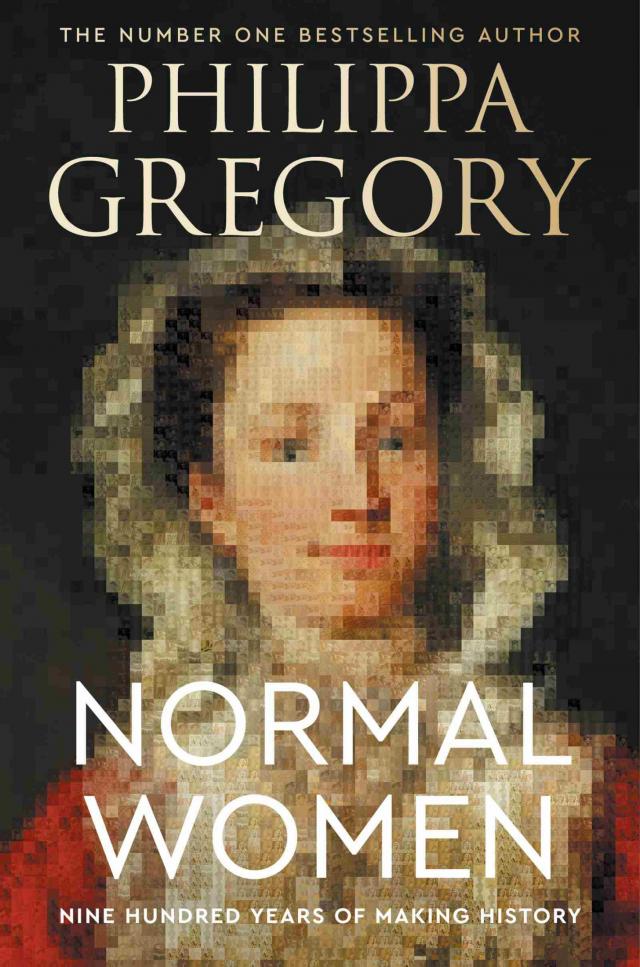
[And Cover] Hannah Norsa by R. Clamp, after Bernard Lens III stipple engraving, 1794 (National Portrait Gallery, London)
Elite women’s work was to advertise the class and wealth of the family, by showcasing expensive clothes and jewellery, now freed from the old controls over what each class might wear. The landed elite enclosed parkland and used agricultural land for sport, and the urban elite founded more and more invitation-only exclusive venues. Even if an aspirational family failed to rise very high, they could at least deploy elite etiquette to distinguish themselves from their working-class origins. Middle-class people studied newspapers, scandal sheets, conduct books and copied upper-class manners and domestic arrangements in an attempt to demonstrate that they had risen above their working-class origins. The greatest indicator of a family’s arrival in the middle classes proved to be the leisure of women.98
Even the phrase ‘pin money’ – which had previously meant a significant annual allowance paid by a husband to his wife for her household expenses – now came to mean trivial earnings that a wife might keep for petty cash. But even this, like housekeeping money given to a wife, remained, in law, the property of her husband and he could demand its return.99 If she made savings, they were legally his, and he could demand they be given to him. The husband of a wealthy woman reported on her income, paid the tax due from her money, but could even claim her tax rebate for himself. The 1824 Tax Act defined wives among a group of people whose tax must be paid by a trustee, guardian, tutor or curator. The others were ‘infant, lunatic, idiot, or insane’:
‘And be it enacted, that the trustee, guardian, tutor, curator, or committee of any person being an infant or married woman, lunatic, idiot, or insane, and having the direction, control, or management of the property of such infant, married woman, lunatic, idiot, or insane person . . . shall be chargeable to the said duties.’100
Women had been excluded from almost all medical work by the end of the 1800s. Patients who could afford to pay almost all consulted a member of a physician’s or surgeon’s organisation – exclusively male. Even the work of midwifery became dominated by male practitioners, probably because women midwives could not get access to the new techniques and technologies – such as forceps for difficult births. Elite families preferred fashionable male midwives – the ‘accoucheur’, whose French name indicated his high status. The very poor might still resort to cheap women practitioners but by the 1851 census only about 2,000 midwives reported that they were in work, and they were all part-time.101
Women continued to work unpaid for the Church of England, even though they held no recognised position in the church. But they were able to organise and even preach in the growing dissenting churches.
John Wesley (1703–91) allowed women to teach Bible classes in his new Methodist Church, and one – Mary Bosanquet – argued that a woman should preach if she experienced a ‘special calling’. Wesley agreed. When the number of pupils in their class exceeded its capacity, Bosanquet and teacher Sarah Crosby preached to crowds of hundreds. Crosby left her husband to live with Bosanquet and two other prominent women preachers, Sarah Ryan and Mary Clark. United in a joint spiritual mission, inspiring each other, facing difficulties and sometimes danger, Methodist women experienced intense loving relationships living and working together, separated from men.102
After Wesley’s death, the Methodist Church banned women from preaching and the inspirational Methodist women speakers retreated from public occasions to become teachers for children at Sunday schools and organisers of social events. Methodist magazines had published thumbnail sketches of single women preachers in the eighteenth century, but by the early nineteenth century they disappeared in favour of ministers’ wives.103
So-called Primitive Methodists, a splinter group, began their mission in 1805 and allowed women preachers to go into working people’s homes and communities to speak, often entering the new urban areas and slums, which were not served by a parish church and never saw a Church of England minister. Typically, women preachers were young, around 20 years old, and came into the ministry after a spiritual experience in adolescence. Women such as Elizabeth White, Harriet Randborn and Harriet Maslin were inspired during their teens and took up preaching as very young women. Elizabeth Gorse Gaunt and Hannah Howe preached in remote areas of Derbyshire. Mary Thorne and Johanna Brooks, both older women, preached for the Bible Christian denomination in Devon and Cornwall, accompanying younger travelling preachers such as Em Cottle and Elizabeth Dart.
The Primitive preacher Ann Carr (1783–1841), a poor and uneducated woman raised by her aunt and uncle, turned to evangelical preaching after her fiancé died young. She became a travelling preacher, joining the Primitive Methodists and bearing witness in mill yards, streets and camp meetings, travelling with Hannah Woodhouse and Sarah Eland. When the Primitive Methodist leaders tried to bring these charismatic preachers under control, she created a new denomination of women-only preachers – the Female Revivalist Society – speaking in cottages and factory yards, especially to women workers. As part of the group, Elizabeth Tomlinson and Sarah Kirkland travelled with Ann Carr around the textile industry villages of Nottingham and Derby, before moving on to Leeds, the centre of the West Riding woollen industry.
The Female Revivalist movement peaked in the 1830s with a savings club, an adult education programme and a Sunday school, but collapsed on the death of Ann Carr in 1841.104 Her friend and colleague Martha Williams wrote her biography. The death of Carr and the closing of the Female Revivalist Society marked the end of women preachers in England until a new wave in the 1860s, which excluded working-class women, and specialised in ‘lady preachers’ who prided themselves on preaching only when formally invited by a church, never impromptu or out of doors, and only with the permission of their husbands or fathers.105
Quaker women, who had been famous prophetesses and preachers, were also discouraged from public witness by the elders of their faith. They were encouraged instead to hold separate women-only meetings and to specialise in charity to the poor and moral discipline.106
Joanna Southcott (1750–1815) formed a society around her prophecies that survives to this day. She predicted the end of the world (it’s OK, it was 2004). Born to a Devon farming family and going into service and shop work in Honiton, Southcott joined the Wesleyan Methodists and then went to London to sell ‘seals of the Lord’ – tickets to heaven for people elected to eternity. She could be extremely persuasive, claiming 10,000 followers in London alone. Southcott promised that she was about to give birth to the new Messiah, but she died without a baby shortly after the due date.
The hugely influential evangelical revival of the national church from 1780 fuelled and enhanced claims of the spirituality of women, encouraging devout women to practice spirituality at home and support works in the churches; but evangelical Church of England women never became preachers. Evangelists emphasised the importance of good works rather than ritual, and upper- and middle-class women were encouraged to meet together to perform charitable and reformist work and to go into poor homes on a mission to improve the poor – teaching women refined behaviour, good housewifery and church attendance. The women’s social work – sometimes very patronising – led a few to see the intolerable conditions that poor women endured, and encouraged some ladies into more informed political work for social change.