Normal women, p.53
Normal Women,
p.53
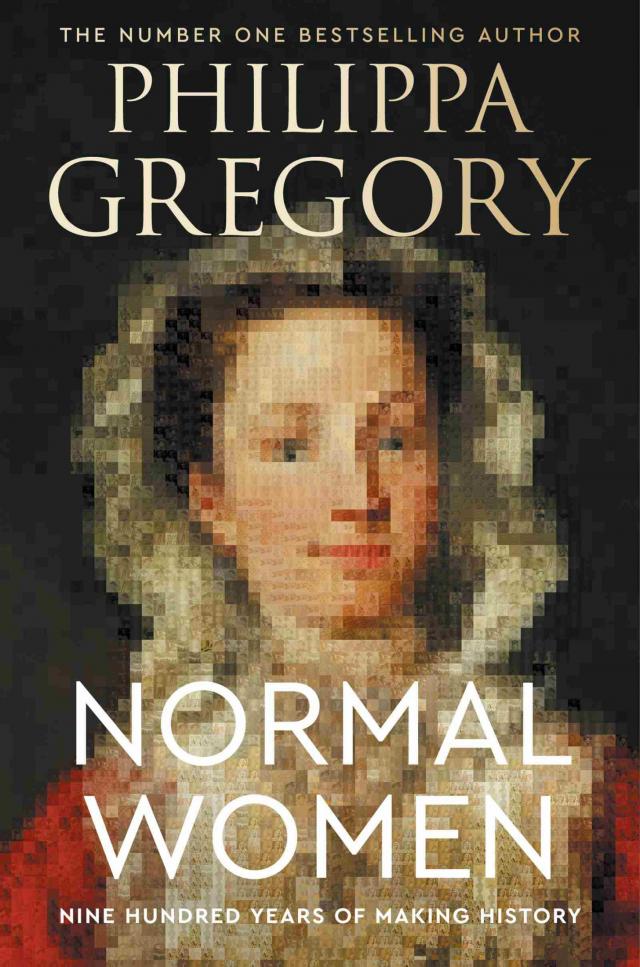


[And Cover] Colonel Victor Barker, by unknown photographer, 9 December 1934 (Keystone/Hulton Archive/Getty Images)
After the First World War the phrase ‘sex change’ began increasingly to be used to describe people who dressed and lived as the opposite sex from their birth sex. Better understanding of psychology and increased medical intervention made it possible for people to transition – most of them from female to male. Almost all of the stories reported in the press were those of people who believed themselves to have been assigned the wrong sex at birth. London’s Charing Cross Hospital became known as an international centre specialising in medical and even surgical help, and patients would usually be allowed to freely choose their sex.176
Marriage
Sex in upper-class marriages continued to puzzle doctors, who were divided between the ‘sexologists’ who said that all women could and should feel sexual desire and those who idolised ‘ladies’ as being above such feelings. Romantic love as a motive for marriage grew, love inside marriage became a goal, and moral husbands hoped to get sexual satisfaction from their wives and not from prostitutes.
Some sexologists rebelled against the widespread belief that women were sexually frigid and argued that women were in an almost constant state of arousal about conception, carrying a child and giving birth, and mothering. According to Iwan Bloch: ‘Procreation is their proper element, and when they are engaged in it they remain at home in their own sphere; we for this purpose must go elsewhere, out of ourselves. In the matter of time also, our part in procreation is concentrated. We may devote to the matter barely ten minutes; women give as many months. Properly speaking, they procreate unceasingly, they stand continually at the witches’ cauldron, boiling and brewing; while we lend a hand merely in passing, and do no more than throw one or two fragments into the vessel.’177
Husbands were assured that wives could be aroused by male persuasion, according to Havelock Ellis, and that women were attracted to strong, decisive and even violent men, and enjoyed forcible seduction. Because of this desire in women, actual rape – sexual intercourse without a woman’s consent – rarely occurred, according to Ellis.
An 1890 textbook stated: ‘A fully matured woman in full possession of her faculties, cannot be raped, contrary to her desire, by a single man.’ This myth was repeated by Gurney Williams, author of the International Clinics paper ‘Rape in Children and Young Girls’, first published in 1913: ‘The mere crossing of the knees absolutely prevents penetration.’178
Forced sexual intercourse in marriage was still not defined as rape. In one case, R v Clarence in 1888, a husband was charged with malicious infliction of bodily harm and grievous bodily harm after he gave his wife a venereal disease while raping her. The rape was not illegal – but knowingly infecting her was a crime.179
The doctors’ discussion about the damage of rape moved from the danger to the happiness of the marriage and from there – as if by magic – to the danger to the happiness of husbands. In 1869, a so-called scientist, John Cowan, wrote that husbands who raped their wives made themselves ill with a ‘weakness of the nervous system’, a ‘weakening of the joints’ and a ‘want of strength’.180 Wife rape was physically damaging for the rapist-husband and should be avoided for that reason.
As the middle-class home was idealised as a place of culture, health and affection where male leaders could experience rest, and enjoy the spiritual high standards and elegance of their wives, marital rape and domestic abuse became more and more unacceptable. There is no reason to think that domestic violence and marital rape stopped. But no longer would neighbours witness, complain or interrupt the abuse of middle-class wives. The aspirational home locked its doors and kept matters private.181
Victoria, Wife and Empress
Queen Victoria, succeeding the often unpopular, sometimes dissolute Hanoverian kings, consciously decided to bring the morality and style of the upper- and middle-class home to her reign. Partly, this was her own personal style – deeply attached in youth to a middle-class governess, living in a separate sphere from the royal court, her own religious background and her passion for her strict and respectable husband who she regarded as her superior. Victoria created a family both bourgeois and royal to rule the greatest empire in the world, linking the dominance of the English with extraordinary prosperity, inequality, racism and sexism.182
The massive increase in the wealth of the nation – from the profits of slavery, enclosure and agriculture, industrialisation and empire – powered the prosperity of everyone but the poor and excluded and grew the middle classes. Working people rose from poverty into better-paid work, farmers grew wealthy with improved agriculture and industrialists made profits. The ‘elite’ class became less exclusive as the middle classes continued the rise they had been making for centuries, merging with the upper gentry who were marrying into the aristocracy, all investing or active in the empire, trade, church, administration, industry and landowning. Minute social distinctions identified old families’ money from new, old titles from new, the established from the arrivistes.
But the newly conscious middle classes did not form a bridge to the poor. They viewed poverty as a disgraced state from which they or their parents had triumphantly escaped. They adopted elite practices: employing poor people at low rates, charging high rents for inadequate housing, supporting either the church which stuck to the old established parishes and ignored the slums, or the evangelical wing that entered the slums bringing God, hygiene, snobbery, sexism and racism. The people they categorised as ‘deserving poor’ became the target of advice and charity, and the rest – paupers, beggars, addicts, the insane, criminals, the hopeless, social offenders, protesters, prostitutes, people of other races and religions – were viewed from a distance, with increasing alarm, regulated and punished. About a quarter of the population could be called middle class by 1850 – their numbers doubled in the next 20 years.183
Although Queen Victoria was an active and domineering monarch – arguing with prime ministers, quarrelling with her husband, ruling for 40 years without him as a widow, and placing her children on most of the thrones of Europe to ensure Great Britain’s continuing position of power – she portrayed herself as a deferential and adoring wife. She might be a reigning queen and then an emperor, but she was determined to show that her husband was the patriarchal head of a model family, promoting Prince Albert as father of the family and of the empire, and herself as a subservient wife and, later, grief-stricken widow.
‘Let women be what God intended, a helpmate for man, but with totally different duties and vocations,’ she wrote.184
She employed governesses and tutors to educate her daughters: Vicky, Alice, Helena, Louise and Beatrice received educations that included physical exercise and practical skills fit for their future careers as wives to monarchs, steering their countries towards a British-type constitution and middle-class way of life. Both parents and first-born Vicky regretted that she had not been born a boy, as she showed more promise than her brother, Prince Edward. Vicky always took the boy parts in family theatricals, dressing as a boy for the stage, with the encouragement of her parents.185 Their ambition for her led them to allow her to choose her own royal husband and her engagement at the age of 15 to a man nine years older than her, in the hope that the young couple would create a British-type constitution in his home country of Prussia. Like all middle-class mothers, Victoria believed in exporting the standards and style of her home, even to families (or entire nations) that did not want it.
All of the princesses supported programmes for women’s education and nursing training. The girls followed their royal mother’s example in attempts to improve the behaviour of women rather than change their circumstances.186 Princess Louise, the second youngest, was a talented artist. The queen allowed her to attend the National Art Training School, and she specialised in sculpture. Louise supported the education of girls, but her husband thought his wife should not speak before an audience. Obediently, the princess educationalist sat in silence, while he took to the stage to read her feminist speech.187
Queen Victoria struck one outstanding blow for the freedom of women from pain when she accepted chloroform for the birth of her last two children, Leopold (1853–84) and Beatrice (1857–1944), against the advice of churchmen, ending centuries of a tradition of female suffering based on the Christian belief that pain in labour was a God-given curse on women for Eve’s sin, as written in Genesis: ‘Unto the woman he said, I will greatly multiply thy sorrow and thy conception; in sorrow thou shalt bring forth children; and thy desire shall be to thy husband, and he shall rule over thee.’188
Queen Victoria avoided the pain that was one of Eve’s punishments for her sin. The other punishment handed down to women was desire for a husband, and the rule of husbands over wives. If the three curses are understood as one, Victoria’s defeat of pain in childbirth suggests that a woman might avoid the other curses: chastity for wives and the rule of men. This was revolutionary – understandably, nobody remarked on it.
Although she gave birth to nine children in 17 years of marriage, Victoria was – like many aristocratic women – remote from her children, refusing to breast-feed, and handing them over to nannies and governesses. She may have suffered from undiagnosed post-partum depression, speaking of ‘lowness and a tendency to cry . . . it is what every lady suffers with more or less and what I, during my first confinements, suffered dreadfully with’.189
She was closest to her youngest daughter, Princess Beatrice, and expected her to remain single and live all her life as a companion and secretary. But Beatrice got engaged in secret and her mother did not speak to her for six months, recovering enough to insist that the young married couple live with her, so that she could see Beatrice every day. The princess obeyed and stayed with her mother through her married life, and after – during her own widowhood. Like a typical middle-class daughter, Beatrice was expected to work as a companion and assistant in the family business, without recognition or pay.
Victoria’s opposition to the campaign for women’s rights was known, but not publicly stated. Her frequently quoted critiques of the ‘mad folly’ of women’s rights were made in private. Yet her position as ruling queen inevitably raised the paradox of one woman whose signature was on the laws, while her married female subjects were excluded from them. Caroline Norton, no friend to women’s suffrage, whose own divorce led to agonising separation from her children, said it was a ‘grotesque anomaly’ that married women were legally non-existent in a country governed by a female sovereign: ‘The signatures of married women are legally worthless; where they cannot lay claim to the simplest article of personal property – cannot make a will – or sign a lease – and are held to be non-existent in law.’190
As a woman who concealed her hard work and was not visibly paid, Victoria provided a model for the middle-class wife who also was not paid for all the work she concealed. In that sense, Victoria was like so many women – an unintentional feminist, determinedly modelling womanly subservience but constantly demonstrating ability.
Sport
Most doctors advised against women taking up sport. Physiologist Alexander Walker made a long study of women in 1892 and concluded: ‘Happily, the athletic temperament does not occur in women.’191
Doctors agreed that the best exercise for women was walking in fresh air. Others warned women against competing with men. But in 1890, Margaret Villiers, Countess of Jersey, a woman who believed that women’s role was to be a ‘helpmeet’ to her husband and to the world, defended the possibility of a woman doing something because she enjoyed it: ‘Is it quite just . . . as is very commonly taken for granted, when a woman attempts anything which is more ordinarily done by men she therefore desires to emulate or rival man? Is it not conceivable that she may sometimes like the work or sport for its own sake, without any thought of competition with the other sex?’192
Upper-class women needed sports and crafts and arts to fill the long hours of leisure prescribed for ladies. According to Harper’s Monthly in 1866, there was an epidemic of croquet, a game suitable for upper- and middle-class ladies, putting them under little strain and requiring little energy. It was exclusive – needing specialised equipment and a well-prepared lawn. Quickly, women found themselves accused of cheating, scuffling the ball into place with their long skirts. An 1865 manual warned women: ‘Don’t cheat. We are aware that young ladies are proverbially fond of cheating at this game; but as they only do it because “it is such fun” and also because they think that men like it . . . The practice spoils the game so much that, if it is allowed, the rules may as well be done away with at once.’193
When interest in croquet waned, lawn tennis took over, even more exclusive, requiring more specialist equipment and a specially prepared and equipped lawn. The first club opened in 1874 and ladies’ events were introduced at a handful of English clubs from 1881. Maud Watson’s first competition came at Edgbaston that year. She won the singles title and the doubles, in partnership with her sister Lilian, at the age of just 16. In 1884, Wimbledon added a singles Ladies Championship, which Maud also won after beating Lilian. Entrants were allowed to the Wimbledon event only two weeks in advance, but 13 players entered, including Blanche Bingley, who would go on to be a future champion. Maud Watson won 54 matches consecutively, losing only 12 sets, until in 1886 she was defeated at Bath by Lottie Dod, who would become not only the youngest ever singles champion at the All England Club in 1887, but also Ladies Golf Champion in 1904 and an Olympic silver medallist archer in 1908.
In 1900, Charlotte Cooper from Ealing added two Olympic golds to her list of victories, winning the ladies singles and the mixed doubles, making her the first Olympic tennis champion and the first individual female Olympic champion. Cooper, deaf since the age of 26, is still Wimbledon’s oldest ladies champion and her record of eight consecutive singles finals stood until 1990 (when Martina Navratilova achieved nine).194 In 1908, Dorothea Douglass, also from Ealing, won another Olympic tennis gold for GB, beating Dora Boothby who took silver. Dorothea published Tennis for Ladies in 1910.
Alice Legh has been called the greatest woman British archer of all time, winning the British national championship 23 times between 1881 and 1922. (Her mother also won it four times.) She was the first female archer to describe her technique and philosophy in detail.195 Legh did not go to the 1908 Olympic Games in order to prepare for the World Championship, which she won, beating the Olympic champion by a substantial margin.
The All England Women’s Hockey Association was founded in 1895, excluding daughters of tradesmen not because they should not be admitted to an exclusive club, but to spare them from extra exertion, according to Hockey Field in 1910:
Is not hockey too violent an exercise and too prolonged a strain for those who often spend much of their time in heavy manual work? . . . Very often these girls, in addition to close application to wage-earning work . . . have the heavy part of the household work in their own homes to perform . . . and get a liberal allowance of exercise in washing clothes or scrubbing floors – which last is a fine exercise, but somewhat ‘self-sufficing’ from an athletic point of view . . . For girls who do this kind of thing daily . . . are not violent games unnecessary, and likely to take them ‘beyond the health limit of fatigue’.196
Alice Legh (1855–1948) said, ‘Even quite old ladies can shoot, and shoot well too.’ She retired as national champion aged sixty-seven
Alice Legh by unknown photographer, c.1894 (Public domain)
The ladies were not welcome in the all-male Hockey Association, and in reply they refused to allow men to serve on the Women’s Hockey Association committee.197 They agreed to exclude working-class people and scheduled friendly matches during working hours, midweek. Both the women’s and men’s associations were based in the south and did not welcome a northern Ladies’ Hockey League, formed in 1910, barring its clubs.
Northamptonshire’s Marjorie Pollard played hockey for England nearly every year from 1921 to 1937. As well as editing and writing the Hockey Field and Women’s Cricket, she was also a sports journalist for national newspapers and in 1935 she became the first woman to commentate on sport for the BBC, during a men’s cricket match.
The 1870s saw a resurgence of cricket for all, and with girls not admitted to men’s clubs a group of women hockey players, including Marjorie Pollard, travelled to Colwall to play cricket in 1926 and founded the Women’s Cricket Association. Pollard remembered: ‘After play was over, we sat in the Park Hotel at Colwall . . . and discussed how cricket could become real for us – no longer to be an elusive thing, that one played half afraid of ridicule. We pondered, mused, talked.’198
Golf was considered an acceptable sport for women, as long as it was not too energetic. Doctors in 1899 advised women only to putt, and if they insisted on driving, to take only a half or three-quarter swing.199 A purpose-built 18-hole ladies’ course opened in 1868 in Devon (a year after St Andrews in Scotland) and English women played a tournament, accompanied by gentlemen caddies resplendent in scarlet uniforms. The ladies’ club supported itself, with lady members responsible for building work and repairs to their own clubhouse (which served cold food only), plus heating and the maid’s wages. They also had responsibility for the maintenance of their course, the mowing machine and the greenkeepers’ wages.200 At Berwick, a ‘ladies’ course was laid out in 1867. Its ladies’ club was formed 20 years later and the women managed the lease of the course and employed their own greenkeeping staff.201 By 1893, the number of ladies clubs had grown to 63, and they called a meeting to form the Ladies Golf Union. Around this time, leading woman golfer Issette Pearson invented the handicapping system, which would eventually be adopted by the men’s game.
Only Barnehurst Golf Club in London offered men and women equal membership, equal use of the links and similar access to the clubhouse, although certain rooms were reserved for each sex. Women mostly either opened their own clubs or joined ladies’ sections of men’s clubs. Some clubs created shorter, simpler greens for women – and allowed competitive female golfers with low handicaps specified time on the men’s greens, but women had to give way to men on the greens. Women were rarely welcome in all the parts of the clubhouse. At Beverley and East Riding, the women could rent a room in the clubhouse and receive refreshments through a hatch. At Littlestone, one of the very few clubs where women and men shared unrestricted use of the course, women only entered the clubhouse by special invitation at Christmas, and never by the front door. When a group of visiting women found doors locked, they had to eat outside in the rain.202