Normal women, p.45
Normal Women,
p.45
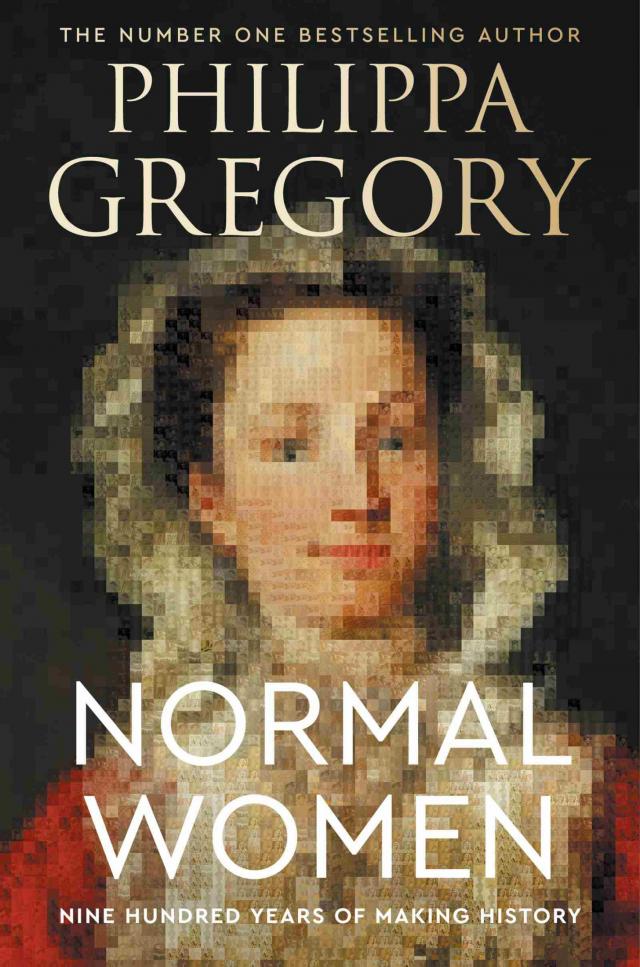


On her marriage to Prince Albert in 1840, Victoria signalled her obedience to her husband as master of the household, her deference to him as an advisor and her role as a domestic woman: a wife and mother, supporting the idea that a happy marriage was created and nourished by female submission, however important the wife might be. After marriage, Victoria deliberately changed her image from that of a beautiful young woman to dowdy and matronly.254
Queen Victoria with a laurel wreath of roses, thistles and leaves, c.1841–50
[And Cover] ‘The Rose of England’, Lithograph of Queen Victoria by T.C. Wilson, c.1841–50 (Look and Learn/Valerie Jackson Harris Collection/Bridgeman Images)
Marriage
The Marriage Act introduced by Lord Hardwicke in 1753 banned all marriages except those conducted in the local church of either the bride or groom, by a Church of England clergyman, after the calling of the banns, except with a special licence. Quakers and Jews might use their own places of worship but no one was allowed to merely promise before witnesses any more. This was designed to prevent kidnap of heiresses, elopement weddings over the Scottish borders, marriages of minors without parental consent and secret marriages in locations like the Fleet Prison.
Such an attack was made on Miss Ellen Turner, a 15-year-old heiress, daughter of the high sheriff of Cheshire, when she was lured from Mrs Daulby’s boarding school at Liverpool in February 1827 by barrister Edward Gibbon Wakefield, his brother William and Mrs Frances Wakefield. The fraudsters took her in a chaise and assured her that her father was going to be made bankrupt by the failure of a bank, but that a marriage with William Wakefield would introduce capital and save him from disgrace. Persuaded by this story, Miss Turner went to Gretna Green in Scotland and was married to Wakefield by the blacksmith at his forge – a legal wedding in Scotland. The three tricked Miss Turner onwards to France, now pursued by her uncle and a Bow Street Runner, who caught them at Calais. William Wakefield reassured him: ‘You may dispose of your niece as you think proper, but you receive her at my hands as a pure and spotless virgin.’
The brother kidnappers were imprisoned for three years each, but the heiress’s father did not proceed against Mrs Frances Wakefield, since he thought her a woman who had been misled by her husband. Miss Turner was released from her marriage vows by a motion of annulment in the House of Lords.255
The stricter regulation of weddings protected elite wealthy heiresses; but its wider effect was to further divide working people’s lives from elite lives, as working people could not afford an official church marriage and many lived in urban slums without a parish church or any religious ministry. Many working women continued to co-habit, ‘marry’ and part using folk rituals like the ‘wife sale’, moving from a previous partner to a new one by staging a public ‘sale’ to a new man of their choice. Some local Poor Law commissioners even forced husbands to sell their wives, to avoid maintaining the family in workhouses. At least one early nineteenth-century magistrate said he did not believe he had the right to prevent wife sales. The English custom of wife selling spread to Wales, Scotland, Australia and the Americas, before finally dying out in the early years of the twentieth century.
Embarrassed elite observers condemned folk marriages and folk divorces – sales, plighting of troths, and jumping backwards over the broom – as pagan, anarchic and degrading. Some sales may have been the open transfer of a wife as a chattel from one ‘owner’ to another. Some working women disrupted wife sales in the 1820s and 1830s, suggesting that they felt it to be no longer a ‘folk marriage’ but a way of men avoiding their domestic responsibility to women that they lived with as husbands and fathers.256
Working-class marriages did not mean a wife became dependent on and submissive to her husband, until the nineteenth century when low wages for women made it almost impossible for a woman to survive alone. Popular ballads like ‘I’ll Be No Submissive Wife’ invoked the arguments against slavery and applied them to tyrannical husbands.257 Violence in working-class marriages was a regular topic, with some songs celebrating wife-beating and others condemning it. No widely popular songs hymned companionate and egalitarian marriages, but the radical Samuel Bamford wrote tender love poems to his wife and children.
How happy may we be, my love!
How happy may we be,
If we our humble means improve,
My wife, my child, and me.
Our home shall be a turtle’s nest,
Where duty, peace, and love,
Shall make its inmates truly blest,
And sorrow far remove.
And if the world upon us frown,
Still peace serene is ours;
It cannot bear the free mind down,
With all its tyrant powers:
For if they bear me far away,
And bind me with a chain,
Our nestling will beside thee stay –
Then do not, love, complain.258
As an active Chartist, handloom weaver and protester at the Peterloo demonstration, Bamford made it clear that the happy marriage depended upon the couple improving their ‘humble means’ and braving tyranny.
Love became the dominant motive for marriage in the nineteenth century, for both elite and working-class people, and stories about love found, lost and regained offered the main adventure for the popular novels mass-produced for the growing female readership. Middle- and upper-class women learned to conform to the etiquette around virginity: a woman should not even verbally express her feelings until the man had told her that he loved her and proposed marriage. The engagement – the gift of a ring and the announcement of their intention to marry – was now supposed to take less than a year, as longer engagements brought the danger of temptation to pre-marital sex. Working-class women apparently succumbed: a large proportion conceived before their wedding day. Between 20 and 40 per cent of brides were pregnant at the altar of English country parishes in 1800–48.259
As work opportunities diminished for elite women, marriage became the only acceptable ambition, and the fiction of union for love sweetened the hard commercial deal. Courtship became an essential skill, the wedding an increasingly significant social ritual, virginity a pre-requisite and de-flowering a debutante moment.260
A gown of white – the chosen colour for debutantes at the queen’s drawing rooms making their entry into social life – was now the preference for brides making their entry into married life. Queen Victoria wore one, marrying in a court dress of white lace. The hugely popular engraving of her and Prince Albert on their wedding day in 1840 shows him gazing straight at the viewer while directing his bride and her gaze out of the frame. She is half a step behind him, her hand resting in his. He points their direction with an index finger, her lips are slightly parted. Clearly, they are going where he leads; and she is thrilled.
The increasing rituals around the marriage vows – the bride leaving her house, handed over by her father, the change of her name, the wearing of a special dress and the permanent wearing of a ring on a particular finger to signify the ownership of her husband – are exact mirrors of slavery rituals: ‘The ritual of enslavement incorporated . . . first, the symbolic rejection by the slave of his past and former kinsmen; second, a change of name; third, the imposition of some visible mark of servitude; and last, the assumption of a new status in the household or economic organization of the master.’261
Victorian wives entered into a state of legal coercion and control in an elite home that was acknowledged as a protective prison for wives in the court case of Cecilia Anne Cochrane, who had lived apart from her husband for some years but was kidnapped by him in 1840. The judge, Mr Justice Coleridge, would not release Cecilia Anne Cochrane, not even to her own mother, who demanded her daughter under the old habeas corpus law that prevented imprisonment without evidence of wrongdoing. The court supported the husband’s right to imprison a wife:
A husband has custody of his wife and may confine her if he sees fit. However, when a wife absents herself from her husband on account of no misconduct on his part, and he afterwards, by stratagem obtains possession of her person, and she declared her intention of leaving him again, whenever she can, he has a right to restrain her of her liberty until she is willing to return to a performance of her conjugal duty.262
A husband had a right to imprison a runaway wife until she agreed to have sex with him and stay with him. The judge went on: ‘For the happiness and honour of both parties (the law) places the wife under the guardianship of her husband, and entitles him, for the sake of both, to protect her from the danger of unrestrained intercourse with the world, by enforcing cohabitation and common residence.’263
Mr Justice Coleridge ended his ruling with the statement that Cecilia Anne Cochrane’s personal happiness was less important than the stability of marriage, proclaiming: ‘Let her be restored to Mr Cochrane!’264
Even those marriages that were not a nightmare of legal coercion could be tyrannies. A contributor to the Spectator pointed out the pleasures of being a husband: ‘Nothing is more gratifying to the Mind of Man than Power or Dominion, and this I think my self amply possessed of, as I am the Father of a Family.’265
Domestic work was now described to middle- and upper-class brides as an opportunity for self-expression. The Romantic movement that had gilded the inequalities between men and women combined with the enthusiasm of 1800s evangelism to promote domestic work as a chance for a woman to shine as a wife, a mother and a spiritual guide: ‘A true wife in her husband’s house is his servant; it is in his heart that she is queen.’266
The increasing demand for more healthy children to labour in the industries and to support British imperial expansion saw women encouraged to become wives and mothers. The empire needed officers and cannon-fodder, and assaults on marriage came to be seen as both ‘unfeminine and unpatriotic’.267
Women writers learned to keep any criticism they might have of the state of marriage to their private papers. In 1819, Hester Thrale wrote sarcastically of the pleasures of her marriage – ‘Holding my head over a bason six months of the year’ – but she did not publish.268
Although elite women were supposed to be immune to sexual desire, their sexual activity was recorded and publicised as never before when newspapers and pamphlets started reporting on trials for compensation brought by cuckolded spouses seeking divorce under the 1670 law, designed to replace violent reprisals for a husband’s honour by setting a monetary compensation to be paid to him for the damage to his property – his wife.269 Upper-class adultery compensation cases turned into a bestselling feature, salaciously describing sexual activity and naming the participants in an easily read code of ‘Lady M’ and ‘Sir –’, in stories that became known as ‘crim cons’ from the hearings of ‘criminal conversations’, meaning adulterous sexual intercourse. The accusations of adultery and the evidence of servants, friends or spies made riveting reading, and the settlements could be astounding: the Duke of Cumberland was ordered to pay Lord Grosvenor £10,000 in 1769. In 1807, Lord Cloncurry brought an action against his former friend Sir John Piers and was awarded damages of £20,000, for adultery.270 The guilty couple were supposed to have been so absorbed in love-making that they failed to notice an Italian artist, Gaspare Gabrielli, up a ladder, painting a fresco on a wall in the same room.
‘Crim. Con. A Sketch taken from Life by Seignoir Gabrielli. Valued by 12 Connoisseurs at Twenty Thousand Pounds!’ – the huge damages awarded to Lord Cloncurry on his divorce
Sir John Piers and Lady Cloncurry, satirical print by Anon., 1807 (The Picture Art Collection/Alamy)
Inevitably, description of the adulteries revealed that aristocratic women were sexually active – seeking and enjoying sex with men and with other women. In an attempt to maintain the purity of the separate sphere home, and the double standard of sexual repression of wives, all divorcees were immediately ostracised, with upper-class social occasions and clubs closed to any woman named in a divorce, or to any woman separated from her husband for almost any reason. Any woman tainted by scandal would be frozen out of elite events and barred from elite establishments. Any upper- or middle-class woman unlucky enough to be caught in any sexual act was shunned or exiled abroad, while adulterous husbands might remain respected members of society, enriched by a deserted wife’s fortune, raising their children.
Single Women
When the 1851 census revealed that of the population of 20 million people, 2.5 million women were single, and that women outnumbered men by half a million, it triggered misogynistic outrage.271 It was the first time single women had been counted, as it was the first time that marital status had been reported, and many commentators were horrified. Single women – many already banned from profitable work and meaningful lives by the need to protect them from the danger of ‘unrestrained intercourse with the world’, as Mr Justice Coleridge would say272 – were thought to be unproductive and parasitical. They were increasingly called ‘surplus women’.
Victorian political economist W.R. Greg wrote a stand-out pompous essay on the ‘surplus woman’ problem, proposing that if only ladies were more charming and wives less demanding of husbands, women would find that bachelors were willing to marry them: ‘As wives become less expensive and less exigeant, more men will learn to prefer them to mistresses.’273 Remaining single women should be shipped out to the colonies, where there were proportionately more bachelors, and they were ready to marry anyone.
‘We have a million and a half adult unmarried women in Great Britain. Of these half a million are wanted in the colonies, half a million more are usefully, happily, and indispensably occupied in domestic service. The evil thus viewed assumes manageable dimensions, and only a residual half million remain to be practically dealt with.’274
Language about single women deteriorated. ‘Surplus’ women implied that any unmarried woman was valueless, and ‘spinster’ and ‘old maid’ became insults. But the increasingly hostile climate and the outburst of commentary on surplus women did not persuade them to take the 10,000 ships that Greg thought were needed to export single women to the colonies; instead it created the first awareness among single women of their numbers, and of themselves as a community.
Sapphism
‘Whenever two ladies live too much together . . . has a Greek name now, and it’s called sapphism.’275
So said writer Hester Thrale in one of her fake shock moments about the changing attitudes to sex. Everyone agreed that all bodies were now either male or female, with no gradations, and so women who loved women could not be excused by being almost-men, hermaphrodites, and driven by manly lust. Instead they were fully women and only women, and so were wrong to experience desire, horribly wrong to enact it, and doubly wrong acting with the wrong sex.276 The self-styled experts agreed that women were wilfully perverse in choosing to love women.277
Sexual intimacy between women was not widely known outside sophisticated circles. Hester Thrale, also a patron of the arts, revered sentimental female friendship and was horrified to think that women living together might be sexually active: ‘Tis my Scourge to think better both of the World & of all the Individuals in it than they deserve; that House of Miss Rathbone’s is now supposed to have been but a Cage of Unclean Birds living in a sinful Celibat. Mercy on us!’278
One woman who knew herself to be sexually attracted and sexually active with women thought that she might be all but alone in the world. Wealthy landowner Anne Lister (1791–1840), nicknamed in her home in Yorkshire as ‘Gentleman Jack’, used her wealth and status to shield and permit her sexual seduction of many women. She recorded her experiences of multiple partners and many sexual incidents in secret, coded diaries. One of her dearest loves was a neighbour, Marianna Belcombe. Lister described a night of lovemaking with Marianna in which they both experienced multiple orgasms. Marianna Belcombe was obliged by her family, and her own desire to conform to conventions, to marry a wealthy man. After her marriage she could meet Anne only under the pretence of friendly visits, when they co-slept as apparently non-sexual friends. They both contracted a sexually transmitted disease – probably from Marianna’s husband.
Anne travelled Europe, exploring her love of women, often assertively even aggressively sexual with more than one hesitant lover, before abandoning them and moving on. She had read of women lovers in classical literature and was curious to hear of a woman in her neighbourhood who was said to be sexually attracted to other women: ‘She was the character I had long wished to meet with to clear up my doubts whether such a one really existed nowadays . . . are there more Miss Pickfords in the world than I have ever before thought of?’279
Anne Lister also visited a famous female couple, the ‘Ladies of Llangollen’, and described her experience in a letter to Marianna Belcombe, who asked if the Ladies of Llangollen were sexually active: ‘Tell me if you think their regard has always been platonic & if you ever believed pure friendship could be so exalted . . . I cannot help thinking that surely it was not platonic. Heaven forgive me, but I look within myself & doubt. I feel the infirmity of our nature & hesitate to pronounce such attachments uncemented by something more tender still than friendship.’280
In later life, Anne Lister fell in love with a wealthy heiress, Anne Walker. The two went through a private ceremony in church when they took communion together, which they regarded as a binding marriage ceremony, and lived together until Anne Lister’s death.
Sexual activity between women, which had previously been ignored, glossed over or referred to only in discreet private letters, started to be discussed more widely, and gossip and accusations published. Women lovers of women were called ‘tommies’ in slang, but the classically educated spoke of ‘sapphists’ – from the Greek poet Sappho who wrote of her love for women.281