Invaders from space, p.15
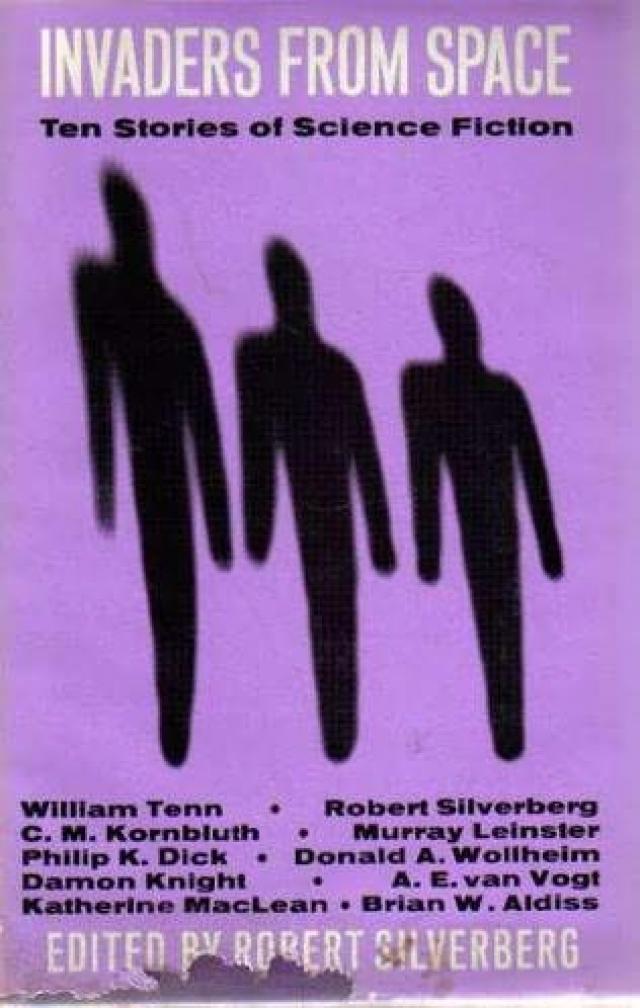
Invaders From Space,
p.15


I’ve talked the matter over, as I said, and there is no really acceptable answer to the whole curious business. We know that we don’t really know very much about things. As a meteorologist I can tell you that. Why, we’ve been discussing the weather from cave-man days, and yet it was not more than twenty years ago that the theory of weather fronts was formulated which first allowed really decent predictions. And the theory of fronts, which is what we modern weather people use, has lots of imperfections in it. For instance, we still don’t know anything about the why of things. Why does a storm form at all? We know how it grows, sure, but why did it start, and how?
We don’t know. We don’t know very much at all. We breathe this air, and it was only in the last century that we first began to find out how many different elements and gases made it up, and we don’t know for sure yet.
I think it’s possible that living things may exist that are made of gas only. We’re protoplasm, you know, but do you know that we’re not solid matter—we’re liquid? Protoplasm is liquid. Flesh is liquid arranged in suspension in cells of dead substances. And most of us is water, and water is the origin of all life. And water is composed of two common gases, hydrogen and oxygen. And those gases are found everywhere in the universe, astronomers say.
So I say that if the elements of our life can be boiled down to gases, then why can’t gases combine as gases and still have the elements of life? Water is always present in the atmosphere as vapor; then why not a life as a sort of water-vapor variant?
I think it makes sense. I think it might smell odd if we accidentally inhaled such a vapor life. Because we could inhale it as we do water vapor. It might smell, say, for example, like burning rubber and zinc ointment.
Because in that last moment when the storm was at its height and the area of unearthly air was compressed to its smallest, I noticed that at one point a definite outline could be seen against the black clouds and the blue-white glare of the lightning. A section of the smelly air had been sort of trapped and pinned off from the main section. And it had a definite shape under that terrible storm pressure.
I can’t say what it was like, because it wasn’t exactly like anything save maybe a great amoeba being pushed down against the ground. There were lots of arms and stubby, wiggly things sticking out, and the main mass was squashy and thick. And it flowed along the ground sort of like a snail. It seemed to be writhing and trying to slither away and spread out.
It couldn’t, because the storm was hammering at it. And I definitely saw a big black mass, round like a fist, hammer at one section of the thing’s base as it tried to spread out.
Then the storm smashed down hard on the odd outline, and it squashed out flat and was gone.
I imagine there were others, and I think that when they aren’t being compressed they could have spread out naturally about a hundred yards along the ground and upwards. And I think we have things like that, only of earthly origin, right in the atmosphere now. And I don’t think that our breathing and walking and living right through them means a thing to them at all. But they objected to the invaders from space. They smelled differently, they were different, they must have come from a different sort of planet, a planet cooler than ours, with deserts and vegetation different from our own. And they would have tried to remake our atmosphere into one of their own. And our native air dwellers stopped them.
That’s what I think.
Catch That Martian
Damon Knight
* * *
We know now, thanks to the Mariner space probes, that the presence of “Martians” on Mars is most unlikely. If life exists at all on our bleak and barren neighbor world, it is probably nothing more complex than bacteria or lichens. Which should not interfere with our delight in Damon Knight’s graceful, disturbing short story. There may very well be Martians all over New York City—even if they don’t happen to come from Mars.
* * *
THE first person who got on the Martian’s nerves, according to a survey I made just recently, was a Mrs. Frances Economy, about 42, five foot three, heavy-set, with prominent mole on left cheek, formerly of 302 West 46th Street, Manhattan. Mrs. Economy went to a neighborhood movie on the night of September 5th, and halfway through the first feature, just as she was scrabbling for the last of her popcorn—zip she wasn’t there any more.
That is, she was only half there. She could still see the screen, but it was like a television set with the sound off. The way she realized something had happened to her, she started stomping her feet, like you do when the sound goes off or the picture stops, and her feet didn’t make any noise.
In fact, she couldn’t feel the floor, just some kind of rubbery stuff that seemed to be holding her up. Same way with the arms of her chair. They weren’t there, as far as her feeling them went.
Everything was dead still. She could hear her own breathing, and the gulp when she swallowed that last mouthful, and her heart beating if she listened close. That was all. When she got up and went out, she didn’t step on anybody’s feet—and she tried to!
Of course I asked her who was sitting next to her when it happened, but she doesn’t remember. She didn’t notice. It was like that with everybody.
*
Not to keep you in suspense, the Martian did it. We figured that out later. There still isn’t any proof, but it has to be that way. This Martian, the way it figures, looks just like anybody else. He could be the little guy with the derby hat and the sour expression, or the girl with the china-blue eyes, or the old gent with the chin spinach and glasses on a string. Anybody.
But he’s a Martian. I don’t see what else he could be. And being a Martian, he’s got this power that people haven’t got. If he feels like it, he just looks at you cockeyed, and zip—you’re in some other dimension. I don’t know what the scientists would call it, the Fourth or Fifth Dimension or what, but I call it the next-door dimension because it seems like it’s right next door—you can see into it. In other words, it’s a place where other people can see you, but they can’t hear you or touch you, unless they’re ghosts too, and there’s nothing but some kind of cloudy stuff to walk around on. I don’t know if that sounds good or what. It stinks. It’s just plain dull.
One more thing, he annoys easy. You crunch popcorn in his ear, he doesn’t like that. You step on his toe, same thing. Say, “Hot enough for you?” or slap him on the back when he’s got sunburn, serve him a plate of soup with your finger in it—zip.
The way we figured out it’s a Martian was that it couldn’t be one of us. No human can do a thing like that. Right? So what else could he be but a Martian? It figures. And nobody ever noticed him, so it must be he looks like anybody else. Some humans, they look like everybody else, but not because they want to. He wants to, I bet.
The way we know he annoys easy, there was eighteen “ghosts” wandering around when the public first noticed, which was during the early morning of September 6th. That was about eleven hours after he got Mrs. Economy.
Thirteen of them were up at Broadway and 49th, walking through traffic. They went right through the cars. By nine o’clock there were two wrecks on that corner and a busted hydrant gushing water all over. The ghost people walked through the water, and didn’t get wet.
Three more showed up in front of a big delicatessen near 72nd Street and Amsterdam Avenue, just looking in the window. Every once in a while one of them would reach in through the glass and grab for something, but his hand went through the pastrami and chopped liver, so none of them got anything. That was fine for store windows, but it wasn’t so fine for the ghost people.
The other two were sailors. They were out in the harbor, walking on water and thumbing their noses at naval officers aboard the ships that were anchored out there. It was hell on discipline.
The first eight patrolmen who reported all this got told they would be fired if they ever came on duty drunk again. But by ten-thirty it was on the radio, and then WPIX sent a camera crew up, and by the time the afternoon papers came out there were so many people in Times Square that we had to put a cordon around the ghosts and divert traffic.
The delicatessen window up on Amsterdam got busted from the crowd leaning against it, or some guy trying to put his hand through the way the three ghosts did; we never figured out which, There were about sixty tugs, launches and rowboats in the harbor, and three helicopters, trying to get close enough to talk to the sailors.
One thing we know, the Martian must have been in that crowd on Times Square, because between one and one-thirty P.M. seven more ghosts wandered through the barrier and joined the other ones. You could tell they were mad, but of course you couldn’t tell what they were saying unless you could read lips.
Then there were some more down by Macy’s in the afternoon, and a few in Greenwich Village, and by evening we had lost count. The guesses in the papers that night ran from three hundred to a thousand. It was the Times that said three hundred. The cops didn’t give out any estimate at all.
*
The next day, there was just nothing else at all in the papers, or on the radio or TV. Bars did an all-time record business. So did churches.
The Mayor appointed a committee to investigate. The Police Commissioner called out special reserves to handle the mobs. The Governor was understood to say he was thinking about declaring a statewide emergency, but all he got in most papers was half a column among the ads. Later on he denied the whole thing.
Everybody had to be asked what he thought, from Einstein to Martin and Lewis. Some people said mass hysteria, some said the end of the world, some said the Russians.
Winchell was the first one to say in print that it was a Martian. I had the same idea myself, but by the time I got it all worked out I was too late to get the credit.
I was handicapped, because all this time I still hadn’t seen one of the ghosts yet. I was on Safe, Loft and Truck—just promoted last spring from a patrolman—and while I was on duty I never got near any of the places where they were congregating. In the evenings, I had to take care of my mother.
But my brain was working. I had this Martian idea, and I kept thinking, thinking, all the time.
I knew better than to mention this to Captain Rifkowicz. All I would have to do was mention to him that I was thinking, and he would say, “With what, Dunlop, with what?” or something sarcastic like that. As for asking him to get me transferred to Homicide or Missing Persons, where I might get assigned to the ghost case, that was out. Rifkowicz says I should have been kept on a beat long enough for my arches to fall, in order to leave more room on top for brains.
So I was on my own. And that evening, when they started announcing the rewards, I knew I had to get that Martian. There was fifteen hundred dollars, voted by the City Council that afternoon, for whoever would find out what was making the ghosts and stop it. Because if it didn’t stop, there would be eighteen thousand ghosts in a month, and over two hundred thousand in a year.
Then there was a bunch of private rewards, running from twenty-five bucks to five hundred, offered by people that had relatives among the departed. There was a catch to those, though—you had to get the relatives back.
All together, they added up to nearly five thousand. With that dough, I could afford to hire somebody to take care of Ma and maybe have some private life of my own. There was a cute waitress down on Varick Street, where I had lunch every day. For a long time I had been thinking if I asked her to go out, maybe she would say yes. But what was the use of me asking her, if all I could do was have her over to listen to Ma talk? All Ma talked about was how sick she was and how nobody cared.
*
First thing I did, I got together all the newspaper stuff about the ghosts. I spread it out on the living room table and sorted it and started pasting it into a scrapbook. Right away I saw I had to have more information. What was in the papers was mostly stories about the crowds and the accidents and traffic tie-ups, plus interviews with people that didn’t know anything.
What I wanted to know was—what were all these people doing when the Martian got them? If I knew that, maybe I could figure out some kind of a pattern, like if the Martian’s pet peeve was back-slappers, or people who make you jump a foot when they sneeze, or whatever.
Another thing, I wanted to know all the times and places. From that, I could figure out what the Martian’s habits were, if he had any, and with all of it together I could maybe arrange to be on the spot whenever he got sore. Then anybody except me who was there every time would have to be him.
I explained all this to Ma, hoping she would make a sacrifice and let me get Mrs. Proctor from across the hall to sit with her a few evenings. She didn’t seem to get the idea. Ma never believes anything she reads in the papers, anyway, except the astrology column. The way it struck her, the whole thing was some kind of a scheme, like gangsters or publicity, and I would be better to stay away from it.
I made one more try, talking up the money I would get, but all she said was, “Well, then why don’t you just tell that Captain Rifkowicz he’s got to let you earn that reward?”
Ma has funny ideas about a lot of things. She came over here from England when she was a girl, and it looks like she never did get to understand America. I knew that if I kept after her, she would start crying and telling me about all the things she did for me when I was a baby. You can’t argue against that.
So what I did next, I took the bull by the horns. I waited till Ma went to sleep and then I just walked out and hopped an uptown bus on Seventh Avenue. If I couldn’t get off during the daytime, I would cut down my sleep for a while, that was all.
I was heading for Times Square, but at Twenty-seventh I saw a crowd on the sidewalk. I got out and ran over there. Sure enough, in the middle of the crowd was two of the ghosts, a fat man with a soupstrainer mustache and a skinny woman with cherries on her hat. You could tell they were ghosts because the people were waving their hands through them. Aside from that, there was no difference.
I took the lady first, to be polite. I flashed the badge, and then I hauled out my notebook and wrote, “Name and address please,” and shoved it at her.
She got the idea and looked through her bag for a pencil and an envelope. She scribbled, “Mrs. Walter F. Walters, Schenectady, N. Y.” I asked her, “When did this happen to you and where?”
She wrote it was about one p.m. the afternoon before, and she was in Schrafft’s on Broadway near 37th, eating lunch with her husband. I asked her if the fat man was her husband, and she said he was.
I then asked her if she could remember exactly what the two of them were doing right at the moment when it happened. She thought a while and then said she was talking and her husband was dunking his doughnut in his coffee. I asked her if it was the kind with powdered sugar and she said yes.
I knew then that I was on the right track. She was one of those little women with big jaws that generally seem to have loud voices and like to use them; and I always hated people who dunk those kind of doughnuts, myself. The powdered sugar gets wet and gluey and the dunkers have to lick their fingers right in public.
I thanked them and went on uptown. When I got back home that night, about four A. M. the next morning, I had fifteen interviews in my book. The incidents had taken place all over the midtown area. Six got theirs for talking, four on crowded sidewalks—probably for jostling or stepping on corns—two for yelling on a quiet street at two in the morning, one for dunking, one for singing to himself on a subway, one, judging by the look of him, for not being washed, and one for coming in late to a Broadway play. The six talkers broke down to three in restaurants, two in a newsreel movie, and one in Carnegie Hall while a concert was going on.
Nobody remembered who they were next to at the time, but I was greatly encouraged. I had a hunch I was getting somewhere already.
*
I got through the next day, the eighth, in a kind of daze, and don’t think Rifkowicz didn’t call my attention to it. I suppose I wasn’t worth more than a nickel to the City that day, but I promised myself I would make it up later. For the moment, I ignored Rifkowicz.
On the radio and TV, there were two new developments. In my head, there was one.
First, the radio and TV. I ate lunch in a saloon so as to catch the latest news, even though I had to give up my daily glimpse of the waitress in the beanery. Two things were new. One, people had started noticing that a few things had turned into ghosts—besides people, I mean. Things like a barrel organ, and an automobile that had its horn stuck, and like that.
That made things twice as bad, of course, because anybody was liable to try to touch one of these ghost things and jump to the conclusion they were a ghost, themselves.
Two, the TV reporters were interviewing the ghosts, the same way I did, with paper and pencil. I picked up four more sets of questions and answers just while I was eating lunch.
The ghosts came over fine on TV, by the way. Somehow it looked even creepier on the screen, when you saw somebody’s hand disappear into them, than it did when you saw it with your own eyes.
The development in my head was like this. Out of the fifteen cases I already had, and the four I got from TV, there were eight that happened on the street or in subways or buses, five in restaurants, and six in places of entertainment. Four different places of entertainment. Now, at first glance, that may not look like it means much. But I said to myself, “What does this Martian do? He travels around from one place to another—that’s normal. He eats—that’s normal. But he goes to four different shows that I know about in three days—and I know just nineteen cases out of maybe a thousand!”
It all fitted together. Here is this Martian. He’s never been here before. We know that because he just now started making trouble. The way I see it, these Martians look us over for a while from a distance, and then they decide to send one Martian down to New York to study us close up. Well, what’s the first thing he does, being that he wants to find out all about us? He goes to the movies. And concerts and stage plays too, of course, because he wants to try everything once. But probably he sees two or three double features a day. It stands to reason.