

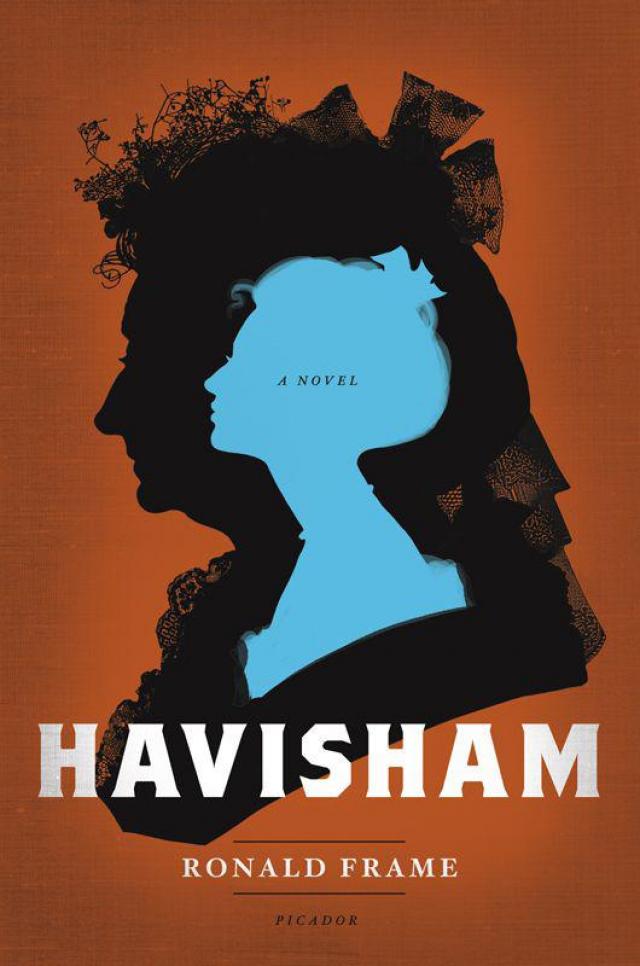
Havisham a novel, p.14
Havisham: A Novel,
p.14


We were even more prominent now from the London road. We looked prosperous, singing our own praises.
TWENTY-FIVE
The brewery had its own malthouses. We bought our hops from four farms in a long valley near Ashford, at Burwell. My father would pay an annual visit, a few weeks ahead of harvesting time, to inspect the crop on its bines and to agree a price for however many hundredweight. Now the journey fell to me. I gave responsibility for the hop-buying to myself, but acting on sage advice from two of the firm’s old hands.
It was arranged that they would ride there, and I would make my way in the curricle. We stopped to water the horses midway, at the inn where my father had always halted. The driver reminded me that my father had once brought Arthur, at the time when it seemed he would be working alongside him.
The owner of the inn presented himself. Would I do him the pleasure, the great pleasure, of resting in his best private room?
I thanked him, but told him we were late already, that I didn’t –
‘I venture to ask, ma’am, on behalf of another.’
‘On behalf of whom?’
I discovered when I was shown into the room.
‘Catherine –’
The blood rushed to my face.
‘Charles!’
‘Surprised?’
‘How on earth did you know –’
‘– you’d be here? Oh, I have ways and means.’
‘But…’
‘Never mind that now.’
He was dressed for a horse, but in dashing style. A waisted cutaway coat and tight breeches. What a handsome figure he –
I reached out for the support of the high mantelpiece.
‘I’m not here,’ he said. ‘I’m far away. Officially.’
‘“Officially”?’
‘If anyone should ask.’
‘Why should –?’
He put his index finger to his lips.
‘There’s been a bit of confusion, that’s all. Or there might be. It’ll get sorted out, though.’
‘Can I help?’
‘You’ve been help enough.’
‘That was nothing.’
‘This is my doing,’ he said, ‘my fault.’
‘Your “fault”? What is?’
‘No, Catherine. Remember what I said –?’
I nodded my head.
Coffee and chocolate were brought into the room. He drank quickly.
‘I’m so glad I was able to intercept you.’
‘You could’ve called at the house,’ I said.
‘I think not.’
‘No. No, I…’
My face heated again.
‘I was waiting for the first sound of your carriage’s wheels…’
He was gone before I was quite ready, taking a back staircase down. I had the touch of his hand on mine; I could still feel where he had brushed his lips against the skin on the back: speedily, but with great gentleness.
… and Joy shall overtake us as a flood.
The final moments were left so sweetly in my memory. I stood swaying slightly with emotion at the top of the staircase. I listened as his footfalls grew fainter, as the jangle of his stirrups faded; I heard the clatter of shod hooves on the courtyard cobbles, and five seconds later I could hear nothing of him at all.
* * *
It had been a decent year for the hops, I was told, with less disease about and less mould than last.
At Burwell we inspected the bines still to be picked. We compared the Flemish variety with the Kent. I was told the very best pickers were on two shillings a day, which seemed to me excessive, and I said so, but I didn’t argue the point.
I was shown figures. Sixty-two hundredweight on ten acres last year, and a profit of £5 15s 0d.
‘You’re not complaining?’ I asked them.
‘Things could always be better.’
‘These are hard times, Mr Foxton.’
‘Indeed, Miss Havisham. But…’
‘I shall look at my own ledgers. I can’t make any promises, however.’
‘That’s most civil of you.’
Suddenly I was exhausted.
‘Are you feeling all right, Miss Hav—?’
I saw again that scene inside the hermitage, the two bodies writhing at their pleasure on the floor.
My head was spinning.
‘You’ve come over very pale, if I might –’
I was taken out of the sun, into the oast house. A chair was found for me. The hops were drying, and the air was hot and stifling from the wood fire. I could only manage a few minutes there, but that was sufficient.
Briefly I’d thought I was going to cry – I felt a sudden terrible sense of desolation – but just in time I pulled myself together, bundling my litter of wanton feelings back under cover.
* * *
An apprentice lawyer called Jaggers – in Mr Snee’s practice – wrote to me, requesting the favour of my time on an issue – as he judged – of no little importance. He begged that I did not inform his employer of his communication.
I was intrigued.
I received a swarthy, sturdily built, bullet-headed young man. His wrinkled shirt collar strained to hold his muscular neck. Samson, I thought of, with the hair on his head cropped close to stubble.
He was far from disempowered, though, despite his subordinate position.
For a few seconds I was alarmed by this sizeable presence. He was tongue-tied at first, but I sensed the confidence he had in his own mission.
‘We have something to discuss, Mr Jaggers?’
* * *
Indeed we did.
My visitor had discovered that Snee was an embezzler. He was defrauding me of this and that, but principally of the monies due to Lady Chadwyck. She had received nothing since before my father’s death, since the time of his collapse.
‘You’re quite sure of your facts, Mr Jaggers?’
‘I waited until there could be no possible doubt.’
‘I see. I see.’
He had retreated to the other side of the fireplace. He stood chewing one index finger, clearly forgetful of everything except the gravity of his news. I liked that air of abstraction which was testimony of his diligence surely. His breath filled his bullock’s chest, I could imagine the shirt buttons were ready to burst off.
‘And you mean to gain nothing for yourself?’
The question appeared to shock him. I had asked it chiefly in play, in order to lighten the dark mood.
‘Only to escape the infectious atmosphere of self-interest I’m forced to endure.’
‘It really won’t affect you too?’
‘I’m young.’
‘As Mr Snee was once.’
‘You think the same is bound to happen to me, Miss Havisham?’
‘Not necessarily.’
‘It might, though?’
‘Then I hope you’ll prove yourself to me. As you have started to recommend yourself already.’
* * *
I confronted Snee myself. He denied my accusations more strongly than I anticipated. I called in my informant. Snee understood at once; there and then he wrote out a money order.
‘To deal with this embarrassment, my dear lady –’
‘“Embarrassment”? And how dare you “dear lady” me!’
I demanded that Mr Jaggers be allowed to gain his articles elsewhere. I would leave my affairs with Snee meantime. Thereafter, when he was fully qualified, Mr Jaggers would take over, representing my interests. If the transference was handled cleanly, I would presume that no earlier dishonesty had occurred, and forgo the pleasure of pressing criminal charges, as the older man must know very well he merited. With that I made the first of my enemies in business – Snee – and my first and trustiest ally – Jeremiah Jaggers.
* * *
However recompense might be offered, I would be admitting to the Chadwycks that I knew now about the financial arrangements that had pertained.
I could see no way around that problem.
No pretence of innocence was possible. Experience can never be undone, or knowledge unlearned.
Following my father’s death, I had acted with the best intentions – not that they were ever likely to discover. Either I must simply let matters be, and hope other means were at the family’s disposal, or I should pay them what was due.
The latter, I decided.
I wanted not to damage the past, even though I was acknowledging to myself that that part of the past was over.
* * *
War against France was pushing up taxation, and every brewer in the land had headaches.
Duty on hops was increased from fifteen shillings to 23s 4d per hundredweight. Duty on strong beer went up from eight to ten shillings a barrel. Malt duty was raised from 1s 4d a barrel to 2s 5d, then shortly afterwards to 4s 5d. The price of materials for pale malt almost doubled, from forty-four shillings a quarter to 81s 6d.
I got wind that some of the pubs were adulterating the brews, and I heard the idea being put about for ourselves too. (Substituting molasses for some of the malt. Mixing strong and light table beers, and marketing the result as ‘strong’.) It would cut production costs certainly, but I felt it would be unfaithful to my father’s memory to tamper with the recipes that had made us successful.
I tried to trim the labour costs, exchanging a few full-time for part-time jobs. I would have preferred to replace the voices that advocated watering down, but I was afraid of tangling with working practices at that level, at any rate before I had gained more expertise.
There’s a silver lining to every dark cloud, however, and when it became too expensive for small house brewers and publicans to continue brewing, they turned to the common houses for their supplies. When one door closes, as they say, another one will open.
* * *
‘How d’you know that?’
‘Know what, sister?’
‘About the Carnaval Ball.’
‘Aa-haa!’
‘Who told you?’
‘Doesn’t matter to you.’
‘Who, Arthur?’
‘Good God, I can’t remember.’
‘“Can’t remember”?’
‘No problems with your hearing, Catherine.’
‘Or you won’t remember?’
‘What’re you asking me for? I don’t stuff my head with all that nonsense. Once something’s happened, it’s over. Gone.’
He was proud, like me. He took advice from no one, and would be obliged to no one. He thought he had his entitlements.
He selected what he wanted to take from the past: the past of his Havisham forebears.
He was aware that he had a role to play, and doubted that he had the talent for it.
He was afraid of revealing too much of himself.
For all that was different between us, we two had just as much in common, and this was my stumbling block, the point I could never think beyond.
TWENTY-SIX
One morning it happened: Charles was standing in the yard.
I had to look twice. Suddenly my heart was up in my throat, I was swallowing on it.
He was back!
… and Joy shall overtake us as a flood.
The blood was pounding inside my head.
I turned in different directions before I decided which. I wanted to change my dress first. Reset my hair.
A knock on the drawing-room door.
‘You have a gentleman visitor, miss. He said he’s come back from abroad. And you’ll be able to guess who he is.’
He had been in Holland.
‘Do you mean to absent yourself again?’
‘It’s not my intention. But life throws up surprises.’
He was complimentary about his surroundings. He noticed little details of the architecture and the decor, and I congratulated him for it.
‘Shouldn’t I notice? Have I forgotten my English manners?’
‘No, no. But – it’s more than I was … I’m glad, though.’
‘Then I’m glad you’re glad, Catherine.’
He didn’t tell me what had detained him for all those weeks in Amsterdam.
‘So, what’s it like? Being a woman in a man’s world?’
‘I’ve had my honeymoon. After this … well, I don’t know.’
‘So much has changed for you.’
‘In some respects, yes. But –’ I lifted my eyes, ‘– in other respects, I haven’t. Not at all. I’m exactly the same.’
* * *
I suggested that we should meet in London. Charles sighed.
‘I’m not “tired of life”, Catherine. But I do get tired of London. London belongs to everyone. Somewhere else. Somewhere that’s just our own.’
* * *
It was always somewhere else.
Wherever we wouldn’t be likely to cross paths with the Chadwycks, although of course we could never be sure about that.
On the Downs. In Tunbridge Wells. The Weald way.
I would take along a maid, for form’s sake, but send her and the driver off for an hour or two.
Charles and I would walk. Sit before a view. Talk.
Happy days! I knew they were happy as we were living them.
Standing looking over the parapet of a bridge, down into a slow weedy river. Strolling through the fragrant shadows of a wood. Climbing, once, up the staircase of a windmill with its great sails revolving and cracking in the wind.
He saw how content I was. He told me he wished he could draw me well enough to take a sketch, but anyway he would always remember me like this. (Did he, very fleetingly, look a little troubled? Or am I mentally painting myself an idealised portrait of the man?)
I said to him, I could better appreciate this time we spent together because it was so precious, stolen from the timetable I had set myself at the brewery.
What a pity, he said in his turn, that we had to steal it.
‘What d’you mean?’
‘If we couldn’t organise ourselves that this was our life.’
‘No guilt?’
He smiled at the question. And pointedly didn’t reply.
I thought quickly.
‘I could give other people my work to do,’ I said. ‘Some of it.’
‘I wasn’t quite thinking of that. In the short term, yes.’
‘“Short term”? You have a long-term stratagem too?’
‘It’s taking shape up here.’ He pointed to the site of his brain.
‘Can you tell me?’ I asked.
‘Might be unlucky.’
We were having our conversation on a river, in a scull. A faster river than the Cam. I sat looking up at the trees rushing past against blue.
‘You’ll tell me when you can?’
‘I promise.’
‘Then that will do me very well.’
* * *
But there was also Arthur. To begin with, he had been pestering me for small amounts: just until he could lay his hands on the next whack of cash from his inheritance.
‘It’s nothing to you,’ he would say. ‘You’ve got pots of the stuff. Don’t humiliate me.’
‘What happened to the last lot?’
‘Got all used up.’
‘Aren’t I supposed to be lending it?’
‘Oh, you’ll get it back.’
‘When?’
‘This is to make sure I do get the money.’
‘The money to pay me back?’
‘Naturally to pay you back.’
But I knew better than to believe him.
He kept asking. I would put up a fight, and he never received what he wanted, or even half of it sometimes. But I did give in to him.
‘There’s no more, though.’
‘It’s not enough.’
‘It’s all you’re getting.’
‘You can afford it.’
‘Did I miss “thank you”?’
‘Would you like me to prostrate myself too?’
‘That really would be stretching all credulity.’
‘You call the shots, all-infallible one!’
Shortly afterwards something occurred to make me nervous, on that reprobate’s behalf.
Loud insistent knocks rained down on the front door.
My visitors were looking for Mr Arthur Havisham. They had some business to discuss with him, urgently.
(Arthur had removed himself that morning – by no mere accident, I now realised.)
They frightened me, the trio, with their undertakers’ black clothes and faux-solemnity and their grave-robber faces.
I performed at my most imperious. I thought of Dido and of Carthage. From a window I watched them leave the yard. Arthur returned late in the evening, when darkness had come down.
‘I think you owe me an explanation,’ I said.
‘They go dunning. They demand money with menaces.’
‘Is the money due them?’
‘I would give it to them if I had it. All the interest adds up.’
‘What’s it for?’
‘Past pleasures, let’s just say.’
‘For which you are duly contrite?’
‘If I knew what being “duly contrite” entailed –’
‘Those men put the fear of God into me.’
‘And me too.’
‘Something truthful from you at last. All is not in vain.’
‘Please. For our father’s sake –’
I sighed out my soul.
‘Just – just tell me how much…’
* * *
When Charles wasn’t there, I sagged. (Did the trees droop by nature’s will, or because I told them what my feelings were?)
I should have been walking tall – and, doubtless, proud. But I was afraid every time he left me, not just unhappy. Fear cut me right down to size, and then it slammed an iron bar against my stomach.
My panic was that he wasn’t coming back, or that I wouldn’t see him again. My imagination threw a caul of gentle thoughts around him, to protect him, but all the time I was having to cope with my demons.
Wherever Charles might be, he would know that he wasn’t alone.
Where did he go?
There was a cousin in Suffolk, a farmer of some sort. Up in Norwich a friend sold land and stock. He visited this or that hospitable relative, or else he looked up a (temporarily, he hoped) ailing schoolfriend.
Here and there, hither and thither.
He had a sister in London, but he could only call at her home when her husband wasn’t there. The man had heard false stories, put about by someone with a grievance. Charles claimed to be unperturbed.


