

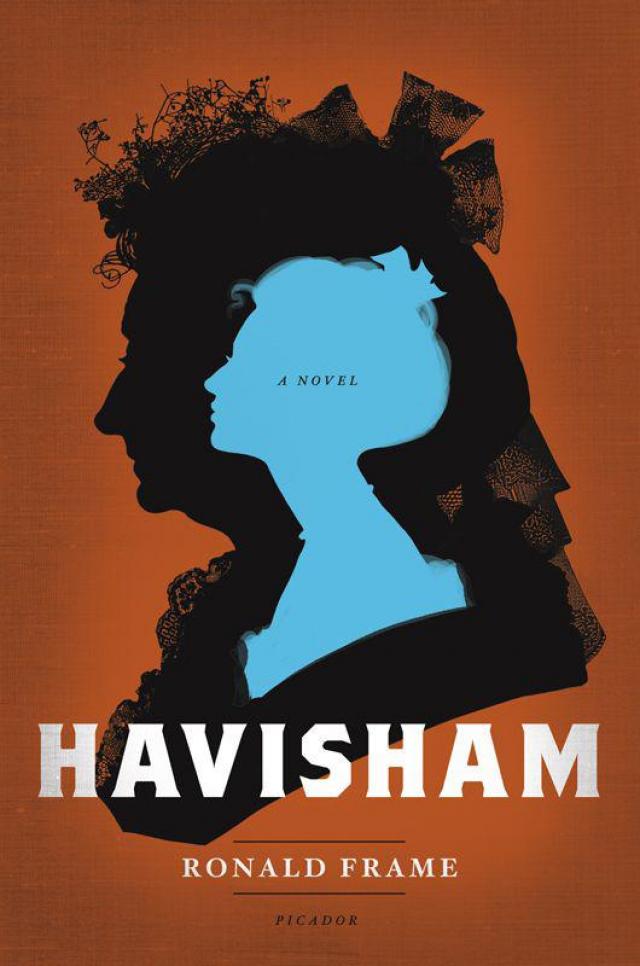
Havisham a novel, p.26
Havisham: A Novel,
p.26


Mr Jaggers stood fingering the exaggeratedly thick gold chain of his repeater, which straddled his broad barrel chest.
‘Once that period of detention is at an end, the same company may be unwilling to permit this one of their number to sever his – or her – ties. And if he – or she – should suggest that these ties are dispensable, then the prior company may conclude that certain constraints should continue to be exerted.’
I was losing track.
‘“Constraints”?’
‘Theirs is a violent society. Conscience and pity have no part. Rather, those qualities are despised. Life itself is valued at very little.’
I shuddered, and felt myself blench beneath the coating of white powder on my face.
Mr Jaggers looked troubled, as much by my reaction as by what he knew but was unwilling to tell me. But I didn’t want him to misunderstand.
‘I have lived in seclusion all this time,’ I said. ‘The old life is long ago and far away.’
Pause.
‘Doesn’t the mind continue to dwell on the past, though?’ he asked me.
‘Less and less on the details. Not on who and what and when and where.’
I remembered what I’d felt, but not who had made me feel those things. I remembered what the experience of knowing Charles Compeyson had done to the young woman called ‘Catherine Havisham’, so much less worldly than she’d liked to think she was.
Now I couldn’t even bring the face of her betrayer to mind. Over years it had faded away, into the furniture, into the walls.
‘I can see the desirability of that,’ my informant said.
His watch started to chime the second quarter. An imposed mechanical pause, while we both listened.
Just what was I being warned about? Firstly, that Mr Jaggers had underestimated this one criminal’s degeneration, his viciousness? And secondly, what the man might do to wrest himself free of the ‘constraints’ which that erstwhile prison company intended to put on him?
‘The human mind, Miss Havisham!’
His final words. To remind me of what my seclusion had needed to save me from.
‘How low it can reach! And sunk at the very bottom of human nature – take my word – is a terrible, lightless lair of wickedness.’
* * *
One night a storm blew up. Estella couldn’t sleep through it. She came to find me, folding her dressing gown decorously about her. We listened to the wind howling through the empty brewhouse.
A branch torn from one of the venerable cherry trees smashed through the roof of the old ice-room behind the kitchen.
Estella perched on the fireside fender. Her eyes widened as Satis House with its two centuries of history quaked around us. Fresh blasts of wind buffeted the walls and rattled the glass in the window frames. Unearthly moans issued from the brewhouse.
The flames leaped in the grate, then cowered. There was a mess of soot on the floor.
Out of doors – as we were to discover – birds’ nests and uprooted shrubs from the garden flew past. A thunder roll was a dislodged rain barrel being tossed across the cobbles in the yard.
Estella kept close to me, but closer still to the fire. Every new squall had her retying the sash of her dressing gown tighter and glancing over at me for comfort.
‘It will pass,’ I told her.
‘When?’
‘Once it’s done with. Blown itself out.’
My reply disappointed her. Shouldn’t I have known ‘when’? Formerly perhaps I might have done; or she would have believed whatever I might have told her, and taken it for a likely fact.
She turned back to the sputtering fire. I saw she was shaking, and that she retied the sash so often to try to disguise how afraid she was.
If I had just leaned across then, stretched out my arm at that moment to touch hers … if I’d only … if …
* * *
The next time he came, Pip seemed out of sorts. He was almost off-hand with me, which he had never been before. And then I realised he was being off-hand to himself. His smiles were somehow bitter, but they weren’t intended for me. They were being directed back at himself, I felt: at the person he used to be, who had once put his trust in what had turned out subsequently to be false.
He looked around, and shook his head, not meaning me to notice. He caught sight of himself in a mirror, and stopped. In the mirror he belonged to this room. Step out of the frame, and he didn’t.
Since he’d last attended us, he had learned something about himself: perhaps the true source of his material prosperity. And he’d been sorely vexed at the discovery.
I had never enquired on the subject. I wouldn’t ever do so.
‘Estella will be coming,’ I told him. ‘Look about the garden, if you like. It’s wrack and ruin, I know –’
‘I never saw a better.’
‘A better garden?’ I smiled at that. ‘Whatever d’you mean?’
‘It’s just as I imagined it would be,’ he said.
‘Thistles and cabbages?’
‘I can see what it must have been like.’
‘You will have Estella to show you.’
What was I setting him up for? The garden had run to riot, run to rot, and –
‘When she comes,’ he said.
‘Just be patient.’
* * *
Estella sighed.
‘But one day I must marry.’
‘Where does that remark come from?’
‘What?’
‘About…’
‘About marrying?’
I stared at her.
She stared back at me. At my yellowing wedding dress. At the two ragged slippers on my feet.
‘I meant all this to be an example to you,’ I said. ‘A caveat.’
‘Telling me what?’
‘Not to believe what I was foolish enough – gullible enough – to believe.’
‘But not that I shouldn’t ever get married?’
‘I – I don’t know. I didn’t…’
Estella as a wife?
I had planned, of course, that she should be supremely eligible. As her provider I had given her everything which I judged from my own experience she might want. Now she asked for the very thing I hadn’t had myself. A wedding.
A gold band on her finger, next to an engagement ring. A honeymoon. A married woman’s establishment.
She would be Mrs This. Or, even, Lady That.
How was it possible I had failed to anticipate her question?
I had required my Estella to sparkle and entice. Men would fall for her. She should promise much, and be promised more in return. She should lead them to think she was a prize, their booty, for the simple taking. And then – majestically, devastatingly – she should disappoint them.
Which was as far as my design had reached. I hadn’t planned for anything beyond. That was the future lying ahead of the future, but Estella was already rattling at its door.
* * *
Pip told me he knew someone – a fellow tutee at Pocket’s seminary in Hammersmith – who talked of Estella.
‘And who might that be?’
‘His name’s Drummle.’
‘Ah.’
Later: ‘This Drummle specimen – is he a friend of yours, Pip?’
‘I can’t say he is.’
The world shrinks and shrinks, but nothing should have astonished me …
‘Aren’t you compatible?’
‘No. Not really.’
‘Why not?’
‘I don’t know if I should say.’
‘Do.’
‘But seeing that he knows Estella –’
‘All the more reason.’
Reading between the lines, Drummle was a boor. Tactless, lazy, surly, prone to despondency. His irresponsible behaviour would have seemed refreshing to Estella, a release. When he wasn’t despondent, he was likely to be the obverse, the very life and soul, and in those circumstances, fifty miles away from Satis House might as well have been a thousand to Estella. She would return to me with his laughter ringing in her ears, seeing his eyes still smiling into the carriage at her: my carriage, which I insisted she travel in now. (Oh I know, Estella, I know just what it is you’re going through. I see far better than you, but there’s nothing I can do to stop you.)
‘Propel me round the room if you will, sir.’
‘Certainly, Miss Havisham.’
‘But this time we shan’t talk.’
‘Whatever you wish.’
‘Oh, wishes and dreams!’
It was when we set out to make those come true that they deceived us, they became the sure-fire means of our undoing.
* * *
Estella was tired of her life with me, just as I had grown weary of my life at home. She longed to make her escape, just as I had longed to make mine. I should have had perfect sympathy for her, therefore. But I didn’t.
Her mother was a murderess, her father a transported convict. Without me she would have grown up in an orphanage, then a poorhouse. I had taken her in, I’d fed her and warmed her, I’d given her a second chance at life. She had everything to thank me for, and yet I received back little or no gratitude.
When I told her she was heartless, all that she could reply was, well, who was it who’d made her like that?
* * *
Perhaps Bentley Drummle was the one man she couldn’t keep down. Was he presenting her with her greatest challenge? Did he even have the semblance of a heart for her to grind away at?
Why couldn’t I put him out of my mind?
The grandeur of the Drummles’ social habits, like their self-opinion, had always been in inverse proportion to their means. Other families kept their wealth or got richer (or, like the Chadwycks, entered into ‘arrangements’); while the Drummles, losing money by slothful inattention, insisted all the more on their dignity, elevating it to noblesse. (All those elderly spinster aunts and bachelor uncles were the problem. Never mind that they didn’t have proper blue blood, the Drummle blood simply wasn’t mixing enough: it was thickening instead; coagulating.)
This Drummle wanted Havisham money. He wasn’t too proud to come after us.
Estella was no greenhorn. She had the measure of him, but there was something about him which affected her differently. He resisted the worst she could deal him. Any other man would have succumbed and gone under by now.
Pip was hurting, and Estella saw that, and she had ceased to be interested. She played with Pip and had ruthless sport.
Drummle didn’t hurt. By dint of stupidity and insensitivity, he had held out. He filled her thoughts, because she couldn’t dispose of him. He wouldn’t honour her as the others did; she hadn’t worked out yet how he was to be broken, or even if he could be.
I could see it all in my mind’s eye. He was impertinent back to her, he showed his temper, he neglected her for a while, then he was generous in a belittling way. He covered his ears when she came after him – before he lurched, lunged at her, pinned her to the wall, pressed himself intimately against her, laughed at her until she started laughing too.
Estella Havisham had met her match.
* * *
Everything was confused. Water lapping against mossy Venetian steps. Dido, ghastly she gazed … red were her rolling eyes. Faded green lettering on a brick wall. A Negro boy wearing a blue velveteen coat with gilt buttons. A bald-headed doll in a window, who winks one eye. Windmill sails cracking in a stiff breeze, Dutch clouds as plump as eiderdowns. Along a Zealand canal a gondola nudging its way, beneath willows, passing a woman’s straw hat that floats on the cold dark water and trails scarlet ribbons. A straw woman, roped to a chair, crowning a bonfire, who explodes in sparks. The black boy announcing, a man is making love to a woman on the Bokhara rug. A perspective grid laid over a blank sheet of sketching paper.
I opened my eyes. I couldn’t tell if it was night or day, autumn or spring. I couldn’t be sure if I had woken up or if this was me falling back into a familiar dream.
* * *
Estella twisted her mouth at me, as if she had some bad taste in it. How had we got to this?
‘Have you ever thought of me? When I was bringing all this credit to you –’
‘What am I hearing? “Me”? “Me”?’
‘That I was a person. Not some – some marionette.’
‘Oh, spare me, Estella. Don’t weep for yourself.’
‘Someone has to.’
‘Why?’
‘The idiocy of it. The tragedy.’
‘It can’t be both,’ I said, ‘whatever you’re talking about.’
‘You know quite well.’
‘Do I?’
‘Deceitful too?’
‘I have never deceived you, Estella. Never.’
‘Well, when you haven’t allowed me a breathing life like other people –’
‘What nonsense you’re –’
‘– then truths and lies don’t matter, there’re no such things. Whether you’ve deceived me or not –’
‘Ha! You’re retracting –’
‘Certainly not. You’ve used me. To do your perverse will. But not so I’ll know why I’m doing it.’
She was in tears.
‘Marionettes don’t cry, Estella.’
I took two or three steps towards her. Then I stopped.
‘Hush, hush!’
She kept on crying. More tears than I thought were possible: unless they had been collecting for these weeks, months.
If I’d been able to stretch out my arms, to hold her … But I couldn’t bring myself to.
I couldn’t manage it. And everything which was to follow – from that one solemn and foreboding moment it had been determined.
* * *
He repeated the name. ‘Drummle, you say?’
‘The same, Pip.’
‘Drummle? He’s the very last – Tell me this is some joke, Miss Havisham.’
‘It isn’t. I wish it were. How I wish it were.’
‘Where’s Estella? Let me speak to her.’
‘She’s gone off for the aftern—’
‘Didn’t she know I was coming?’
‘Yes, Pip.’
‘Then she won’t get her play with me. Will she?’
He quietened. But he also grew gloomy. ‘You should see how the oaf drives.’
‘And how is that?’ I asked.
‘So fast round corners in the brougham, he scrapes the body on the lamp-posts.’
‘He sounds … high-spirited,’ I said, not concealing my own dejection.
‘Reckless. A hot-head. Hell-bent.’
My worst fears were being confirmed.
‘And the horses are all on edge. He’ll run someone down soon, I’ve no doubt about it. Only he’ll be going so fast, it won’t matter to him.’
‘Because he hasn’t seen?’
‘Because he cares not a damn.’
* * *
Estella was coming and going exactly as she pleased. She wouldn’t tell me what her arrangements were. She only dropped a word or two, of the barest necessity, in passing.
I could have disinherited her, as my father had done to Arthur.
But the Havisham money was the essential component in her allure. Without it she would have been much like any other of a multitude of girls. What else was to be done with her bounty anyway? The wealth was inseparable from the name. The name was inseparable from the fact of our wealth. It was the identity which we had in common, we two last Havisham women.
She was telling me nothing. Of where she went, whom she saw. She thought she could do without me. She was twenty-one, her own woman, with ample funds as it was. She thought she should be able to forget me.
But I was in the air. I was in the bloodstream, I was in the bone.
I was there in the mirror. I was there in front of your face, so you tried – tried, Estella – to wave me away.
I’m the tread on the staircase behind you. I’m that little gulp of air in your throat after you’ve taken a swallow of food or drink, whatever you need to nourish you. I’m the small plaintive scratching of a branch at the window, I’m also the cold north wind rumbling low in the belly of the chimney. I’m the heat of your bedroom in summer, I’m the frost which patterns those extravagant ice ferns on your window. I’m the dampness of autumn oozing out of the stonework, I’m the wearisome predictability of spring budding, which is only the continuance into another year, and into the next, of your neglect of me and your unhappiness for yourself.
But didn’t she deserve to forget me?
I had shrunk the love inside her to such a tiny thing, a thing that she realised could not sustain her.
I couldn’t condemn her for ingratitude to me, because she didn’t know – I hadn’t trained her – to have any warmer feelings.
FORTY-FIVE
Estella went off to Richmond, to stay with Mrs Bradley, by the Green. In the silence – the utter dearth of communication – that followed, I had to set the scene for myself.
She was being paid court to, as ever. She was behaving (I hoped) like an icy empress. But I suspected that covertly – in well-bred Richmond – an axe was being ground; Estella was making contingency plans, in order not to continue her life as a second ‘Miss Havisham’.
I told Pip she had gone to the opposite end of the country. He was ready to set off after her. I told him I needed him here.
But he was turning too.
‘I begin to see what you’ve done.’
‘“Done”? What have I –’
‘Will you now play the innocent, madam?’
‘What’s this?’
‘I was some kind of experiment, was I?’
He was indignant, and yet his voice didn’t quite lose its tone of urbane politeness.
‘What precisely was I intended to prove to you, Miss Havisham?’
I could have feigned not to understand. But I had my answer instantly ready.
‘When you praised Estella, that confirmed my success with her. And when I persuaded you to stand up to her, then – you were testing Estella’s resolve.’
‘An experiment. Anyone could have been in my place, it just happened to be me?’
‘You – you needed to be intelligent. Someone who – who didn’t quite fit, so to speak –’
‘But I was expendable?’
‘Then why should I have persisted with you – only you – if you were?’


