Parallel nazi 07c1, p.26
Parallel Nazi 07c1,
p.26
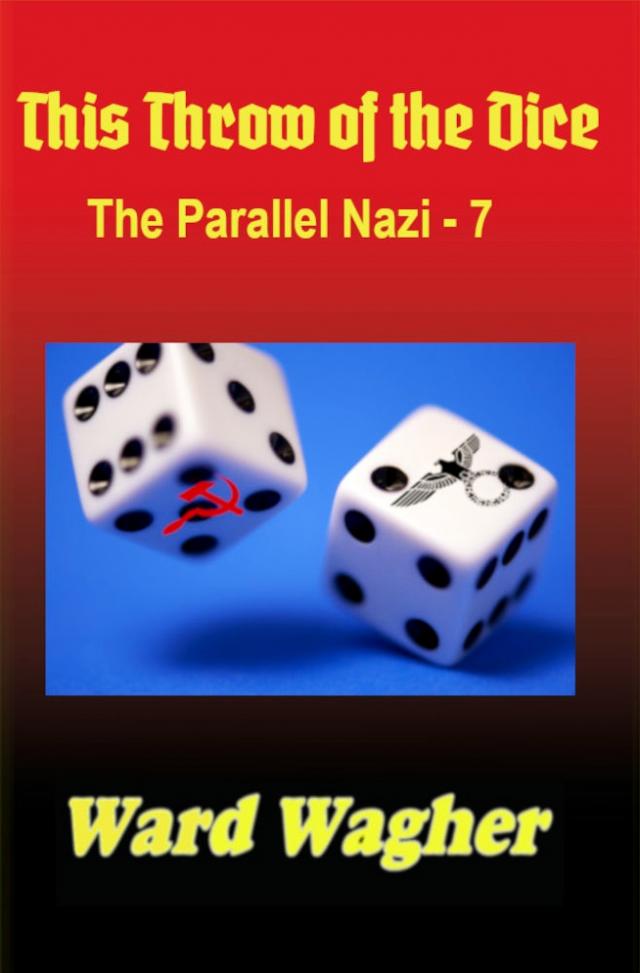


Von Rundstedt nodded and picked up the typewritten military summary. “I apologize for not having copies to distribute. We only finished it this morning, and I will have copies for you by the end of the day. To put it briefly, our forces are locked in battle with the Russian Army in Silesia. The Russians are attempting to close our salient into the area, thus far unsuccessfully. General Rommel has managed to drive a force behind the Russians, cutting off their supply lines as well as a means of retreat.”
“Chuikov, the Russian general, apparently has decided to gamble that he can destroy our forces and recover his access to supplies. As you know, General Guderian and the OKW have agreed that since the Russians seek a decisive battle, we should give it to them. General Rommel concurred.”
“And so we are abandoning our cut and thrust strategy?” Rainer asked.
“Not exactly. We used our blitzkrieg strategy to good effect in cutting off the Russian line of retreat. And we are trying to avoid direct head-on situations as much as possible. We are using the schwerpunkt to punch through and split the Russian lines. The goal is to break their cohesion so we can apply locally superior forces against the remnants that refuse to surrender.”
“And what are the Russians doing?” Colonel Gehlen asked. “I no longer have any sources in Chuikov’s organization.”
“It seems they are using a similar strategy to ours,” the Reichsmarshall replied. “Chuikov is a clever operator. So far, we seem to hold the upper hand.”
“And you think we will win this one?” Schloss asked.
“I do. We have the benefit of better reconnaissance. We know where the Russian forces are concentrated. We know they have limited supplies and ammunition, and we are forcing them to burn through it rapidly. And we have control of the air. The Luftwaffe has been invaluable.”
“So we were able to surprise them?” Peter asked.
Von Rundstedt cocked his head. “Surprise is an interesting concept. We are comfortable that they did not realize the size of our forces in the region. Schörner’s four divisions have been there for quite a while, and Rommel was able to sneak in quite a bit of augmentation without them being aware of it, as far as we know.”
“As far as we know,” Schloss repeated.
“Yes,” von Rundstedt replied. “We all try to remember that surprise works in both directions. But, so far, everything points to the Wehrmacht having achieved tactical surprise.”
“And your objective is Poznań?” Rainer asked.
“That was our original objective,” the Reichsmarshall stated. “We have updated our objectives to include destroying the Russian army in Silesia. If we accomplish this, then the road to Warsaw will be open.”
Schloss looked around the table. “So what we are doing is rolling the dice, correct?”
Von Rundstedt leaned forward and placed his arms on the table. “This throw of the dice will likely be the gambit that wins the war for us.”
Schloss rubbed the inside of his cheek with his tongue as he considered the Reichmarshall’s answer. “Will there be any further questions for the Reichsmarshall?”
No one answered. “Fine. Thank you for your report, Herr Reichsmarshall.”
Schloss looked over at Kirche. “Next item, Willem?”
“Yes, Herr Reich Chancellor. The Commerce Minister asked that we discuss the Breton Woods conference for financial exchange rates.”
“Thank you. Go ahead, Joachim,” Schloss directed. “You will probably have to put this on a sixth-grade level for us.”
Ribbentrop chuckled nervously. “That would be about the level of my understanding, Herr Reich Chancellor. A conference started this week at Bretton Woods in the United States. People are attending from all the major powers. I was not able to attend, but I sent one of our monetary specialists to participate. The goal is to develop a mechanism for currency exchange and financial settlements.”
“That sounds laudable,” Rainer said.
“The catch is that we have to agree to manage our money supply to avoid wild fluctuations in value. The Americans want to peg the currencies to gold. That can both work for us and against us. But it would discourage us from devaluing the currency.”
“As happened to the Weimar Republic,” Schloss said. “That nearly destroyed Germany.”
“Correct,” Ribbentrop replied. “No one is sure any agreement the attendees will reach, if any. The English and the Americans are sharply divided on the approach. In general, however, This will encourage free trade and boost the economies of the participating countries. And the Americans would like Germany to participate.”
“That makes sense,” Schloss commented. “I think the American economy is in turmoil because they are demobilizing, and they are struggling with their cleanup operation. What are your recommendations, then, Herr Commerce Minister?”
“Only that we study the proposals carefully. We have our own challenges at the moment.”
Ribbentrop paused as the group chuckled at his comment.
“I do not think we should rush into something just at the urging of the Americans. They are not hostile towards us, but they obviously will serve themselves first. But, I think we may find it useful.”
“Thank you,” Schloss said. “I expect some lively discussion when we finally see the entire package. What’s next, Kirche?”
“Herr Schreiber.”
Peter looked up. “Just an update on the situation in Japan. We have learned that the group that engineered the coup appointed Fumimaro Konoe as the Prime Minister. That is at odds with the extreme nationalism we assumed was behind the coup. Konoe is considered a moderate.”
“Any thoughts on what might be happening, Peter?” Schloss asked.
“We just recently reopened the Consular Office in Tokyo, and our Chargé d'Affaires has yet to arrive. So we are almost completely in the dark.”
“I thought we already had an embassy there,” Schloss commented.
“We do, but we downgraded it to a mission after the Japanese began their war. They were unhappy with us.”
Schloss nodded and then looked over at Gehlen. “Anything you have been able to pick up, Reinhard?”
“Only that there is some speculation in our shop that the emperor had insisted on Konoe. If that is the case, then whoever planned this thing got a big surprise when Hirohito took it in a different direction.”
“Does anyone care to predict whether they will continue to repair relations with Germany?”
No one said anything. After a moment, Schloss spoke.
“I don’t either. Fortunately, this is not something critical to Germany, so I think we can afford to sit back and watch things develop. Kirche?”
The group worked through the rest of the extensive list of items before it adjourned. Schloss was glad to get through before dinner time.
§ § §
July 4, 1944; 10 AM
The Kremlin
Moscow, USSR
“We have a problem with the Red Army, Sergei,” Stalin quietly said as he puffed industriously on his pipe. “They seem to get themselves trapped and know not what to do.”
Sergei Kruglov shifted uneasily in his seat. That Chuikov had managed the same feat that Smirnoff had recently achieved was simply unbelievable. The NKVD head was convinced that Stalin was going to order him to do something about it. And there was little to be done.
Malenkov sat across the table and worried about his problems. Production of war materials was never enough. As usual, Stalin demanded the impossible.
“Once again, they are cut off from contact with Moscow, other than radio,” Kruglov volunteered.
“Certainly, they could get an airplane in,” Stalin argued. “The pilots have bragged to me about the Po-2. They say they can land it on a postage stamp. Perhaps, you could instruct one of the political officers to arrest Chuikov and strap him into a Po-2.”
Kruglov was surprised. That had not occurred to him.
“We could do that,” Kruglov admitted.
“Then let us fly in a replacement officer. Someone with more sense, and perhaps he can rescue the situation.”
“Rokossovky,” Malenkov immediately said.
“The Pole?” Stalin asked.
“Well, yes, Comrade. But he has proven himself in this war.”
Stalin looked at Kruglov and raised an eyebrow.
“Is he someone we can sacrifice?” the head of the NKVD asked.
“I need somebody to win!” Stalin stated sharply.
Kruglov was more nervous now. Stalin rarely raised his voice. Things were now at a dangerous stage. Chuikov was working hard to avoid surrender. And the Red Army had yet to lose this battle. Replacing the leadership of that army group was fraught with peril. By the time a new general got his arms around the situation, the Germans could well have cut them to pieces.
“I think Chuikov remains our best chance of victory,” Kruglov said. “Anything else would seal the fate of that operation. If he wins, we can bring him back to Moscow, pin a medal on him and shoot him. If he loses, he has more worries than the NKVD.”
Stalin laid his pipe down and stared at Kruglov. The NKVD chief held his breath but stared levelly back at Stalin. Out of the corner of his eye, Kruglov saw the sweep-second hand moving around the face of the clock on the wall. After a full minute, Stalin picked up his pipe again and began filling it.
“Very well, Sergei. We will do nothing for now.”
The unquestioned ruler of the Soviet people hummed tunelessly to himself as he filled his pipe. Once he had it alight, he puffed great clouds of noxious smoke into the room. Then he waved a hand to dismiss his key lieutenants.
CHAPTER THIRTY-NINE
July 7, 1944; 10 AM
Imperial Palace
Tokyo, Japan
The new prime minister of Japan stood in the Emperor’s Audience Chamber and sweated in the heat. The land of the cherry blossoms was not widely known to be hot during the summer months, but Fumimaro Konoe was miserable. It was all of thirty degrees Celsius outside, and it had to be thirty-five here in the Audience Chamber. And Konoe dare not comment on or react to the oven-like heat.
The emperor looked comfortable as he sat on his throne, wearing a formal suit. Konoe wondered if the man had ice water in his veins. Konoe had presented the government’s plan during the imperial audience, and now one of the prefect governors was droning on about infrastructure improvements. The emperor had never kept Konoe waiting during his previous terms as prime minister. He wondered if Hirohito used this as a way to express displeasure. The man was hard to read.
Finally, the emperor spoke. “We have received the reports from the Imperial Government and the prefectures. We will consider the matters before expressing a decision.”
What in the great Buddha’s name was the emperor playing at? Konoe wondered. One of the nameless functionaries bowed before him and indicated he should follow as he left the audience chamber. The labyrinth of hallways and corridors reminded him of his days before the war when he was the prime minister and was accorded great respect. Now he seemed to be treated as an errand boy.
Once conducted into the emperor’s office, Hirohito kept him standing. Furthermore, four enormous guards stood, two flanking the door and two behind the emperor. This was decidedly different, Konoe thought. During his prior regime he was… well, not a friend of Hirohito, but on a conversational basis. Things now seemed hostile.
The emperor spoke. “Why have you disgraced our nation and our people?”
Surprise and shock rippled through the prime minister. Never had he heard of the emperor being so forthright. Konoe almost missed Hirohito’s following statement.
“You are an accomplice in the murder of a courageous man. He was murdered though he strove to accomplish the policies as I directed.”
“Majesty! I abase myself.” Konoe dropped to his knees and bowed his face to the floor. “If you give your permission, I will depart to join my ancestors.”
“And you will take the coward’s way out? You shame me, Prime Minister. Now arise.”
Konoe dragged himself to his feet in complete confusion. What was Hirohito trying to say?
“You left the government because you could not countenance the activities of the militarists. Yet, now you are serving them again. How can these things be?”
“Majesty, I was called back by the House of Representatives and the Councilors. I believe Yamamoto’s murder was a shameful act.”
“I do not believe you.”
Konoe was now at a complete halt. There was nothing in protocol that guided someone when the emperor called him a liar.
“You spoke with no one other than the two houses?”
“I spoke with several close friends after I was invited to form a government,” Konoe replied. “I needed advice.”
“And what did your friends tell you?” the emperor asked softly.
“That the nation needed me. Yamamoto saved the nation, and we could not allow his efforts to be in vain.”
“Very well,” Hirohito sighed. “And I must not allow his efforts to fail. If we were to abrogate the treaty, the Americans could destroy our economy, if not the whole country. I know from your previous regime that you have been honorable and honest. Can you promise me you will continue?”
“Of course, Majesty. I am willing to do anything for you, even to die.”
“Let’s hope it doesn’t come to that,” Hirohito said dryly. “We generally are more effective when we are alive.”
“Of course, Majesty. Thank you.”
“I have given this careful thought,” the emperor said. “I will call a conference of the major people in the government and the military. I will then lay out my thoughts and expectations. Those who refuse to participate or agree, I will deal with.”
Konoe shivered despite the heat. He had never heard the emperor speak in such a manner. Historically, the throne had moved behind the scenes with obscure directives. Hirohito’s actions would severely shake the government and the military.
“You will contact the American ambassador and beg him to communicate to his government the need for patience so that we can untangle the skeins. The key to our survival is the supply of oil that the Americans have promised. That is what drove my agreement to the treaty. If they stop shipping oil to Japan, we will be in a terrible position. You and I will likely die in the resulting unrest. And the nation will be destroyed.”
“I will so communicate that to the ambassador.”
“I am working to gather a loyal group of military personnel. Part of what we will task them with is to protect the Imperial presence and your government. We will also direct them to provide additional protection to the Americans in our land. If we allow them to be harmed, their President Truman may go back to war with us. In our current position, they would smash us.”
“I understand.”
“Very well. And I must ask you, Fumimaro Konoe, are you with me?”
“I am with you, Majesty. Body and soul.”
“Thank you.” Hirohito stood. “We have much to do. If you detect new threats, please communicate with me immediately.”
“I will do so.”
After bowing deeply, Konoe left the emperor’s private office. If there was any doubt in his mind where the emperor stood, the answer was blindingly clear.
§ § §
July 8, 1944; 2 PM
The Queen’s Private Office
Buckingham Palace
London, England, UK
Colin Marty sat in the room to take notes during the weekly meeting between the queen and the prime minister. Over the past several weeks, he noticed the relationship between the two unraveling and wondered what to do about it. And he pondered whether he should even attempt to salvage it.
“I dare say, Your Majesty,” Clement Atlee said, “that the situation in Japan and the Far East should concern us less than matters close to home.”
“I suppose you are correct in theory, Prime Minister. However, we are still recovering from a major war in the Far East, and our subjects there depend upon the fleet to protect them from new aggression, which, as you may remember, we did not do well recently. We need to direct our attention on the recent change of government in Japan and work to assure everyone that we won’t see a repeat of the past twenty years.”
“But, what could the Japanese possibly do, Ma’am? We have interned their fleet and demobilized their army. The Americans have shown no inclination to march off and set the Japanese loose again.”
“If you might remember, Mr. Attlee, that we are an ally with the United States and share the responsibility for the treaty with Japan. It is not something we can dispose of lightly. We are still engaged in helping the Australians rebuild their country. Things are unsettled in Singapore, not to mention India.”
“I believe you are exaggerating the risks in the Far East, Ma’am,” Atlee responded. “And we have urgent needs at home. The party is pushing me to allow the Health Care initiative to move forward, and this is something our people need.”
“And I do not object to Labour pushing its initiatives. What I object to is making major changes to public policy when we have not had an election in five years.”
“But, this is a popular initiative, and I believe the people support it.”
“I do not gainsay you, Prime Minister. But I refuse to allow accusations of ruling by fiat. We need an election first.”
“Then let’s hold the damned election, Ma’am. The wars are over for Britain. We are at peace. We are cutting our defense spending, and we can afford to do this.”
“And what if Labour doesn’t gain a majority?”
“Oh, I feel certain we will win, Ma’am,” Atlee said confidently.
“You are aware, of course, that Winston has maneuvered himself into standing for the safe seat in East Ham?”
“That murderer? Yes, I was aware of it, and I would think the house would refuse to seat him.”
“And what if the Tories win the election. Do you suppose they might maneuver to hand the premiership to Winston again?”