The years best science f.., p.6
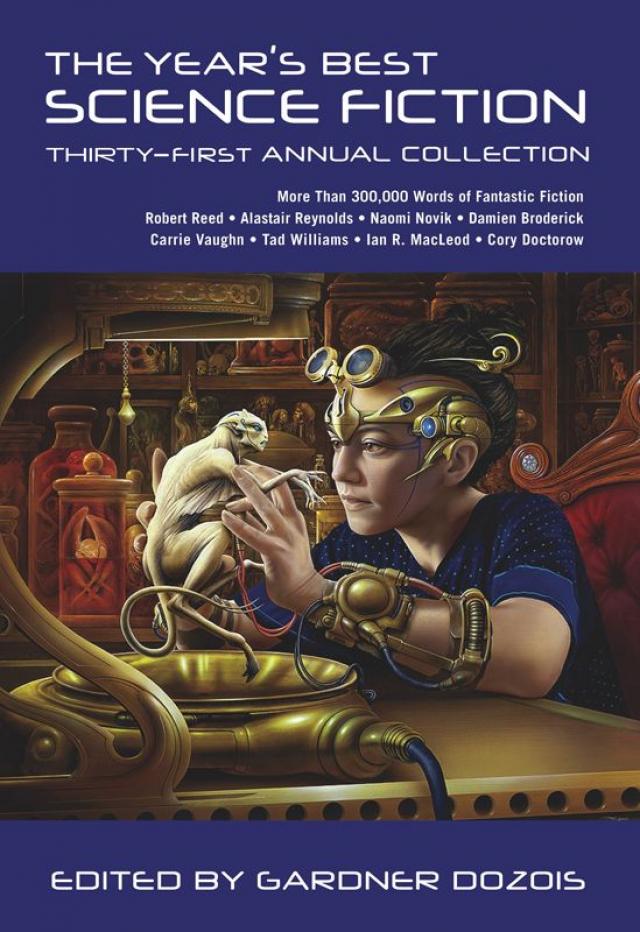
The Year's Best Science Fiction: Thirty-First Annual Collection,
p.6


The 2013 Bram Stoker Awards, presented by the Horror Writers of America on June 15, 2013, in New Orleans, Louisiana, were: Best Novel, The Drowning Girl, by Caitlin R. Kiernan; Best First Novel, Life Rage, by L. L. Soares; Best Young Adult Novel, Flesh and Bone, by Jonathan Maberry; Best Long Fiction, The Blue Heron, by Gene O’ Neill; Best Short Fiction, “Magdala Amygdala?” by Lucy Snyder; Best Collection, New Moon on the Water, by Mort Castle and Black Dahlia and White Rose: Stories, by Joyce Carol Oates (tie); Best Anthology, Shadow Show, edited by Mort Castle and Sam Weller; Best Nonfiction, Trick or Treat: A History of Halloween, by Lisa Morton; Best Poetry Collection, Vampires, Zombies and Wanton Souls, by Marge Simon and Sandy DeLuca; Graphic Novel, Witch Hunts: A Graphic History of the Burning Times, by Rocky Wood and Lisa Morton; Best Screenplay, The Cabin in the Woods, by Joss Whedon and Drew Goddard; plus Lifetime Achievement Awards to Clive Barker and Robert R. McCammon.
The 2013 John W. Campbell Memorial Award was won by Jack Glass: The Story of a Murderer, by Adam Roberts.
The 2013 Theodore Sturgeon Memorial Award for Best Short Story was won by “The Grinnell Method,” by Molly Gloss.
The 2013 Philip K. Dick Memorial Award went to Lost Everything, by Brian Francis Slattery.
The 2013 Arthur C. Clarke award was won by Dark Eden, by Chris Beckett.
The 2012 James Tiptree, Jr. Memorial Award was won by The Drowning Girl, by Caitlin R. Kiernan and Ancient, Ancient, by Kiini Ibura Salaam (tie).
The 2012 Sidewise Award for Alternate History went to Dominion, by C. J. Sansom (Long Form) and “Something Real,” by Rick Wilber (Short Form).
The Cordwainer Smith Rediscovery Award went to Wyman Guin.
* * *
Dead in 2013 or early 2014 were:
JACK VANCE, 96, one of the true giants of the field, seminal to the development of the science fiction and fantasy genres as we know them (he also wrote mysteries, winning an Edgar Award for The Man in the Cage), multiple Hugo and Nebula Award–winner, recipient of the World Fantasy Award for Lifetime Achievement and the SFWA Grand Master Award, inducted into the Science Fiction Hall of Fame, author of novels such as The Dying Earth, Big Planet, Emphyrio, The Star Kings, The Dragon Masters, Night Lamp, and many others; FREDERIK POHL, 93, another of the seminal giants of the field as both writer and editor, winner of multiple Hugo and Nebula Awards, as well as the SFWA Grand Master Award and an inductee into the Science Fiction Hall of Fame, onetime editor of Galaxy and Worlds of If magazine as well as the Star original anthology series, the author of sixty-five novels and thirty short-story collections, including the landmark The Space Merchants (with C. M. Kornbluth), Gateway, Man Plus, and many others, a friend; RICHARD MATHESON, 87, author and screenwriter, winner of the World Fantasy Award, the Bram Stoker Life Achievment Award, an inductee into the Science Fiction Hall of Fame, author of I Am Legend and The Shrinking Man, as well as many screenplays for Twilight Zone episodes; British writer IAIN M. BANKS, 59, author of the influential SF novel series about the far-future society known as the Culture, such as Consider Phlebas, The Player of Games, and Use of Weapons, as well as stand-alone SF novels such as Feersum Endjin and The Algebraist, and, writing as IAIN BANKS, best-selling mainstream novels such as The Wasp Factory, The Bridge, and The Crow Road; brilliant and eclectic writer NEAL BARRETT JR., 84, whose best known among his many novels was probably The Hearafter Gang (which critic John Clute called “The great American novel”), but who was even better known for his quirky short fiction, recently collected in Other Seasons: The Best of Neal Barrett, Jr., a friend; PARKE GODWIN, 84, World Fantasy Award–winner, author of the Arthurian Firelord trilogy, among others; DORIS LESSING, 94, Noble Prize–winner, famous for her mainstream fiction, but who also produced many science fiction novels and books with fantastic elements, including the books in the Canopus in Argos sequence such as The Marriages Between Zones Three, Four and Five and The Making of the Representative for Planet 8, as well as Briefing for a Descent into Hell, The Summer Before the Dark, and many others; BASIL COPPER, 89, prolific British author of horror and mystery fiction; JAMES HERBERT, 69, British author, author of twenty-three novels, most horror, including international bestsellers The Rats and The Fog; MICK FARREN, 69, author and musician, author of the cult favorite The DNA Cowboys trilogy, as well as The Long Orbit, Their Master’s War, and The Renquist Quartet; BOYD BRADFIELD UPCHURCH, 93, who wrote as JOHN BOYD, author of The Last Starship from Earth and a dozen other SF novels; DOUGLAS R. MASON, 94, British SF author who wrote as JOHN RANKINE; ANN CRISPIN, 63, SF writer, author of the Starbridge series as well as many Star Trek and Star Wars novels and other media tie-in novels, cofounder of the watchdog group Writer Beware, a friend; PATRICIA ANTHONY, 66, SF writer, author of novels such as Brother Termite, Happy Policeman, God’s Fires, and Conscience of the Beagle, as well as much short fiction; DOUGLAS R. MASON, 94, who also wrote as JOHN RANKINE, prolific SF novelist; ANDREW J. OFFUTT, 78, author of more than seventy-five books of fantasy, SF, and erotica; RICK HAUTALA, 64, horror writer, author of thirty books including Night Stone and Mockingbird Bay; NICK POLLOTTA, 58, prolific author of many SF and action adventure novels, including Damned Nation and Belle, Book and Candle; ANGEL ARANGO, 86, Cuban SF writer, considered to be one of the founders of Cuban SF; DAVID B. SILVA, 62, horror writer and editor, editor of the influential magazine The Horror Show; JAN HOWARD FINDER, aka “THE WOMBAT,” 73, writer, anthologist, and longtime fan; DANIEL PEARLMAN, 77, SF writer, prolific short-story writer and author of fantasy novel Memini; WILLIAM HARRISON, 79, author of the story “Roller Ball Murder,” which was made into the movie Rollerball; ANDREW GREELEY, 85, best-selling Chicago author, columnist, and priest; British author DEBORAH J. MILLER, 50, who also wrote as MILLER LAU; ELMORE LEONARD, 87, a writer whose genre credentials were limited to the novel Touch and the YA animal fantasy A Coyote’s in the House, but a towering figure in the mystery field, where he was a best-selling author and a grandmaster, author of dozens of famous mystery novels such as Get Shorty, Stick, Out of Sight, and Rum Punch; TOM CLANCY, 66, best-selling author of technothrillers such as The Hunt for Red October, Red Storm Rising, and Clear and Present Danger; BARBARA MERTZ, 85, well-known mystery novelist who wrote as ELIZABETH PETERS, as well as under other pseudonyms; GARY BRANDNER, 80, horror writer, best known for The Howling; JON MANCHIP WHITE, 89, Welsh horror writer; PHILIP NUTMAN, 50, writer, journalist, and critic; T. R. FEHRENBACH, 88, Texas historian and occasional SF writer; COLIN WILSON, 82, English philosopher and novelist, author of the well-known nonfiction book The Outsider, as well as novels such as The Mind Parasites and The Space Vampires; JOEL LANE, 50, British author, poet, critic, and anthology editor; HUGH NISSENSON, 80, mainstream author who occasionally wrote SF; GOKULANANDA MAHAPATRA, 91, Indian SF author and science writer; JOSEPH J. LAZZARO, 56, SF writer and science essayist, mostly for Analog; MARY-LYNN REED, 64, author; PAUL WILLIAMS, 64, editor, author, and fan, founder of the groundbreaking music magazine Crawdaddy! as well as of the Philip K. Dick Society, editor of the thirteen-volume series of The Complete Stories of Theodore Sturgeon as well as one of the first critical studies of the work of Philip K. Dick; ANNE JORDAN, 69, author and anthologist, former managing editor of The Magazine of Fantasy & Science Fiction; JACQUES SADOUL, 78, prominent French editor; ANNE C. PETTY, 68, novelist and Tolkien scholar; RICHARD E. GEIS, 85, author, editor, longtime fan, multiple Hugo Award–winner, editor of the influential fanzines Science Fiction Review and The Alien Critic; LELAND SAPIRO, 89, editor, SF scholar, fanzine fan, teacher; NICK ROBINSON, 58, chairman of publishing house Constable & Robinson; RICHARD GALLEN, 80, publishing financier who backed the start-ups of Tor, Baen, and Bluejay; ANTONIO CARONIA, 69, Italian SF translator and critic; ROGER EBERT, 70, film critic, author, and fan, whose film criticism for The Chicago Sun-Times and on television programs such as Siskel and Ebert at the Movies and Roger Ebert and the Movies made him the most famous film critic in America; ROBERT MORALES, 55, writer, editor, and journalist, author of the miniseries Truth: Red, White and Black Marvel Comics; DOROTHY “DOT” LUMLEY, 64, British literary agent, and former wife of writer Brian Lumley; SCOTT CARPENTER, 88, astronaut, one of the original Mercury 7 crew; RAY HARRYHAUSEN, 92, pioneering stop-motion animator and world-famous special effects artist who created the special effects for such classic genre movies as Jason and the Argonauts and The Seventh Voyage of Sinbad; MITCHELL HOOKS, 89, SF cover artist; DAVID FAIRBOTHER-ROE, SF cover artist; CARMINE INFANTINO, 87, renowned comic book artist, best known for his work on The Flash and Adam Strange; JOHN DAVID WILSON, 93, Disney animator who worked on Lady and the Tramp and others; EDWARD LEVITT, 97, animator; JOAN HANKE-WOODS, 67, cover artist, winner of the Best Fan Artist Hugo; JEAN-CLAUDE SUARES, 71, graphic designer and illustrator; DAN ADKINS, 76, illustrator and comic book artist; AL PLASTINO, 91, longtime comic book artist; JANICE VALLEAU WINKLEMAN, 90, longtime comic book artist; STUART FREEBORN, 98, makeup artist on Dr. Strangelove, 2001: A Space Odyssey, and Star Wars; JANE HENSON, 79, one of the cocreators of the Muppets, former wife of the late Jim Henson; RAY MANZAREK, 74, keyboardist for The Doors, perhaps the best keyboardist in rock music; PETER O’ TOOLE, 81, famous stage and screen actor whose genre connections are slight, but whom everyone knows from films such as The Lion in Winter, Lawrence of Arabia, The Stunt Man, and The Ruling Class; MICHAEL ANSARA, 91, TV actor, best known for playing Kang in Star Trek, who also had roles in many other genre shows such as Babylon 5, The Outer Limits, and Lost in Space; ANNETTE FUNICELLO, 70, actress with roles in genre movies such as The Shaggy Dog, best known for her participation in the original The Mickey Mouse Club in the fifties; ROBIN SACHS, 61, stage, film, and television actor, best known to genre audiences for his roles as evil sorcerer Ethan in TV’s Buffy the Vampire Slayer and as Sarris in Galaxy Quest; JONATHAN WINTERS, 87, improvisational comedian and actor, best known to genre audiences for his role as Mearth in Mork and Mindy; JAMES GANDOLFINI, 51, TV actor with no real genre connection, but known to everyone for his role in The Sopranos; EILEEN BRENNAN, 80, film actor, best known for roles in The Sting and Murder by Death; DENNIS FARINA, 69, best known for roles in Get Shorty and Law & Order; ALLAN ARBUS, 95, best known for his role in TV’s M*A*S*H, who also appeared in genre productions such as Wonder Woman and Damien: Omen II; JEAN STAPLETON, 90, stage and film actor, best known as Edith from TV’s All in the Family, who also appeared in genre film Damn Yankees!; KAREN BLACK, 74, film actress, known for her role in Five Easy Pieces and in many horror movies; MEL SMITH, 60, actor, best known to genre audiences for his role as the Albino in The Princess Bride; RICHARD GRIFFITHS, 65, actor, best known to genre audiences as Uncle Vernon from the Harry Potter movies; MILO O’SHEA, 87, actor, best known for playing Durand-Durand in Barbarella; LEE THOMPSON YOUNG, 29, television actor on Smallville and Rizzoli & Isles; MICHAEL BURGESS, 65, better known as ROBERT REGINALD, author, editor, and publisher, founder of Borgo Press; GRAHAM STONE, 87, Australian scholar, librarian, bibliographer, longtime fan, founder of the Australian Science Fiction Society; MARTY GEAR, 74, longtime fan and costumer; KEITH ARMSTRONG-BRIDGES, longtime British fan, cofounder of the Tolkien Society, a friend; DAN MCARTHY, 78, New Zealand fan, writer, artist, and con-runner; ELLIOT K. SHORTER, 74, fan, bookseller, former Locus editor; FRANK DIETZ, longtime fan, fanzine editor, convention organizer, cofounder of the Lunarians; JERRY WRIGHT, 67, founding editor of Web zine Bewildering Stories; JIM GOLDFRANK, 80, longtime fanzine fan; BOBBIE DUFAULT, 55, convention organizer and fan; ANDREA M. DUBNICK, 63, editor and fan; BOB BOOTH, 66, writer, editor, and convention organizer; ROBERT BRIDGES, 83, longtime fan, one of the founding members of the Washington Science Fiction Society; PAMELA BOAL, 78, writer and longtime British convention fan; ALICE S. CLARESON, 83, editor and teacher, widow of SF critic Thomas D. Clareson; RUTH NIMERSHEIM BAMBACH, 96, mother of SF writer Jack Nimersheim; RICHARD BALLANTINE, 72, son of publishers Ian and Betty Ballantine, an editor and author in his own right; MARY ANN PORTER, 103, mother of small-press publisher Marianne Porter; BETTY DeHARDIT, 88, daughter of the late Will Jenkins, who wrote SF as Murray Leinster; ALAN BRUCE SAWYER, 51, producer, brother of SF writer Robert Sawyer; ROSEMARY WOLFE, 82, wife of SF writer Gene Wolfe; MARION STURGEON, 83, third wife of late SF writer Theodore Sturgeon; RUTH SPEER, 90, wife of longtime fan Jack Speer; NANCY KEMP, 90, former wife of longtime fan Earl Kemp.
The Discovered Country
IAN R. MACLEOD
British writer Ian R. MacLeod was one of the hottest new writers of the nineties, publishing a slew of strong stories in Interzone, Asimov’s Science Fiction, Weird Tales, Amazing, The Magazine of Fantasy and Science Fiction, and elsewhere, and his work continues to grow in power and deepen in maturity as we move through the first decades of the new century. Much of his work has been gathered in four collections: Voyages By Starlight, Breathmoss and Other Exhalations, Past Magic, and Journeys. His first novel, The Great Wheel, was published in 1997. In 1999, he won the World Fantasy Award with his novella “The Summer Isles,” and followed it up in 2000 by winning another World Fantasy Award for his novelette “The Chop Girl.” In 2003, he published his first fantasy novel and his most critically acclaimed book, The Light Ages, followed by a sequel, The House of Storms, in 2005, and then by Song of Time, which won both the Arthur C. Clarke Award and the John W. Campbell Award in 2008. A novel version of The Summer Isles also appeared in 2005. His most recent books are a new novel, Wake Up and Dream, and a big retrospective collection, Snodgrass and Other Illusions: The Best Short Stories of Ian R. MacLeod. MacLeod lives with his family in the West Midlands of England.
Here he tells an evocative and emotionally powerful story of someone sent on a mission to a virtual utopia reserved only for the superrich who have died on our mundane Earth, a sort of literal afterlife. It’s a smart, tense, and tricky story in which the stakes are high and nothing is what it seems.
The trees of Farside are incredible. Fireash and oak. Greenbloom and maple. Shot through with every colour of autumn as late afternoon sunlight blazes over the Seven Mountains’ white peaks. He’d never seen such beauty as this when he was alive.
The virtual Bentley takes the bridge over the next gorge at a tyrescream, then speeds on through crimson and gold. Another few miles, and he’s following the coastal road beside the Westering Ocean. The sands are burnished, the rocks silver-threaded. Every new vista a fabulous creation. Then ahead, just as purple glower sweeps in from his rear-view over those dragon-haunted mountains, come the silhouette lights of a vast castle, high up on a ridge. It’s the only habitation he’s seen in hours.
This has to be it.
Northover lets the rise of the hill pull at the Bentley’s impetus as its headlights sweep the driveway trees. Another turn, another glimpse of a headland, and there’s Elsinore again, rising dark and sheer.
* * *
He tries to refuse the offer to carry his luggage made by the neat little creature that emerges into the lamplit courtyard to greet him with clipboard, sharp shoes and lemony smile. He’s encountered many chimeras by now. The shop assistants, the street cleaners, the crew on the steamer ferry that brought him here. All substantially humanoid, and invariably polite, although amended as necessary to perform their tasks, and far stranger to his mind than the truly dead.
He follows a stairway up through rough-hewn stone. The thing’s name is Kasaya. Ah, now. The east wing. I think you’ll find what we have here more than adequate. If not … Well, you must promise to let me know. And this is called the Willow Room. And do enjoy your stay …
* * *
Northover wanders. Northover touches. Northover breathes. The interior of this large high-ceilinged suite with its crackling applewood fire and narrow, deep-set windows is done out in an elegantly understated arts-and-craftsy style. Amongst her many attributes, Thea Lorentz always did have excellent taste.
What’s struck him most about Farside since he jerked into new existence on the bed in the cabin of that ship bound for New Erin is how unremittingly real everything seems. But the slick feel of this patterned silk bedthrow … The spiky roughness of the teasels in the flower display … He’s given up telling himself that everything he’s experiencing is just some clever construct. The thing about it, the thing that makes it all so impossibly overwhelming, is that he’s here as well. Dead, but alive. The evidence of his corpse doubtless already incinerated, but his consciousness—the singularity of his existence, what philosophers once called “the conscious I,” and theologians the soul, along with his memories and personality, the whole sense of self which had once inhabited pale jelly in his skull—transferred.
The bathroom is no surprise to him now. The dead do so many things the living do, so why not piss and shit as well? He strips and stands in the shower’s warm blaze. He soaps, rinses. Reminds himself of what he must do, and say. He’d been warned that he’d soon become attracted to the blatant glories of this world, along with the new, young man’s body he now inhabits. Better just to accept it that rather than fight. All that matters is that he holds to the core of his resolve.
He towels himself dry. He pulls back on his watch—seemingly a Rolex, but a steel model, neatly unostentatious—and winds it carefully. He dresses. Hangs up his clothes in a walnut panelled wardrobe that smells faintly of mothballs, and hears a knock at the doors just as he slides his case beneath the bed.
“Yes? Come in…”
When he turns, he’s expecting another chimera servant. But it’s Thea Lorentz.
* * *
This, too, is something they’d tried to prepare him for. But encountering her after so long is much less of a shock than he’s been expecting. Thea’s image is as ubiquitous as that of Marilyn Monroe or the Virgin Mary back on Lifeside, and she really hasn’t changed. She’s dressed in a loose-fitting shirt. Loafers and slacks. Hair tied back. No obvious evidence of any make-up. But the crisp white shirt with its rolled up cuffs shows her dark brown skin to perfection, and one lose strand of her tied back hair plays teasingly at her sculpted neck. A tangle of silver bracelets slide on her wrist as she steps forward to embrace him. Her breasts are unbound and she still smells warmly of the patchouli she always used to favour. Everything about her feels exactly the same. But why not? After all, she was already perfect when she was alive.