The two noble kinsmen, p.2
The Two Noble Kinsmen,
p.2
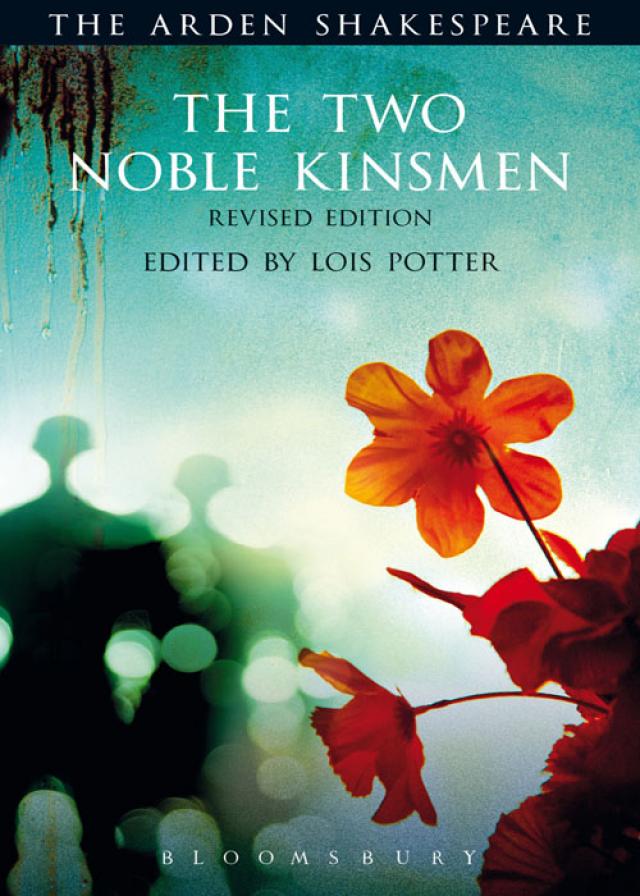


Revised Edition
I have taken the opportunity to make corrections, some of which I owe to the reviewers of the first edition, especially John Jowett. I should also like to thank Lili Mesterházy and John Fry for helpful correspondence about this play and Ann Thompson and Richard Proudfoot who, as always, were scrupulous in their attention to the revision.
Thanks also to Claire Cooper, Joshua Pawaar, Emily Hockley, and of course the invaluable Margaret Bartley, who have steered this project to its conclusion in an age technologically so far removed from the one in which it was first conceived.
Lois Potter
London
INTRODUCTION
The Two Noble Kinsmen is a Jacobean dramatization of a medieval English tale based on an Italian romance version of a Latin epic about one of the oldest and most tragic Greek legends; it has two authors and two heroes. It first appeared in 1634, without preface or dedication, the only extraneous information being supplied by the title page: ‘Presented at the Blackfriers by the Kings Maiesties servants, with great applause: Written by the memorable Worthies of their time; Mr John Fletcher, and Mr William Shakspeare. Gent.’ ‘Gent.’, or ‘Gentleman’, applied to both Fletcher and Shakespeare, whose names were bracketed together. Neither collaborator could confirm or deny the attribution: Shakespeare had died in 1616, Fletcher in 1625. Despite this explicit title page, most discussions of the play have centred on the question of its authorship – a topic, of course, closely bound up with its evaluation. The one other piece of contemporary evidence is an entry, dated 8 April 1634, in the Stationers’ Register, where the publisher, by paying a small fee to the Stationers’ Company, established his ownership of the book he was about to publish. Here, the play is described as a tragicomedy – the first play to be so listed since 1615.
This introduction will begin with the implications of the contemporary statements just mentioned. After considering the play’s mixed messages about its genre, I shall look at the numerous elements of the collaboration: not only the authors themselves but their historical, theatrical and literary contexts. Complex as the collaboration process was, the end product can be discussed as a coherent work – not in spite of, but because of, the circumstances of its production.
THE GENRE: TRAGICOMEDY
Because, until recently, it was so little known and performed, The Two Noble Kinsmen can still be genuinely suspenseful even for readers and spectators who know its main source, Chaucer’s Knight’s Tale. Until the final scene of the play, it is not at all clear whether the ending will be comic or tragic. Whoever made the Stationers’ Register entry (probably the publisher, John Waterson) clearly thought that it was both; he needed only to look at the final speech of Theseus (5.4.112–37) which makes plans for both a funeral and a marriage and stresses the paradox that ‘The conquered triumphs; / The victor has the loss’. But tragicomedy is not really quite the right word. Giambattista Guarini, the theorist of the genre, stressed in his Compendio della Poesia Tragicomica (1602) that its object was not to alternate tragic and comic scenes but to create a genuinely mixed genre with a unified mood and atmosphere, lacking both the horrific elements of classical tragedy and the grotesque elements of classical comedy. Fletcher attempted something like this at the beginning of his career, with The Faithful Shepherdess (1608–9), but its theatrical failure suggests that audiences were not yet ready to lose the variety to which they had been accustomed in drama. The Two Noble Kinsmen works quite differently. Throughout, the play offers contradictory indications about the direction it intends to take.
The first act is largely static, almost a closet drama. The interruption of the opening wedding procession, by three queens in mourning, establishes a pattern of disrupted rituals that continues through the play. Whereas much of the play condenses its source, 1.1 actually expands it. Chaucer’s Theseus immediately agrees to the queens’ request that he make war on Creon and enable them to bury their dead husbands’ bodies. In the play, by contrast, Theseus devotes considerable time to the decision as to whether to sacrifice his wedding day – and night – to the call of duty. The characters are extremely self-conscious about living up to the occasion; it is as if they knew that they were taking part in a tragedy. Some of the language is grotesque, as when one of the queens urges Hippolyta to imagine how she would feel if Theseus were lying dead on the battlefield, ‘Showing the sun his teeth, grinning at the moon’ (1.1.100). Palamon and Arcite, introduced in the second scene, are equally self-conscious about their conversation, which keeps drifting away from its apparent subject into generalized and irrelevant social satire. Their situation, when they hear that Theseus is marching on Thebes and realize that they will have to fight on behalf of a ruler they despise, is more ironic than tragic. Scene 3, another conversation, reveals that Hippolyta respects the close friendship of Theseus and Pirithous and that Emilia’s closest relationship, also with a friend of her own sex, was ended by death when both girls were 11. Emilia does not think that she will ever care as much for a man as she did for her friend. Normally in drama any young person who talks like this can be expected to undergo a rapid conversion, and this is what Hippolyta herself thinks will happen. Act 1 concludes with the victory of Theseus and the formal mourning of the queens. Though the evil Creon never appears, these scenes make a strong moral point: the gods are just and, sooner or later, will punish evil. With the departure of the queens, the plot seems resolved. Only the discovery of the half-dead Palamon and Arcite in 1.4, and Theseus’ insistence that his doctors should try to save their lives, point to the future.
From the start of Act 2, on the other hand, we are in the world of romantic comedy, with the ordinariness of the Jailer, his Daughter and her Wooer set against the Daughter’s idealization of the two kinsmen (whose miraculous recovery from their supposedly fatal wounds is taken for granted). The men’s enthusiastic praise of their friendship is exaggerated to the point where (like Emilia’s rejection of love) it is bound to collapse, and it does so almost as soon as Emilia appears. After Arcite has been freed from prison, two events seem to prepare the way for a happy ending: his introduction to Emilia in disguise and the love of the Jailer’s Daughter for Palamon, which inspires her decision to free him. An audience might well look forward to a double wedding at this point, with the discrepancy of rank between Palamon and the Daughter no doubt resolved by the revelation that she is really of noble birth. With hindsight, one can see that the authors are also trying to prepare for the tragic ending by stressing Arcite’s horsemanship as early as 2.5, but no one unfamiliar with the play could guess what use would be made of these hints.
Act 3, which takes place entirely in the woods, draws on a pun that is never made in the play itself: the double meaning of wood as ‘insane’. Palamon’s appearance, ‘as out of a bush’, suggests a wild man, and the play suddenly veers in the direction rejected in the Prologue: the tale of Robin Hood. Arcite’s story – attracting the ruler’s attention at a sporting competition, being welcomed at court, then taking advantage of his position to steal the ruler’s venison, wine, and armour – corresponds to one told of Little John in fytte 3 of the early-sixteenth-century Litel Gest of Robin Hood (reprinted several times before 1600) and, in later ballads, of Robin Hood himself. The Daughter, no longer comic in her obsession with Palamon, goes mad. The Schoolmaster, who is ‘excellent i’th’ woods’ (2.3.55), directs a performance of a country dance in which everyone takes it for granted that the Daughter’s madness will be a positive asset. The act ends with the combat between the two men that was promised in 3.1. Like the wedding in 1.1, it is interrupted. Theseus, facing another set of kneeling women (joined, this time, by Pirithous), has yet again to change his mind in public. He creates conditions that are meant to formalize and contain the combat by making it an all-or-nothing affair: the winner will marry Emilia but the loser and all his party must die.
Neither Palamon nor Arcite appears in Act 4. Instead, they are present in the fantasies of the Jailer’s Daughter and in Emilia’s attempt to choose between them on the basis of their pictures. Most of the act is taken up with the madness of the Jailer’s Daughter, whose offstage attempt to create a tragic ending for herself has also been interrupted, in this case by her devoted fiancé. Her family and friends try to cure her by means of various sorts of play-acting, aided by a doctor who may be either a quack or a sage. On her next appearance in 4.3 she is lost in visions of the afterlife and it seems likely that she will die in despair if she cannot have Palamon.
The spectacular opening of Act 5 seems like a return to the static mode of Act 1, and corresponds to the scenes of oracles and prophecies that characterize tragicomedy. In tragedy, typically, the hero receives an evil omen which comes true in a sense he does not expect; in tragicomedy, the omen may be conditional (like the ‘if’ in ‘if that which is lost be not found’ in The Winter’s Tale, 3.2.136) or it may come true in a beneficent rather than an evil sense. In The Two Noble Kinsmen, though Emilia is left puzzled, both men receive good omens. Both also get what they asked for, but with tragic results. Tragicomedy specializes in bringing happiness out of near-disaster, which is why Guarini considered it the only kind of drama that truly reflected Christian belief (Guarini, 245). Shakespeare and Fletcher, however, seem to have been more struck by Chaucer’s pagan gods, who, like the ‘juggling fiends’ of Macbeth, ‘keep the word of promise to our ear / And break it to our hope’ (Mac 5.8.21–2). The play that began with a wedding procession, interrupted by mourning queens, ends with an interrupted triumph, an interrupted execution, and the promise of mourning followed by a wedding. Sandwiched between the scenes that resolve the main plot comes the ‘cure’ of the Daughter’s madness. Her final scene (5.2) leaves it unclear whether she recognizes the supposed Palamon and whether such a recognition will cure or perpetuate her insanity – though the Jailer in 5.4 offers an optimistic interpretation of events.
The Knight’s Tale also ends with the attempt to reconcile conflicting emotions. Theseus stresses the need to accept human mortality and ordains the marriage of Palamon and Emily in order to make two sorrows into one perfect joy; we have the Knight’s word for it that the ending is blissfully happy for the two surviving lovers. But Chaucer’s Palamon and Emily have earned their happiness by many years of grief. The speed with which the Jacobean dramatists rush to their conclusion makes their juxtaposition of tragic and comic events, and Theseus’ attempts to justify them, seem increasingly forced. Having first consigned Palamon and his friends to death and gone to celebrate Arcite’s victory, ‘Right joyful, with some sorrow’ (5.3.135), Theseus later welcomes the unexpected reversal of events by planning to mourn ‘A day or two’ for Arcite before attending Palamon’s wedding (5.4.124). Audiences would probably have recognized the biblical allusion (see the note on this line), which makes his words much less casual than they sound to modern ears. Nevertheless, the Epilogue which follows is rather startling in its attempts to make the audience follow Theseus’ advice and cheer up.
Many other Jacobean plays have the same abrupt shifts of tone and open endings as The Two Noble Kinsmen; an obvious example is Webster’s The Duchess of Malfi, which was probably being rehearsed at the same time. Whether we see such plays as confused or subtle depends on our perception of the authors’ intention, which in turn depends on our faith in their talent. When a play is known to be the work of two authors, it is tempting to attribute inconsistencies and uncertainties of tone either to disagreements between them or to breakdowns in the collaborative process. It therefore seems important to understand this process as fully as possible.
THE COLLABORATORS
John Fletcher
The play’s date is generally agreed to be 1613–14, for reasons that will be discussed below. At that time John Fletcher was 33 and Shakespeare 47. That Fletcher’s name is the first to appear on the title page may mean only that the publisher believed in alphabetical order, but it seems likely that the play belongs slightly more to him than to Shakespeare. Although a fair amount is known about his life, there are also some substantial gaps in the record, making him in many ways as mysterious a figure as his co-author. What follows is summarized from the pioneering research of his nineteenth-century editor Alexander Dyce, and from subsequent work by Philip Finkelpearl and Gordon McMullan.
Fletcher was the odd man out in a family consisting largely of distinguished and literary churchmen. His grandfather had been a militant Protestant; his father Richard, living in easier times, apparently owed his distinguished career to personal charm and the favour of Elizabeth I, whose chaplain he had been before becoming Bishop of London. In 1594, the Bishop, a widower since 1591, married a beautiful woman, very recently widowed. Whether because of her reputation or because the marriage seemed too obviously inspired by feelings unsuitable to a clergyman, it gave rise to a number of scurrilous poems; the satirist Sir John Davies treated his Inns of Court friends to a series of epigrams, widely circulated in manuscript, punning on Fletcher and lecher (Davies, 177–9; Beal, 1: 1.217–18). Abruptly denied the Queen’s favour, the Bishop, ‘seeking to lose his sorrow in a mist of smoke’ (Fuller, 275), died suddenly while taking tobacco in 1596. It turned out that he was heavily in debt. John (then 16 years old) is generally thought to have been at Cambridge at the time, but there is no record of his activities until the early seventeenth century. If he was unable to remain at the University, he obviously had strong incentives to begin supporting himself. With a scandal and financial ruin in his background (not unlike what seems to have happened, on a smaller scale, to Shakespeare’s father), he probably did not have much to lose when he turned to playwriting in the early years of James I’s reign.
He was possibly helped in the intervening years by patronage. Finkelpearl and McMullan emphasize the importance of Fletcher’s connection with the Earl of Huntingdon’s circle based at Ashby de la Zouche. Francis Beaumont, Fletcher’s first collaborator, was probably acquainted with the Earl ‘almost from birth’, since his family came from the same part of the country (McMullan, 15). Fletcher may have met Beaumont through his patron, or it may have been the other way round. He seems to have remained on friendly terms with the family for the rest of his life. Through them he would have known the other writers they patronized, such as Michael Drayton. Both he and Beaumont had met Ben Jonson by 1607, when they contributed commendatory verses to the first edition of Volpone. He probably benefited not only from these acquaintances themselves but also from their libraries (Jonson had a fine one); playwrights depended on access to all kinds of source material. Beaumont had further advantages as a member of the Inner Temple and could have introduced Fletcher to Inns of Court writers such as the pastoral poet William Browne. It has been suggested (Gayley, 140–4) that Beaumont and Fletcher are portrayed as the shepherds Remond and Doridon, two close friends, in Browne’s Britannia’s Pastorals, which began to appear in 1613. If this were true, the poem would be valuable evidence that the legendary friendship, of which so much was made by later writers, had a basis in fact.
Beaumont and Fletcher wrote their first collaborative plays for the fashionable children’s companies of St Paul’s and Blackfriars. Especially for a gentleman like Beaumont, who may have come to playwriting via amateur theatricals at university, the Inns of Court and Ashby, these small theatres with their elite audiences probably seemed preferable to the commercial playhouses. The boys’ companies deferred more to their authors than the star-dominated adult companies, a fact that initially attracted playwrights with intellectual pretensions. Dates and authorship of the early plays are hard to fix because many of them were revised for later revivals (McMullan gives a useful canon and chronology, 267–9). At the most conservative estimate, Fletcher by 1612 had collaborated on two tragedies, two romantic-satiric comedies and a tragicomedy, while his solo works included a pastoral tragicomedy, The Faithful Shepherdess (1608–9), two sex-war comedies, The Woman’s Prize (1611) and Monsieur Thomas (1610–13), and a tragedy, Valentinian (1610–12). At least some of these plays had been highly successful.
In 1613 Beaumont withdrew from playwriting, and from their jointly shared lodgings, on his marriage with an heiress. If Finkelpearl is right, he suffered a stroke shortly after this date and died three years later. By 1613 the boy actors had lost much of their prestige and some companies had merged with adult groups. Fletcher continued writing for one such group, perhaps because he was now collaborating with Nathan Field, a former child star now in his twenties. However, the King’s Men were the leading company in London, playing far more frequently than the children and always looking for talented writers to supply the consequent demand for new plays. Fletcher may have come to the notice of their leading dramatist, Shakespeare, as a result of The Woman’s Prize, or the Tamer Tamed, which offers itself as (or was perhaps adapted to become) a continuation of The Taming of the Shrew, with incidental parodies of other Shakespeare plays. He and Shakespeare were probably involved in three collaborations, though The Two Noble Kinsmen is the only surviving one to bear both their names. A few years later Fletcher took over as the company’s leading dramatist (Field’s own move to the King’s Men may have been an incentive) and continued to write both alone and in collaboration until he died of the plague in 1625. He was buried in St Mary Overy (now Southwark Cathedral). Philip Massinger, his last important collaborator, was buried in the same grave in 1640; Fletcher wrote twice as many plays with him as with Beaumont (McMullan, 144), but no one ever developed a legend about the Fletcher–Massinger friendship.
The tributes to Fletcher’s character in the prologues and epilogues written for posthumous productions of his plays may have been motivated by the need to ‘sell’ a now out-of-date author. Still, Richard Brome, who knew him, pointed out in his verses to the 1647 Beaumont and Fletcher Folio that many could witness to the truth of his claim: