The case of the worried.., p.12
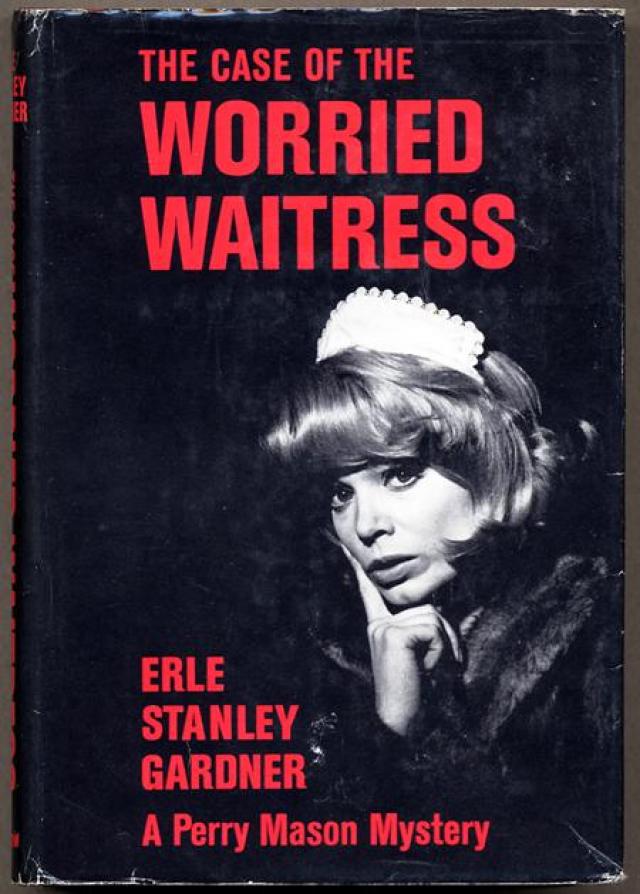
The Case of the Worried Waitress,
p.12


Lt. Tragg regarded Baxley thoughtfully. “Baxley,” he said, “you’re in a very vulnerable position in this case. I’m going to let you go home. I’m not going to book you, but you keep out of that house and don’t go around jimmying locks.”
“I didn’t jimmy a lock.”
“Well, it depends upon what you call a jimmy. Technically, it was breaking and entering.”
“I had as much right there as Mason or …”
“No, you didn’t,” Tragg said. “Now, you keep out of that place. Keep away from it! If you’re apprehended anywhere around there in the future, you’re going to be in serious trouble. And mind you, I’m not giving you any coat of whitewash right now. I’m simply letting you go. You’re a businessman and we can get you if we want you. There’s no need putting you in a cell and letting you come up in the morning before a magistrate to have charges preferred and bail fixed. It’s better to just let you go on your own recognizance.”
Tragg turned to Mason and said, “For your further information, Counselor, it looks as if Sophia Atwood is going to live. They performed an emergency operation, drained at least a large part of the blood clot, but there are complications. She hasn’t regained consciousness and, when she does, she may have traumatic retrograde amnesia and not be able to recall anything.
“The reason I’m telling you that is because you’ll be reading it in the papers anyway, and it means that we’re going to proceed immediately against Katherine Ellis with a preliminary hearing. Then if anything happens that there’s a turn for the worse, we can always dismiss this complaint and indict her for first-degree murder before a grand jury.
“Pleasant dreams, Counselor.”
“And we’re free to go now?” Mason asked.
“You’re free to go, and I think I might as well tell you also that it wouldn’t be particularly wise for you to be snooping around that house. If you want to get things belonging to your client, we’ll give you a police escort tomorrow in broad daylight. You can go there with a car and suitcases—or a moving van or whatever you want—and take everything belonging to your client out of the room. At which time the police officer will make an inventory of what you’re taking. In the meantime, don’t get caught hanging around that house. Evidence can be planted by anybody, and I don’t need to warn you, Counselor, that planting evidence is a very serious offense. In your case it could lead to complications which might even result in disbarment.”
“I wouldn’t think of planting evidence,” Mason said.
“No,” Tragg said, “I don’t believe you would. But you might plant something short of evidence, something that would be perhaps bait for a trap.”
“What in the world could I use for bait?” Mason asked.
“I don’t know,” Tragg said thoughtfully, “but I’m doing a lot of thinking. As you told me, you can’t keep a person from putting two and two together.”
Chapter 14
“well,” Drake said, when they had taken a taxi back to the Atwood house to pick up their own Cars, “do we disregard the police warning and still try to keep the trap under surveillance tonight?”
“We do not,” Mason said. “The police meant business with that warning. Over and above that, however, the trap is no longer a trap. The police will have a guard out here within the next fifteen minutes—in case they haven’t got one on the job already.”
“What will they be waiting for?”
“Waiting for one of us to come back. They’ve warned all of us to stay away. But Lieutenant Tragg isn’t satisfied with any of our explanations. He thinks there’s something about that building that enters into the picture, and he doesn’t know exactly what it is. He proposes to find out. … See that car ahead, with the dent on the rear of the right fender, Paul?”
“Uh huh.”
“Well,” Mason said, “for your information, when the prowl car drove up to headquarters that car was parked out in front of the police station.”
“Oh-oh,” Drake said, “it’s a sleeper—a car which has a license plate which is meaningless because it hasn’t been issued to anyone. Police use those in their undercover work.”
“Exactly,” Mason said. “I felt that would be the way Lieutenant Tragg would react to the information he’s received. Our trap is not going to catch anything tonight. And it’s a shame, because we went to so much trouble to plant the bait.”
“But she might still walk in,” Drake said.
“Not with all the publicity the place has had tonight,” Mason said. “A prowl car coming up at high speed, three men being taken to headquarters—and by midnight the radio will be carrying news that we were picked up at the scene of the crime, apparently trying to find evidence, and taken to headquarters. However, if Bernice is foolish enough to try to get in there tonight, police will have her picked up before she’s been in the place ten seconds.”
“And so?” Drake asked.
“So,” Mason said, “we have our hand forced. We demand an immediate preliminary hearing for Katherine Ellis or demand that the charges be dismissed. We try to get an interview with the blind woman and, in the meantime, I go up to my office where Della Street has signed a receipt for the two cartons of material Katherine Ellis had sent to her by truck shipment.
“You’d better tag along up to the office, Paul, while we open those cartons. There just might be something in them that would be of value.”
“What did she say was in them?”
“When the crash came,” Mason said, “Katherine Ellis had a lot of expensive clothes.
“She sold the fur coats and everything else for which she could get any money—stripped herself down to bare essentials and came out here to live with her aunt Sophia. She sensed that she’d be living in one bedroom with limited closet space. She cut her wardrobe down. The things she kept were the ones on which she couldn’t raise any money.
“She tells me that she brought along some business documents her father had left which she thought might be worth while—some old gold-mining stocks which were reported to be valueless at the time the estate was appraised, and a couple of old family photograph albums and some old letters.
“I told her I wanted an order to get the things out of storage and take a look through them just to see if there was anything in those old papers that will be of any help.”
“Think you’ll find anything?” Drake asked.
“Probably not. The chances are a thousand to one,” Mason said. “But some of those stock certificates that were appraised as having no value are the things I’m interested in. Sometimes some of those highly speculative issues turn out to be bonanzas.”
“I can’t help you any with that stuff,” Drake said. “I’ll go home and get some shut-eye. I was sitting around waiting for a call all last night.”
“I’ve had a day myself’ Mason admitted, “but I want to take an inventory of those stocks.”
“You can reach me on the phone any time during the night,” Drake told him, “but be sure it’s important. I’m bushed.”
Mason nodded, said good night, drove to his office where Della Street already had the stock issues laid out in order, with a typed inventory.
Mason looked at the table on which Della Street had arranged the papers and said, “There doesn’t seem to be very much for me to do. You seem to have done it already.”
“I’ve made a complete inventory,” she said.
“What’s the photograph album?” Mason asked.
“Family pictures. Would you like to see your client when she was three years old? Or a picture in the nude at three months? Or you might like to take a look at the family home, which apparently was mortgaged to the hilt, but it certainly was a pretentious place.”
Mason thumbed through the album, turned to the more recent pictures.
“This one,” Della Street said, “is your client with her expensive sport car—sitting there behind the wheel at indolent ease. I bet it would have come as a shock if some fortuneteller had tapped her on the shoulder and said, ‘Exactly six months from the date of this picture, dearie, you’ll be waiting tables.’”
Mason regarded the picture thoughtfully. “Any pictures of Aunt Sophia?” he asked.
“Oh yes. She appears in several of the family shots, but they’re pretty old and the pictures are the typical fuzzy amateur stuff that people take for no good reason and then paste in-family photograph albums.”
“I thought the family photograph album had gone out of style,” Mason said.
“I think her father kept this up,” Della Street said, “and he was a pretty good photographer. Most of the pictures in there are sharp and clear, but running all the way through it are pictures taken with a different camera that are fuzzy, poorly exposed, and out of focus. I just have an idea that Katherine Ellis’ mother did those pictures, because they’re all family pictures— groups and festive occasions such as a party on Katherine’s fifteenth birthday, Katherine with two of her high-school chums.”
“What about the clothes?” Mason asked.
“The clothes are neatly packed,” Della Street said, “and I don’t think we can do anything better than just leave them folded and in these cartons. We’ll have to get a place to store them.”
Mason nodded. “Attend to it in the morning, Della. I’m dog tired tonight. And tomorrow we’re going to call this blind woman at her unlisted number. We’ll call her until we get an answer, and I’m going to have an interview.”
“What can she tell us?” Della Street asked.
“She probably can tell us a good deal if she wants to,” Mason said. “For instance, what’s the idea of keeping a watch on the Gillco Manufacturing Company, and why use a blind woman as a sentry?”
Della Street said, “Perhaps the blind woman is simply to cover up and served as an excuse to enable Sophia Atwood to come there part of the time.”
“Then the blind woman should know why Sophia Atwood wanted to go there,” Mason said. “But I rather suspect there’s something else in the wind.”
“What?”
“I think,” Mason said, “there’s some industrial espionage going on. I think that somebody smuggles information out of the Gillco Manufacturing Company’s plant and, while pretending to buy pencils, drops a note in the basket which contains the pencils.”
“Now that would be something,” Della Street said. “Do you suppose the blind woman would tell us?”
“It depends on her character and depends on how we can approach her,” Mason said. “Sophia Atwood can’t talk. Somebody’s going to have to talk if we’re going to find out the things we need to find out.
“I’ll tell you what, Della, we won’t disturb Paul Drake tonight, but first thing in the morning we’ll get him on the job and we’ll run a double in—a ringer.”
“A blind woman?”
“A woman who poses as being blind,” Mason said. “We’ll get one of his female operatives, get her dolled up in a black dress, dark eyeglasses, with a stock of pencils and ballpoint pens—the works.
“We’ll put her out there at the Gillco Company, let her sit where the blind woman sits, and … ”
“And suppose the real blind woman comes along and catches you at it?” Della Street asked.
Mason grinned. “Then we’ll have a showdown which should be productive of results.”
He toyed for a moment with the possibilities of the thought, then said, “That just might be a wonderful way to find out what it’s all about. Let the female operative, posing as the blind woman, be there on the grounds when the blind woman shows up in her taxicab, and have a hidden tape recorder taking down all the conversation. I’ll bet it would be illuminating.
“I think we’re going to try it, Della. And in the meantime we’re going to get ready for a preliminary hearing. The more I think of it, the more important I think it is to have that female operative on the job posing as the blind beggar—or pencil seller, whatever you want to call her.
“Paul Drake is going to hate me for this, but get him on the phone. He’s just about had time to get in, have a drink, and start unwinding.”
Della Street dialed the number of Drake’s unlisted telephone, waited for an answer, then nodded to Perry Mason.
Mason picked up the phone. “Hi, Paul,” he said.
Drake groaned. “I knew that the phone would ring before I’d been in the place five minutes. I suppose you’ve got another brainstorm and you’ll want everything done all at once. All right, what is it?”
Mason said, “I want to get a phony blind woman, Paul—a female operative who will dress exactly as the blind beggar has been dressing, will go out to the same place, sit down in the same position, and offer pencils and ballpoint pens for sale.”
“I don’t see what good that’s going to do,” Drake protested.
“It’ll do this much good,” Mason said. “We’ll leave her there until the real blind woman shows up. Your operative will have a small tape recorder hidden under her dress. When the blind woman shows up, she’ll turn it on and make a tape recording of the resulting conversation. A good operative should be able to lead the blind woman into making some very revealing statements.”
Drake was silent for a moment. “You get me?” Mason asked.
“I get you,” Drake said, “but I can’t get the thing done for at least twenty-four, maybe forty-eight hours.”
“Why?”
“Use your head, Perry. We’ve got to get a woman who will fool the employees there at the plant. She’s got to be a ringer for the blind woman. Suppose someone at the plant there is talking with her from time to time—someone, perhaps, who has spent some time visiting with her. This woman has got to be good.
“I’ve got to get the female operative I’ve got to coach her on the part I’ve got to get my men who have been shadowing the blind woman, get them to rehearse her. I’ll try and get it done tomorrow so you can have some results the next day.”
“The next day,” Mason said, “Katherine Ellis is going to have her preliminary examination.”
“Can’t you postpone it?”
“Sure, I can postpone it if I want to, but I don’t want to. I think that’d be playing into the prosecution’s hands by asking for a postponement. They want delay. They’re still working on a case. They are all confused by the events that happened tonight.”
“Well,” Drake said, “I’ll do the best I can. I’ll start putting out lines, then I’m going to go to bed and go to sleep. I’ll try to have a female operative on the job the first thing in the morning, and we’ll try to get her fixed up as a spurious blind woman. Heaven knows what may happen! You know the rules. If she’s arrested, you pay all the fines.”
“I pay all the fines,” Mason said. “Have a good night’s sleep, Paul.”
Drake said querulously, “Now you tell me!”
Chapter 15
Judge Morton Churchill took his place on the bench, gathered his robes around him, looked down at the group at the bar, said, “This is the case of the People of the State of California versus Katherine Ellis. The charge is assault with a deadly weapon with intent to commit murder. Are the parties ready?”
Hamilton Burger, the District Attorney, arose. “If the Court please,” he said, “I am ready for the People. I do wish to state, however, that as the Court is, of course, aware, murder is the unlawful killing of a human being with premeditation or malice aforethought, or in connection with the commission of a felony, and death may take place within one year and a day from the time of the assault. I am simply stating the law, generally, in order to explain our position, which is that we are proceeding against this defendant by means of a complaint. We are having this preliminary hearing on the complaint. We will ask that she be bound over to answer the charge in the Superior Court.
“In the event, however, that before proceedings in this case are complete, Sophia Atwood should die as the result of the blow which was struck by the defendant, we will dismiss this complaint and proceed before the Grand Jury, asking an indictment for murder.
“We are therefore anxious to see that there is no legal jeopardy attaching to the defendant.”
“Why not wait until you have a more settled picture of the medical aspects of the case?” Judge Churchill asked.
“There are reasons,” Hamilton Burger said. “We want to perpetuate certain matters of evidence. We want to have the defendant in a type of custody from which she cannot be removed by habeas corpus.”
“Very well,” Judge Churchill said. “What about the defendant? Is the defendant ready?”
“The defense is ready,” Mason said.
“Very well,” Judge Churchill said. “Proceed.”
“If the Court please,” Hamilton Burger said, “as I have stated to the Court, there are certain aspects of evidence in this case which we wish to have perpetuated. Therefore we are calling certain witnesses and examining them in some detail. As for the rest of the case, we will simply rely upon the rule of law which provides that it is only necessary to show that a crime has been committed and that there is reasonable ground to believe the defendant is connected with the perpetration of that crime.”
“Very well,” Judge Churchill said. “This Court wasn’t born yesterday, Mr. District Attorney. I think I appreciate your position. Go ahead and put on your evidence.”
“We call Stuart Baxley to the stand,” Hamilton Burger said.
Stuart Baxley stepped forward, held up his right hand, was sworn, and took his position on the witness stand.
“Your name is Stuart Baxley?” Hamilton Burger asked.
“Yes.”
“You were acquainted with Sophia Atwood and have been acquainted with her for some time last past?”
“Well … Yes.”
“On the fourth of this month did you have occasion to see her?”
“Yes, sir.”
“Where did you see her?”
“The first time I saw her was when I called at her house as a guest. I was invited to dinner.”
“Then what happened?”
“There was something of a commotion. Mrs. Atwood felt she had been robbed of a hundred dollars. There was a bit of excitement and the defendant was, I believe, under suspicion.”