The case of the worried.., p.3
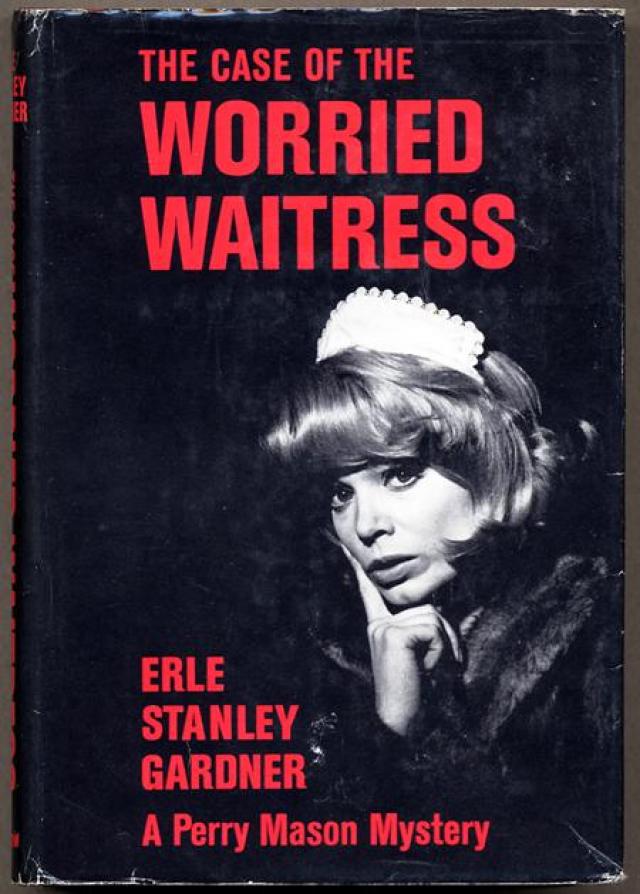
The Case of the Worried Waitress,
p.3


Della rang the Drake Detective Agency, and a few moments later Paul Drake gave his code knock at the door of Mason’s office.
Della let him in.
Drake said, “Hi, Perry. Hi, beautiful. What’s the good word today? Got a job for me?”
“I’ve got a job,” Mason said. “I want a job of tailing done and I don’t want your operative to get caught even if he has to let the subject go.”
“Who’s the subject?”
“A Sophia Atwood’ Mason said. “Here’s her address.”
He passed the card Katherine Ellis had given him over to Paul Drake.
“What is this—an apartment house?” Drake asked.
“A two-and-a-half-story private dwelling,” Mason said. “Probably the house is pretty old and run-down and the lot is worth five times as much as the house.”
“Description of the person I’m to shadow?”
“Fifty-odd, looks considerably younger in the face but dresses older. A neat figure chestnut hair five foot three weighs about a hundred and eighteen steely gray eyes.
“Now then, I’ll give you a tip. She’ll leave the house, walk to a bus line, take a bus—I don’t know how far— then get off the bus, transfer to a taxicab, do a lot of shopping in a taxicab, have the cab drive her to the bus line, pay off the cab, take her purchases, climb aboard a crowded bus, travel several blocks, get off the bus and walk a block and a half to the house.”
“Well, I’ll be damned,” Drake said.
“Exactly,” Mason agreed.
“What’s the object of doing all this?”
“That,” Mason said, “is what I’d like to find out.”
“Can you tell me anything about your client?”
“In this part of the job I haven’t any client,” Mason said. “I’m satisfying my curiosity and I don’t want you running up any fancy bills on expenses. On the other hand, I do want a good competent tailing job done and I don’t want the subject to have any idea that she’s being followed.”
“Okay,” Drake said with a grin, “you came to the right place. You think the shenanigans will go on today?”
“I’m going to be out your per them if they don’t,” Mason said.
“I take it you want immediate action.”
“Starting as of now,” Mason told him.
“Okay,” Drake said. “I’ve got a good man I can put on it. He’ll be on his way in a matter of minutes.”
Chapter 4
It was after five o’clock when Paul Drake’s code knock sounded on Mason’s door.
Della Street opened the door and Mason said, “Hi, Paul. We’re getting ready to call it a day, and it’s been some day.”
“Thought I’d catch you before you left,” Drake said. “I’ve run into something that puzzles me.”
“What’s that?” Mason asked.
“This Sophia Atwood deal. My man uncovered something puzzling. He reported by telephone a short time ago, and I thought I’d better come in and tell you the story.”
“Where was he phoning from?” Mason asked.
“Actually he was phoning from his car,” Drake said. “We’ve got several cars with telephones in them and this man is using one. He telephoned from out in front of the two-and-a-half-story residence, but he was using the phone in his car.”
“Okay,” Mason said. “What’s the pitch?”
“Guess what the aunt really does for a living?”
“You mean she works?”
“She works,” Drake said.
“What does she do?”
“She sells pencils.”
“Pencils?”
“That’s right. She has an air cushion, a dark smock, some dark eyeglasses, a stock of pencils, and she’s a fixture in front of the offices of the Gillco Manufacturing Company out on Alvareno Street.”
“Goes there every day?” Mason asked.
“Off and on.”
“Don’t they object?” Mason asked.
“Apparently not. One of the big stockholders in the company passed the word along the line that she wasn’t to be disturbed.”
“How much time does she put in selling pencils?” Mason asked.
“I can’t get the whole sketch,” Drake said. “My man didn’t want to ask too many questions, but at times she’ll be there darn near all day. Other times she’ll show up for just an hour or two.”
“How does she come and go?” Mason asked.
“Taxicab.”
“Doesn’t it arouse comment that a pencil peddler should arrive by taxicab?”
“It’s the same cab all the time,” Drake said, “and the story is that the cabdriver has some sort of arrangement on a monthly basis to drive her where she wants to go.”
“Check on her marketing?” Mason asked.
“Yes, she goes from one market to another picking up specials. She goes by taxicab, and apparently this time it isn’t the same cab every time. At least it’s not the same cab that she uses when she’s taken to her stand in front of the Gillco Manufacturing Company.”
“What about the Gillco Manufacturing Company?”
“Electronics, gadgets, modern scientific stuff. It does manufacturing on its own and also acts as sole importing agent for one of the Japanese factories. It … ”
The phone rang.
Della Street looked inquiringly at Mason.
The lawyer shrugged his shoulders, said, “Okay, Della, we’ll take this one last call.”
Della, now that the switchboard operator had gone home and her phone was connected directly with the switchboard, picked up the instrument and said, “Perry Mason’s office … Yes, this is Miss Street… Who? … What is it about? … Oh, I see. Just a minute. I’ll see if I can catch him. He’s just leaving the office.”
Della cupped her hand over the mouthpiece, said to Perry Mason, “It’s your client, Kit Ellis, and she’s in serious trouble. She wants to know if it’s possible for you to get in touch with her right away.”
Mason hesitated a moment, exchanged glances with Paul Drake, then said, “Okay, Della, I’ll talk with her.”
The lawyer picked up the phone on his desk.
“Mr. Mason,” Kit said, “I know this is a terrible imposition, but it’s almost a matter of life or death with me. Could you come out here?”
“Where is here?” Mason asked.
“Where I am living—Aunt Sophia’s house. You have the address.”
“What seems to be the trouble?”
“I am being accused of theft.”
“By whom? By your aunt?”
“Not exactly. By some smart alec who says he’s a ‘friend of the family,’ His name is Stuart Baxley. Someone should take this pompous …”
“Don’t talk like that,” Mason warned, his eyes narrowing.
“Well, Baxley is here, and he’s urging Aunt Sophia to have me arrested and there’s a detective here and … ”
“Have you said anything?” Mason asked.
“What do you mean, ‘Have I said anything’? I told them they’re crazy. I…”
“Have you said anything about any of the things you told me about?”
“Not so far, no.”
Mason said, “Sit tight. Say you haven’t stolen anything. Aside from that, say nothing to anyone about anything. Don’t answer any questions except to state that your attorney is on his way out and your attorney will do all the talking. Do you understand?”
“Yes.”
“I take it,” Mason said, “that your aunt has suffered a pecuniary loss.”
“Apparently.”
“From the money that was hoarded?”
“Well, it’s a long story and involved.”
“Say nothing,” Mason said. “Answer no questions. Say you are innocent of any crime but are referring everything to me. When I get there, follow my lead.”
Mason slammed the telephone back in the cradle, nodded to Della Street. “Let’s go, Della,” he said. The lawyer made for the door, held it open, said to Paul Drake, “Keep on the job, Paul. I’ll phone in to see what’s new, but call off your shadow. His presence out there may attract attention now.
“Come on, Della.”
Della grabbed her purse, snaked her coat off the hook. Mason held the coat for her and they strode down the corridor, Della Street’s heels beating a rapid tattoo as she tried to keep up with Mason’s longer steps. Drake came behind them at a more leisurely pace.
“Good heavens, Chief,” Della said as Mason punched the elevator button, “if the aunt’s lost all of the money in the hatboxes, it could be a fortune … and how much do we really know about our client?”
“Of course, we don’t know what’s in the hatboxes,” Mason said. “We can only … ”
The cage came to a stop, the door slid open, and Mason piloted Della Street into the cage and motioned her to silence.
They hurried to the parking lot. Mason got his car out and drove skillfully through the streets, making time wherever he could until he came to the big two-and-a-half-story house on the upper side of the canyon drive.
The lawyer parked his car, helped Della out, and together they ran up the steps to the porch.
Mason rang the front doorbell and almost immediately it was opened by a broad-shouldered, belligerent individual, in his middle forties, who said brusquely, “You can’t come in!”
Mason said, “Permit me to introduce myself. I’m Perry Mason, an attorney. I’m representing Katherine Ellis, who I believe is inside. This is Miss Street, my secretary. I want to see my client.”
“You can’t come in!”
“Who says so?”
“I say so,” a voice announced, and the broad-shouldered man stepped aside to make way for a peppery man who stood barring the way and who seemed to be trying to take charge of the situation.
“I am Stuart Baxley,” this man said. “I am a friend of the family, Sophia has been the victim of an atrocious, dastardly crime perpetrated by Katherine Ellis, and I propose to see that Miss Ellis pays for her misdeed.
“If you want to talk with your client, you may talk with her after she arrives at the police station.”
“You have notified the police?” Mason asked.
“We’re notifying them.”
“You are the police?”
“Certainly not. I told you who I am.”
Mason raised his voice. “Come on out, Katherine!” he shouted. “You’re going with me.”
“Indeed she is not going with you,” Baxley said.
“You’re going to restrain her?”
“Yes.”
“By force?”
“If necessary. This gentleman behind me is a private detective, Mr. Levering Jordan, of Moffatt and Jordan, Investigators. He is completing his investigation. When he completes it, we propose to make a formal arrest, either through the police or as a citizen’s arrest.”
Mason said, “I’m not going to try to force my way into your house or Sophia Atwood’s house, but I am going to talk with my client.”
Mason heard hurried steps, then Katherine Ellis in the background said, “Here I am, Mr. Mason.”
Stuart Baxley turned and started toward her.
Mason raised his voice. “You lay a finger on my client, Baxley, and I’ll break your neck! Come on, Katherine, you’re going with us.”
“You can’t do this,” Baxley said.
Levering Jordan said, “Take it easy, Mr. Baxley. Mr. Mason is a well-known attorney.”
“Well, he can’t break anybody’s neck,” Baxley said.
Mason grinned. “I can try.”
“There are two of us,” Baxley said to Jordan, “and you’re a pretty husky individual.”
“There are legal points involved,” Jordan demurred.
Mason turned to face Katherine. “Come on, Katherine. Walk toward me. If anybody tries to detain you, try to break away from him and let me come to your assistance. Now, let’s have the legal formalities straight, gentlemen. Is anyone making a citizen’s arrest?”
“I’m making a citizen’s arrest,” Baxley said.
“Better take it easy, Mr. Baxley,” Jordan warned.
“All right,” Mason said, “you’re a citizen. You’ve made an arrest. This is my client. Having arrested her, your duty now is to take her before the nearest and most accessible magistrate. I’ll accompany you. Come on, Katherine.”
“Now, wait a minute, wait a minute,” Jordan said. “We still have a little investigative work to do. Miss Ellis has been very much of a problem.”
“In what way?” Mason asked.
“She refuses to give us her fingerprints. I have pointed out that we can get those fingerprints as soon as she is booked at a police station.”
“Come on, Katherine,” Mason said. “What are you waiting for?”
Baxley made a move as though to block her exit, but Katherine Ellis slithered around him and made a run for the door.
Jordan made no effort to stop her.
“Dammit, Jordan,” Baxley said, “get her! Grab her!”
Mason put his arm around Katherine’s waist, passed her over to Della Street, then turned to face Baxley and Jordan.
“Miss Ellis is now in my custody,” he said.
Baxley came blustering to the door. “Well, you’re not going to take her away from here!”
“Want to bet?” Mason asked.
“Do something, Jordan. Dammit, do something,” Baxley stormed.
“Mr. Jordan,” Mason explained, “isn’t feeling particularly lucky at the moment.”
Jordan stepped back, said something in a low voice to Baxley.
Mason said, “Come on, Kit,” turned and escorted Della Street and Katherine Ellis down to where his car was parked.
Katherine said, “I can’t leave here, Mr. Mason. I haven’t a thing out of my room—not even a toothbrush. I…”
“You’re leaving,” Mason said. “There are a lot more important things at stake than a toothbrush. I see you have your purse.”
“Yes, I hung on to that through all of the melee.”
“How much of a melee?”
“Verbal.”
“And what did you say?”
“I said nothing except what you had told me to. I said that I had not taken any money, that I was not going to answer any questions except in the presence of my attorney because I was innocent of any crime and I felt that they didn’t have any right to ask me questions. I repeated that over and over again.”
“Good girl!” Mason said.
“She’s trembling like a leaf in the wind,” Della Street said, her arm around Katherine Ellis’s shoulders.
“I know,” Mason said. “We’re going where we can talk.”
“Where?” Katherine asked. “Your office?”
“That’s too far,” Mason said. “We’re going down the road to the first good motel we find. We’re going to register there, then we’re going to see about getting your things. You’re not working today, Katherine?”
“Not tonight. I told Mr. Madison I was going to move and he said to take the evening off so I could get settled.”
“Okay, we’ll go find a motel,” Mason said. “I think there are some of them on the main boulevard on the other side of this canyon road.”
Mason helped Della Street and Katherine Ellis into the front seat of his automobile, said, “We’ll sit three in front. I’ll drive and talk and I want you to listen.”
He closed the door on the right side, walked around to the driver’s seat, got in, started the car, and drove slowly into the stream of traffic.
“Now, Katherine,” he said, “I may not have time to talk to you in detail because they may notify the police and a radio cruiser may pick us up.
“Any statement you make to me as your attorney or to Miss Street, or in the presence of Miss Street as my secretary, is confidential.
“Now, the reason I had to ask you to refuse to make any statement was that we—all three of us—know that you have been guilty of doing things you shouldn’t. Your curiosity got the better of you. You went prowling into that closet where you had no right to be.
“The minute you touched that hatbox you made yourself vulnerable. Now, how much does your aunt claim is missing?”
“A hundred dollars.”
“What?” Mason asked in surprise.
“A hundred dollars.”
“Out of that hatbox which was filled with money?”
“Mr. Mason, there’s something funny. That hatbox isn’t filled with money any more. The hatbox is empty.”
“What about the other hatboxes that were on the shelf?”
“All gone.”
“And faced with a loss of what may be several hundred thousand dollars, your aunt Sophia claims that she’s lost only a hundred?”
“Yes.”
“Well, I’ll be damned!” Mason muttered under his breath.
“Stuart Baxley came to call on her this afternoon. She invited him for dinner and she invited me for dinner. It looked as if she might be trying to play Cupid. She went up to her room and left us alone for ten or fifteen minutes. Then all of a sudden she started screaming that she had been robbed.
“Baxley ran upstairs to see what it was all about. I followed him at a more sedate pace.
“She was standing there at the door of her closet pointing to the empty shelf and repeating over and over, ‘I’ve been robbed.’
“Finally Stuart got her calmed down and—well, you can imagine how I felt. I was in a panic.”
Mason brought his car to a halt at a boulevard stop, said, “Go on.”
“Stuart asked her how much she’d lost and she told him immediately that she had lost a hundred dollars that she had put a hundred dollars in the hatbox this morning and that the hatbox was now empty.”
“What did she say about the other hatboxes?”
“Nothing.”
“And what did Baxley say?”
“Oh, good old Baxley!” Katherine Ellis exploded. “He’s evidently resented me ever since I came there and, of course, he was the first to insinuate that I had been home and had had an opportunity to get into the closet and take the money.”
“How long had you been home?”
“I had the afternoon off and I put in a good part of it doing some personal shopping. Then I went home and packed. Aunt Sophia came and invited me for dinner. I accepted.”