

The case of the worried.., p.13
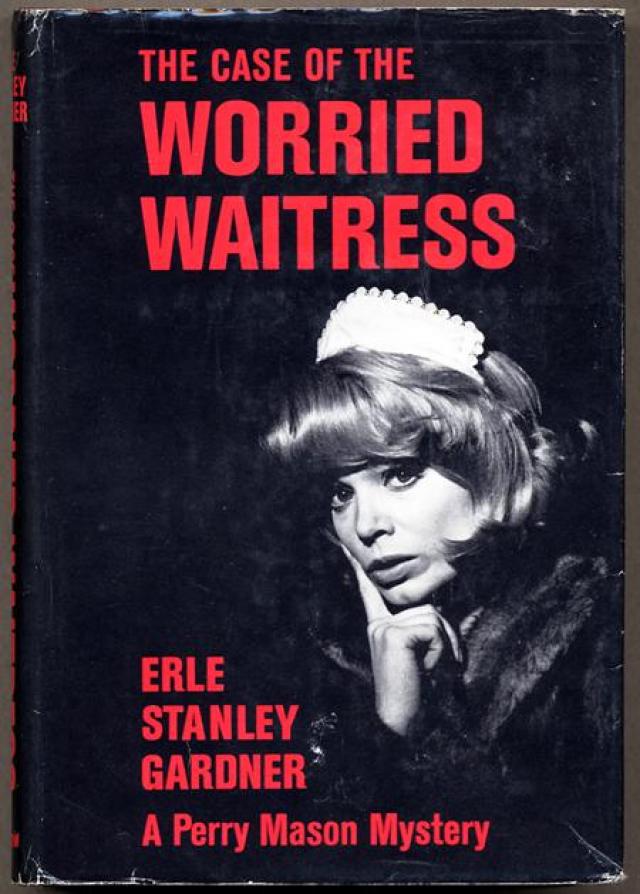
The Case of the Worried Waitress,
p.13


“And what did you do in relation to that situation?”
“I had a friend, a private detective, Levering Jordan, of the firm of Moffatt and Jordan. I suggested to Mrs. Atwood that I summon him.”
“And you did so?”
“Yes, sir, with her permission, of course.”
“And then what happened?”
“Mr. Jordan asked the defendant if he could take her fingerprints for purposes of comparison.”
“Did she consent?”
“Not only did she refuse, but she called Perry Mason who came to the house and instructed the defendant…”
“Objection,” Mason snapped.
“Sustained.”
Hamilton Burger tried a new approach. “Did you have occasion to enter that house after Sophia Atwood had been taken to the hospital?”
“Yes, sir, I felt certain that…”
“Objected to,” Mason interposed. “The witness can’t testify as to his thoughts.”
“Sustained.”
Hamilton Burger said, “All right, you had some presently undisclosed reason for entering the house. Now what happened after you entered the house?”
“I was very careful to use only a very small fountain-pen flashlight and keep the light down on the floor. I climbed the stairs to the second floor. I moved very cautiously and very quietly. I had a feeling that there was something …”
“We’re not interested in the feelings of the witness, if the Court please,” Mason objected.
“Confine yourself to facts,” Judge Churchill warned.
“Well,” Baxley went on, “I got to the top of the stairs and I was very quiet. I could hear enough movement to know that there was someone else in the place.”
“So what did you do?”
“I remained very still and very quiet.”
“You say that you heard motion. Did you hear anything else?”
“Just a peculiar slithering sort of sound.”
“A sound made by people whispering?”
“No, I don’t think it was whispering, but it was a peculiar slithering sound.”
“You had no means of knowing at that time that Counsel-for-the-defense Perry Mason and an employee of his, Paul Drake, were in the building, occupying the room where the defendant had lived?”
“I had no means of knowing that.”
“Then what happened?”
“Then there was a terrific crash, and I … Well, the thing took me by surprise and I was all keyed up and I was frightened. I started to run and then—well, the crash was between me and the back stairs, up which I had come, and so I turned tail and ran for the front stairs. And Mason sprang on me and assaulted me.”
“By himself?”
“Paul Drake, the private detective, was helping him. And then after they had me completely powerless, Drake went to phone the police.”
“I think you may inquire,” Hamilton Burger said to Perry Mason.
“When you went to that house,” Mason asked, rising and taking a couple of steps toward the witness box for the purpose of emphasizing his questions on cross-examination, “were you carrying a weapon?”
“I was carrying a thirty-eight-caliber revolver.”
“Did you have a permit for that revolver?”
“No.”
“Then why were you carrying it? You knew it was illegal to have it in your possession.”
“I was carrying it because I felt I was going into a position of some danger.”
“Danger from whom?”
“I didn’t know.”
“And you were prepared to shoot anyone whom you encountered?”
“I was prepared to defend my life.”
“You thought your life might be in danger?”
“Yes.”
“What was there that made you believe your life might be in danger?”
“Sophia Atwood’s life had been in danger.”
“Do you know why she was assaulted?”
“I have a very good idea, yes.”
“You think all of this trouble was over the theft of a hundred dollar bill?”
“Frankly, no.”
“Now, just a minute—just a minute,” Hamilton Burger interposed. “The question is objectionable. I didn’t offer an objection, but Counsel is asking the witness for his opinion. As Mr. Mason has so aptly pointed out, we’re not interested in what a witness thinks we’re interested in the facts. Let the witness confine himself to facts.”
“Very well,” Mason said. “Now then, Mr. Baxley, you were present when Sophia Atwood claimed someone had stolen a hundred-dollar bill from a hatbox in her closet?”
“Yes.”
“And you suggested, did you not, that the defendant might well be responsible for the theft?”
“I did not. I asked a few searching questions.”
“What do you mean by searching questions?” “I asked how many people had been in the house, how many people had access to Mrs. Atwood’s bedroom, how many people knew that she kept empty hatboxes in the bedroom.”
“Empty hatboxes?” Mason asked.
“Yes.”
“How many?”
“Heavens, I don’t know. She said she had put the money in an empty hatbox.”
“But you didn’t say ‘empty hatbox,’” Mason said. “You said ‘empty hatboxes’—using the plural.”
“Perhaps I did.”
“Did you understand there was more than one hatbox?”
“I don’t know. I don’t think so. She said ‘a hatbox.’ ”
“But you said ‘hatboxes’ in the plural.”
“All right, I was talking about ‘hatboxes’ in the plural.”
“When you were propounding those searching questions you have mentioned, you were talking about ‘hatboxes,’ plural?”
“All right, I said ‘hatboxes,’ plural.”
“And she didn’t correct you by pointing out there was only one hatbox?”
“No. Things were pretty tense at the moment, and there was no question but what in her mind ”
“Just a minute—just a minute,” Mason interrupted, holding up his hand. “We’re not interested in your thoughts, and we’re certainly not interested in having you read the mind of Mrs. Atwood and stating what was in her mind at the time. What I’m trying to find out from these questions is what you deliberately put in her mind—the thought which you implanted that the defendant was guilty of the theft.”
“I never said I implanted any such a thought.”
“You may not have said it, but your actions said it,” Mason added. “You asked those Searching questions as to the people who had been in the house. You didn’t ask any searching questions about your own opportunity to have stolen the money.”
“Certainly not!”
“Why not?”
“Because as a reputable businessman, as a friend, I was certainly above suspicion—or I would so consider myself.”
“But you didn’t consider the defendant, as a blood relative, as being above suspicion?”
“I simply asked questions.” ’
“Searching questions?”
“Call them that, if you wish.”
“You had a revolver in your possession when you last entered that house?”
“Yes.”
“Why?”
“To protect myself in case of necessity.”
“You knew it was against the law for you to carry that gun?”
“All right, I knew it was against the law.”
“You broke into the house.”
“I didn’t break—I manipulated a lock.”
“Legally that constitutes breaking and entry,” Mason said.
“All right,” Baxley flared, “take it up with my friend, the District Attorney. I’ve already come clean with him and we understand each other.”
“In other words, you’ve been given immunity for any crime you may have committed in exchange for your testimony.”
“It wasn’t on a bargaining basis at all. The District Attorney came to the conclusion that my intentions were absolutely aboveboard.”
“You had a hundred-dollar bill in your possession.”
“Is that a crime?”
“How long had you had that hundred-dollar bill?”
“I don’t know.”
“Try and think.”
“I can’t remember when I got it.”
“Then your memory is very defective,” Mason said, “because I am in a position to show by competent testimony that you went to your bank and asked for a hundred-dollar bill and … ”
“All right, all right, I had a hundred-dollar bill. It was my money. I had a right to get it. I had a right to go to the bank and get it whenever I wanted.”
“Now then,” Mason said, “I’m going to ask you if it is not a fact that you went to that house with that hundred-dollar bill in your possession with the intention of planting that hundred-dollar bill in the room which had been occupied by the defendant so that subsequently, when a detailed search of the room was made by police at your instigation, the hundred-dollar bill would be discovered concealed under a mattress or in some place which would indicate a guilty knowledge on the part of the defendant?”
“Absolutely not.”
“I submit,” Mason said, “that your actions speak louder than your denial. You were tiptoeing into the bedroom, intent upon planting that bill, when you blundered into a water cooler, tipped it over, and made a terrific crash, and then realized that you were not alone in the house. But before you could escape, you came into contact with Paul Drake and with me.”
“That is not true, and I didn’t upset that water cooler,” Baxley said. “You and Drake must have upset that. It was the crash that frightened me and caused me to start running, trying to get to the stairs.”
“And you still deny that you intended to plant that hundred-dollar bill in the defendant’s room?”
“I do.”
“That’s all,” Mason said contemptuously, turning his back on the witness.
Baxley started to leave the witness stand.
Judge Churchill tapped with his pencil on the bench. “Just a moment, Mr. Baxley,” he said. “I want to ask you a few questions. You knew that the defendant was being accused of taking a hundred dollars from a hatbox?”
“Yes.”
“And you went to your bank and got a hundred dollars in the form of a hundred-dollar bill, and then, in the dead of night, went to that house and manipulated a lock so you could enter it?”
“If you want to express it that way, yes.”
“And you want this Court now to believe that your intentions were entirely innocent?”
“Yes, sir, Your Honor. Yes, sir.”
“Well, I don’t believe it,” Judge Churchill said. “I don’t think you’re telling the truth. I think you got that hundred dollars for a sinister purpose.”
Judge Churchill glowered at the District Attorney. “This is your witness, Mr. District Attorney,” he said. “And the Court is going to tell you here and now that I don’t believe his testimony.”
“I submit it for what it’s worth,” Hamilton Burger said.
“Well, in my opinion it’s worth nothing. The Court feels that there has been an attempt to frame this young woman with a theft. This case fairly reeks with a frame-up, as far as the Court is concerned.”
“But, Your Honor, we have other evidence. We propose to show the defendant made a surreptitious visit to the house in the dead of night and at the very time Sophia Atwood was assaulted we have evidence which will show that her fingerprints were found on the hatbox from which the money was taken and we can present a very strong circumstantial evidence of theft and an assault with intent to cover up that theft.”
“If she stole the money in the early evening,” Judge Churchill asked, “why should she return to assault Sophia Atwood?”
“We admit that we don’t have all of the motivation clearly established,” Hamilton Burger said.
“Well, I’m not going to preclude you from putting on other evidence, but as far as this witness is concerned, the Court simply doesn’t believe his testimony.”
Judge Churchill settled back in his chair with an air of cold finality.
Burger hesitated for a moment, apparently debating with himself whether to try to rehabilitate the witness, then decided against it.
“Very well, Mr. Baxley,” he said. “I have no questions on redirect.”
Baxley suddenly said, “All right, all right, all right! I’ll tell the real truth. I went there to try to help the defendant— not to hurt her.”
Mason whirled to the witness. “And just how did you expect to help her?”
“I intended to take that hundred-dollar bill and plant it—not in the bedroom of the defendant, but in the closet of Sophia Atwood.
“The hatbox had been knocked off the shelf. I intended to suggest that there should be a thorough search of the closet, on the theory that something might have knocked the hatbox off the shelf—perhaps a mouse or a rat—and that the cover came off the box and that the hundred-dollar bill had fluttered into the back of the closet somewhere—perhaps lodging behind a garment or in a shoe.
“I felt that the police had searched the defendant’s room but they hadn’t thoroughly searched the closet.
“Then when they found the hundred-dollar bill in the closet, they would assume that was the hundred-dollar bill which had fluttered from the hatbox, that there had been no theft at all, and the good name of the defendant would have been cleared.”
Mason regarded the witness thoughtfully. “And why were you so anxious to clear the good name of the defendant that you would take a hundred dollars of your own money and deliberately fake this evidence?”
Baxley said, “My reasons are personal and private. But I will state that I knew that if the defendant could establish the fact of her innocence, and the hundred-dollar bill was still missing, then suspicion would be directed against me and in view of certain plans I had in mind, I simply couldn’t afford to come under suspicion. Now then, that’s the truth.”
Mason stood for several seconds regarding the witness thoughtfully, then he said curtly, “That’s all.”
Judge Churchill said, “Just a moment. I want to ask the witness why he didn’t tell the truth earlier.”
“Because I didn’t want to admit that I was trying to plant that hundred-dollar bill in the closet.”
“You knew that you were under oath when you were called to the witness stand?”
“Certainly.”
“You concealed the real facts you tried to lie about not remembering when you got the hundred-dollar bill you tried to make it appear your possession of that hundred-dollar bill was incidental you concealed your motives for entering the house.”
“All right, I did a lot of things I shouldn’t have done,” Baxley said. “But you can’t accuse me of trying to frame any evidence against this defendant. I was trying to help get her out of the jam in which she found herself.”
“You didn’t tell the District Attorney this.”
“Certainly not.”
Judge Churchill said, “This is a very peculiar case. There are certain aspects of it that I don’t like. I don’t like them at all.
“I am not going to prejudge the case I am not going to jump at conclusions before I hear the evidence. But we have here, apparently, a very refined-looking young woman who is accused of crime under circumstances which impress the Court as being highly suspicious.
“The witness is excused. You may call your next witness, Mr. District Attorney. But I would suggest that your prosecution of this case may be premature, to say the least.”
“Mr. Mason hasn’t explained what he was doing in that house—not to my satisfaction,” Hamilton Burger said. “If the Court is going to look at suspicious circumstances—”
Judge Churchill interrupted. “I don’t care what motivation Mr. Mason may have had for being in that house. We now have the case of a witness for the prosecution who has admitted to concealing facts to giving us a version of his conduct which was considerably different from the real truth, and who, only under the stress of cross examination, admitted that he entered that house surreptitiously and at night for the purpose of tampering with the evidence in this case.
“Now, this is a preliminary hearing. The Court is trying to do justice as best it can. I understand this is not a jury trial but, nevertheless, this Court wasn’t born yesterday, Mr. District Attorney, and it is quite apparent that there are backgrounds in this case which are highly suspicious.”
Hamilton Burger said, “Under those circumstances I am going to ask the Court for a recess until tomorrow morning, at which time I may have additional evidence and decide to go ahead with the case, or may offer to dismiss the case and await the outcome of the injuries to Sophia Atwood and then proceed against the defendant before the Grand Jury.”
“Is there any objection on the part of the defense?” Judge Churchill asked.
“None whatever,” Mason said.
“Very well. The Court will continue this matter until ten o’clock tomorrow morning. Court will take a recess, and I would suggest that there be a great deal of investigative work done between now and tomorrow morning, if this case is to go on.”
Judge Churchill left the bench and stalked into chambers.
Hamilton Burger turned without a word to Mason and left the courtroom.
Chapter 16
Once clear of the courthouse, Mason turned to Paul Drake, his manner radiating suppressed excitement. “Paul,” he said, “did you get it? Did you get it?”
“Get what?” Drake asked.
“The whole picture,” Mason said. “Stuart Baxley was telling the truth. He wasn’t telling the whole truth, but he was telling a good part of the truth. Now we know what we’re dealing with.”
“What are we dealing with?” Drake asked.
“Don’t you get it? Paul, the water cooler had been moved.”
“Had been moved?”
“That’s right—had been moved. Mrs. Atwood had that water cooler in her bedroom. She probably was one of those persons who are on a very low sodium diet and was drinking distilled water. There was a water cooler on the lower floor, because I remember seeing it there, and she had a water cooler in her bedroom. And it had been moved.”















